
Table of Contents
Are you thinking of organizing a trip to Namibia on your own and don't know where to start?
After traveling the country for 24 days as a family in a 4x4 with rooftop tents, we have prepared this complete guide with everything we wish we had known before traveling.
Here you'll find practical information about travel requirements for Namibia, the best time to visit, our 24-day itinerary, must-see places, how much it costs to travel to Namibia, tips for driving independently, where to stay, and everything we learned while exploring one of Africa's most fascinating countries.
If you are preparing your trip to Namibia, this guide will help you plan it step by step based on our real experience.
Is this your first time in Namibia?
👉 Start with our Namibia Travel Guide , where you'll find all the information on budget, best time to go, safety, 4x4 rental, accommodation, visa and route planning.
After:
Other related guides:
- 24-day Namibia itinerary
- Namibia: What to see
- Namibia on your own
- How much does it cost to travel to Namibia?
- Namibia with children
About us
We are the Kucavana family , and we travel with our two children and our adopted dog, Max. We usually travel in our motorhome, also called Kucavana, hence the name of our blog (as a baby, Anna couldn't pronounce "motorhome" and said "Kucavana"). But we also enjoy traveling by bicycle, by plane, and backpacking—the point is to have adventures as a family. The one writing this is me, Pilar, the mom of the family and perhaps the craziest one. I enjoy every new experience we have as a family, and I hope to help you enjoy traveling as much as we do.
To stay connected with you, follow us on our social media channels: YouTube and Instagram
1. Why travel to Namibia?
If you're looking for a unique, wild destination that will surprise you every day, Namibia should be high on your list . After traveling the country independently for 24 days in a 4x4 with rooftop tents, we can say without exaggeration that it was one of the most amazing trips we've ever taken.
Namibia isn't a country of grand monuments or spectacular cities. Its magic lies elsewhere. It's in the endless roads that wind through desert landscapes where you don't see another soul for miles, in the sunrises over giant orange dunes, in the elephants that appear beside a waterhole lost in the middle of nowhere, or in the nights under one of the clearest starry skies on the planet.
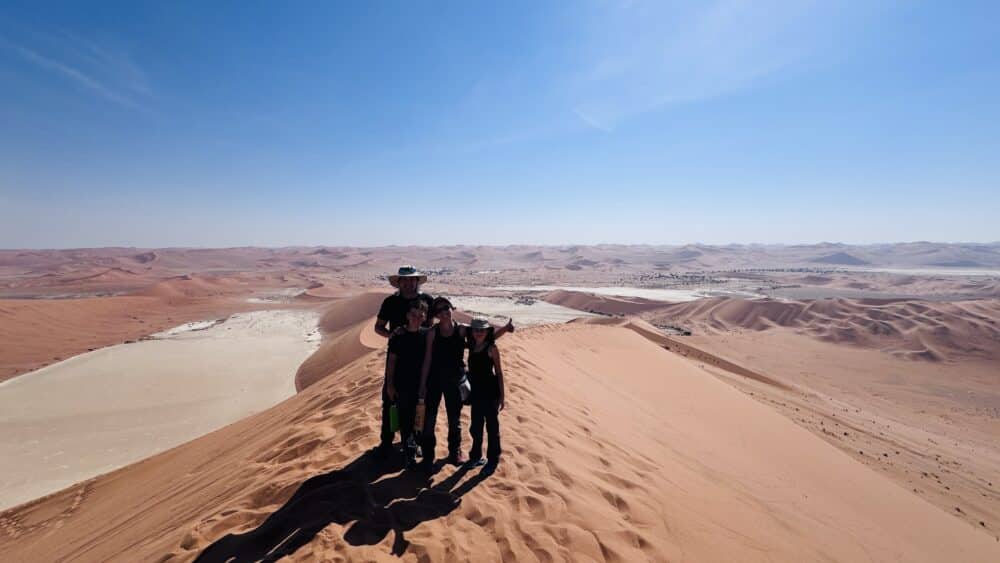
What surprised us most was the enormous variety of landscapes . Before traveling, we thought Namibia was basically a desert, but the reality is very different. In just a few weeks, we went from the forests and wetlands of the Caprivi Strip to the immense salt flats of Etosha, from the reddish mountains of Damaraland to the wild Atlantic coast, and finally, we explored some of the tallest dunes in the world at Sossusvlei.
IMPORTANT TIP : Don't travel to Namibia without good travel insurance . Seriously. The distances there are enormous, private healthcare is expensive, and if something happens in the middle of a national park or in a remote area, helicopter evacuation can cost a fortune. After thoroughly comparing different options, we chose IATI Estrella , which is the only one with over one million euros of medical coverage—crucial in destinations where any unforeseen event can multiply the costs. IATI also offers 24/7 Spanish-language support and an app for online medical consultations, which was incredibly useful during our trip. Here's our link with a 5% discount on any IATI travel insurance policy. If you're going to Namibia, it's truly worth traveling with peace of mind.
1.1 What makes Namibia unique compared to other destinations in Africa
Africa is full of incredible destinations, but Namibia has something that sets it apart from the rest: the constant feeling of freedom in the vastness.
Unlike other African countries where much of the experience revolves around organized safaris, in Namibia you can travel thousands of kilometers completely independently . Driving on practically empty roads, setting your own schedule, and sleeping in spectacular locations surrounded by nature are all part of the adventure. I assure you it's no more difficult than traveling by campervan to the North Cape, for example, from Spain with children, which is our case 🙂
Furthermore, Namibia boasts some of the most extreme and photogenic landscapes on the continent:
- The Namib Desert, considered the oldest desert on the planet.
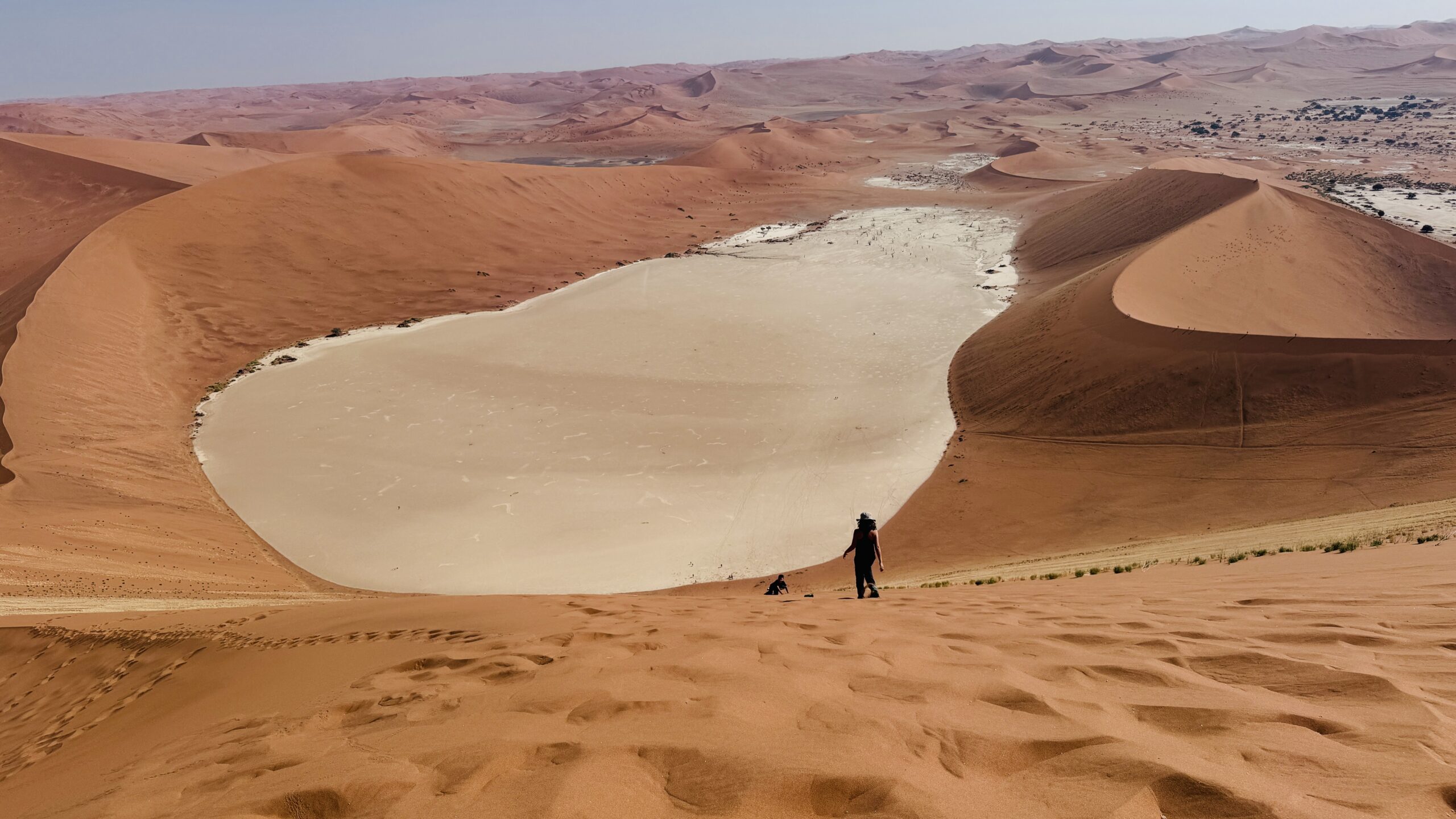
- Sossusvlei and Deadvlei, one of Africa's most iconic landscapes.
- Etosha National Park, one of the best places in the world to observe wildlife.
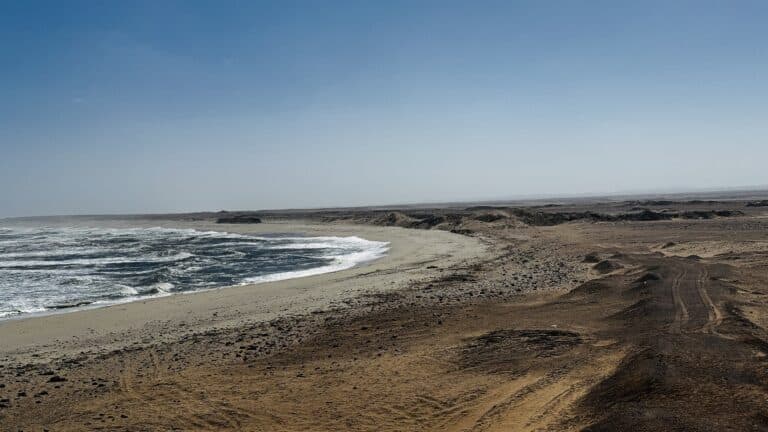
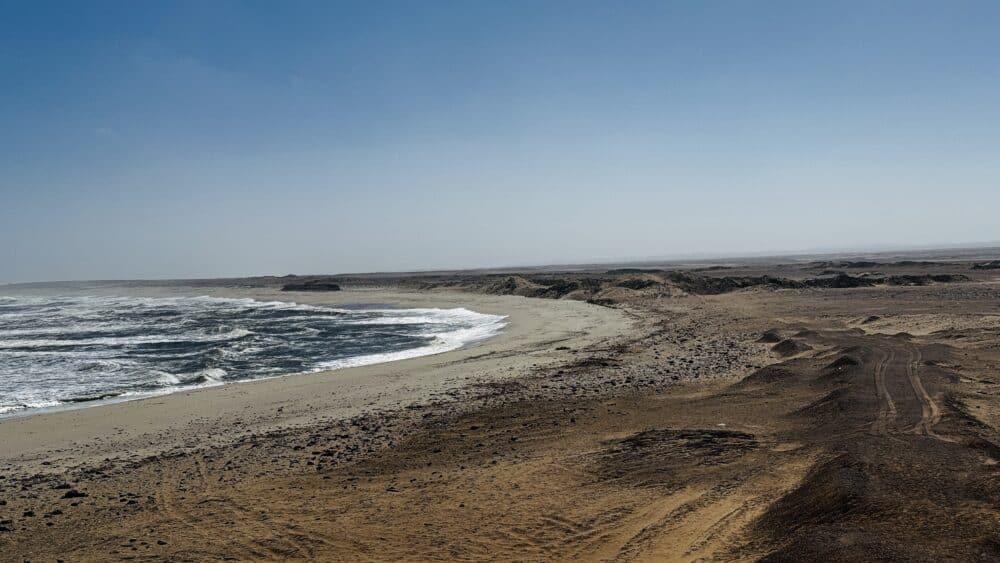
- The Skeleton Coast, where the Atlantic Ocean collides with the desert.
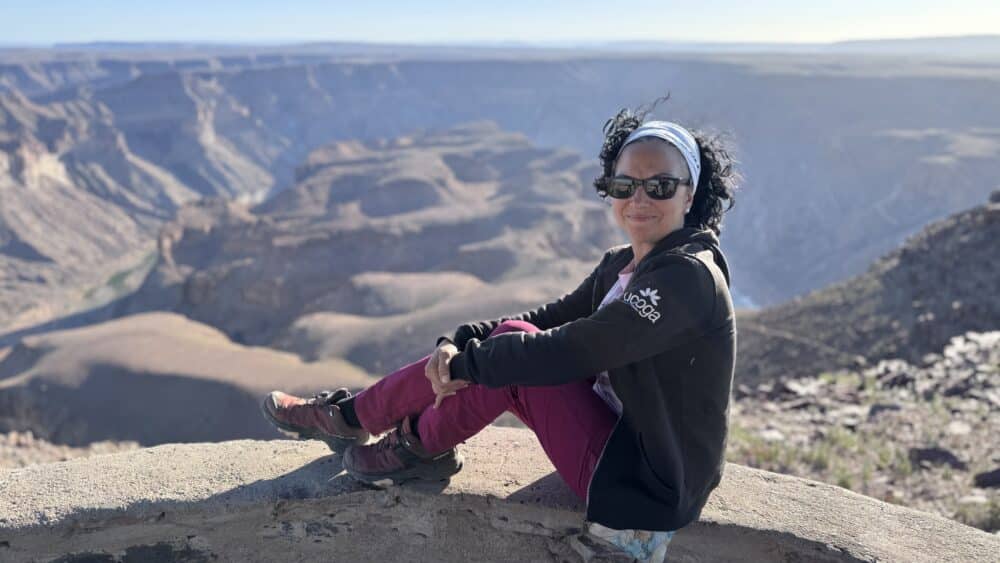
- Fish River Canyon, the second largest canyon in the world.
All of this is accompanied by a surprisingly good tourist infrastructure for one of the least populated countries on the planet.
1.2 Our experience touring Namibia for 24 days as a family
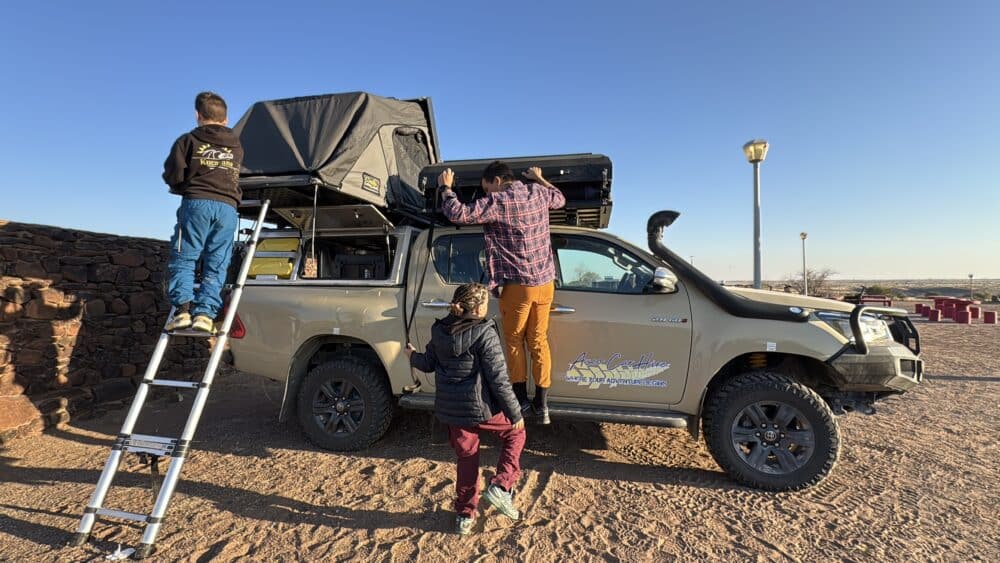
Our journey began in Windhoek, the country's capital, where we picked up a 4x4 vehicle equipped with two rooftop tents. From there, we embarked on a 24-day circular route that allowed us to discover some of Namibia's most spectacular landscapes.
During the trip we visited Waterberg Plateau National Park, the remote Caprivi Strip, Bwabwata National Park, Etosha National Park, Damaraland, Twyfelfontein, the Skeleton Coast, Spitzkoppe, Swakopmund, Walvis Bay, Namib-Naukluft, Sossusvlei, Deadvlei, Lüderitz, Kolmanskop, Fish River Canyon, Ai-Ais and Hardap National Park, before return to Windhoek.
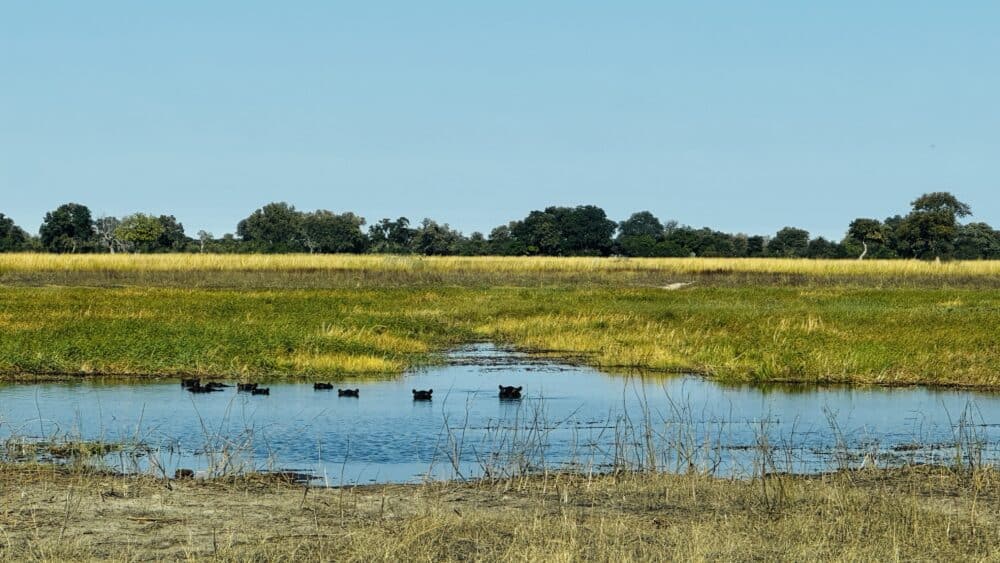
We traveled as a family with our children, and although the distances are enormous, Namibia seemed like a perfectly viable destination for families used to independent travel. In fact, many of the best memories of the trip weren't from the big tourist spots, but from simple experiences like falling asleep to the sound of hippos by the Okavango River, watching white rhinos in Waterberg, or gazing at thousands of stars from our campsite in the middle of the desert.
1.3 Is Namibia worth traveling to?
Absolutely yes.
Namibia is one of those rare destinations that truly exceeds expectations. It's a safe country, easy to explore independently, with spectacular natural beauty and a sense of adventure that's increasingly difficult to find elsewhere in the world.
If you enjoy road trips, photography, wildlife observation, wide open spaces, animals, different cultures and realities, and landscapes that seem to be from another planet, Namibia will probably become one of your favorite trips.
We arrived expecting dunes and safaris. We left with the feeling of having traveled through one of the most fascinating, diverse, and authentic countries we have ever visited.
2. Where is Namibia and what is the country like?
Namibia is one of the most surprising and least-known countries on the African continent. Located in southwest Africa, it stands out for its vast natural spaces, low population density, and some of the most spectacular landscapes on the planet.
With an area exceeding 824.000 km², Namibia is almost one and a half times larger than Spain, yet its population barely surpasses 3 million. This means that for much of your trip you'll feel practically alone amidst nature.
2.1 Namibia on the map
Namibia is bordered by Angola to the north, Zambia to the northeast, Botswana to the east, and South Africa to the south. Its entire western coast is washed by the Atlantic Ocean.
One of the most intriguing features of Namibia's map is the Caprivi Strip, a narrow expanse of land stretching eastward between Angola, Botswana, Zambia, and Zimbabwe. This region boasts a climate and landscapes completely different from the rest of the country, with large rivers, abundant vegetation, and a wealth of wildlife. During our trip, it was one of the areas that surprised us the most.
2.2 Basic information about Namibia
| Date | Information |
| Official name | Republic of Namibia |
| City’s | Windhoek |
| Continent | Africa |
| Location | Southwest Africa |
| In total area | 824.292 km² |
| Population | Approximately 3 million inhabitants |
| Official language | English |
| Other common languages | Afrikaans, German, Oshiwambo, Herero, Nama and other local languages |
| Currency | Namibian Dollar (NAD) |
| Telephone prefix | + 264 |
| Form of government | Presidential Republic |
| Time zone | UTC + 2 |
| Plugs | Type D and M |
| Predominant religion | Christianity |
| They drive through | The left |
| Main airport | Hosea Kutako International Airport (Windhoek) |
| Bordering countries | Angola, Zambia, Botswana and South Africa |
| most famous national park | Etosha National Park |
| Most visited spot | Sossusvlei and Deadvlei |
| Best time to travel | From May to October (winter there) |
| Visa for Spanish citizens | Yes, a tourist visa is currently required. |
| Security | Considered one of the safest countries for independent travel in Africa |
City’s
The capital of Namibia is Windhoek , located in the center of the country. It is the main point of entry for most international travelers and the location of the main services related to car rentals, banks, and supermarkets.
Currency
The official currency is the Namibian dollar (NAD), although the South African rand is also commonly accepted in much of the country.
Language
The official language is English, although Afrikaans (which resembles Dutch, from the settlers of Holland), German, and numerous indigenous languages such as Oshiwambo, the most widely spoken, Herero, or Nama are also very common.
Population
Namibia has approximately 3 million inhabitants , making it one of the least densely populated countries in the world.
Time zone
Namibia uses UTC+2 year-round , known as Central African Time (CAT) . Unlike many European countries, Namibia does not observe daylight saving time , so the time difference with Spain varies depending on the time of year.
| Time of the year | Time in Spain | Time in Namibia | Difference |
| Winter (late October to late March) | +1 UTC | +2 UTC | +1 hour |
| Summer (late March to late October) | +2 UTC | +2 UTC | No difference |
For example:
- If it's 12:00 in Barcelona in January, it's 13:00 in Namibia.
- If it's 12:00 in Barcelona in July, it's also 12:00 in Namibia.
One of the advantages for Spanish travelers is that the time difference is barely noticeable. There's no jet lag like on other long-haul trips, so you can easily adapt to the country's pace from day one.
Furthermore, daily schedules in Namibia are often closely tied to sunrise and sunset, especially if you plan on safaris or other outdoor activities. During the Southern Hemisphere winter months (June, July, and August), the sun typically rises around 7:00 a.m. and sets around 18:00 p.m. This means many days start early, which is particularly recommended in national parks like Etosha or in spectacular locations such as Sossusvlei, where the sunrises are truly breathtaking.
Practical tip: avoid driving at night. In addition to poor lighting on many roads, it's common to encounter animals crossing the road, especially in rural areas and near national parks. Therefore, it's best to plan your journey so you always arrive at your accommodation before sunset.
2.3 Interesting Facts about Namibia
Before you travel, there are several facts that help you understand why Namibia is so special. In fact, in an exclusive post, I'll tell you what surprised us most about Namibia, sharing 16 amazing facts about Namibia that you can read and be amazed by.
Here are some of them, and I'll summarize them for you:
It has the oldest desert in the world
The Namib Desert has been forming for millions of years and is considered the oldest desert on the planet.
It is home to some of the tallest dunes in the world
In Sossusvlei there are dunes that exceed 300 meters in height, including the famous Big Daddy.
It is one of the best countries for wildlife viewing
Etosha National Park is one of Africa's great wildlife sanctuaries, especially famous for its rhinos, elephants, lions, and giraffes.
It has one of the clearest skies on the planet
Namibia's low light pollution makes it a spectacular destination for stargazing and photographing the Milky Way.
It is one of the safest countries for independent travel in Africa
Precisely because of its stability, good infrastructure and ease of driving, Namibia is often considered one of the best destinations to start independent travel in Africa.
3. Requirements for traveling to Namibia
Organizing a trip to Namibia is relatively simple, but it's advisable to check the necessary documentation before booking flights.
Basic requirements for traveling to Namibia
🛡️ The insurance we recommend for Namibia
IMPORTANT TIP : Don't travel to Namibia without good travel insurance . Seriously. The distances there are enormous, private healthcare is expensive, and if something happens in the middle of a national park or in a remote area, helicopter evacuation can cost a fortune. After thoroughly comparing different options, we chose IATI Estrella , which is the only one with over one million euros of medical coverage—crucial in destinations where any unforeseen event can multiply the costs. IATI also offers 24/7 Spanish-language support and an app for online medical consultations, which was incredibly useful during our trip. Here's our link with a 5% discount on any IATI travel insurance policy. If you're going to Namibia, it's truly worth traveling with peace of mind.
Passport and visa
To enter Namibia, you need a passport with a minimum validity of six months from the date of entry into the country.
In addition, Spanish citizens currently need a tourist visa, which you can obtain online or directly upon arrival (although the wait is much longer, be warned because it happened to us). As regulations can change, I recommend always checking official information before traveling.
Driving license
If you're traveling independently in Namibia, you'll need a valid driver's license. While many companies accept Spanish licenses, we also carry an International Driving Permit to avoid any issues. And since it's not clear at any embassy, it's best to have an International Driving Permit.
Traveling to Namibia with children
If you are traveling as a family, it is recommended to bring:
- Individual passport for each minor.
- Sworn translation into English of the birth certificate.
Travel insurance
Namibia is a safe country, but the distances are vast and many national parks are far from medical centers. Therefore, I recommend purchasing travel insurance with good medical coverage and roadside assistance.
More Information
This guide to requirements for traveling to Namibia provides a summary and details, but I recommend reading our full article on requirements for traveling to Namibia, where we explain all the necessary documentation step by step.
4. What is the best time to travel to Namibia?
Namibia can be visited year-round, although the best time will depend on what you want to do during your trip.
quick summary
| Months | Climate | Recommendation |
| May – October | Dry and fresh | Best time |
| November – April | More heat and rain | fewer tourists |
Dry season (May to October)
It's the best time to travel to Namibia.
During these months:
- It hardly rains.
- The roads are in better condition.
- The animals congregate near the ponds.
- There are fewer mosquitoes.
- Safaris are easier.
We traveled between the end of June and the middle of July and found excellent conditions for traveling around the country independently.
Rainy season (November to April)
During these months the landscape becomes greener and prices tend to be somewhat lower.
In return, some tracks may be in worse condition and wildlife observation is somewhat more complicated.
Our recommendation
If it's your first trip to Namibia, I recommend traveling between June and September.
It's the ideal time for safaris in Etosha, exploring the Namib Desert, visiting Sossusvlei, and enjoying a self-drive road trip with complete peace of mind. We went from June 24th to July, and it was a great choice: fewer crowds, cool nights, warm but not scorching days, and no rain.
5. How to get to Namibia from Spain
Although Namibia may seem like a remote destination, getting there from Spain is much easier than many travelers imagine. Most international flights arrive at Hosea Kutako International Airport, located about 40 kilometers from Windhoek, the country's capital.
If you are organizing a trip to Namibia independently, the most common way is to fly from Madrid or Barcelona with a layover in a European city such as Frankfurt, Munich, Addis Ababa or Doha.
Flights to Namibia from Spain
Currently there are no direct flights between Spain and Namibia, so it will always be necessary to make at least one stop.
The most common routes are:
| Ruta | Usual scales |
| Madrid – Windhoek | Frankfurt, Munich or Doha |
| Barcelona – Windhoek | Frankfurt, Munich or Doha |
| Valencia – Windhoek | Madrid + international connection |
| Bilbao – Windhoek | Frankfurt or Madrid |
We flew with Lufthansa from Barcelona, with a layover in Munich before landing in Windhoek early in the morning. A very convenient option to immediately begin our Namibian adventure.
How long is the flight to Namibia?
Depending on the connection chosen, the total travel time usually ranges between 13 and 20 hours.
Although it may seem long, one of the advantages of traveling to Namibia is that there is hardly any time difference with Spain, so jet lag is practically not noticeable.
Hosea Kutako International Airport
The country's main airport is Hosea Kutako International Airport, located about 40 kilometers from Windhoek.
Here you will find:
- Car rental offices.
- Currency exchange. We did the exchange here.
- ATMs
- Local SIM cards. We bought both SIM cards we used during the trip directly there.
- Moving companies.
Most travelers who tour Namibia independently pick up their rental vehicle directly here; in fact, they come to pick you up, they are not here, and they start the adventure from the first day, as we did.
How much does a flight to Namibia cost?
The price depends a lot on the season and how far in advance you book. You can see what it cost us in the Namibia travel guide's "How much does a trip to Namibia cost?" section, where I detail our actual expenses.
As a reference, the cost per person is:
| Season | Target price |
| Low season | 600-800 € |
| Middle season | 800-1.100 € |
| High Season | 1.000-1.500 € |
My advice is to book flights several months in advance, especially if you are traveling between June and October, the best time to travel to Namibia.
6. How to get around Namibia
If there's one thing that makes Namibia one of the best destinations in the world for a road trip, it's the freedom it offers to explore the country on your own.
The vast majority of travelers organize their trip to Namibia independently by renting a car or a 4x4 and designing a tailor-made route through the main national parks and must-see places in the country.
Is it necessary to rent a car in Namibia?
Yes.
Although there are some buses and domestic flights, to visit places like Etosha National Park, Spitzkoppe, Sossusvlei, Fish River Canyon or Damaraland you will need your own vehicle.
The true essence of Namibia lies precisely in traveling its roads and discovering spectacular landscapes between destinations. And the truth is, the roads, although mostly unpaved, are very good, but don't get too comfortable because in Namibia most serious accidents are traffic accidents, so exercise extreme caution.
We actually had a really close call while overtaking that almost cost us our lives, so don't get overconfident, don't overtake because the dust and the constant changes in road surface make visibility very poor. A heartfelt recommendation: be patient on the road and everything will be fine.
IMPORTANT TIP: If you're traveling to Namibia, rent a 4x4 with a rooftop tent; it's undoubtedly the best option for independent travel. Asco Car, with whom we rented without any issues and highly recommend, has given us a 5% discount that you can all use by booking with them on their website and adding the discount code @KUCAVANA.
Do you need a 4x4 to travel to Namibia?
It depends on the route.
If you are only going to visit Windhoek, Swakopmund and some paved areas, one tour may be enough.
However, to complete a full route like ours and access places like:
- Sossusvlei.
- Deadvlei.
- Damaraland.
- Caprivi.
- Some remote campsites.
A 4x4 vehicle is much more advisable. You basically need it for the desert sand tracks, although if you don't know how to drive on sand, don't risk it too much on those tracks.
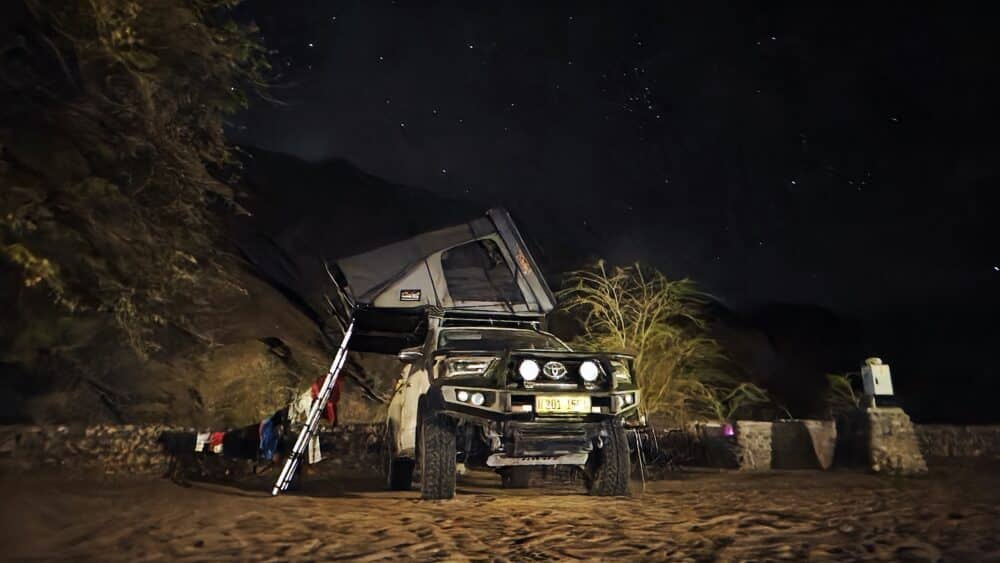
We completed the entire route in a 4x4 equipped with two tents on the roof, a very popular option among those who travel independently in Namibia, and it allowed us to explore tracks in the National Parks on our own without having to book tours.
What are the roads like in Namibia?
One of the most surprising things about traveling to Namibia is the generally good condition of the roads.
There are two main types:
Paved roads (B)
They connect the main cities and are usually in very good condition. Basically, there's one running north to south and a couple more connecting some large cities like Skopmund with Windhoek and, to the north, the towns on the Caprivi slopes.
Gravel roads (C and D)
They are the most common during a route through Namibia.
Although they are well maintained, they require careful driving due to dust, loose stones, and long distances.
A common problem is getting a small crack in your rental car window from a stone, so don't forget to include glass insurance.
Actual distances in Namibia
One of the most common mistakes when planning a trip to Namibia is underestimating the distances.
Although the map may seem small, the stages are usually long.
| Journey | Approximate distance |
| Windhoek – Waterberg | 300 km |
| Waterberg – Caprivi | 650 km |
| Caprivi – Etosha | 500 km |
| Swakopmund – Sossusvlei | 350 km |
| Lüderitz – Fish River Canyon | 430 km |
It is common to drive between 3 and 8 hours a day depending on the stage.
Gas stations and fuel
Gas stations are common in major towns, but can be scarce in some remote areas.
That's why it's recommended:
- Refuel whenever you have the opportunity.
- Bring enough water.
- Check the next fuel point before starting a long stage.
Tips for driving in Namibia
After traveling more than 4.000 kilometers across the country, these are the tips I consider most important:
- Avoid driving at night; in fact, rental companies prohibit it.
- Respect the speed limits.
- Reduce your speed on gravel tracks.
- Always carry water and some food.
- Check your tire pressure.
- Download offline maps.
- Plan your daily stages well.
- Rent satellite phones if you're going to less touristy areas; if you're taking the typical route, don't worry because there are always plenty of cars and you won't be alone.
Is it easy to travel independently in Namibia?
Yes, and it's probably one of the easiest African countries to navigate. Even Google Maps works incredibly well if you download the maps and use it offline—better than some other GPS apps. We used it for the entire trip.
The combination of good infrastructure, safety, excellent national parks and freedom of movement makes Namibia one of the best destinations in the world for those who enjoy organizing a great road trip.
If you like safaris, extreme landscapes and the feeling of adventure, few experiences compare to exploring Namibia independently in a 4x4.
7. Our 24-day Namibia itinerary
After many hours of research, reading blogs, maps, and other travelers' experiences, we designed a 24-day circular route through Namibia that allowed us to discover the country's main attractions at a leisurely pace, enjoying the experience of independent family travel that we will never forget. A lot of hard planning that paid off.
During the trip we traveled more than 4.000 kilometers in a 4x4 vehicle equipped with two tents on the roof, combining safaris, deserts, mountains, coastal cities and some of the most spectacular landscapes in Africa.
If you have less time, you can easily adapt this itinerary to a 15- or 21-day Namibian route by removing some stages. However, based on our experience, we believe that three weeks allows you to much better appreciate the country's vast distances.
Our premise when traveling through Namibia with children was to travel calmly, trying to make most point-to-point transfers a maximum of 3-4 hours of driving and to dedicate at least 2 nights to the cool destinations.
Map of our route through Namibia
Here you can see our map that we used on the route with all the points of interest in the country, campsites and other points of interest.
Summary of our route through Namibia
| Daytime | Destination |
| 1 | Flight from Barcelona |
| 2-3 | Waterberg National Park |
| 4-5 | Caprivi Strip and Bwabwata National Park |
| 6-8 | Etosha National Park |
| 9 | Damaraland |
| 10 | Twyfelfontein |
| 11 | Skeleton Coast |
| 12 | Cape Cross y Spitzkoppe |
| 13-14 | Swakopmund and Walvis Bay |
| 15-16 | Namib Naukluft National Park |
| 17 | Sossusvlei, Deadvlei and Sesriem |
| 18-19 | Aus, Lüderitz and Kolmanskop |
| 20 | Fish River Canyon |
| 21 | Ai-Ais Hot Springs |
| 22 | Hardap National Park |
| 23 | Windhoek |
| 24 | Return to Spain |
Days 1 to 3: Waterberg Plateau National Park
As soon as we landed in Windhoek, we picked up our 4x4 and headed towards Waterberg Plateau National Park, a huge reddish plateau that rises above the plains of the north of the country.
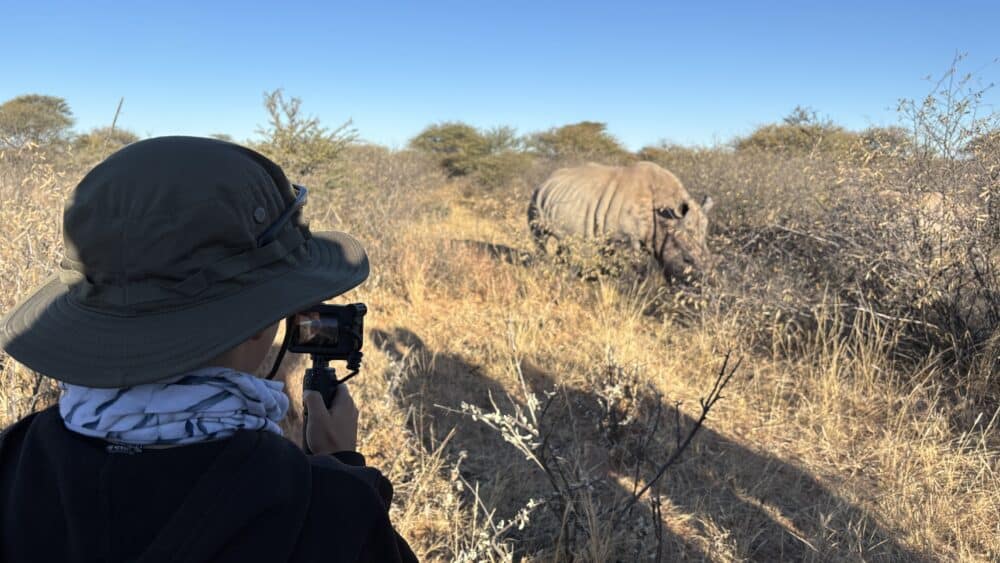
It was a perfect introduction to Namibia. Here we went hiking, watched baboons, and participated in a tour to search for white rhinos, one of the great jewels of Namibian wildlife.
Days 4 and 5: Caprivi Strip and Bwabwata National Park
The Caprivi region was one of the biggest surprises of the trip.
Accustomed to imagining Namibia as an immense desert, arriving in this area of rivers, forests and lush vegetation was totally unexpected.
We slept by the Okavango River and went on a boat safari (we dismissed the traditional mokoro after seeing so many hippos and crocodiles hehehe) through the waters of the Kwando, surrounded by hippos, elephants and birds.
Days 6 to 8: Etosha National Park Safari
Etosha was one of the most anticipated moments of the trip and also one of the best.
We explored the park from east to west, staying in various campsites within the reserve to make the most of the sunrises and sunsets.
During our safaris we saw elephants, giraffes, zebras, hyenas, rhinoceroses and numerous antelopes concentrated around the waterholes.
Days 9 and 10: Damaraland and Twyfelfontein
From Etosha we continued towards one of the most photogenic regions in Namibia.
Damaraland offers volcanic landscapes, reddish mountains, and a sense of isolation that is difficult to describe.
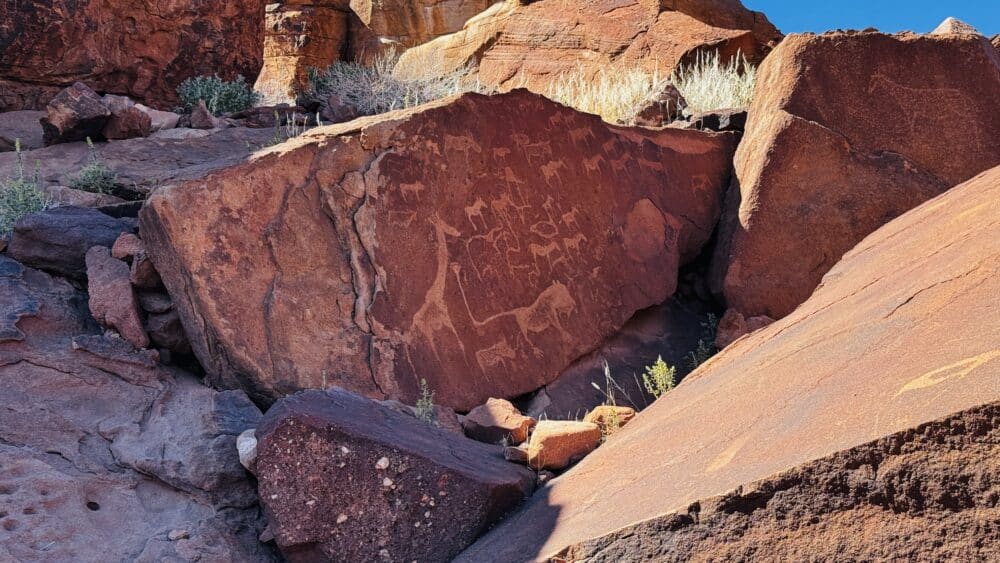
We also visited Twyfelfontein, declared a World Heritage Site by UNESCO thanks to its thousands of rock engravings.
Days 11 to 14: Skeleton Coast, Spitzkoppe, Swakopmund and Walvis Bay
The Atlantic coast allowed us to discover a completely different side of Namibia.
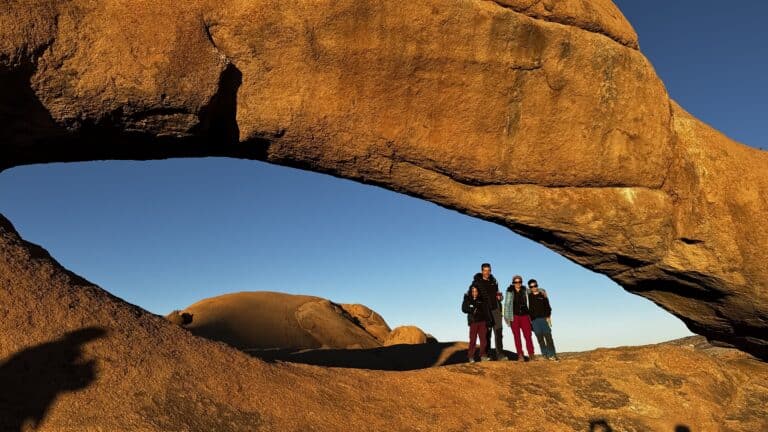
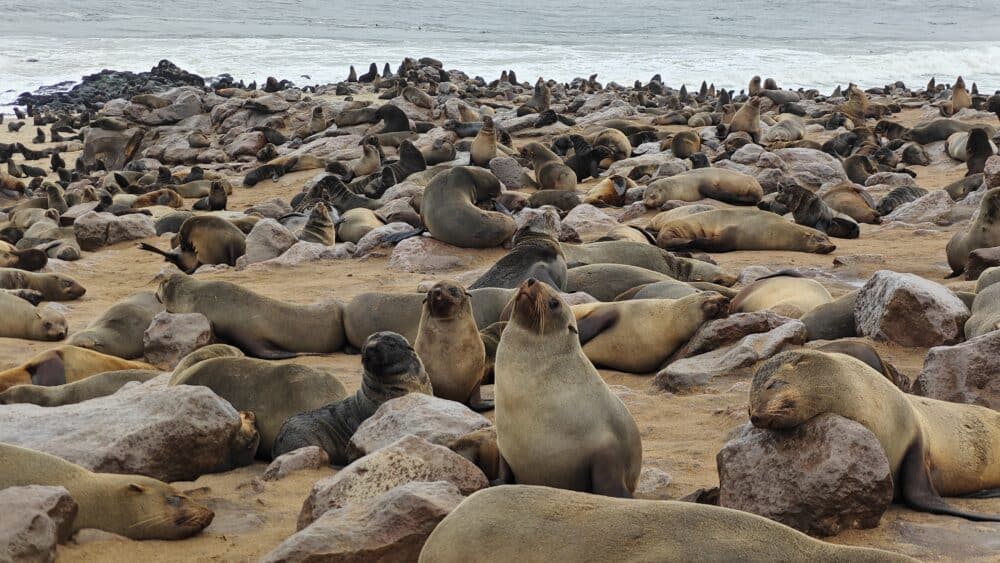
We visited the impressive seal colony at Cape Cross, slept under the granite mountains of Spitzkoppe, and explored the coastal towns of Swakopmund and Walvis Bay.
Here we find some of the most amazing landscapes of the trip, especially in Sandwich Harbour, where the Namib dunes merge with the Atlantic Ocean.
Days 15 to 17: Namib-Naukluft, Sossusvlei and Deadvlei
Probably the most famous image of Namibia.
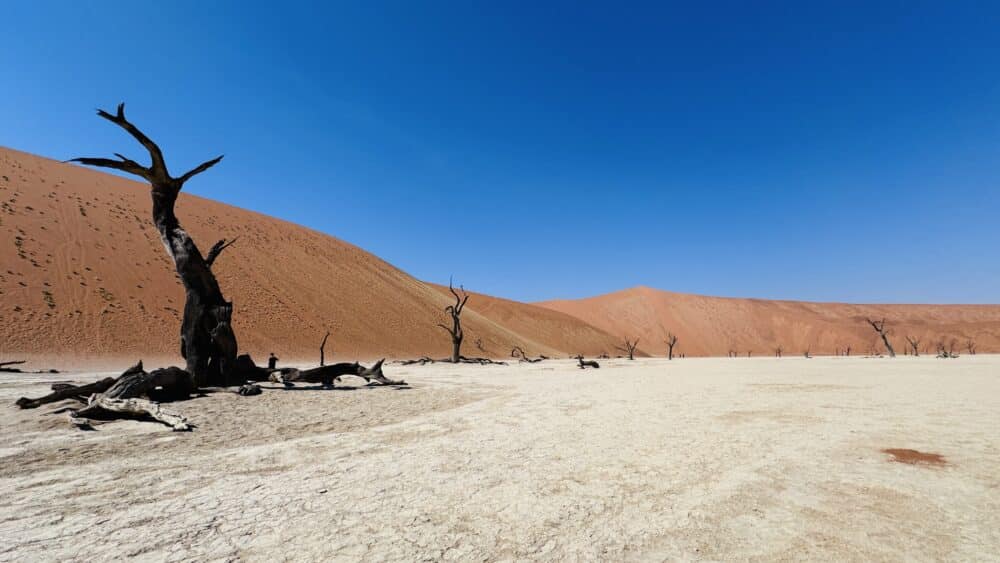
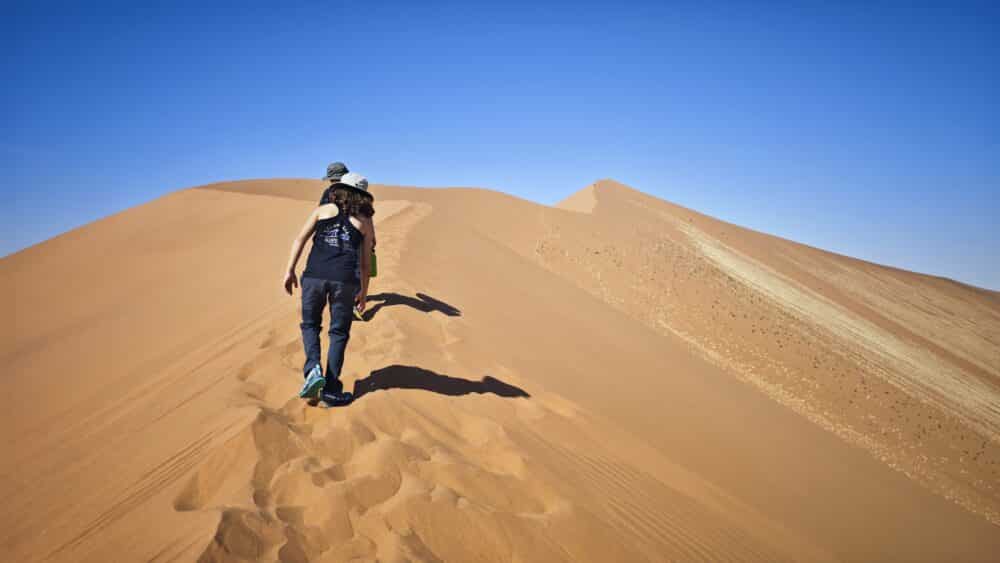
The gigantic reddish dunes of Sossusvlei and the dead trees of Deadvlei form one of the most spectacular landscapes we have ever seen.
Waking up early to watch the sunrise over the dunes was an unforgettable experience.
Days 18 to 22: Lüderitz, Kolmanskop, Fish River Canyon and Ai-Ais
The last part of the journey took us to the remote south of Namibia.
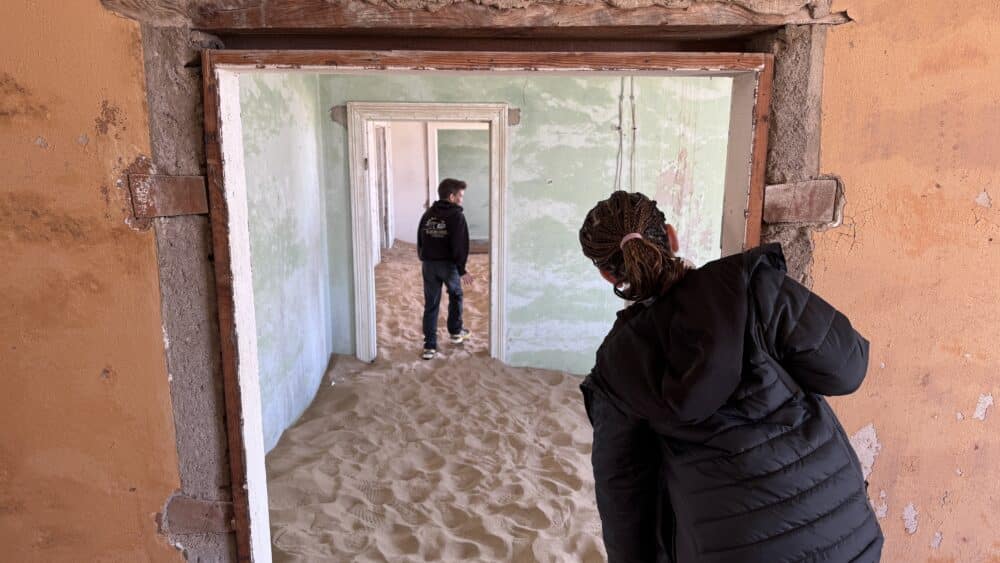
We explored the colonial town of Lüderitz, photographed the houses invaded by sand in Kolmanskop, and contemplated the impressive viewpoints of Fish River Canyon, the second largest canyon in the world.
Day 23: Return to Windhoek
After almost a month traveling around Namibia, we returned to Windhoek to return the vehicle and catch our flight back to Spain.
8. What to see in Namibia: 20 must-see places
If you're planning your own trip to Namibia, these are the places we consider essential after traveling around the country for 24 days.
1. Etosha National Park
Namibia's best national park for wildlife viewing.
Its enormous salt flats and ponds attract elephants, lions, giraffes, zebras, rhinoceroses and hundreds of species of birds.
Read the complete guide to Etosha National Park.
2. Sossusvlei
Namibia's most famous dunes.
Its colors constantly change with the light of dawn and offer some of the most spectacular landscapes in Africa.
Read the complete Sossusvlei guide.
3. Deadvlei
One of the most photographed places on the planet.
The combination of dead trees, white soil, and orange dunes creates an almost unreal landscape.
Read the complete Deadvlei guide.
4. Fish River Canyon
The second largest canyon in the world after the Grand Canyon.
The viewpoints offer absolutely breathtaking views.
Read the complete guide to Fish River Canyon.
5. Spitzkoppe
Namibia's most famous granite mountains.
A paradise for hikers, photographers and astronomy lovers.
6. Swakopmund
The most touristic city in the country.
It combines German colonial architecture, adventure activities, and access to the Namib Desert.
7. Walvis Bay
Famous for its flamingos, pink salt flats and excursions to Sandwich Harbour.
8. Skeleton Coast
One of the wildest and most mysterious coastlines in the world.
9. Cape Cross
Namibia's largest seal colony.
10. Damaraland
Volcanic landscapes, desert-adapted elephants, and a sense of adventure.
11. Twyfelfontein
UNESCO World Heritage.
12. Waterberg Plateau National Park
Ideal for hiking and rhinoceros watching.
13. Bwabwata National Park
One of Namibia's most unknown and surprising parks.
14. Lüderitz
The most peculiar city in the country.
15. Kolmanskop
The famous ghost town invaded by the dunes.
16. Namib-Naukluft National Park
Namibia's largest national park.
17. Sesriem Canyon
A spectacular canyon carved by the Tsauchab River.
18. Hoba Meteorite
The largest meteorite found on Earth.
19. Ai-Ais Hot Springs
Perfect for relaxing after visiting Fish River Canyon.
20. Windhoek
The gateway to the country and starting point for most routes through Namibia.
9. Namibia on your own: tips for organizing your trip
If there's one country in Africa that begs to be explored independently, it's Namibia. In fact, much of the destination's magic lies precisely in driving for hours along endless roads, sleeping under the stars, and discovering some of the continent's most spectacular landscapes at your own pace.
After traveling through Namibia for 24 days as a family, we can say that it is one of the easiest and safest countries to travel independently in Africa.
Is it easy to travel independently in Namibia?
Yes, much more than you imagine.
Namibia has:
- Good roads.
- Excellent signage.
- Developed tourism infrastructure.
- Quality campsites and accommodations.
- Gas stations on the main routes.
- A higher level of security than in many other African countries.
That's why it's often recommended as one of the best destinations for a first independent trip through Africa.
How many days does it take to see Namibia?
The answer depends on the pace of travel.
| Duration | Recommendation |
| 10-12 days | Very fast route |
| 15 days | The minimum recommended |
| 21 days | Very good option |
| 24 days or more | Ideal |
Our 24-day route allowed us to visit virtually all of Namibia's must-see sights without feeling like we were constantly rushing.
What to book before traveling
If you are traveling during peak season (June-October), it is advisable to book well in advance:
Direct Flights
Prices usually rise rapidly as the date approaches.
4x4 vehicle
The best models sell out months in advance, and if they don't, they become much more expensive.
Campsites
Especially in:
- Etosha National Park.
- Sesriem.
- Spitzkoppe.
- Lüderitz.
- Waterberg.
Activities
Some popular tours can fill up weeks in advance.
Our tips for traveling independently in Namibia
After traveling more than 4.000 kilometers across the country, these are the tips that we found most useful:
- Avoid driving at night.
- Refuel whenever you can.
- Keep enough water in the car.
- Download offline maps.
- Don't underestimate the distances.
- Book campsites in advance.
- Get up early to take advantage of the best safari hours.
The mistakes we would avoid
If we were to organize the trip again:
- We would keep the full 3 days in Etosha, no less.
- We would still include the Caprivi region, even though it's a long drive to get there.
- We would dedicate at least two nights to Spitzkoppe.
- We would not reduce time in Sossusvlei.
- We would never overtake while driving, nor would we drive at night.
These are some of the places that surprised us the most during the route.
10. How much does it cost to travel to Namibia independently?
One of the questions we were asked most before and after the trip was how much it really costs to travel to Namibia independently.
The short answer is that Namibia isn't a cheap destination, especially if you're traveling as a family and exploring the country in a 4x4. However, it's not as expensive as many people imagine, particularly when compared to an organized tour.
We took a 24-day road trip through Namibia (22 days of actual travel) as a family—two adults and two children—in a 4x4 vehicle equipped with two rooftop tents. During the trip, we covered approximately 5.000 kilometers, visiting some of the country's most spectacular locations, such as Etosha National Park, Sossusvlei, Deadvlei, Spitzkoppe, Swakopmund, Walvis Bay, and Fish River Canyon.
Our actual budget for traveling to Namibia
This was the total cost of our trip:
| Concept | Ribs |
| International flights (4 people) | 2.900 € |
| 4x4 rental with two tents and full insurance | 4.300 € |
| Campsites and accommodations | 2.249 € |
| Gasoline (5.000 km) | 710 € |
| Supermarkets | 700 € |
| Restaurants | 250 € |
| National park entrance fees | 394 € |
| Tours and activities | 942 € |
| Visas | 283 € |
| Sworn translations | 85 € |
| Souvenirs and tips | 500 € |
| TOTAL | 13.313 € |
The total cost of the trip was €13.313 for four people for 24 days , including absolutely all expenses.
What was the most expensive part of the trip?
Without a doubt, renting the vehicle.
The 4x4 with two rooftop tents, full insurance, complete camping equipment and satellite phone cost €4.300, becoming the most important item in the entire budget.
We rented our vehicle from Asco Car Hire, one of the best-known companies for organizing independent trips to Namibia. Based on our experience, we can wholeheartedly recommend them, especially for the condition of the vehicle and the excellent service we received during our trip.
IMPORTANT TIP: If you're traveling to Namibia, rent a 4x4 with a rooftop tent; it's undoubtedly the best option for independent travel. Asco Car, with whom we rented without any issues and highly recommend, has given us a 5% discount that you can all use by booking with them on their website and adding the discount code @KUCAVANA.
The second largest item was international flights.
We flew from Barcelona with a single stopover in Munich and paid approximately €700 per person, a price we consider quite reasonable for traveling in high season.
How much do campsites cost in Namibia?
One of the things that surprised us the most was the quality of many campsites.
Although Namibia cannot be considered a cheap destination, camping accommodation allows you to save a lot compared to lodges.
During our trip we spent a total of €2.249 on accommodation, a figure that includes:
- campsites.
- Plots within national parks.
- Several nights in lodges and apartments.
- Special accommodations like our tree house by the Okavango River.
The average cost was less than €100 per night for the whole family.
By the way, we were able to book most of them through this website where you can compare different accommodations and pay conveniently by card, as it is a simple and very reliable European platform.
How much does it cost to eat in Namibia?
This is where we manage to save the most.
Most days we cook for ourselves using the vehicle's kitchen and the campsite barbecues.
Our expenses were:
| Concept | Ribs |
| Supermarkets | 700 € |
| Restaurants | 250 € |
In total we spent less than €1.000 on food during the entire trip.
For reference, a simple meal in a restaurant usually costs around €15 per person, while cooking at the campsite considerably reduces daily expenses.
Is it cheaper to travel by camping or in a lodge?
Much cheaper at campsites.
Besides saving money, we believe that camping is part of the Namibia travel experience.
Many campsites have:
- Spotless showers and bathrooms.
- Pool.
- Electricity.
- Barbecue area.
- Spectacular surroundings.
Some are even located within the national parks themselves.
Is it possible to travel to Namibia cheaper?
Yes.
If your budget is tighter, there are several ways to reduce costs:
- Travel outside of peak season.
- Book the 4x4 well in advance.
- Choose a simpler vehicle.
- Always sleep in campsites.
- Cook most of the meals.
- Reduce guided activities.
Just on the vehicle rental you could easily save between €1.000 and €1.500 compared to what we spent.
Is it worth spending so much money on a trip to Namibia?
Absolutely yes.
It's not a low-cost trip and requires some financial planning, but we found the cost-to-experience ratio to be extraordinary.
We have rarely felt so much freedom while traveling: driving for hours through impossible landscapes, seeing wild animals in their natural habitat, sleeping under millions of stars, or contemplating sunrises in places like Sossusvlei are experiences that are hard to forget.
After 24 days traveling through Namibia as a family, we still think it has been one of the best investments in memories we have ever made.
11. Where to sleep in Namibia
During our 24-day trip, we mainly combined camping with some nights in lodges and apartments. Overall, the quality of accommodation in Namibia surprised us very positively.
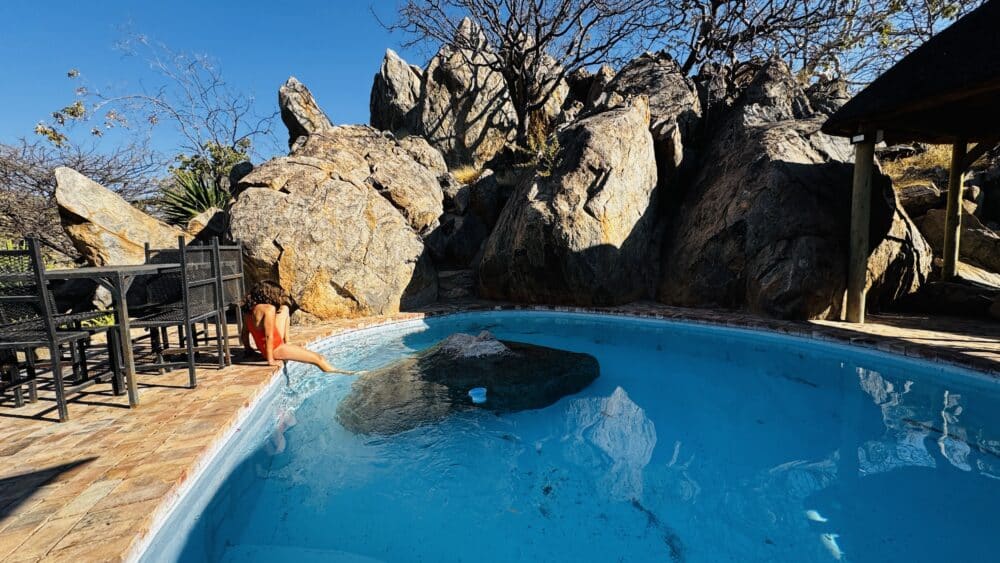
If you're traveling independently in Namibia, campsites are a fantastic option: they're usually very well equipped, have barbecues, a swimming pool, and a prime location surrounded by nature.
We also recommend booking a special night in a lodge to rest from the road and enjoy some spectacular accommodations.
You can find hotels, lodges, apartments and campsites in Namibia at the best price here: Namibia accommodations and campsites
Our advice
If you're looking for the best value for money, combining camping with a night or two in a lodge is probably the best way to explore Namibia.
12. Namibia with children: Is it worth it?
After traveling through Namibia for 24 days with our children, we are certain that it is one of the best destinations in Africa for family travel.
Safaris in Etosha, the dunes of Sossusvlei, the seals of Cape Cross, or sleeping in the rooftop tents of the 4x4 turned the trip into an unforgettable adventure for them.
However, it's important to plan the stages well because the distances are long and some days involve many hours of driving.
Do we recommend Namibia for families with children?
Definitely.
It's a safe destination, easy to explore independently, and full of unforgettable experiences. Seeing wild animals in their natural habitat, sleeping under the stars, and discovering some of Africa's most spectacular landscapes makes this trip a true family adventure.
13. Animals to see in Namibia
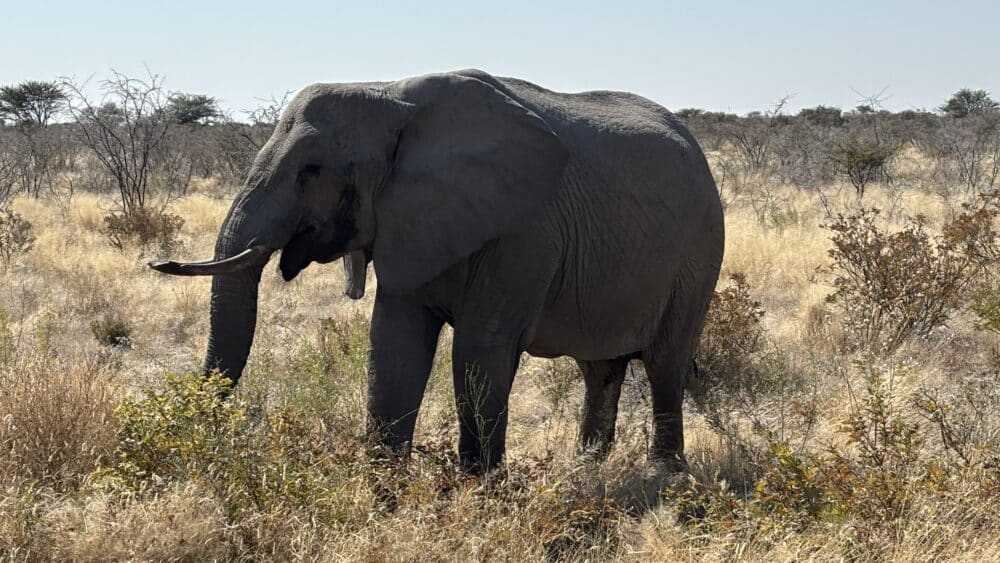
If you're thinking of taking a trip to Namibia, get ready for some of the best wildlife encounters in all of Africa. One of the great attractions of traveling to Namibia is precisely the opportunity to observe animals in their natural habitat without having to book organized safaris.
During our 24-day trip through Namibia, we saw wildlife almost daily, especially in Etosha National Park, one of the best national parks in Africa for independent safaris.
Among the most common animals are:
- African elephants
- White and black rhinoceroses
- Leones
- Giraffes
- Zebras
- Cheetahs
- Hippos
- Cocodrilos
- More than 100.000 seals in Cape Cross
- Flamingos in Walvis Bay
One of the most exciting moments of our trip to Namibia was observing white rhinos in Waterberg and huge herds of elephants around the Etosha waterholes.
Where to go on safari in Namibia?
If you're looking for the best safari in Namibia, our recommendation is clear: Etosha National Park.
Unlike other African destinations, here you can explore the park in your own vehicle and enjoy a completely independent experience. For us, it was one of the best experiences of the entire trip and one of the must-see places in Namibia.
14. Culture and peoples of Namibia
Although most travelers are drawn by safaris, deserts and spectacular landscapes, cultural richness is another of Namibia's great treasures.
During a trip through Namibia you will discover that it is one of the most diverse countries in Africa, where different ethnicities, languages and traditions coexist.
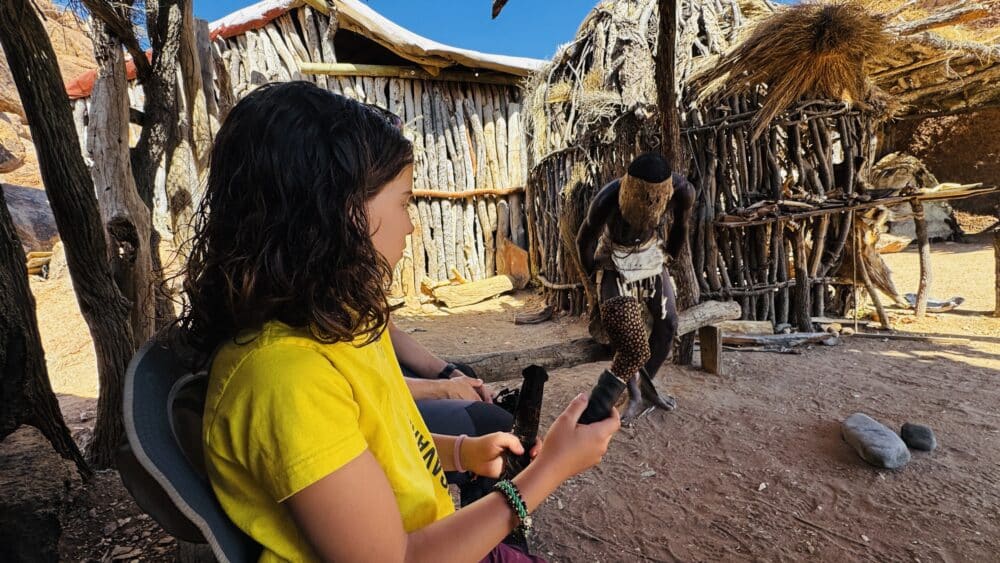
The most well-known are the Himba , one of the country's most emblematic indigenous groups. Their traditional hairstyles and the characteristic mixture of ghee and red ochre they use to protect their skin have made them one of Namibia's cultural symbols.
In addition to the Himba, during a trip through Namibia you will also interact with other communities:
- herero
- Opportunity
- Name
- Saint (Bushmen)
- Ovambo
A country with a fascinating history
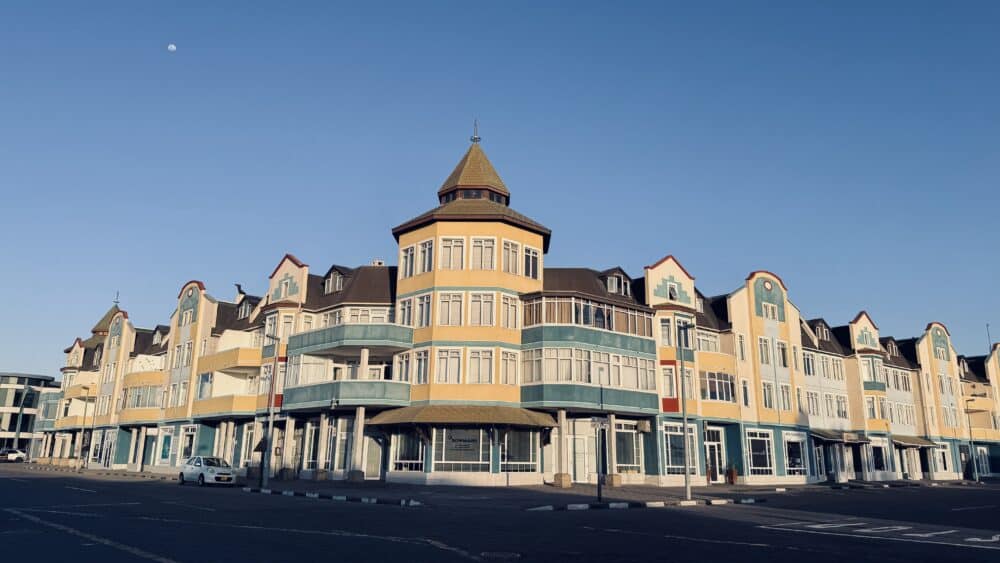
Another of the most surprising curiosities when traveling to Namibia is the German influence that can still be felt in cities like Swakopmund or Lüderitz.
Walking through its streets, trying some typical dishes or admiring the colonial architecture makes it seem, at times, as if you have traveled to another continent.
The other side of Namibia and its history that no one tells you about
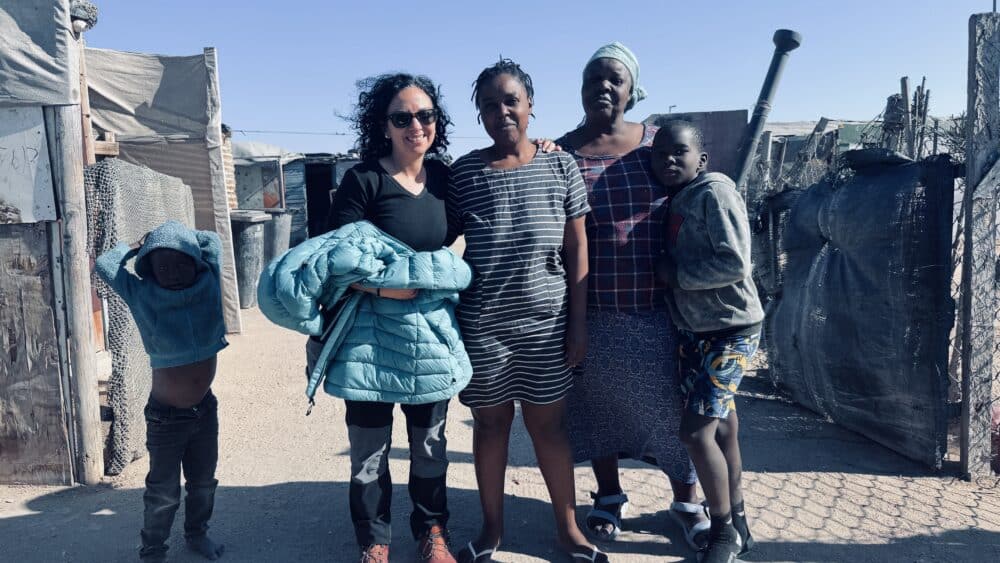
There's a part of Namibia's history that rarely appears in travel guides. For much of the 20th century, the country was under South African administration and suffered the policies of apartheid, a system that segregated the population by race and expelled thousands of Black people to outlying areas. Although Namibia gained independence in 1990, traveling through the country gave us the feeling that many of those wounds remain open. In practically every city, we saw the stark contrast between the more affluent neighborhoods and the townships , vast settlements where many families continue to live in shacks and extremely precarious conditions.
As travelers, we were struck by how inequality remains very visible in daily life and how much of the wealth generated by the country's natural resources doesn't seem to have translated into equal opportunities for everyone. Beyond safaris, deserts, and spectacular landscapes, Namibia also invites reflection on the lasting effects of colonialism, apartheid, and the economic inequalities that still shape its reality today.
What language is spoken in Namibia?
Although English is the official language and the one used in tourism, Afrikaans, German and numerous local languages are also common.
This mix of cultures, landscapes and traditions is precisely one of the reasons why Namibia seemed to us one of the most interesting countries to explore independently.
| Spanish | afrikaans | Oshiwambo |
| Hi ! | Hello | Wa uhala po |
| Good morning | Goeie môre | Mwauke po |
| Good afternoon | Goeie middag | Mwa tokelwa po |
| Goodnight | Goeienaand | Uutiku uuwa |
| Goodbye | Totsiens | Kala po nawa |
| Thank you | dankie | Tate |
| Thank you very much | Thank you very much | Tate unene |
| Please | Asseblief | Alikana |
| Yes | Ja | Ee |
| No | No | Aaye |
| How are you? | Hoe gaan dit? | Ongiini? |
| I'm fine | Dit gaan goed | Ondi li nawa |
Do you need to speak Afrikaans or Oshiwambo to travel to Namibia?
No. English is the official language of Namibia and is used in hotels, restaurants, national parks, campsites, and tourist activities.
Even so, learning a few words in Afrikaans or Oshiwambo often brings a smile to your face and is a lovely way to connect with the local culture during your trip to Namibia. We found that a simple "Dankie" (thank you) was often enough to break the ice.
Interestingly, Afrikaans is one of the most widely spoken languages in Namibia and shares many similarities with the Dutch spoken by South African settlers who came to Namibia during apartheid. Oshiwambo, on the other hand, is the most widespread native language in Namibia, spoken by millions, particularly in the north.
15. Security in Namibia
One of the most common questions when organizing a trip to Namibia independently is whether it is a safe destination.
After traveling over 5.000 kilometers through Namibia as a family, our experience was very positive. In fact, we found it to be one of the safest countries for independent travel in Africa. Even in Swokpmund, where some say there's insecurity, we didn't find it to be safe at all, nor even in its Township, where we went with a guide to learn about the other side and reality of Namibia after apartheid and the current state of capitalism in Africa.
Is it safe to travel to Namibia?
Yes. Namibia has political stability, good tourist infrastructure, and a low population density.
As in any country, it's advisable to use common sense, especially in cities like Windhoek or Swakopmund, avoiding leaving valuables in plain sight inside the vehicle.
Road safety
The main risk during a trip through Namibia is not the people, but the roads.
Some important tips:
- Avoid driving at night.
- Respect the speed limits.
- Be careful on gravel tracks.
- Refuel whenever you can.
- Keep enough water in the car.
Safety in national parks
During safaris in Etosha National Park or Bwabwata National Park, it is essential to respect the rules and always maintain distance from the animals.
Remember that you are observing wild animals in their natural habitat, not in a zoo.
Our advice
If you're hesitating between traveling to Namibia independently or booking an organized tour, our recommendation is clear: Namibia is a country perfectly suited for exploring on your own and one of the best options for getting started with African road trips.
16. Frequently asked questions about traveling to Namibia
How many days do I need to travel to Namibia?
Ideally, you should spend between 15 and 24 days. We did a 24-day trip and we think it's the perfect amount of time to discover the main sights in Namibia at a relaxed pace.
Do you need a 4x4 to travel to Namibia?
Not always, but it is highly recommended if you want to visit places like Sossusvlei, Deadvlei, Damaraland or do a complete tour of Namibia on your own.
What is the best time to travel to Namibia?
Between June and September, coinciding with the dry season, is the best time for safaris in Etosha and exploring the country by car.
Is it expensive to travel to Namibia?
It's not a cheap destination, but it's not a luxury trip either. The budget will depend mainly on the type of vehicle, accommodations, and activities you choose.
Is it safe to travel to Namibia with children?
Yes. We traveled through Namibia as a family for 24 days and found it to be one of the safest and most comfortable destinations to travel to with children in Africa.
What currency is used in Namibia?
The official currency is the Namibian dollar (NAD), although the South African rand is also commonly accepted.
Is it possible to go on a self-drive safari in Namibia?
Yes. In fact, one of Namibia's great attractions is that it allows you to go on self-drive safaris in your own vehicle, especially in Etosha National Park.
Is Namibia worth traveling to?
Absolutely. If you love safaris, vast landscapes, deserts, road trips, and wild nature, Namibia is one of the most spectacular destinations we've ever visited.
17. Our opinion of Namibia after 24 days
After traveling through Namibia for 24 days as a family, we can say without a doubt that it has been one of the most special trips we have ever taken.
We arrived expecting safaris, deserts, and spectacular landscapes. And yes, we found all of that. But we also discovered so much more: the freedom to travel thousands of kilometers at our leisure, the thrill of sleeping under one of the most star-filled skies on the planet, and the constant sense of adventure that accompanies every day in this country.
We were amazed by the enormous variety of landscapes. In a single trip, we went from sailing among hippos in Caprivi to searching for elephants in Etosha, walking among giant dunes in Sossusvlei, exploring ghost towns like Kolmanskop, or contemplating the immense Fish River Canyon.
We were also surprised by how easy it is to organize a trip to Namibia independently. Before going, we had many doubts about the roads, safety, and the logistics of traveling in a 4x4 with children. After experiencing it, we believe it's one of the best destinations in Africa for those seeking a great adventure without sacrificing a certain level of comfort.
What we liked the most
- Self-guided safaris in Etosha National Park.
- Sleeping in 4x4 rooftop tents.
- Sunrises in Sossusvlei and Deadvlei.
- The feeling of freedom while traveling through Namibia by road.
- Wild animals in freedom.
- Spectacular campsites surrounded by nature.
- Share this adventure with our children.
What we liked least
If we had to find fault with anything, we would say that the distances are enormous and some days of driving can feel long, especially if you are traveling with children.
It is also a destination that requires some advance planning, especially for booking 4x4s and some campsites during peak season.
But honestly, they are minor inconveniences compared to everything the country has to offer.
Is Namibia worth traveling to?
Absolutely yes.
If you enjoy road trips, safaris, wide open spaces, photography, wildlife, and unique travel experiences, Namibia is a destination that will hardly disappoint.
We would come back tomorrow.
And if you've landed here because you're thinking about organizing a trip to Namibia independently, our advice is simple: stop hesitating and start planning your route. It's one of those trips you'll remember for a lifetime. And if you have children and are unsure, don't hesitate for a minute—it's ideal, unparalleled, and unique, so much so that we're already planning trips to Botswana and South Africa next summer.
Is this your first time in Namibia?
👉 Start with our Namibia Travel Guide , where you'll find all the information on budget, best time to go, safety, 4x4 rental, accommodation, visa and route planning.
After:
Other related guides:
- 24-day Namibia itinerary
- Namibia: What to see
- Namibia on your own
- How much does it cost to travel to Namibia?
- Namibia with children
Latest posts from our blog
-

Definitive manual for traveling by motorhome【2026】
Super complete manual for traveling by motorhome with all the answers to your questions.
-

Switzerland at Christmas: our family adventure between lights, snow and hot chocolate
If you're thinking of spending a magical Christmas in a fairytale destination, Switzerland at Christmas should be on your list. This year we took the plunge (and skis) and set off to explore Switzerland at Christmas with the kids, a plan we knew couldn't fail. Spoiler alert: everything we…
-
Guide to traveling to Alsace at Christmas: costs, map, route, tips and the 20 essential plans
Enjoy our guide to travelling to Alsace at Christmas. With this post we want to share our experience and learnings at the destination and help you prepare your next trip to Alsace at Christmas on your own. We are Kucavana, a family with two children and two dogs who love to travel. And if you want…
-

Guide to traveling to the Dolomites at Christmas: costs, map, route, tips, 7 Christmas markets and 19 other essential plans
Enjoy our guide to travelling to the Dolomites at Christmas. With this post we want to share our experience and learnings at the destination and help you prepare your next trip to the Dolomites at Christmas on your own. About us We are Kucavana, a family with two little ones and a dog who love to travel. We want to share our experience and learnings at the destination and help you prepare your next trip to the Dolomites at Christmas on your own.
Ethical code:
On our blog you will find affiliate links. These are always placed with our highest ethics. We never publish any service or product that we have not used before and that we are sincerely happy with. That is why our recommendations are always ethical. In addition, there is no additional cost for you to book through our links and, on the other hand, it means a small commission for us that helps us maintain this blog so that you can continue enjoying it for free.