


Table of Contents
Iceland is a country brimming with otherworldly natural beauty . A journey through its vast landscapes, hot springs, volcanoes, and glaciers offers a unique experience, and one of the best ways to enjoy this adventure is aboard a campervan . This mode of transport not only allows you to freely explore the surroundings but also provides the comfort of having a home on wheels as you travel across this extraordinary island.
The campervan becomes your refuge, allowing you to stop anywhere to marvel at the landscapes and discover every hidden corner that Iceland has to offer. In this article, we will explore all aspects of travelling by campervan in Iceland, from planning to driving tips and the best routes to take.
About us
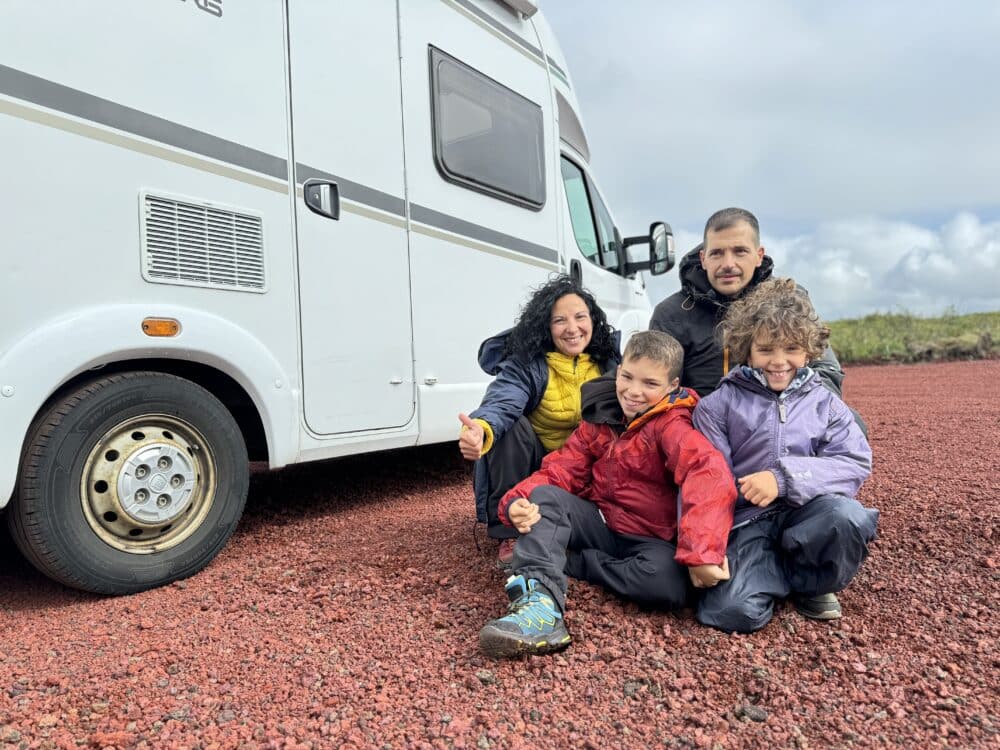
We are the Kucavana family , and we travel with our two children and our adopted dog, Max. We usually travel in our motorhome, also called Kucavana, hence the name of our blog (as a baby, Anna couldn't pronounce "motorhome" and said "Kucavana"). But we also enjoy traveling by bicycle, by plane, and backpacking—the point is to have adventures as a family. The one writing this is me, Pilar, the mom of the family and perhaps the craziest one. I enjoy every new experience we have as a family, and I hope to help you enjoy traveling as much as we do.
To stay connected with you, follow us on our social media channels: YouTube and Instagram

Travelling by camper in Iceland: an advantageous choice
Traveling in a campervan in Iceland offers numerous advantages over staying in hotels or even using a motorhome. The first and most notable is freedom of movement. Having your own transport and accommodation in one vehicle gives you the flexibility to follow your own itinerary, without fixed check-in or check-out times.
Unlike a motorhome, campervans are typically more compact and maneuverable, making them easier to drive on Iceland's roads, including the famous F-roads . Furthermore, compared to hotels, traveling by campervan is significantly cheaper, especially considering the high cost of food in local restaurants. This type of travel allows you to prepare your own meals , leading to considerable savings. In short, a campervan provides you with a comfortable and mobile home, allowing you to explore Iceland at your own pace.
How to choose the ideal camper for Iceland
When planning your campervan trip to Iceland, it's crucial to select the vehicle that best suits your needs. Essential features to consider include size , the presence of an onboard bathroom , and the heating system.
- Size: The camper should be spacious enough for passengers to feel comfortable, but not so big that it limits your mobility on the narrow Icelandic roads.
- Integrated bathroom: Having a bathroom is not only an aspect of comfort but also of convenience, especially in less populated regions.
- Heating: This is essential, as temperatures can be cold even during the Icelandic summer.
For those who want to explore Iceland to the fullest, it's advisable to choose the campervan that best suits their travel needs, whether it's a compact model, one with an integrated bathroom, or a 4x4 campervan for more challenging routes. Campervan rentals in Iceland offer options for every type of adventure, allowing you to discover majestic landscapes and places otherwise inaccessible.

Recommended daily routes and planning
Iceland offers several routes to explore by camper, each with its own charms and particularities.
Popular itineraries :
Golden Circle : The shortest route that can be traveled in one day, starting and ending in Reykjavik, encompassing iconic places such as Þingvellir National Park, the Geysir geothermal area and the spectacular Gullfoss waterfall.
We help you organize your motorhome route
Do n't have time to plan your next motorhome trip? Want an expert to help you organize and set up your motorhome route? Let us help you. Book your Click & Go route now.
We'll create your Click & Go motorhome route for you, so all you have to do is click and your GPS will do the rest . A tailor-made , personalized itinerary , ready for you to enjoy 100% . Request your quote now through this web form and get ready for a perfect motorhome trip.

Ring Road (Road 1) : The road that circles the entire island, ideal for a complete exploration. It can take between one and two weeks, depending on the stops.
Less touristy routes :
Highlands and Northern Peninsulas : Perfect for those who want to get away from the busy roads and discover isolated and majestic landscapes.
When is the best time to rent a campervan in Iceland?
The best time to rent a campervan and travel around Iceland is during the summer , from June to August, when the roads are snow-free and the weather is more pleasant. However, autumn can also be a beautiful time to visit, provided you take into account the adverse weather conditions .
What are the requirements for renting a camper in Iceland?
To rent a camper in Iceland, you must be at least 20 years old and have a valid driver's license, accompanied by a credit card for the deposit. Some companies may also require previous experience driving campers or similar vehicles.
Extra equipment for your camper adventure
To make your trip more comfortable, it's advisable to bring some extras :
- Camping chairs and table: They will allow you to enjoy the outdoors on sunny days.
- Chargers and adapters: Very useful to keep all your devices charged.
- Showers in municipal swimming pools: Iceland has a network of municipal swimming pools where you can shower at a low cost. Alternatively, campsites also offer showers.
Tips for driving in Iceland
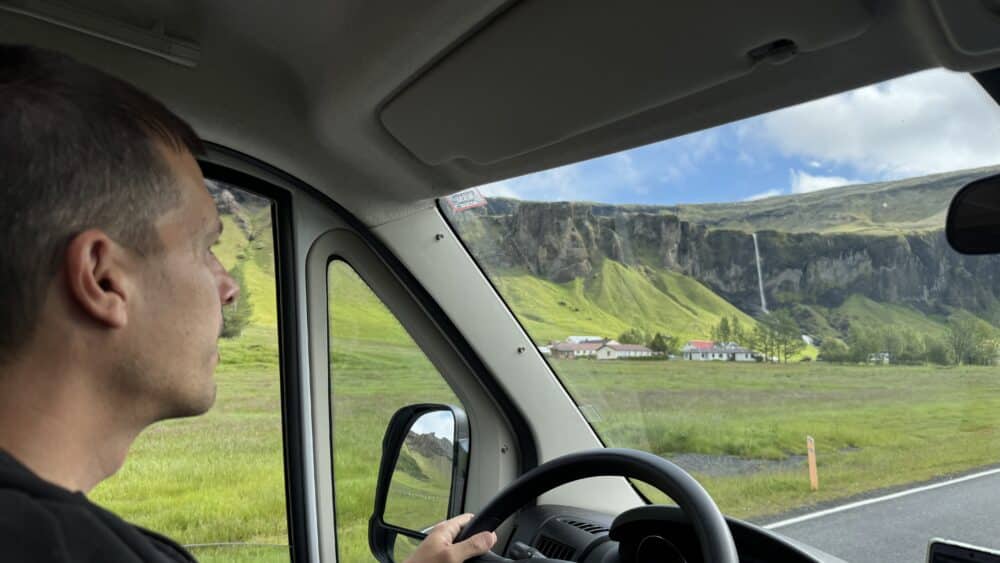
Driving in Iceland is a unique adventure, but it also involves challenges that require preparation and caution. These tips will help you enjoy your trip in complete safety.
- Filling up with petrol in Iceland:On the Ring Road, petrol stations are common, but in less populated areas they can be scarce. It is advisable to refuel when the tank is half full to avoid unforeseen events. Most petrol stations in Iceland operate on a self-service basis and accept card payments. N1 stations are a reliable option for refuelling.
- Road and weather information: In winter, check the road conditions on the Road.is website daily before setting out. This page provides real-time updates on road closures and weather conditions, allowing you to plan safe routes and adjust your itinerary if the weather worsens.
- Road safety and weather conditions: Safety is paramount when driving in Iceland. F roads And some rural roads can be difficult due to rough terrain and abrupt weather changes. It is essential to slow down in adverse conditions and be alert for snowstorms or fog that can occur without warning. Carrying an emergency kit with food, water and warm clothing is essential in case of delays or unforeseen conditions.
- Lights on at all times:In Iceland, it is mandatory to have your vehicle lights on at all times of the day, even in the middle of summer, as the weather can change quickly and reduce visibility.
- Speed limits and radars: The speed limit on the Ring Road is 90 km/h and is reduced to 80 km/h on gravel roads. In built-up areas, the limit is 50 km/h or less. Iceland has fixed speed cameras on several routes, so respecting the limits will help you avoid fines.
- Suitable vehicle according to the route and season: Choosing between a standard vehicle or a 4×4 depends on the time of year and the routes planned. In winter, a 4×4 provides greater safety and control, especially on secondary roads and F-roads. In summer, a 4×4 is necessary only for routes in the Highlands, as the Ring Road and other main routes are accessible to conventional vehicles.
- Parking and camping: In Iceland, wild camping is prohibited. It is mandatory to spend the night in designated campsites, which usually charge between 10 and 40 euros depending on the type of camper and the number of people. Some tourist parking lots are also paid and may be monitored by cameras, so it is advisable to check the signage.
- Akureyri tunnel: Near Akureyri, on the Ring Road, there is a toll tunnel. The fee must be paid online at tunnel.is before or after driving through the tunnel. You only need to enter the vehicle's license plate to make the payment.
- Driving license: European drivers do not need an International Driving Permit to rent a vehicle in Iceland; a valid driving licence, such as a Spanish one, is sufficient. Check the rental company's requirements to make sure you meet the conditions.
- Compact luggage: Campers have limited space, so it is advisable to bring compact and practical luggage. Many rental companies offer free storage for large suitcases, which makes it easier to use the space in the vehicle.
- Gravel protection insurance: In Iceland, many roads are gravel, especially outside the Ring Road, such as on the Snæfellsnes Peninsula. Gravel protection insurance is highly recommended, as stone chips on the windscreen are common and repairs can be expensive.
By following these tips, you can enjoy the experience of driving in Iceland while preparing for any unforeseen events, maximizing both the safety and the pleasure of your adventure.
Accommodation in camping and overnight areas in Iceland
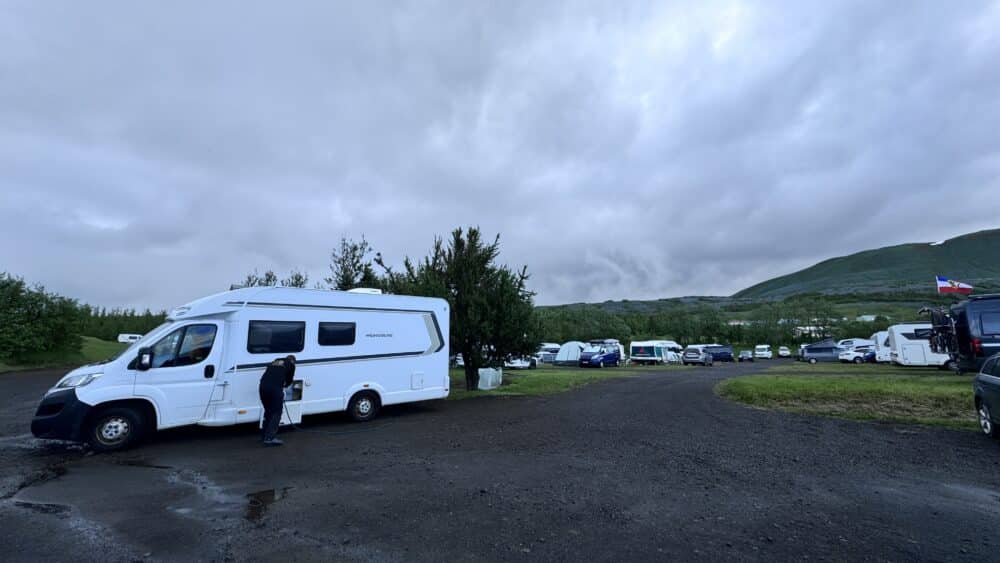
Iceland boasts an extensive network of campsites strategically located across the island, offering a safe and comfortable place to stay for campervan and motorhome travelers. These campsites are equipped to accommodate tourists and provide essential services such as showers, toilets, electricity , and in many cases, kitchens, picnic areas, and laundry facilities . Furthermore, some campsites offer Wi-Fi and provide access to tourist information points, ideal for planning your next few days of travel.
Camping regulations in Iceland
Wild camping is strictly regulated in Iceland to protect its fragile ecosystems. It is mandatory to stay overnight in designated campsites if you are traveling in a campervan or motorhome, and sleeping in parking lots or areas not designated for camping is not permitted. Fines for camping outside of campsites can be substantial, and regulations are particularly strict in protected areas and nature reserves.
Campsite rates and services
Overnight camping fees in Iceland typically range from €10 to €20 per person or €20 to €40 per vehicle . These prices can vary depending on the season and the services offered at the campsite. Most campsites accept card payments, but it's advisable to bring some cash, as some smaller campsites may not offer this option.
Recommended and well-located campsites
- Skógafoss Camping: Located next to the iconic Skógafoss waterfall in southern Iceland, this campsite offers a unique experience by allowing visitors to camp close to one of the country's most famous waterfalls. Showers, toilets, and a picnic area with exceptional views are available.
- Camping Reykjavik: Located in the capital, it is ideal for those who want to explore Reykjavik. It offers full services such as showers, toilets, Wi-Fi, and a laundry, and is close to supermarkets and restaurants.
- Egilsstadir Camping: Located in eastern Iceland, this campsite is perfect for those planning to explore the eastern fjords. It offers basic amenities, plus a communal kitchen and Wi-Fi access.
- Camping in Skaftafell: Located within Vatnajökull National Park, this campsite offers easy access to hiking trails, glaciers and waterfalls. In addition to toilets and showers, it has a small shop where basic supplies can be purchased.
- Camping Asbyrgi: Located in the north of Iceland, in the spectacular Ásbyrgi canyon, it is ideal for those wishing to explore Jökulsárgljúfur National Park. It offers basic amenities and a stunning view of the canyon.
Tips for camping in Iceland (even if you're traveling in a camper)
- Book in advance during high season:During the summer (June to August), demand for campsites is high, so it is recommended to book in advance, especially at the most popular campsites.
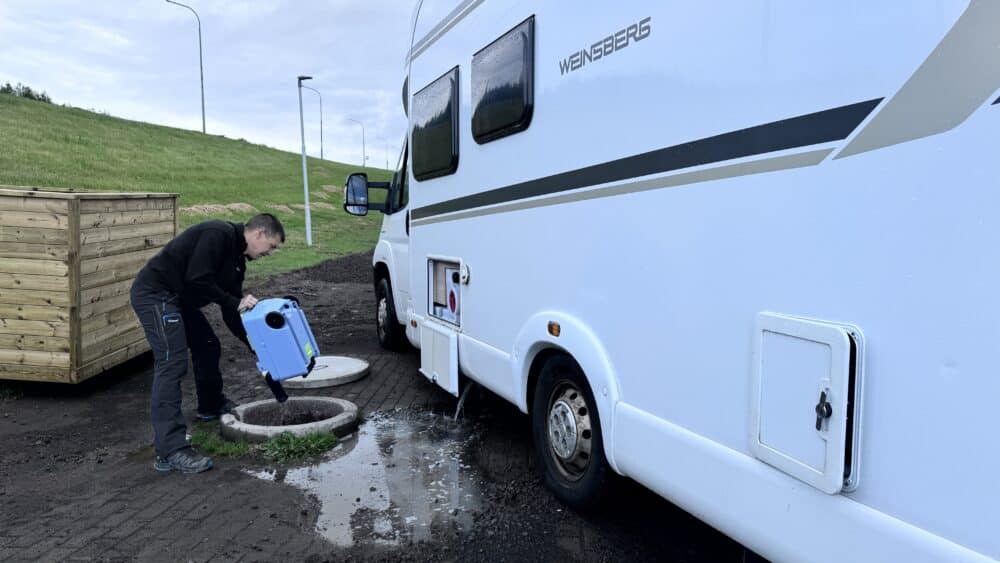
- Use of facilities: Take advantage of the communal kitchens and picnic areas offered by many campsites. This allows you to reduce food costs and meet other travelers.
- Access to municipal swimming pools: Although some campsites include showers, many travelers choose to shower at nearby municipal swimming pools, which often have affordable rates and offer changing rooms, saunas and thermal baths.
- Access to Wi-Fi and chargers:Not all campsites have Wi-Fi or power outlets, so it is advisable to bring a portable battery or consider the option of a local SIM card for internet.
- Recycling and respect for the environment: Iceland is a country that takes great care of its environment, so it is essential to recycle and follow the waste management rules of each campsite.
Tips for traveling to Iceland
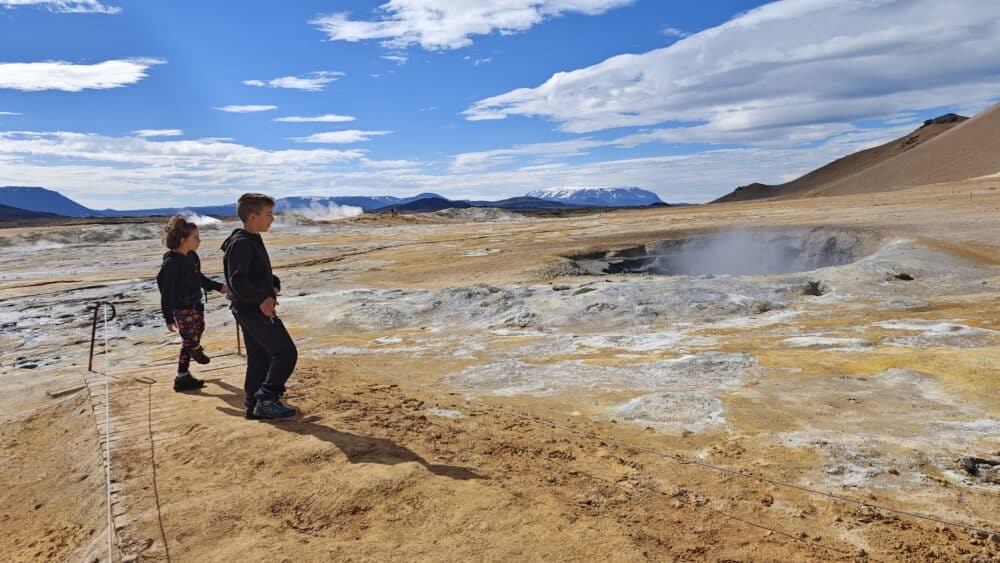
To make your trip to Iceland more comfortable and affordable, here are some practical tips that can be of great help in planning your adventure.
- Travel and health insurance: Although the European Health Insurance Card is valid in Iceland, the Icelandic health system includes a co-payment for medical visits and treatments. Given the high cost of medical care in the country, it is advisable to travel with travel insurance that covers emergencies and comprehensive medical care. Good insurance will provide you with peace of mind and significant savings in the event of any unforeseen events.
- Card payments: In Iceland, most shops and services accept card payments, making shopping easy and eliminating the need to carry large amounts of cash. Although the local currency is the Icelandic krona (ISK), many cards with no currency exchange fees allow you to pay without additional costs. Opting for a fee-free travel card can be very advantageous.
- Internet connectionIceland is part of the European Economic Area, so most EU visitors enjoy free roaming. This means you can use your data and stay connected without any extra costs in most urban and tourist areas. However, if you plan to travel to more remote areas, it may be worth considering a local SIM card or portable Wi-Fi to maintain internet access at all times.
- Supermarkets and food savings: To reduce food expenses, it is advisable to buy in supermarkets such as bonus o The crown, which offer lower prices on basic products. At Bónus, easily recognizable by its pig logo, you will find a variety of food at affordable prices. Planning a weekly purchase or carrying non-perishable products with you will help you manage your budget better.
- Food from home: Bringing some food from your home country is an excellent strategy to save money and enjoy your favorite meals. Products such as sausages, preserves and sauces in sachets take up little space and can be very practical to complement meals in your camper or accommodation.
- Alcohol and beverages: Alcoholic drinks in Iceland are usually expensive and low in alcohol content. To save money, consider buying alcohol at the Duty Free from Keflavík Airport, which operates 24 hours a day, or at the Duty-Free at your departure airport. This can help you avoid the high local prices and enjoy a few drinks during your stay.
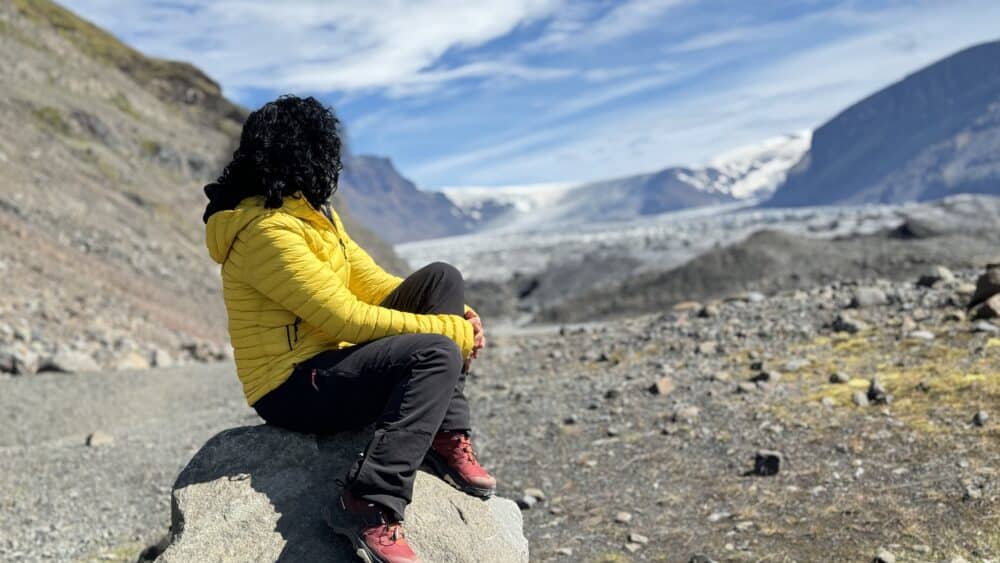
Extra equipment for your camper adventure
To make your trip more comfortable, it is advisable to bring extra equipment, such as camping chairs and tables , which will allow you to enjoy the outdoors on sunny days.
It's also helpful to have basic kitchen utensils and cleaning supplies to keep the space tidy. Taking advantage of campsite facilities is also a great way to enjoy extra amenities like laundry facilities or barbecue areas.
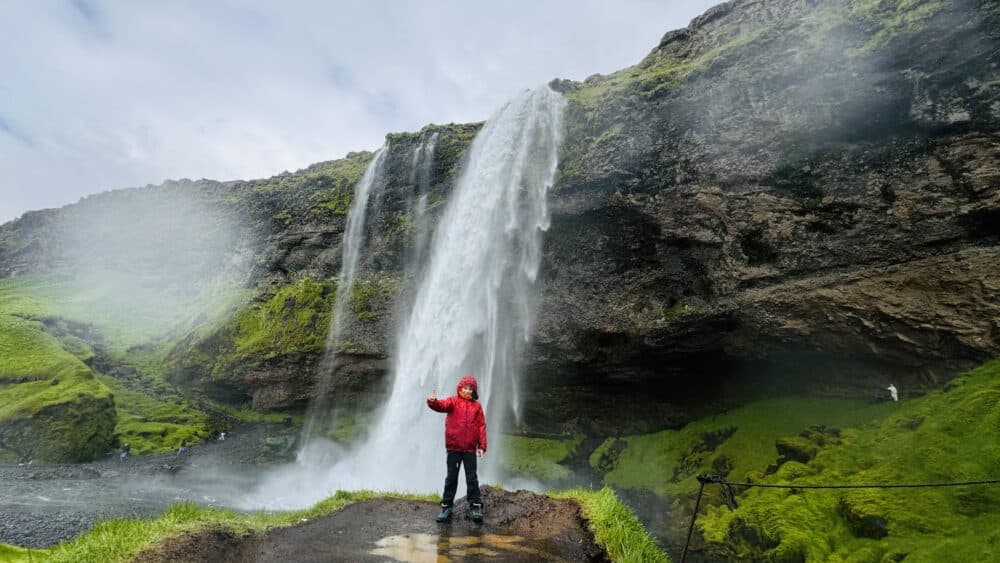
Frequently asked questions about travelling by camper van in Iceland
Is it safe to travel by campervan during winter in Iceland?
Although the Icelandic winter can be harsh, traveling by camper is possible if you are properly prepared. Make sure the camper is equipped with heating and that the roads are open seasonally.
Where is it legal to spend the night?
Legislation requires campers to spend the night in designated campsites to protect the environment. Iceland offers a wide variety of campsites that ensure a comfortable and safe stay.
Is it possible to travel by camper in winter?
Most major routes remain open in winter, but access to the Highlands and some F-roads is limited to the summer season due to weather conditions.
The unique experience of travelling in a camper van in Iceland
Travelling around Iceland in a campervan is one of the most enriching adventures you can experience. With the opportunity to discover dream places, create tailor-made itineraries and enjoy wild nature in total freedom, this trip promises to be an unforgettable experience. So get ready to experience Iceland from a unique perspective, where every wake-up offers a new and exciting landscape.
Iceland is a country brimming with otherworldly natural beauty . A journey through its vast landscapes, hot springs, volcanoes, and glaciers offers a unique experience, and one of the best ways to enjoy this adventure is aboard a campervan . This mode of transport not only allows you to freely explore the surroundings but also provides the comfort of having a home on wheels as you travel across this extraordinary island.
The camper becomes your refuge, allowing you to stop anywhere to marvel at the landscapes and discover every hidden corner that Iceland has to offer. In this article, we will explore all aspects of traveling by camper in Iceland, from planning to driving tips and the best routes you can take.
Latest posts from our blog
-
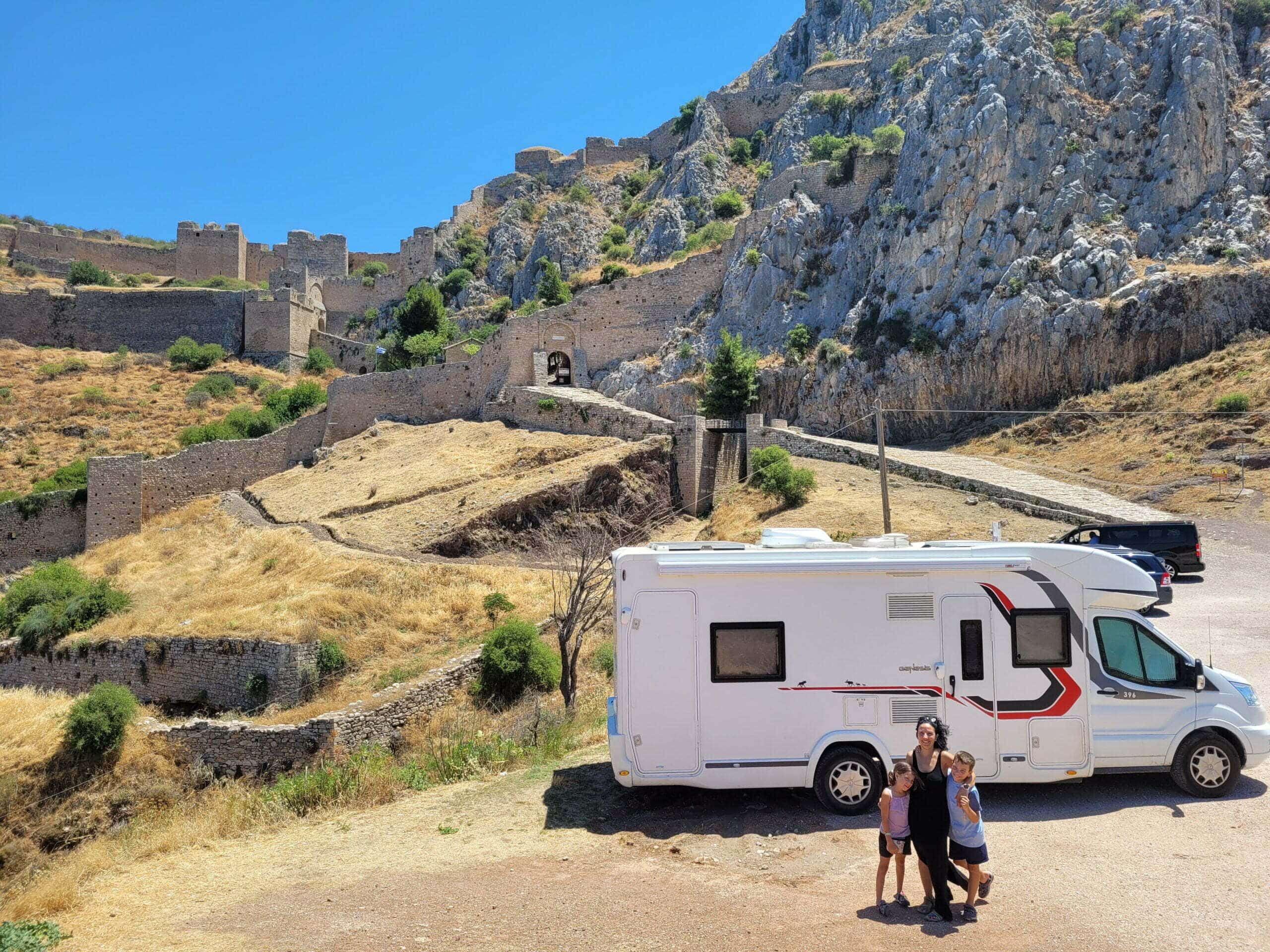
Definitive manual for traveling by motorhome【2024】
Super complete manual for traveling by motorhome with all the answers to your questions.
-
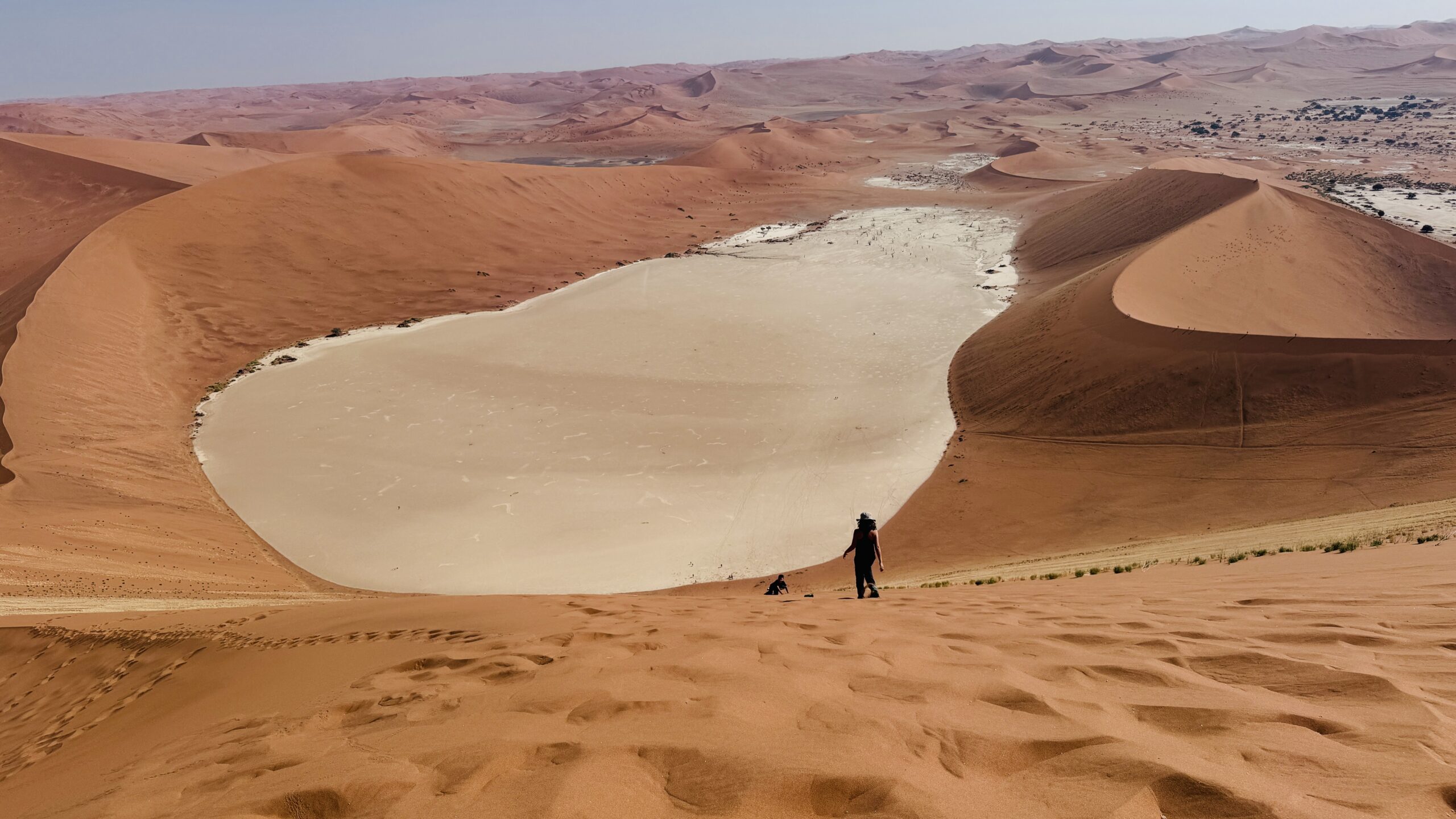
Namibia Trip: Complete Guide for Independent Travel (24-day Itinerary, What to See and Tips Based on Our Experience)
Are you thinking of planning a trip to Namibia on your own and don't know where to start? After traveling the country for 24 days as a family in a 4x4 with rooftop tents, we've put together this comprehensive guide with everything we wish we had known before our trip. Here you'll find information…
-
London with children: what to see and do as a family (royal guide with map) of the top 22 plans
If you're planning a trip to London with kids and don't know where to start, here you'll find the 22 best family-friendly activities, an optimized 3-day itinerary, money-saving tips, the best free museums, and an interactive map with all the must-see places. Basic summary: London with kids. Quick information. Recommended days: 3-5…
-
Guide to traveling to Canada: everything you need to know for a trip to Canada on your own
Welcome to a super guide for traveling to Canada from Spain or anywhere in Europe. One of our newest destinations in this wonderful world, where every trip continues to surprise us with its hidden gems. How lucky we are to have been born on Earth! How fortunate to be able to travel to Canada! Visiting Canada…


Ethical code:
On our blog you will find affiliate links. These are always placed with our highest ethics. We never publish any service or product that we have not used before and that we are sincerely happy with. That is why our recommendations are always ethical. In addition, there is no additional cost for you to book through our links and, on the other hand, it means a small commission for us that helps us maintain this blog so that you can continue enjoying it for free.