


Table of Contents
The Monument to the Farmer, a sculpture by César Manrique , located next to the Farmer's Museum in Lanzarote, is not just a work of art: it is a monumental tribute to those who made Lanzarote habitable. It is also one of those places that helps one understand the essence of the island, its struggle with the volcanic landscape, and the creativity with which its inhabitants transformed an extreme environment into a cultural masterpiece.
If you're planning your route, looking for information, photos of the Monument to the Peasant sculpture by César Manrique , reviews, opinions, or simply want to know what César Manrique did at this key location, here's the most complete guide to understand it, visit it, and enjoy it as it deserves.
If you're planning your trip to Lanzarote, here's my guide. Complete guide to traveling to Lanzarote with routes, tips and must-see places.
What is the Monument to the Peasant?
The Monument to the Farmer , also known as the Monument to the Farmer sculpture by César Manrique , is a gigantic white structure made up of geometric elements that evoke animals and traditional tools. Its official name is Fecundity , and it represents the enduring relationship between the farmers of Lanzarote and their land.
The sculpture is made from repurposed old marine tanks, a characteristic gesture of César Manrique , who always championed the harmony between art, tradition, and sustainability. This work is part of the collection of César Manrique sculptures scattered throughout the island.
TIP: If you want to experience the best of Lanzarote without worrying about driving, parking, or tickets, sign up for a combined island tour . They take you to the most breathtaking spots, picking you up from your accommodation, with a local guide who tells you everything, and no queues or stress. You just enjoy. Zero logistics, 100% experience, and no need to worry about booking tickets.
Where is the Monument to the Farmer and why is it so important in Lanzarote?
The Monument to the Farmer is located in the exact center of Lanzarote , in Mozaga, precisely where the roads that crisscross the island converge. This is no coincidence: Manrique wanted to place it at the geographical heart of the island to highlight its true emotional heart.
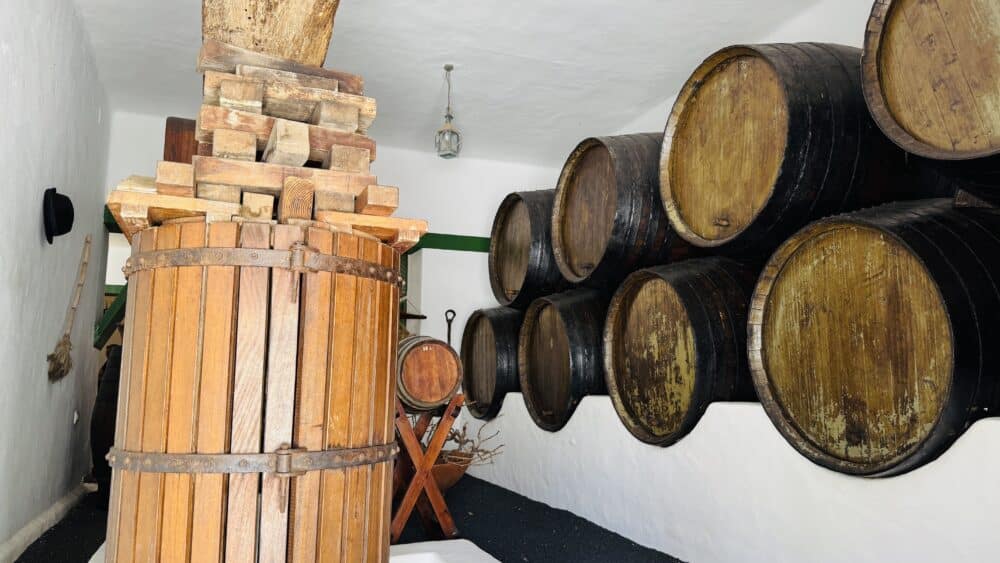
The Casa del Campesino Museum also begins here , explaining how the farmers of old lived, worked, and farmed. It's a perfect complement to understanding the artwork.
Many visitors arrive simply looking for "the peasant monument" or "the peasant monument," but they discover a cultural ensemble that surprises with its visual power and symbolic weight. That's what happened to us! What a surprise!
Peasant Museum: tradition, crafts and the best local food in Lanzarote
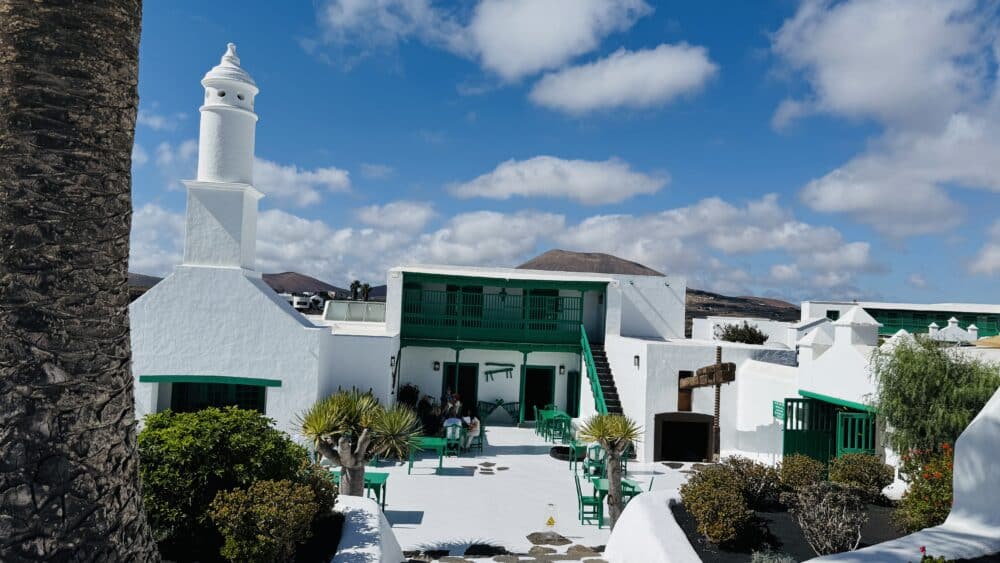
Right next to the Monument to the Farmer, a sculpture by César Manrique , lies one of the most special places to understand the essence of the island: the Lanzarote Farmer's Museum . It's a free, open, and vibrant space where the memory of the traditional trades that shaped Lanzarote is preserved, and where you can still see local artisans at work.
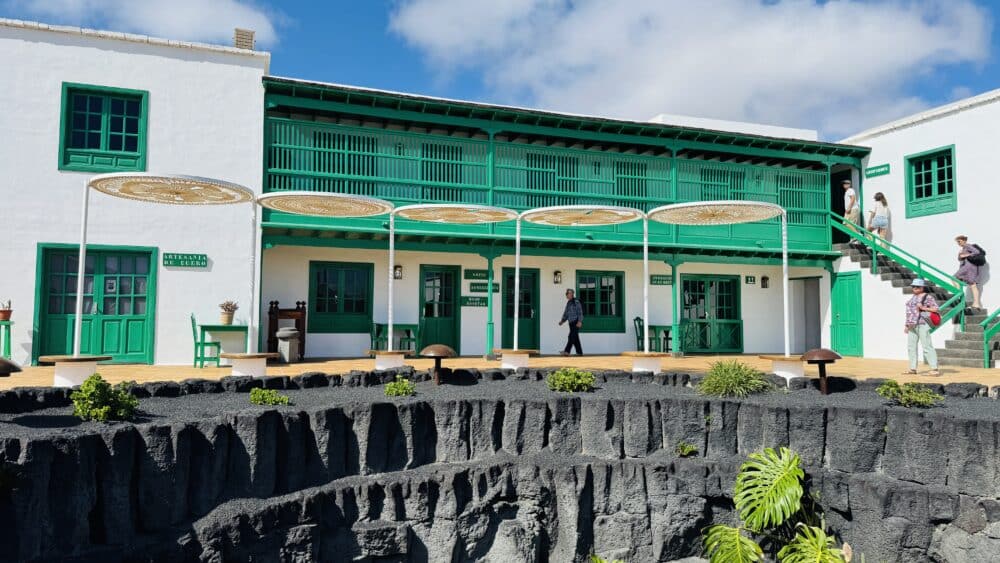
The museum comprises various rooms that recreate traditional workshops: pottery, basketry, carpentry, weaving, and other trades that were essential for life on a volcanic island with limited resources for centuries. The visit is quick but incredibly enriching. Here, you don't just observe; you feel the creativity, the struggle, and the identity of Lanzarote's farmers.
One of the aspects that most surprises travelers is its authenticity. It's not a museum designed solely for tourism, but a genuine tribute to traditional crafts. The artisans work right there, and you can watch them mold clay, weave palm leaves, or carve wood with a naturalness that seems to stop time. This space perfectly complements the symbolic power of the exterior monument, creating a cohesive cultural ensemble that is very easy to visit.
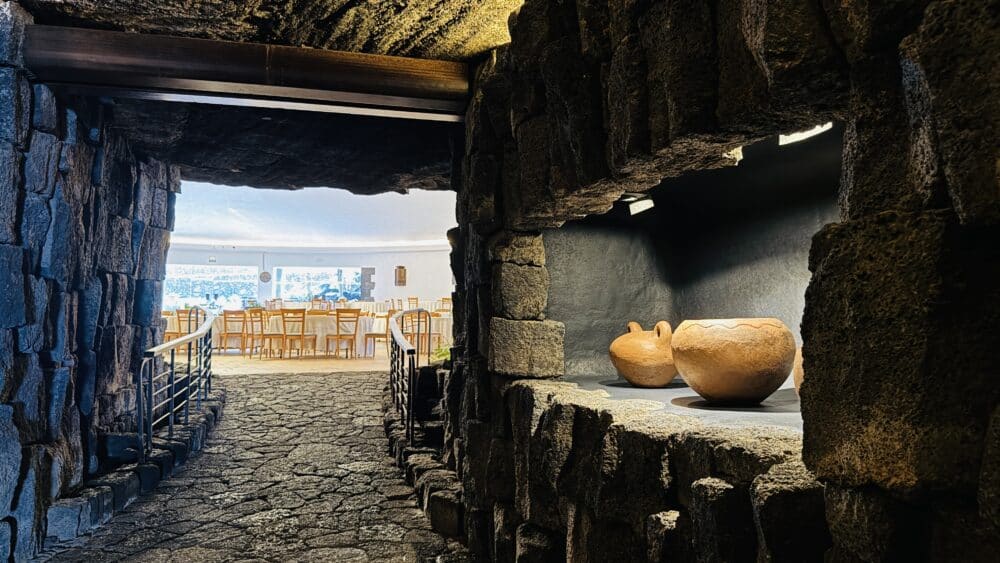
And if you enjoy local cuisine, take note: the Museo del Campesino (Farmer's Museum) is one of the best places in Lanzarote to eat traditional home-style cooking . The complex's restaurant offers authentically prepared dishes, from lentil stew to boiled parrotfish, as well as scalded gofio (a type of flour), local cheese, wrinkled potatoes, and mojo sauce made the old-fashioned way. Here, the flavors are real, without artifice, and deeply rooted in the tradition that Manrique sought to preserve.
With its free admission, tranquil atmosphere, and cultural value, the Museo del Campesino (Farmer's Museum) is a must-see for anyone wanting to discover Lanzarote beyond its volcanic landscapes. It's a place to pause, learn, and savor the island at its very heart.
Our personal experience at the Monument to the Peasant and the Peasant Museum
We arrived at the Monument to the Farmer, a sculpture by César Manrique , almost by chance. On our route through the center of Lanzarote, we were following the white road signs, those that appear suddenly and, without planning it, lead you directly to a piece of the island's history. When we saw the sign for "Monument to the Farmer," we decided to take a detour , thinking it would be a brief stop, just five minutes to take a photo and continue on.
But Lanzarote always surprises you more than you imagine.
Upon arrival, we were struck by the monumental white structure rising above the volcanic landscape. The simplicity and power of Manrique's design are best understood when you see it firsthand: it's a direct, sincere, and immense tribute to the farmers who sustained the island through incredibly difficult times. We wanted to see it quickly… and ended up staying much longer.
The surprise of the peasant museum and it's free!
The real surprise came later, when we crossed to the building opposite, the Peasant Museum , convinced it would cost money. We were already mentally preparing ourselves to "let's see how much it costs," and suddenly we discovered it was completely free . We still remember it with that feeling of "how can it be so beautiful... and free on top of that?" It was one of those moments when you feel you've found an unexpected treasure.
We entered and were greeted by that immense white courtyard, the artisan workshops, the traditional objects, and the impeccable architecture that Manrique designed to celebrate Lanzarote's popular culture. And amidst all that, the complex's traditional restaurant was overflowing. We couldn't get a table (and we were incredibly annoyed), because what we saw coming out of the kitchen looked absolutely spectacular: truly local dishes, with that homemade touch you know you'll remember.
It was clear to us that we'll be back just to eat there. It's one of those places you save as a promise for your next visit… and that you recommend to everyone because you know it never disappoints.
It was an impromptu stop, but it ended up being one of the most authentic and unexpectedly special moments of our trip around Lanzarote . A perfect blend of art, tradition, and local life that gives you a deeper understanding of the island from within.
Summary table of the Peasant Museum
| Information | Detail |
| Full name | Peasant Museum – César Manrique Monumental Complex |
| Location | Geographical center of Lanzarote, in Mozaga |
| Price | Free entry |
| What to see | Craft workshops, traditional trades, Manrique's architecture |
| What to do | See local artisans, buy authentic handicrafts, eat traditional cuisine |
| Restaurant | Yes, highly recommended for its typical homemade food. |
| Visit Duration | 30 min – 1 h |
| Ideal for | Families, culture lovers, those seeking authentic experiences |
| Recommended combination | Monument to the Farmer (right in front) |
Frequently Asked Questions about the Peasant Museum
Is the Peasant Museum free?
Yes, admission is completely free, both to the workshops and to the architectural environment created by César Manrique.
Are there artisans working live?
Yes. It's one of the biggest attractions: you'll be able to see real artisans practicing traditional crafts such as basketry, pottery, or carpentry.
How much time is needed for the visit?
Between 30 minutes and 1 hour, depending on whether you stop to see the workshops or to buy handicrafts.
Where exactly is it located?
In the geographical center of Lanzarote, in Mozaga, next to the Peasant Monument.
Is the restaurant worth it?
Absolutely. It's one of the best places to try homemade Lanzarote food in an authentic atmosphere.
Is this a recommended visit for children?
Yes, it's peaceful, educational, and visually appealing. Children are often drawn to watching the artisans at work.
Can it be combined with other visits?
Yes, it's perfect to include on the same day you visit La Geria, Teguise or Jameos del Agua.
Opinions and reviews of the Monument to the Peasant
If you look for reviews of the Monument to the Peasant, a sculpture by César Manrique , you'll find consistent descriptions: it's a quick, free, and highly recommended visit. It also appears on international platforms as:
- Monument to the Peasant, sculpture by César Manrique, opinion (Dutch/Polish)
- Monument to the Peasant, sculpture by César Manrique. (French)
- Monument to the Peasant, sculpture by César Manrique, reviews (Spanish and Italian)
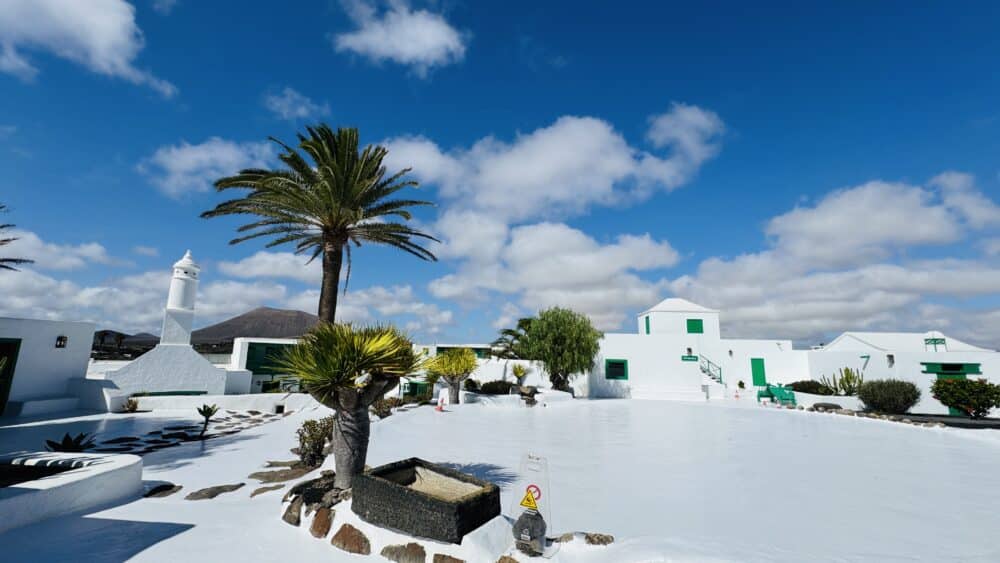
Most people appreciate its symbolism, its central location, and how photogenic it is with the blue sky as a backdrop.
Photos of the Monument to the Peasant
The photographs of César Manrique's Monument to the Peasant showcase his characteristic aesthetic: pure lines, almost abstract geometry, and a white elegance that contrasts with the volcanic black of the ground. It is one of Manrique's most photographed sculptures because, as he himself said, it had to be visible "from very far away."
What did César Manrique do here?
When you ask yourself what César Manrique did in this place, the answer is simple: he created a tribute. A monument that celebrates the creativity and effort of generations of Lanzarote residents who transformed a hostile island into a fertile land.
His intention was twofold:
- To value the peasantry, often forgotten in tourist accounts.
- Teach the visitor Lanzarote is much more than beaches or volcanic landscapes; it is a story of survival and ingenuity.
Tips for your visit
- The visit to Monument to the Peasant by César Manrique It's free, just like... Attached Peasant Museum.
- You can combine it with La Geria or Teguise, as it's on the way.
- It's perfect for photos at sunrise or sunset.
- If you're interested in art, check out other options. sculptures by César Manrique scattered across the island.
Frequently Asked Questions about the Monument to the Farmer
What does the Monument to the Peasant represent?
It represents the union between the Lanzarote farmer and the volcanic nature that he had to learn to master.
Is it a work by César Manrique?
Yes, it is one of the most emblematic sculptures created by César Manrique , along with other projects such as Jameos del Agua or the Mirador del Río.
Is it free to visit?
Yes, the outdoor sculpture and surroundings are free.
How long does it take to see the Monument to the Peasant?
Between 10 and 20 minutes for the sculpture; about 45 minutes if you also visit the traditional museum.
Do I need to make a reservation?
No, you can get there directly.
Summary table of the visit
| Appearance | Information |
| Official name | Monument to Fertility |
| Known as | Monument to the Peasant, sculpture by César Manrique |
| Author | César Manrique |
| Location | Mozaga, Lanzarote |
| Price | Free |
| Visit Duration | 10–45 mins |
| best time | Early morning or sunset for cooler weather and the best lighting. |
| Related keywords | peasant monument, the monument to the peasant, the monument of the peasant |
Conclusions on the Monument to the Peasant and the Peasant Museum
Visiting the Monument to the Farmer and the Farmer's Museum in Lanzarote is one of those experiences that, while not as well-known as some of César Manrique's other works, leaves a profound impression. The complex acts as a gateway to the island's deepest identity: its agricultural history, its relationship with a harsh landscape, and the immense value of those who worked the land for generations.
The imposing and symbolic sculpture of the Monument to the Peasant encapsulates Manrique's philosophy at a glance: to elevate the humble, dignify the everyday, and recall the origins of everything we see today in Lanzarote. Opposite it, the museum complements this vision with workshops, traditional crafts, and meticulously designed spaces. Best of all, admission is free , making it a must-see for any traveler.
It's a perfect place to include on a route through the center of the island, whether to learn a little more about the local culture, to enjoy Manrique's architecture or to eat authentic Lanzarote cuisine in its restaurant (if you're lucky enough to find a table).
In short: a comprehensive, inspiring stop that's easy to fit into any itinerary, helping you understand Lanzarote not just with your eyes, but also with your heart. If you're looking for something different and authentic, you'll find it here.
Latest posts from our blog
-
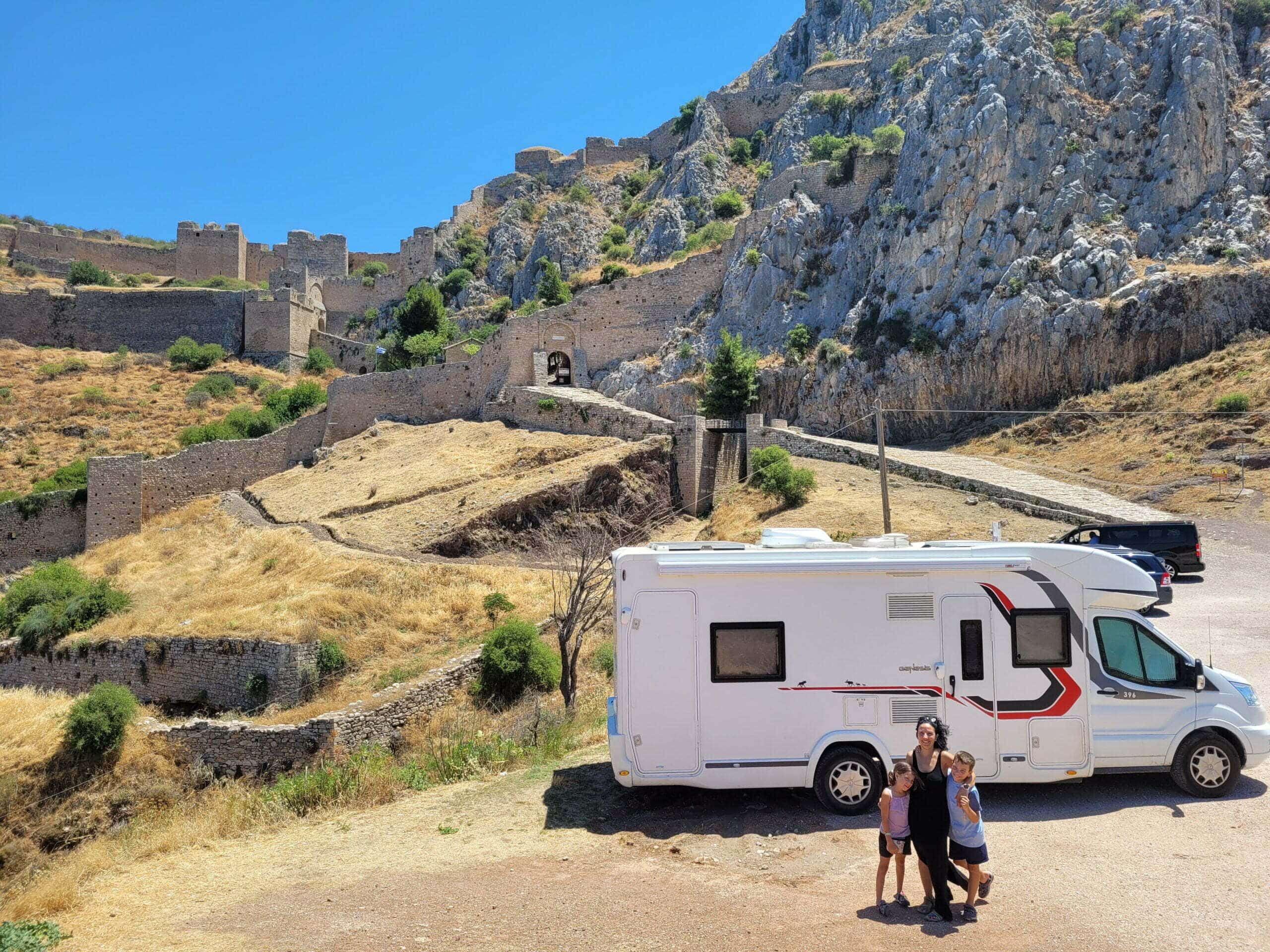
Definitive manual for traveling by motorhome【2024】
Super complete manual for traveling by motorhome with all the answers to your questions.
-
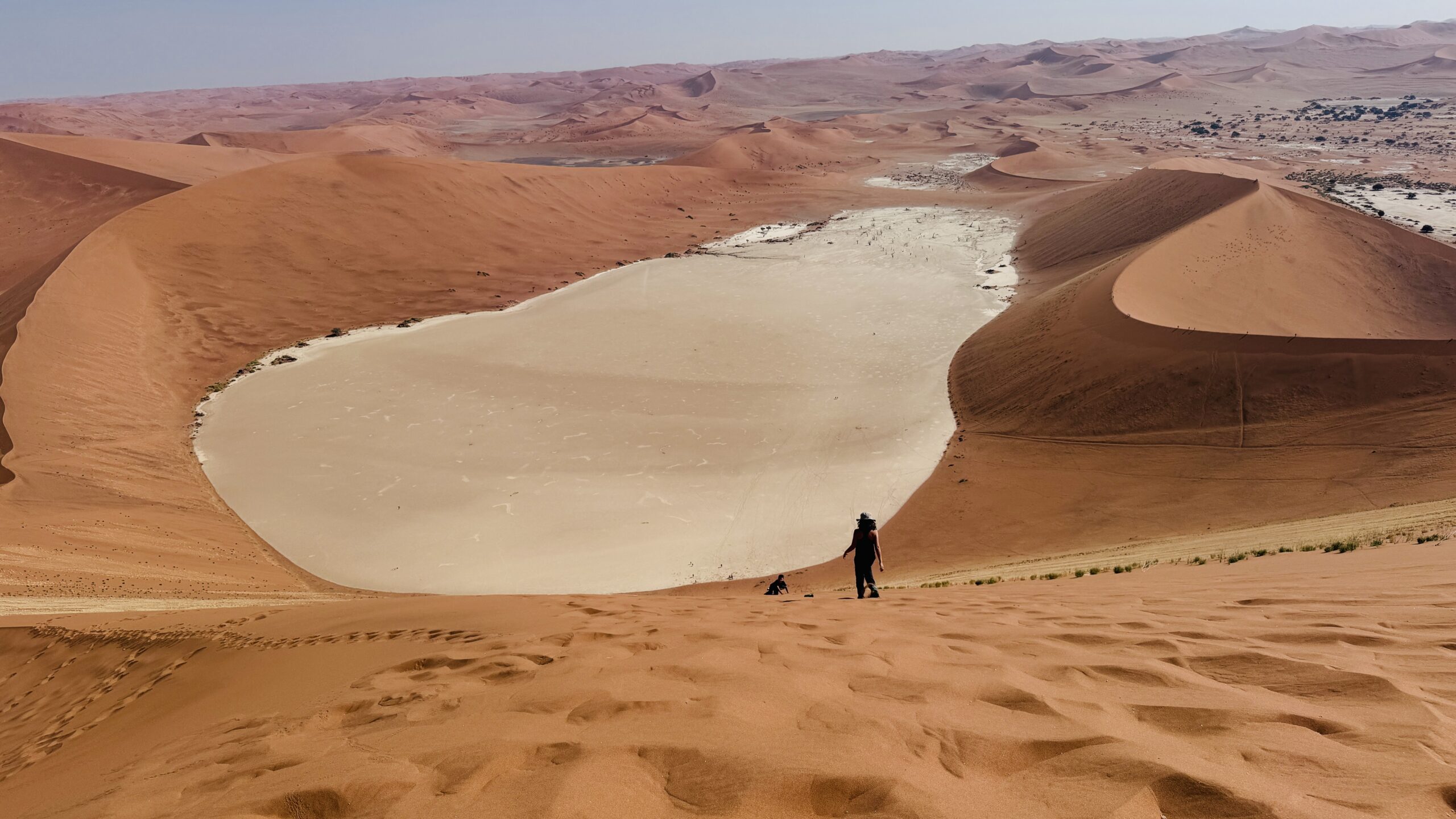
Namibia Trip: Complete Guide for Independent Travel (24-day Itinerary, What to See and Tips Based on Our Experience)
Are you thinking of planning a trip to Namibia on your own and don't know where to start? After traveling the country for 24 days as a family in a 4x4 with rooftop tents, we've put together this comprehensive guide with everything we wish we had known before our trip. Here you'll find information…
-

London with children: what to see and do as a family (royal guide with map) of the top 22 plans
If you're planning a trip to London with kids and don't know where to start, here you'll find the 22 best family-friendly activities, an optimized 3-day itinerary, money-saving tips, the best free museums, and an interactive map with all the must-see places. Basic summary: London with kids. Quick information. Recommended days: 3-5…
-
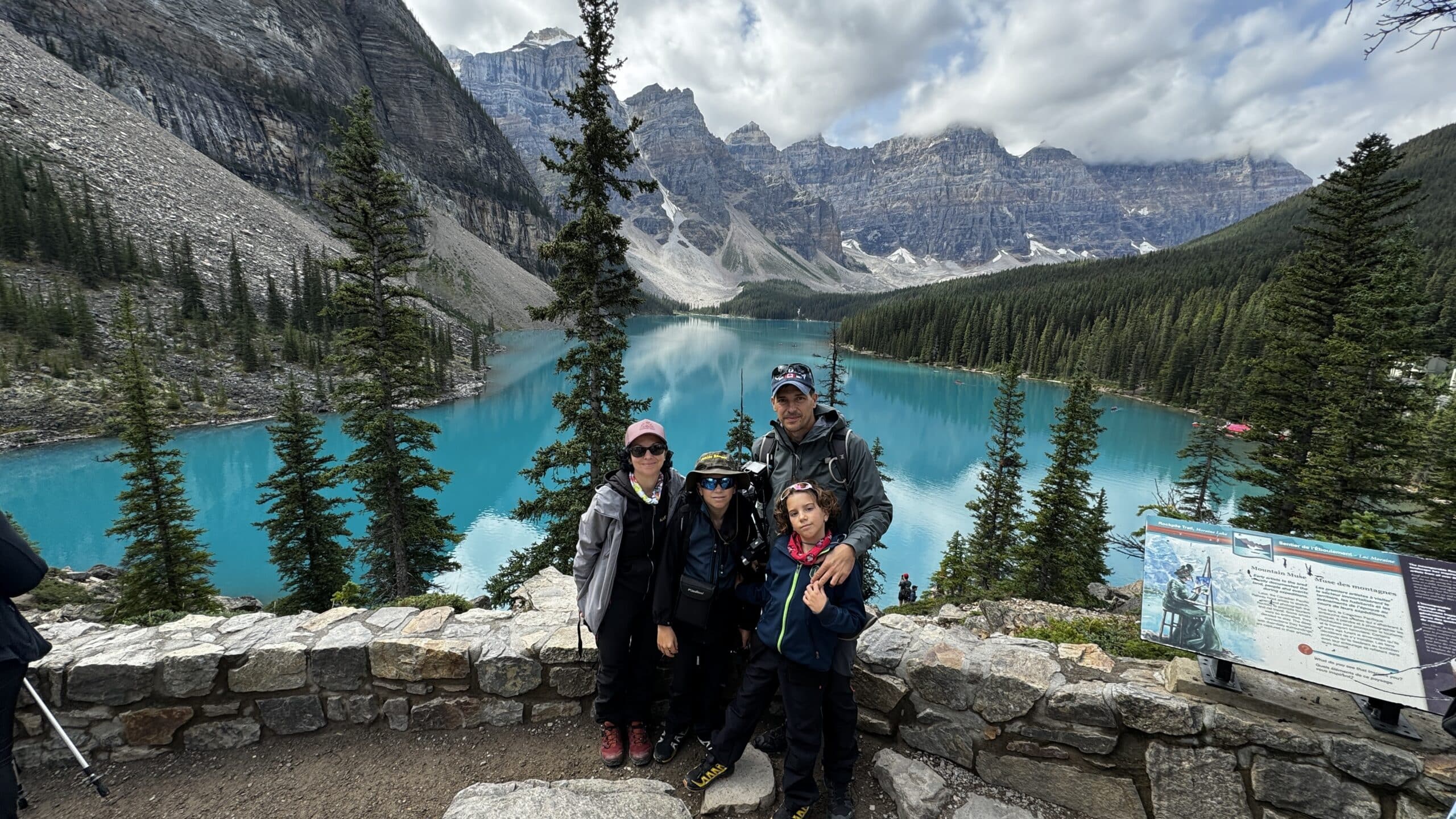
Guide to traveling to Canada: everything you need to know for a trip to Canada on your own
Welcome to a super guide for traveling to Canada from Spain or anywhere in Europe. One of our newest destinations in this wonderful world, where every trip continues to surprise us with its hidden gems. How lucky we are to have been born on Earth! How fortunate to be able to travel to Canada! Visiting Canada…


Ethical code:
On our blog you will find affiliate links. These are always placed with our highest ethics. We never publish any service or product that we have not used before and that we are sincerely happy with. That is why our recommendations are always ethical. In addition, there is no additional cost for you to book through our links and, on the other hand, it means a small commission for us that helps us maintain this blog so that you can continue enjoying it for free.