


Table of Contents
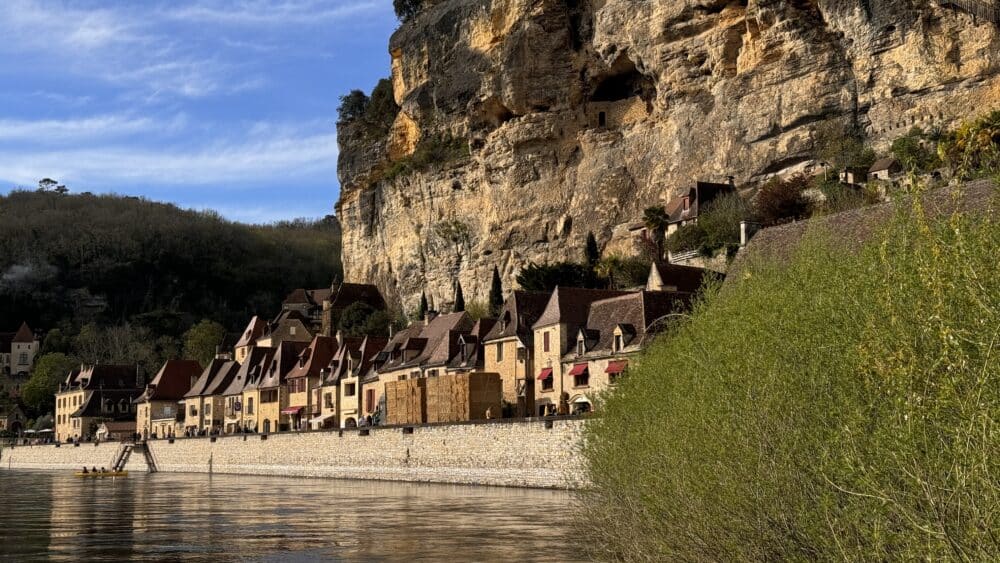
Welcome to this new route through the must-see sights of the Périgord Noir in the Dordogne. In this article, I'll share our family adventure through the Dordogne Périgord Noir in France, showing you an ideal route through this region that has truly captivated us.
We've just returned from this historic French department, and the Dordogne-Périgord, whether with children or as a family, never disappoints . I can only sing its praises. This is our second visit to the Dordogne-Périgord, and we remain in love with it and eager to explore even more. We thoroughly enjoyed this route, which you can also combine with a trip through the Lot department in France, a neighboring and equally beautiful region.
There is no small town or corner that does not have charm, monument, castle or surprising cave!
A tip: Don't travel without travel insurance . Avoid medical co-payments, have a doctor just a click away on your app, have a lawyer specializing in any issues that might arise during your trip, and avoid unpleasant surprises like cancellations or incidents along your route. The travel insurance that has convinced us the most for family travel so far is Iati Familia. Its price and coverage are ideal for traveling within Spain, Europe, and beyond. It covers everything on your trip, not just essential medical needs with 24-hour access to a doctor and pediatrician via the app's chat . I've included a discount they'll give you at the end of your quote request.

About us
We are the Kucavana family , and we travel with our two children and our adopted dog, Max. We usually travel in our motorhome, also called Kucavana, hence the name of our blog (as a baby, Anna couldn't pronounce "motorhome" and said "Kucavana"). But we also enjoy traveling by bicycle, by plane, and backpacking—the point is to have adventures as a family. The one writing this is me, Pilar, the mom of the family and perhaps the craziest one. I enjoy every new experience we have as a family, and I hope to help you enjoy traveling as much as we do.
To stay connected with you, follow us on our social media channels: YouTube and Instagram
We help you organize your motorhome route
Do n't have time to plan your next motorhome trip? Want an expert to help you organize and set up your motorhome route? Let us help you. Book your Click & Go route now.
We'll create your Click & Go motorhome route for you, so all you have to do is click and your GPS will do the rest . A tailor-made , personalized itinerary , ready for you to enjoy 100% . Request your quote now through this web form and get ready for a perfect motorhome trip.

The Dordogne Perigord: what it is and about the mess of its names
After days on our route through the Lot in a motorhome , we finally arrived at night in the Dordogne Perigord , our destination on this new trip and route that will start the next day and which in total will be a 7-day route through the Dordogne Perigord.
Actually, the administrative and official name of the French department we will visit on this route is simply Dordogne , although as a tourist destination they use the brand and name Dordogne Perigord, thus rescuing the old and historical name of this area: Perigord.
In case you don't know, in France they are organized territorially into Regions and Departments. The Regions are equivalent to our Autonomous Communities and the Departments are equivalent to our provinces. In France there are 18 regions and 96 departments, plus 5 that are located overseas.
The Dordogne department is located in the New Aquitaine region and is the third largest department in France.
Its borders encompass what was formerly the historical province of Périgord . Hence, we commonly call this department Dordogne-Périgord, not because that is its current administrative name, but to recall its historical province of Périgord.

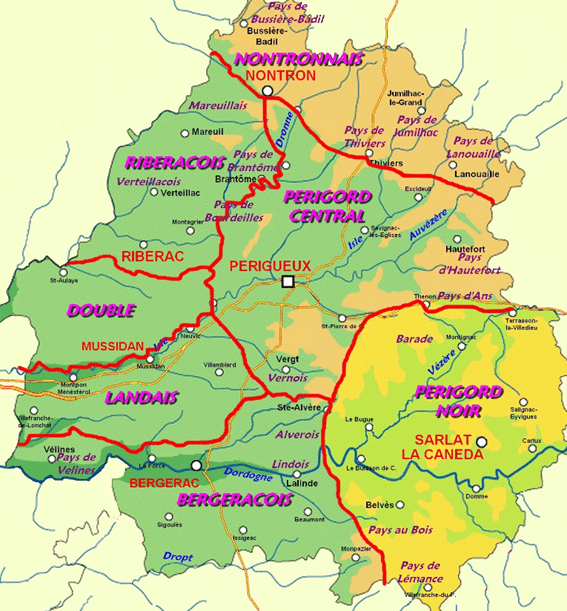
The Dordogne Perigord areas and the mess of their nomenclatures
The Dordogne department is currently divided into seven zones , each centered around one of the largest population centers. You can see them on the map above.
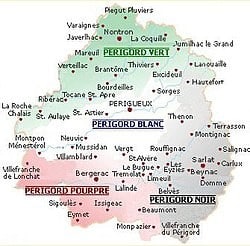
However, if we talk about the old historical department of Périgord , which no longer exists but is now practically all of Dordogne, we need to talk about another classification, which you can see on the map below . It has four zones : Black Périgord, Red Périgord, White Périgord, and Green Périgord.
It's confusing , because on different blogs and websites you'll hear about destinations with different names, but referring to the same territories.
However, there is one area that, whether historically or modernly, is called the same thing: the Black Périgord. Thank goodness!
Furthermore, the Black Perigord is the area through which we will enter our route through the Dordogne Perigord and one of the most important in terms of visits to make in this French department.

About Black Perigord
The Périgord Noir, also known as Sarladais , has emerged as an iconic natural destination in the Dordogne region of France, encompassing the southeastern part of the present-day Dordogne department and forming the eastern area of the Nouvelle-Aquitaine region. Its epicenter and capital revolves around the historic city of Sarlat-la-Canéda.
From a historical perspective, the Black Périgord precedes the other three subdivisions of the Périgord, establishing itself as a symbol of deep-rooted tradition and captivating landscapes.
Etymologically, the term "Périgord Noir" derives from the density of its evergreen oak (Quercus ilex) forests, which give the region a characteristic dark hue, and also alludes to the fertile, shady soil of Sarladais. However, it is commonly associated with the black truffle.
How to get to the Dordogne Perigord
You have several options for getting to Dodoña Perigord.
To begin, I will explain our own experience, then I will try to explain the rest of the options to get to the Dordogne with alternative transport to your own vehicle.
Getting to the Dordogne with your own vehicle: our experience
Just as we did on our route through the Dordogne Perigord , you can access the Dordogne by road in your own vehicle, car, motorhome or camper van.
The roads from Spain to France are all in very good condition , whether they are national roads or motorways.
In our case, we left Barcelona for the Dordogne-Périgord region, taking the AP-7 motorway to Narbonne, heading towards Carcassonne. There, we took the A62 motorway to Toulouse, and from there, we continued straight ahead until we reached the Dordogne. If you've never visited Carcassonne, this is a must-see first stop on your route.
We arrived in the Dordogne through its south-central-western gateway, the area called the Black Perigord , with our first stop in Le Bugue, a beautiful village on the banks of the Vézère River, near Bergerac and Sarlat, one of the 3 largest towns in the Dordogne.
The motorway is very good all the way and it's almost a 6-hour drive from Barcelona, but it's easily manageable even in a single day.
The cost of our trip from Barcelona to the Dordogne and back in our vehicle was : €450
How to get to the Dordogne Perigord by plane and how to get around there: Dordogne Perigord airports and transport
Near the Dordogne there are two airports where you can go and from there rent a car to get to the Dordogne, or if you prefer you can go by train to the Dordogne and get around the Dordogne by local buses , where there is a good network to get around.
The two main airports in the Perigord Dordogne region are:
- The airport Bordeaux
- The airport Toulouse-Blagnac.
Summary of our trip through the Dordogne Black Perigord
Next, before moving on to the explanation of our route, itinerary and visits made, as well as the things you can do and see in the Dordogne Perigord , I will quickly summarize what our experience and recent trip to the Black Perigord has been like.
I'll tell you how many days we were there, on what dates , what our budget and expenses were for the four of us in the family, and finally I'm going to try to summarize what was the best and worst of our route and trip to Dodoña , so that you have clues about what to prioritize or avoid on your trip to the Perigord.
Days of our route through the Dordogne Black Perigord
Our route was a 7-day trip through the Périgord Noir, the southeasternmost part of the Dordogne region. Of these 7 days, we spent one traveling to Barcelona and another returning from our starting point.
When have we made the trip to the Black Perigord?
Our trip through the Dordogne was during Holy Week , at the end of March and beginning of April, in spring.
If you're wondering how much a 7-day trip to the Dordogne-Périgord costs, below are our expenses for a group of 4 people : 2 adults and 2 children:
Travel costs
- Gasoline + tolls: 450 €uros, going and returning from Barcelona
- Tickets and activities: €580
- Hospitality and other purchases in supermarkets: €480
In total: Approximately €1500, €250 per head.
Here we would need to consider the accommodation that each person chooses, which on average for a family of 4 can cost between 60 and 200 euros per night.
The best and worst of our trip to the Dordogne Perigord
To conclude our summary of our Dordogne Perigord route, we like to try to summarize what was the best and worst part of the trip.
It's something we like to do on the way back from our routes, while driving home. A way to close the trip and finish reliving it.
We talk among the 4 of the family and take stock of the trip, highlighting what we liked the most and the worst in the opinion of each one.
So, please consider this to be the humble opinion of a traveling family , nothing too rigorous, simply our own experience. Keep in mind that you might have a different experience when you go, and your opinion could be different.
The best of the Dordogne Perigord on our route
- The entire Vézére Valley. For its attractive landscape of cliffs with wonderful rock shelters, its leisure offer (theme parks, greenway, canoe descents on the Vézére...) and its incredible prehistoric heritage.
- Les Eyzies, the so-called world capital of prehistory, where the Cro-Magnon man was discovered and where there is an incredible museum.
- The Black Perigord greenway that crosses Le Pays de Fenelón from Sarlat.
- The magret de canard they make, the foie and the black truffa in the pasta.
- Canoe down the Vézére River, calm and full of rock shelters and beautiful castles.
- The cliff towns of the Dordogne Valley, classified as the most beautiful in France, and with good reason.
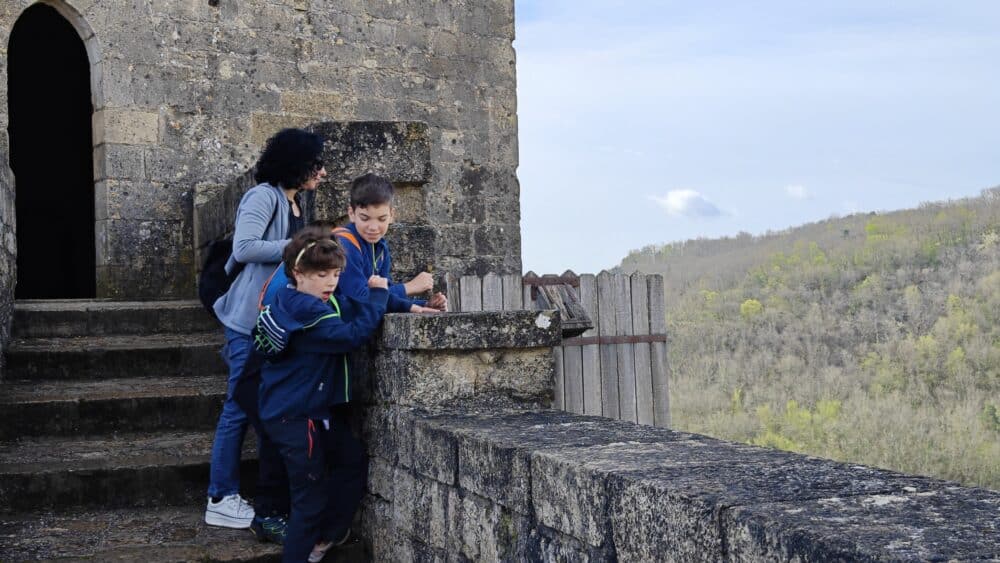
- Castelnaud castle and its views over the Dordogne valley.
- The Eyrignac gardens with their plant sculptures of animals.
- Sarlat la Caneda, beautiful medieval town!

The worst of the Dordogne Perigord on our trip
- Narrow roads, usually without lines in the middle.
- Restoration prices.
- The tolls of France.
- Before the Easter Monday weekend, many places are closed.
- That the trip was over so quickly!
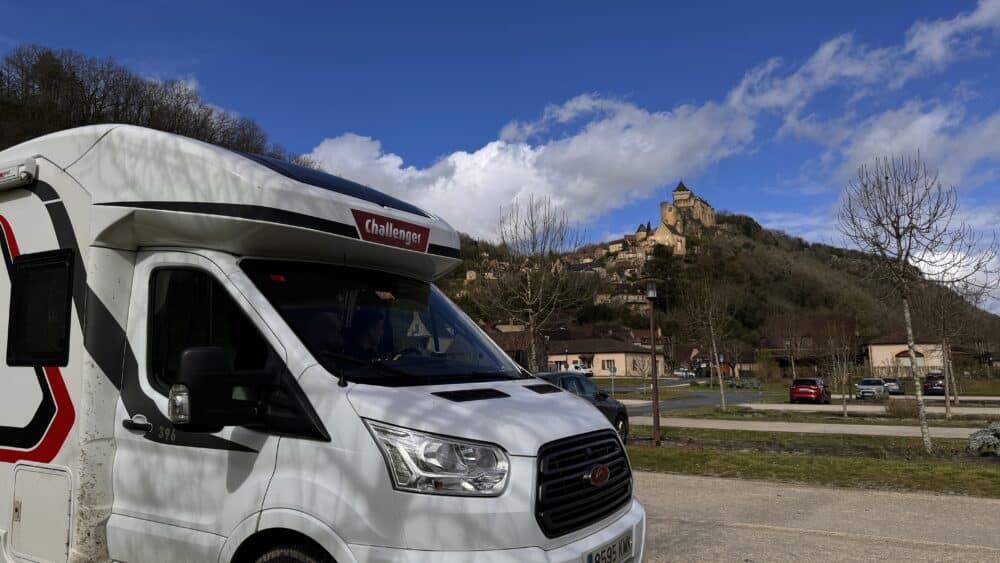
Route through the Perigord by car, motorhome or camper through the 15 essential plans
We'll leave the summary of our route through the Perigord region of France and go into detail about what to see in the Perigord Noir , which is mainly the destination we will visit most on our route, and the rest of the Dordogne Perigord, especially its part of the Dordogne Valley.
Based on our 7-day experience from our last trip through the Dordogne Perigord and a previous trip we made 10 years ago, we propose here a route through the best of this historic department of France, the Perigord, currently called Dordogne.
A route through the 15 essential plans to see in the Perigord by car, motorhome or however you travel.
Video summary of our route through the 15 essential things to see in Perigord


Perigord Noir what to see: A route through 3 stages
The route that we will begin to describe below through the Black Perigord Dordogne, happens through 3 different stages:
- Stage 1: The Vezère Valley, capital of the Prehistory of the world.
- Stage 2: The Pays de Fenelón, the greenest and most authentic Black Perigord.
- Stage 3: Dordogne River Valley, heart-stopping towns and one of the most visited in all of France.
Stage 1: The Vezère Valley, capital valley of the world's prehistory
We embark on the first stage of our route and journey through the Dordogne, a first stage that begins in the Vézère Valley, located in the Dordogne region of France, in the northernmost part of the Périgord Noir. This valley is famous for its exceptional prehistoric heritage. The Vézère Valley is home to numerous archaeological sites and caves with impressive cave paintings , most notably Lascaux, a UNESCO World Heritage Site.
This valley combines spectacular natural landscapes with a rich human history, spanning from the Paleolithic to the Middle Ages. Here we explore picturesque villages, medieval castles and enjoy outdoor activities such as hiking and canoeing on the Vézère River, surrounded by a natural environment of great beauty that will surely not leave you indifferent either.
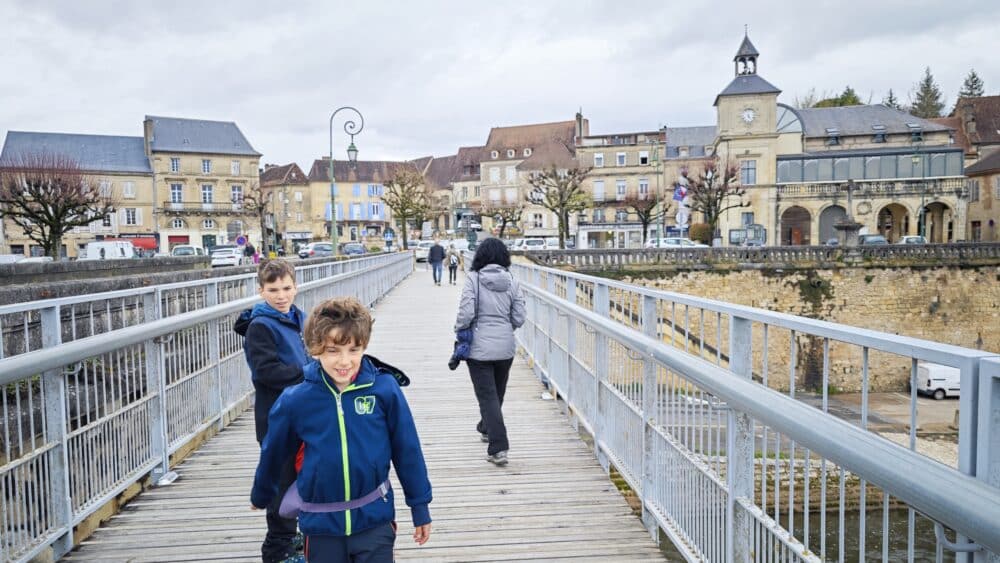
1st stop: Le Bugue
We begin our route through one of the best entrances to the Dordogne: we enter through the north of the Perigord Noir.
Le Bugue is a charming village and one of the must-see destinations in the Périgord Noir region . A village that captivates with its picturesque atmosphere, its many family-friendly attractions, and its rich history.
Nestled in the Vézère river valley , this destination is a gem for lovers of nature, history and family leisure.
With its cozy atmosphere, its lush landscape and its cultural heritage, Le Bugue is the essential start of our route through the Perigord Noir to see.
Le Bugue Dordogne what to see and do
At Le Bugue, we have been able to enjoy multiple visits and activities that we believe are worth it as one of the Perigord Noir points to see. I am going to try to summarize here what you can do and what we liked most about what to see in Le Bugue, within the Black Perigord.
Visit its charming old town
Its cobbled streets invite you to stroll among stone houses with red tiles , while its weekly market on Tuesday mornings offers fresh local produce and handicrafts.
The first thing you definitely shouldn't miss is taking a leisurely stroll through the streets of Bugue.
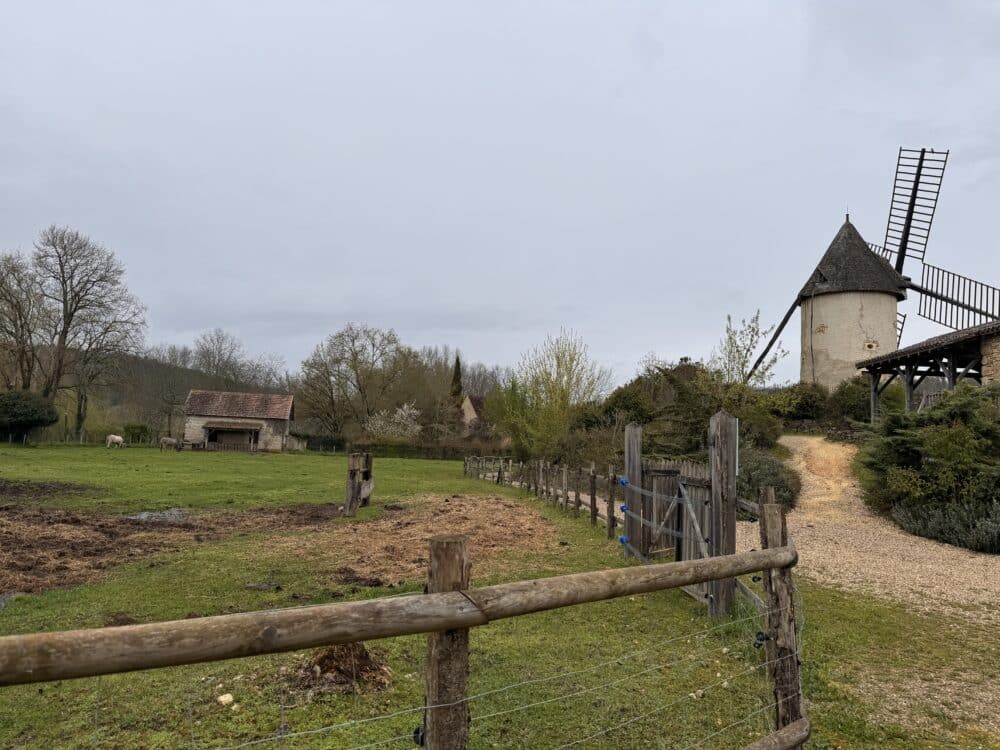
Visit Bournat Farm Park
On our trip through the Périgord Noir, this visit was a must. Through a blog post about a motorhome trip to the Périgord by some good friends, we discovered this place in the Périgord Noir, and it was one of the places that most appealed to us for a visit with the children.
It is a theme park that represents life in the Black Perigord in the year 1900, reproducing the life of this beautiful region at that time with actors, buildings of the period, workshops and much more that the whole family will love.
Finding yourself after getting lost in the Prehistoric Labyrinth or exploring the Big Bird aerial circuit in Univerland
At first glance this activity caught our attention. The place is ideal to meet the Cro-Magnon man in his real life, in a 1000m2 environment going through a labyrinth of riddles and adventure. But the truth is that when we saw that they only spoke French, English and Dutch, we backed away and we couldn't tell you about the activity, since we didn't do it.
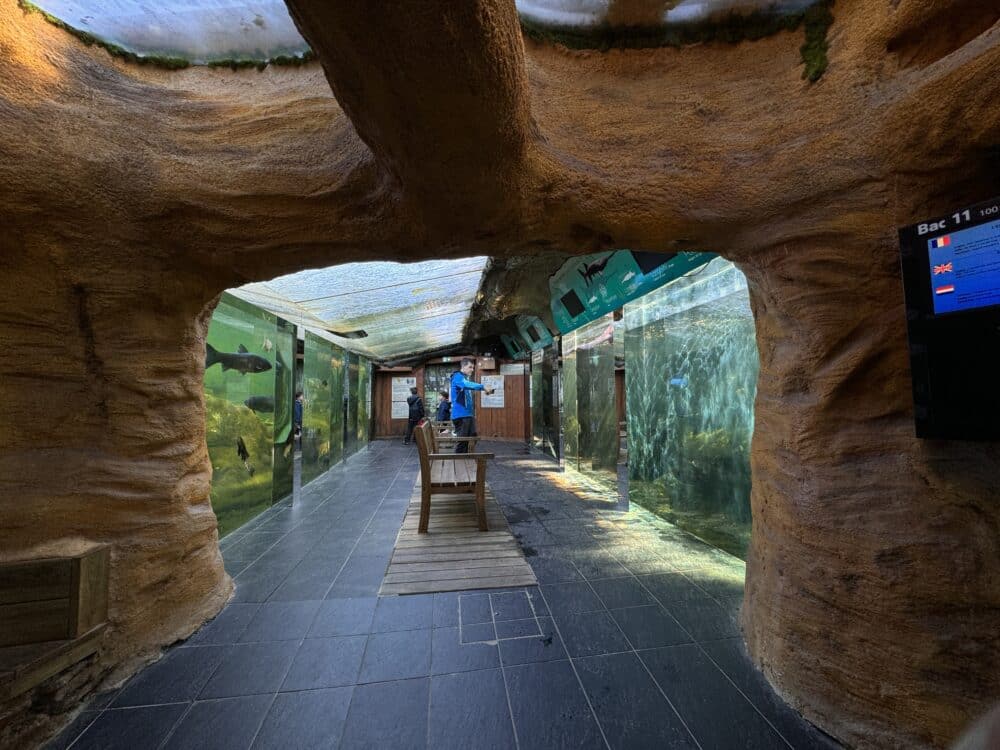
Go to the Perigord Noir Aquarium
Le Bugue has one of the largest private freshwater aquariums in Europe with more than 70 aquariums and more than 6000 animals. Our visit here was ideal with the children for an afternoon.
Hiking
From Le Bugue there are two hiking routes that can be done to get to know the natural environment of Le Bugue:
- The circular route called Boucle du Cingles 14 km and of high difficulty.
- The circular route called Boucle des Cabannes 8,5 km and moderate difficulty.
Take a route along the Vezère River by canoe
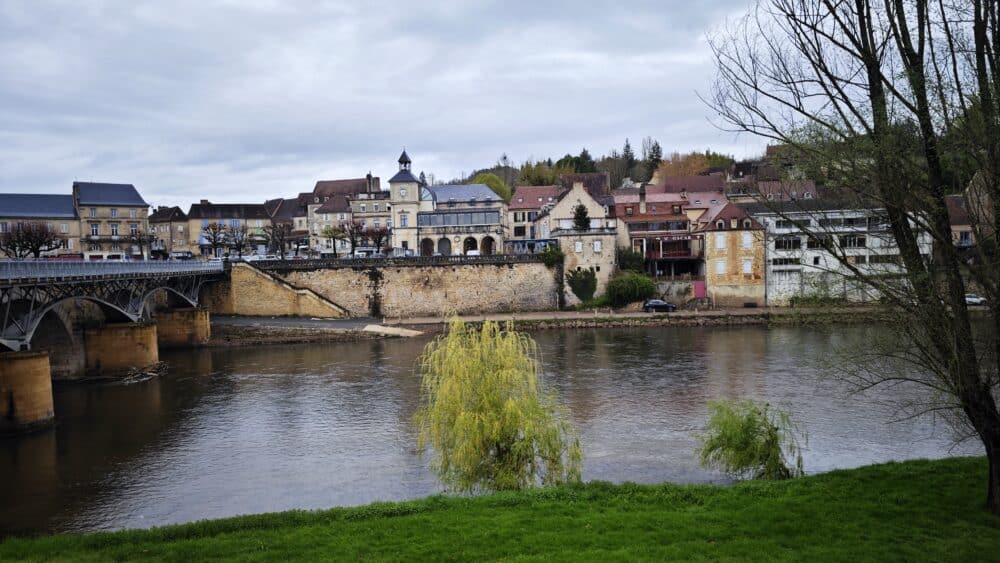
From Le Bugue you can hire canoes and take a canoe route along the Vèzere River, a very calm river and ideal for descending with the family.
Campsites in Le Bugue
In Le Bugue there are two main campsites where you can stay if you are looking for camping in the Black Perigord:
Camping Le Rocher de la Granelle
Open from early May to mid-September. It is a good campsite on the banks of the Vézère, very cozy, with a very nice swimming pool including a small heated pool from mid-May to mid-September and a nice playground for children. It has renovated toilets and shaded plots, some facing the Vézère. A big advantage it has is that there are shops within walking distance, a Lidl and an Intermarché (less than 10 minutes). On the other hand, if you go with children there is entertainment and a kids' club, which is a plus.
Camping les Trois Caupain
Opening of the campsite from April 1 to October 30. It has 3 swimming pools with one that is covered and heated to 28° all season.
The campsite is located 900 meters from the city center and very close to supermarkets. Furthermore, the interesting thing is that it is 500m from Bournat Park, the Aquarium and the Prehistoric Labyrinth among others.
If you go to Le Bugue by motorhome
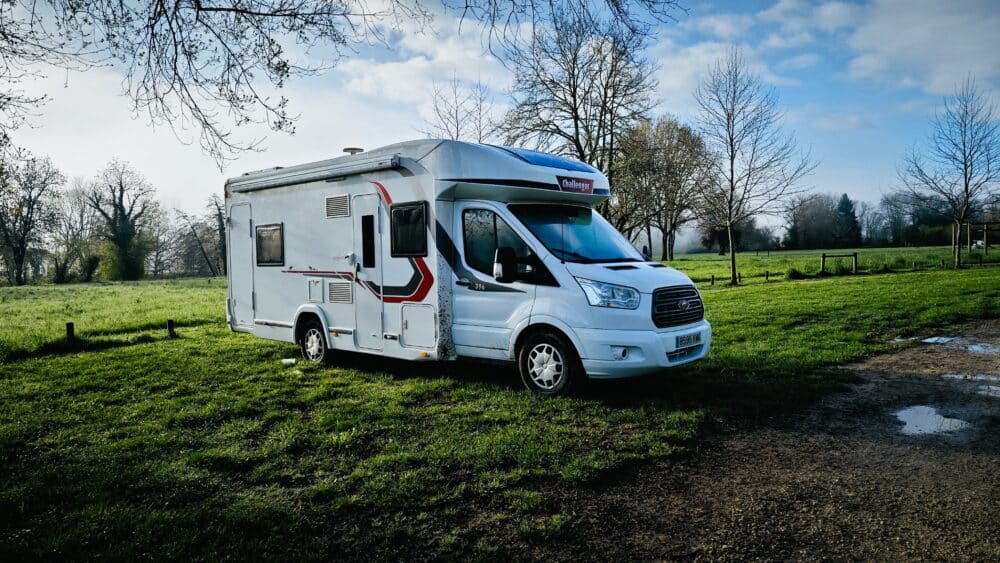
In addition to campsites, if you're traveling by motorhome, there's a municipal motorhome area called Le Bugue , with a moderate fee. It's located in a green area next to the Vézère River, offering basic services and a very central location. Parking is permitted for a maximum of 72 hours. Just be aware that the water supply is often shut off from November to April due to potential freezing temperatures.
2nd stop: Visit to the depths of the Proumeyssac cave with basket
A classic visit to see in the black Perigord is to descend into the depths of the Proumeyssac cave , the so-called Crystal Cathedral.
One of the largest caves in the Dordogne located 50 meters deep, discovered in 1907 and with the largest number of stalactite and stalagmite formations in the area.
We couldn't miss it so we visited this cave and enjoyed its 14 degrees underground. Something why we decided to go visit Proumeyssac was because there is a formula for visiting the cave that is different from many other caves.
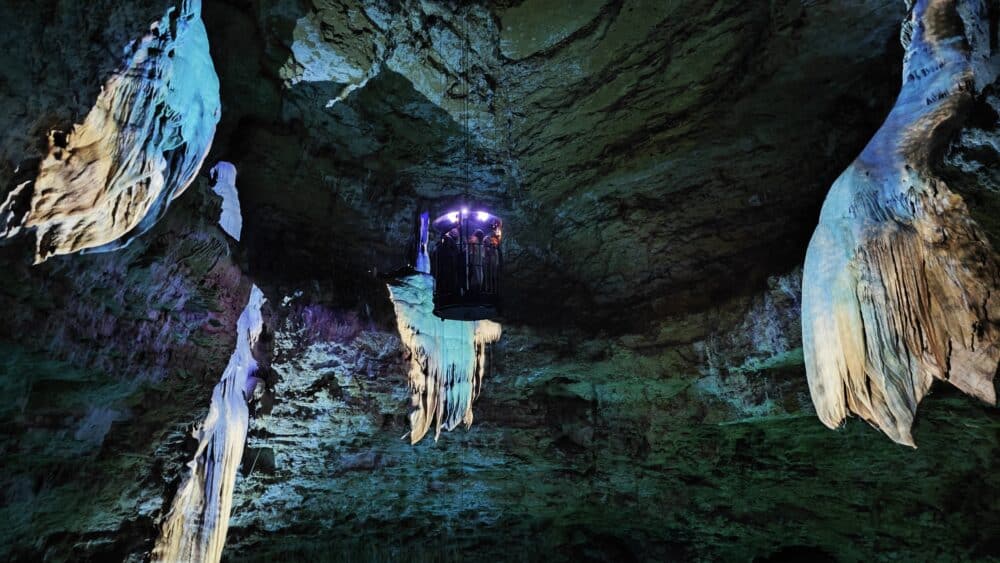
Apart from having a light and sound show during the visit , common in other caves, in Proumeyssac there is a 360º visit with a descent into the cave in a basket as was done in ancient times.
The first visitors to the cave, through a basket powered by a horse, could descend and visit this cave and this is what is intended to be recreated.
Now, the basket does not work with a horse, but it works with a technical system that rotates 360 degrees.
A brutal experience! Of course, if you want this visit in a basket, book in advance, otherwise you will have to do the traditional one on foot.
Something also to keep in mind, if you go outside of the high season in summer, is that the cave is closed from 12:00 to 14:00 p.m. and the last visit is at 17:XNUMX p.m.
Parking at the Gouffre de Proumeyssac
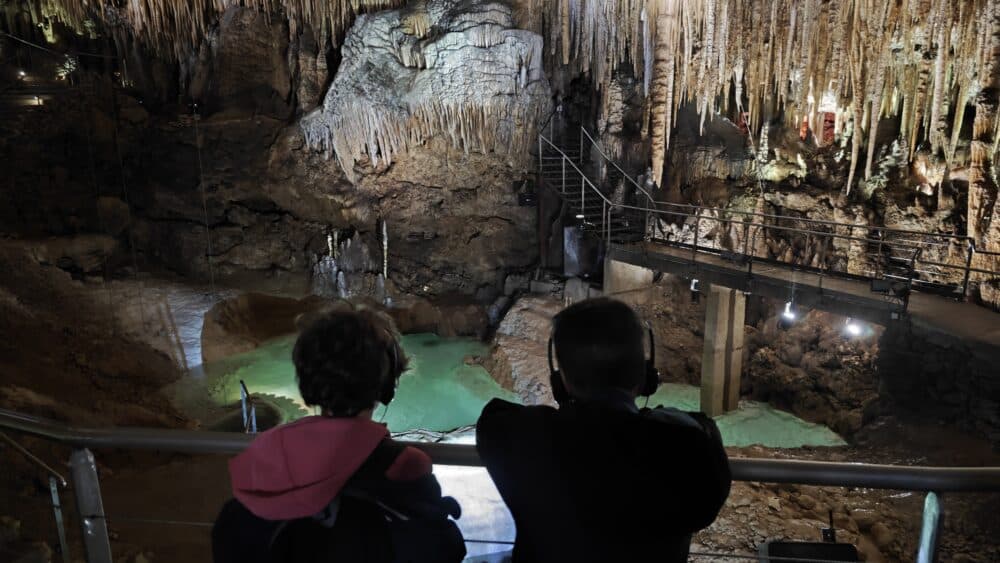
To park at the Gouffre de Proumeyssac , there is a large parking lot right in front where you won't have any problem.
Sleep near the Chasm of Proumeyssac
For accommodation, we recommend a campsite located on a nearby farm called Ferme de la Brauge in Tursac , or if you are traveling by motorhome and prefer a motorhome area, the Eyzies or Le Bugue areas.
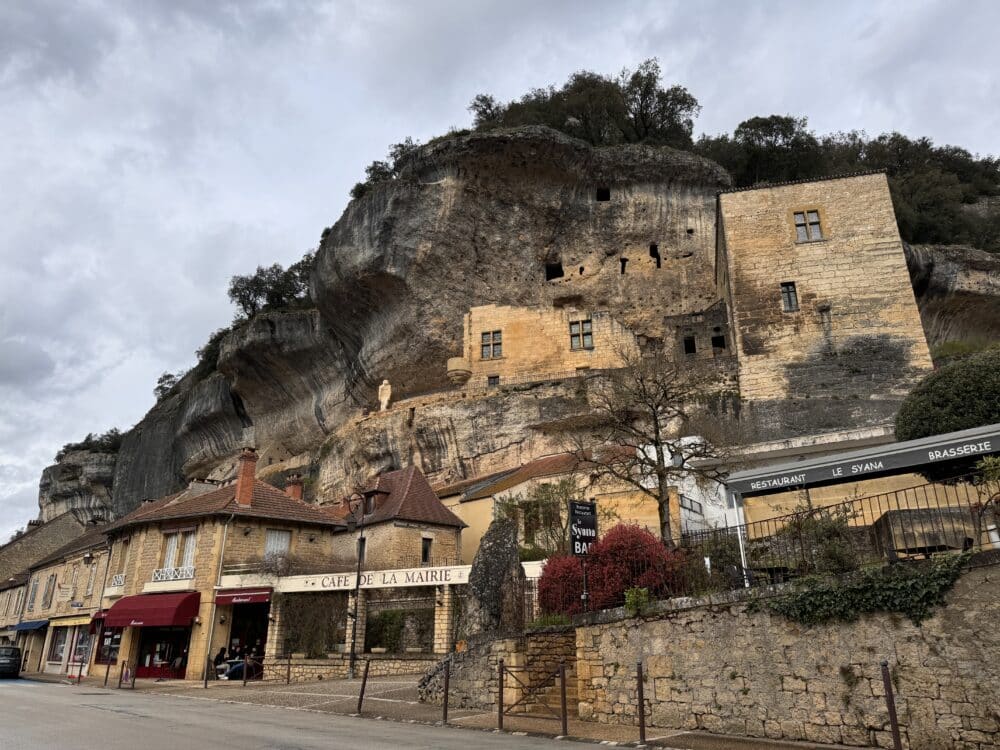
3rd stop: Les Eyzies: National Museum of Prehistory and green route through impressive landscapes
The old town of Les Eyzies boasts two landscaped cliffs from which you can appreciate the beauty of this charming village
The most prominent one is located in the heart of the town, opposite the Town Hall Square . There you'll also find the National Museum of Prehistory, the old castle, and the Neanderthal statue.
The second cliff, grayer in tone, comes into view as you leave Les Eyzies heading towards Périgueux. It contains three important tourist attractions in the Dordogne region: the Grand Roc cave, the Laugerie Basse refuge, and the Tayac troglodyte fort (currently closed to visitors).
The Dordogne-Périgord region is full of cliffside villages, all captured and shared on Instagram, but none quite as breathtaking as this one! Don't forget to take a stroll and enjoy some of the hiking trails in Les Eyziers.
World Capital of Prehistory what to see in Perigord
Les Eyzies, in the Perigord Noir, very close to Le Burgue, presents itself to tourists first and foremost as the world capital of Prehistory , which already says a lot about this beautiful town.
It was here that Cro-Magnon man was discovered in the Cromagnon Shelter, and here we find world wonders of prehistoric art in caves such as Font-de-Gaume, the Laugerie haute and Laugerie basse shelters, listed as National Monuments and protected in the UNESCO World Heritage.
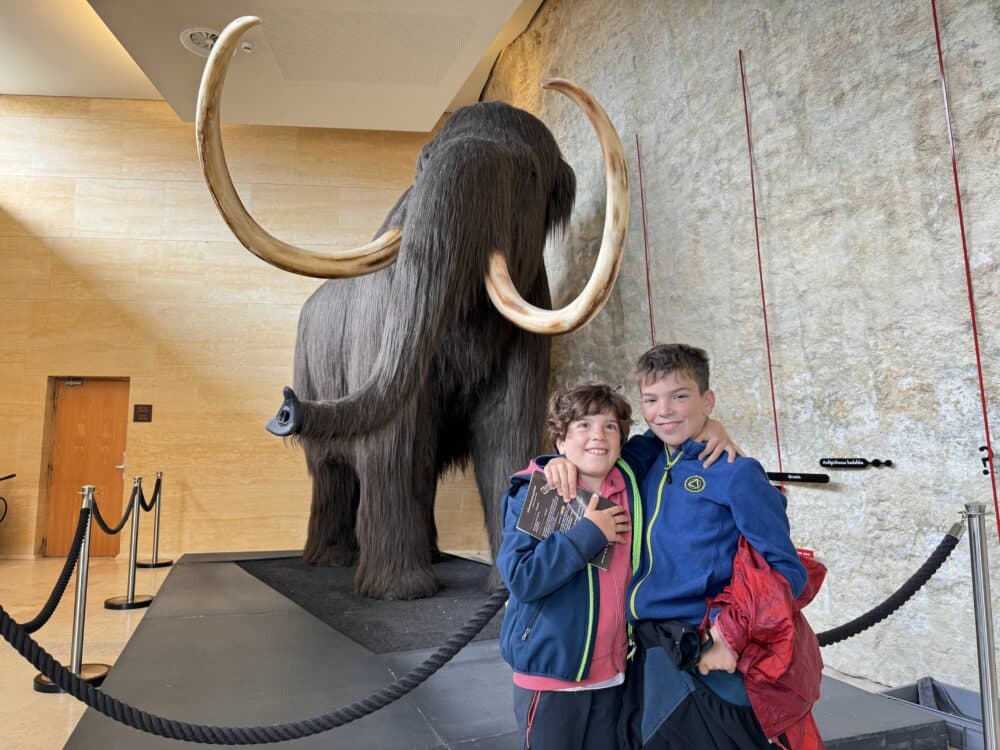
Furthermore, it is in Les Eyzies where we find the National Museum of Prehistory , a reference point for the Upper Paleolithic with rich collections from the Vézere Valley area where we are located.
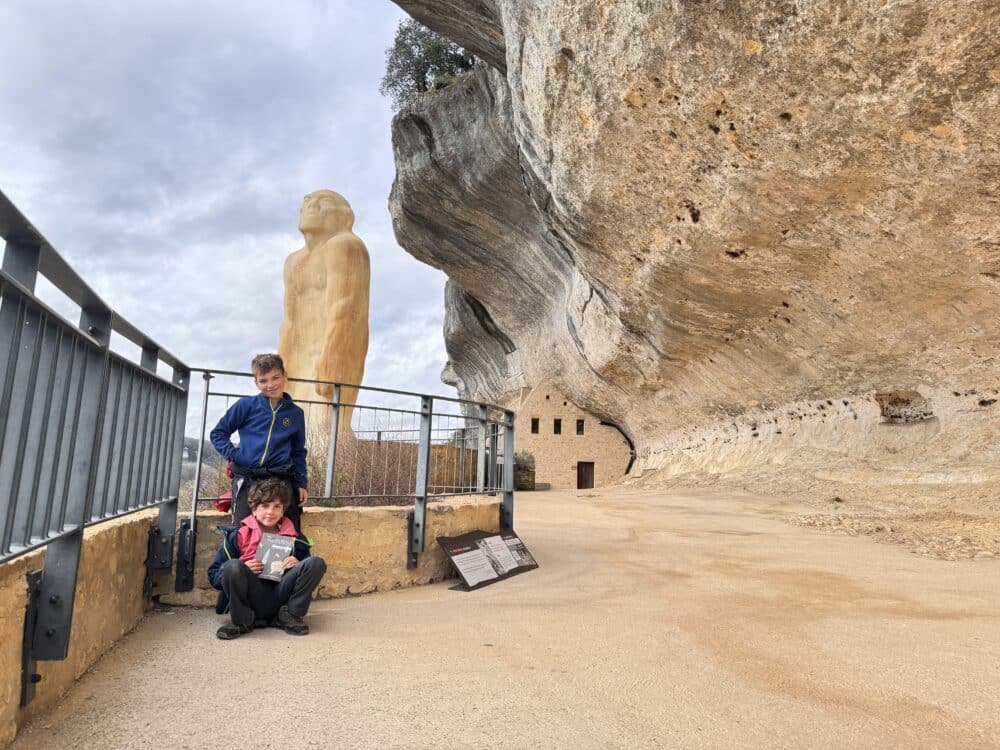
Something that also attracts attention and that you should visit within the National Museum of Prehistory, in Les Eyziers, is its giant statue of the Prehistoric Man by Paul Dardé, the Cro-Magnon statue that they call it, although it actually represents Neanderthal man.
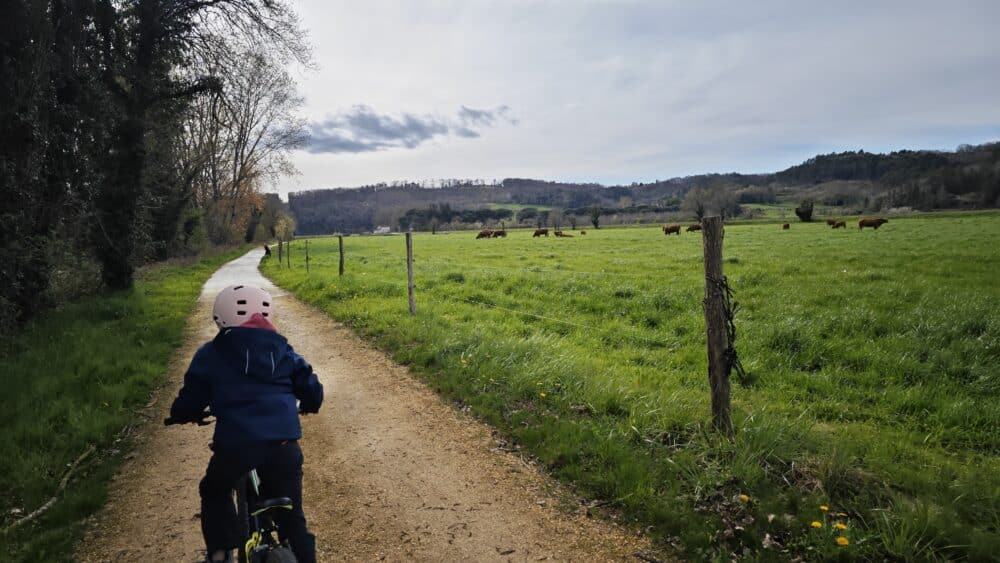
Cycling on the Vézère Valley greenway, an essential thing to do in Perigord
The Vézère Valley greenway, still under expansion, passes through Le Bugue. This greenway follows the course of the Vézère River and partly uses existing rural roads, although some sections have been repaired and made available as a safe greenway without being shared with other vehicles.
Currently the route connects 4 towns in the Vézère Valley on a route of about 20 kilometers through the towns of Les Eyzies, Le Bugue, Limeuil and Saint-Chamassy.
If you don't have your own bike and need to rent one, there is bike rental available at the tourist office 24 hours a day, 7 days a week in Le Bugue and Les Eyzies ; in Le Bugue they only rent electric bikes.
The greenway is accessible to pedestrians and cyclists . What you should know is that it currently combines safe, designated sections with existing rural paths, some of which are used by cars, although infrequently, which you should take into account.
If you're looking for sections that are NOT shared with cars , there's currently one ideal and safe 15km stretch (30km round trip), which is the one we did, from Les Eyzies to Le Bugue. Highly recommended.
If you decide to do the entire route, you should know that the remaining sections will be shared with cars on rural roads.
You have here the tracks and information of the two current main finished sections of the Vézere Greenway here:
Other cycling routes that you have sports are the following:
Traveling the circular route: Campagne, Peyrat, Saint Chamassy, Audrix, Peyrat, Campagne
19,50km you can stop to visit the depths of Proumeyssac, but this route, already shared in sections by cars, is only for adults.
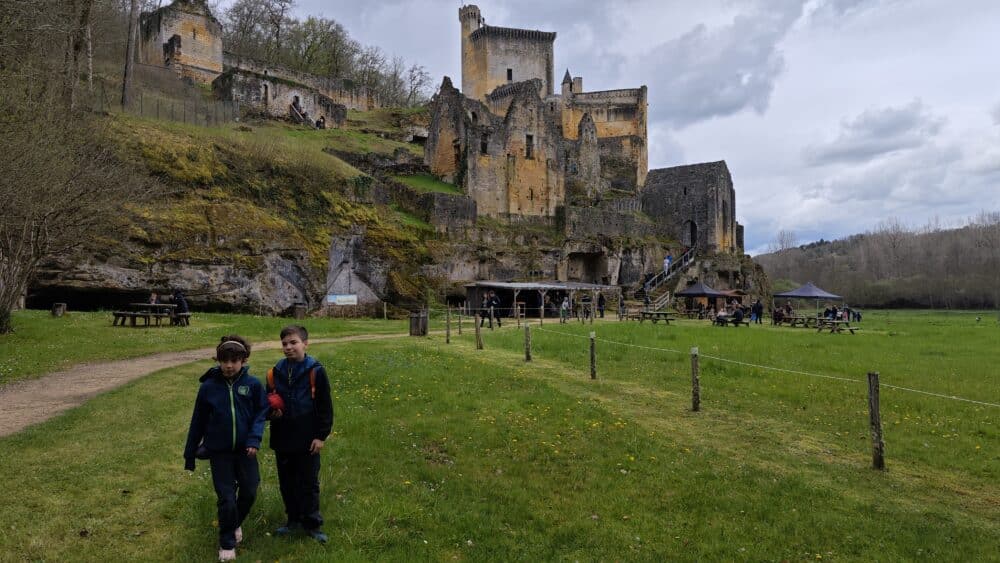
4th stop: Commarque Castle
The imposing Commarque Castle stands majestically above the Beune Valley, between Les Eyzies and Sarlat, in an enclave known as Sireuil. Its construction, which dates back to the 12th and 14th centuries, contains a unique and fascinating history as a co-manor, the vestiges of which still survive today.
The De Commarque family, currently owners of the castle, offers guided tours and workshops during the summer season. Recently, the hidden cave beneath this fortress has been opened to the public, and the walls of the keep can be explored by rappelling, descending more than 40 meters. Only those of intrepid spirit will venture into this activity.
For those who prefer a quieter experience, the traditional visit and the activities available on site are reason enough to make a stop and fully enjoy the charm of Commarque.
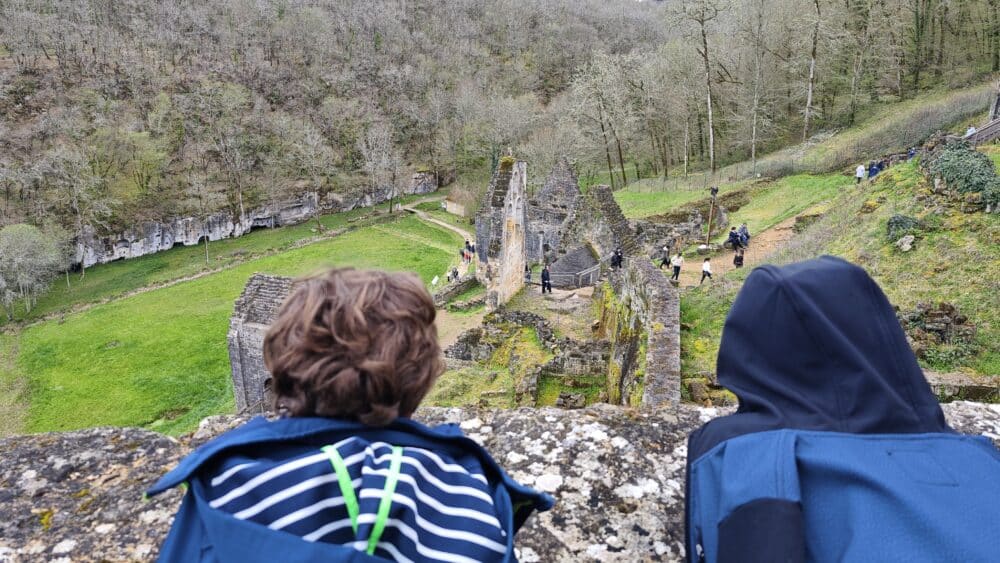
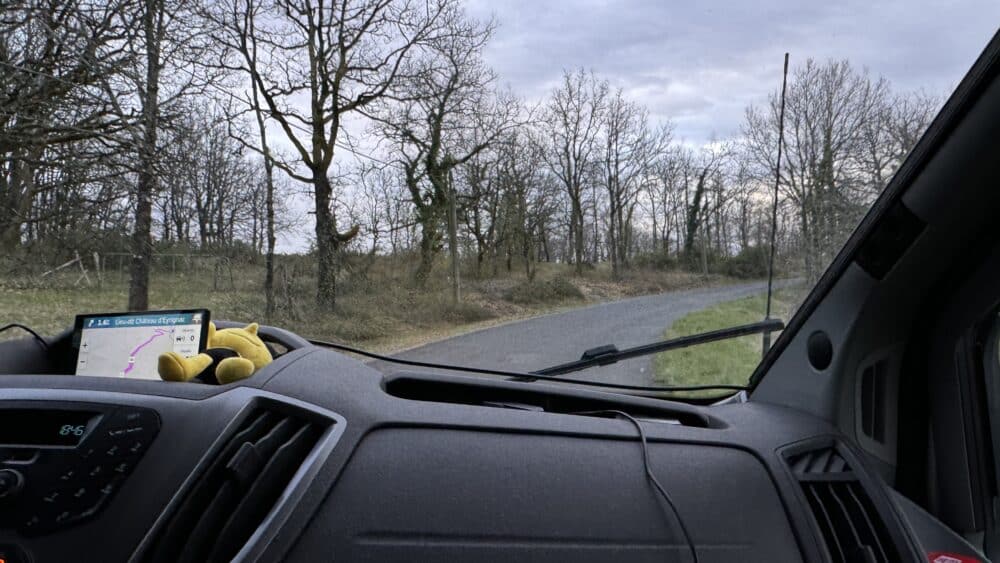
At Easter, just when we went, they do an Easter egg hunt activity that the kids loved. A castle that is definitely worth a visit. Of course, the road to get there is very narrow, so be careful and try to arrive at night or first thing in the morning to avoid encountering cars facing you.
Sleep after visiting Commarque Castle
For accommodation, we recommend a campsite located on a nearby farm called Ferme de la Brauge in Tursac , or if you are traveling by motorhome and prefer a motorhome area, the Eyzies area.
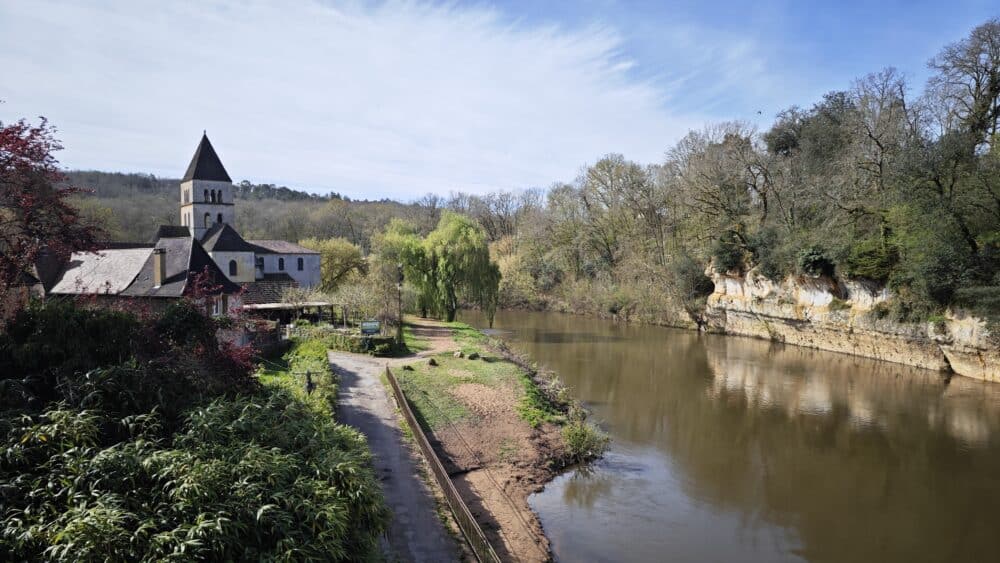
5th stop: Sail along the Vézèrre in Saint Léon sur-Vézère, one of the most beautiful villages in France
After our visit to Les Eyziers, we continued along the Vézère Valley until we reached one of the villages listed as among the most beautiful in France. Saint-Léon-sur-Vézère, located in the Côte de Jor region, possesses the charm and authenticity typical of the medieval villages of the Périgord Noir , with its warm, golden stones, tiled roofs, labyrinthine couredoux (narrow streets), and the Vézère River dominating the landscape.
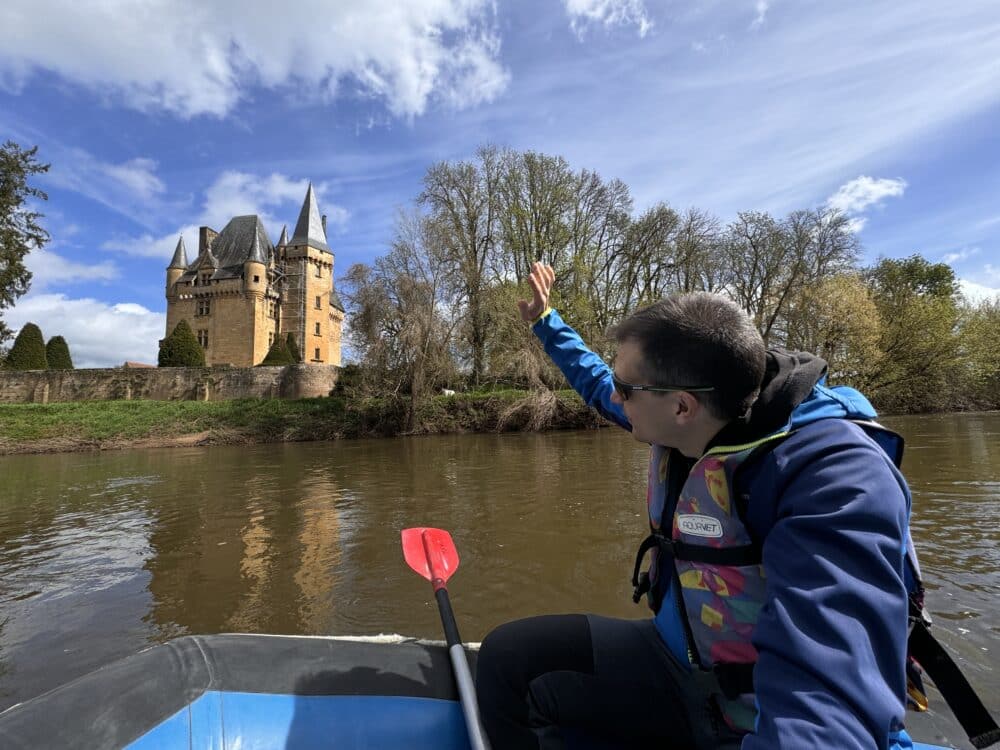
Canoeing (or rafting) down the Vezère
This town is one of the best for going down the Vézère River because it has an ideal canoe base called Canoë APA.
From here they took us in a van and unloaded to make the descent and reach the canoe base again.
The canoe trip is usually 12 km – 3 hours, between Thonac and Tursac, called the "Among Castles and Troglodyte Fortresses" route, but the itinerary can be adapted when you contact them. They speak a little Spanish, so don't worry.
The nautical base has a parking lot where you can park without any problem.
In our case we did the descent with guided rafting boats since it had rained a lot and for safety reasons it was better than the canoe, although we assure you that the river is a very calm raft.
Le Conquil, troglodyte village to see in Perigord Noir
In Saint León we can also discover and visit on the banks of the river an ancient habitat of prehistoric man sheltered by the rocks as a place of refuge where, through guided or self-guided tours with an audio guide in French or English, you can learn about the history of this troglodyte place.
Furthermore, in Le Conquil, you will also find a small theme park for the little ones with dinosaurs and games.
Where to sleep in Saint-León-sur Vézère camping or motorhome area
In Saint-León-sur-Vézère there is a great municipal campsite at a good price next to the river and with all the services.
And if you're traveling by motorhome, there's a paid motorhome area that's also municipal and it's great.
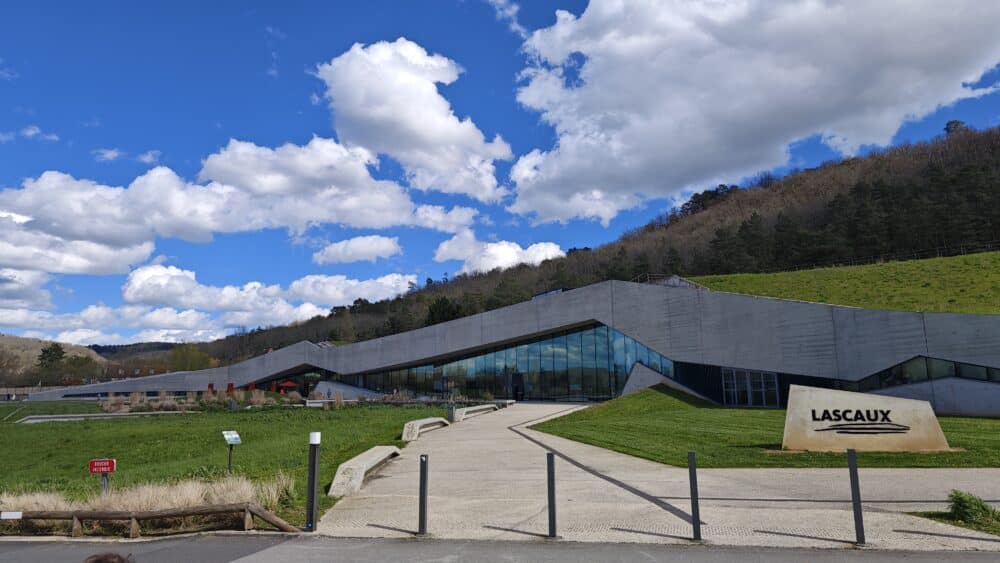
6th stop: Visit to the Montignac Lascaux International Center for Parietal Art, a must-see in Perigord
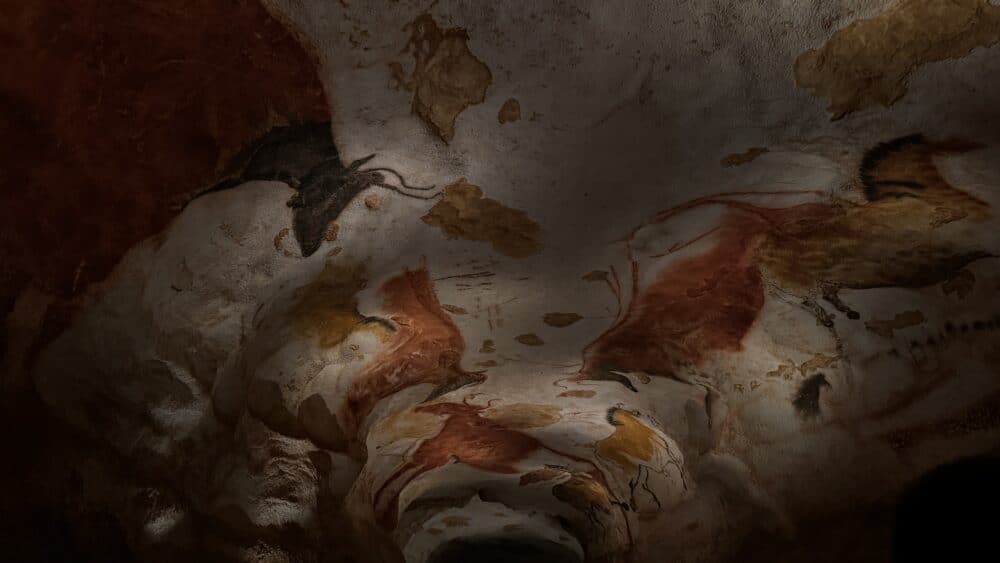
Among the prehistoric sites inscribed on the UNESCO World Heritage List in the Vézère Valley, the Lascaux cave stands out with its cave paintings , authentic masterpieces of prehistoric art.
Discovered in 1940 by Marcel Ravidat, his dog Robot and three friends, it was open to the public between 1948 and 1963, then closed due to climatic imbalances caused by visitors' breathing. In 1983 a partial replica, Lascaux II, was inaugurated 200 meters from the original cave. Later, a traveling exhibition, Lascaux III, presented facsimiles of complementary scenes. And finally today we find Lascaux IV, the result of a 2012 architectural competition, gives life to a rock art center that merges exhibition rooms and a complete recreation of the accessible part of the original cave.
The International Centre for Rock Art, home to Lascaux IV , invites you to immerse yourself in fantasy and imagination, and to follow in the footsteps of our ancestors. Special attention has been paid to temperature (13°C), humidity, and lighting to recreate the original atmosphere—a faithful reproduction of the original.
This center is unique in France and the world for its prehistoric art; it's called the Sistine Chapel of caves! It's like the Eiffel Tower of Paris; if you go to the Périgord, it's one of the must-see attractions in the Dordogne!
Before you go, remember to book your visit to Lascaux IV, as there are special tours for children and tours in Spanish.
Where to park to visit Lascaux
The International Centre for Rock Art has a large visitor parking lot where you can park freely during the day; overnight parking is prohibited. Within this parking area, there is a section designated specifically for campervans. This is a day-only parking area, and overnight stays are not allowed, but it's an ideal base for visiting Lascaux and Montignac.
Where to sleep in Montignac in a motorhome
To spend the night in Montignac near Lascaux IV we recommend the Montignac motorhome area:
Municipal paid motorhome area of Montignac , very close to the historic center.
Stage 2 of the route through the Black Perigord: Pays de Fenelón
The Pays de Fénelon is an area rich in historical, cultural and natural heritage of the Black Perigord Dordogne. This territory is named after the famous archbishop and writer François de Salignac de La Mothe-Fénelon, whose influence is felt in the region.
The area is dotted with charming medieval villages, such as Carlux and Salignac-Eyvigues, with cobbled streets, castles and stone buildings. The imposing castle of Fénelon, located on the top of a hill, is a good example.
The Pays de Fénelon is also a paradise for nature lovers, with numerous hiking trails and cycling routes as we will enjoy.
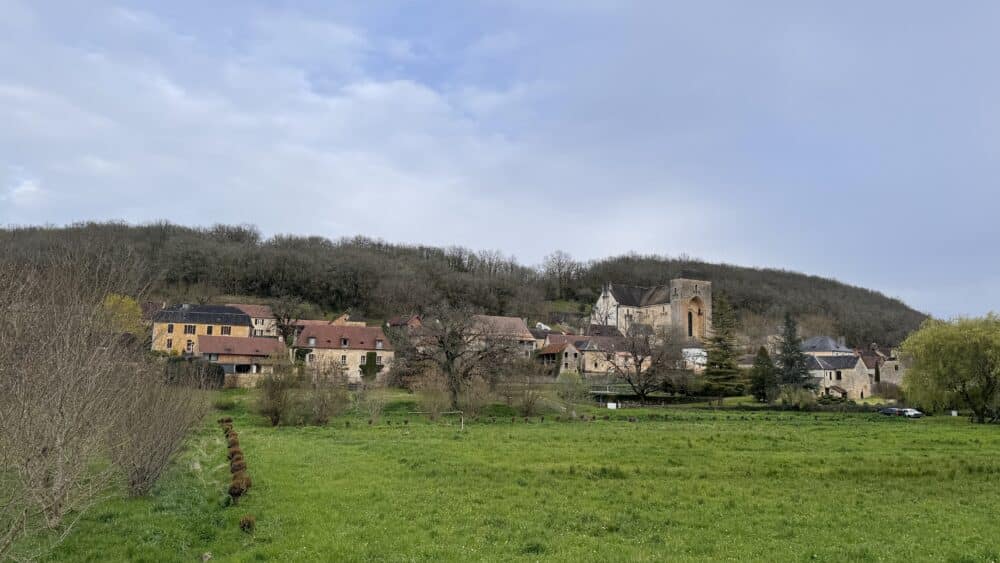
Stop 7: Visit to Coly-Saint Amand
From Montignac, we continue our route to now visit two beautiful little towns that you cannot miss on your trip to the Dordogne Perigord, now entering this second stage of our route through the Black Perigord Dordogne.
Classified among the “most beautiful villages of France,” Saint-Amand-de-Coly is characterized by the imposing stone silhouette of its abbey, which can be visited by parking at the village entrance. Considered the most beautiful fortified church in the Périgord region , this Romanesque abbey stands as a magnificent testament to the region's troubled past.
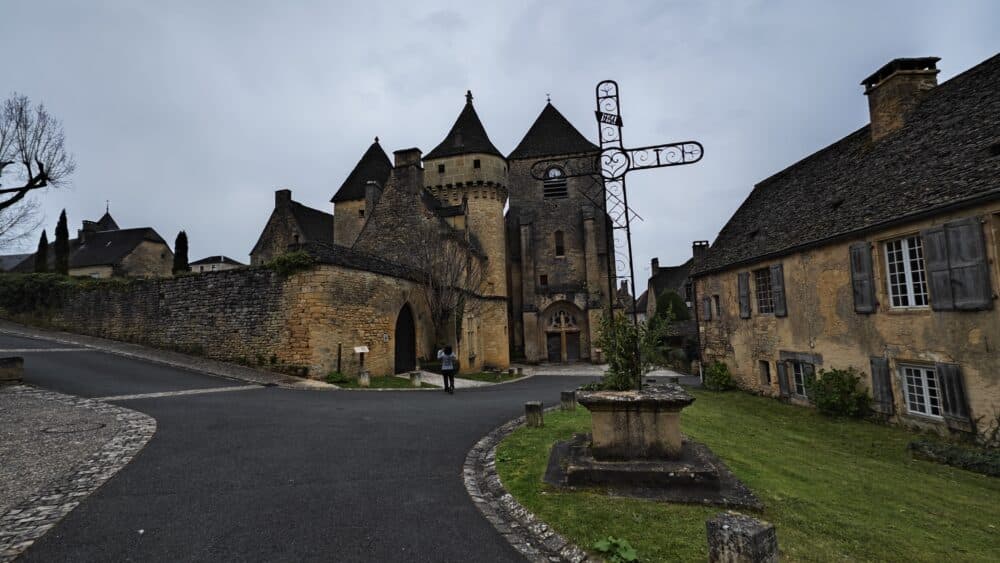
Stop 8: Saint-Geniès, one of the most beautiful towns to see in Perigord
On the other hand, less than 15 minutes from Saint-Amand, away from the main roads, we'll park in the parking lot , which also houses the village's campervan area, to visit the village of Saint Geniès . This village has preserved its ochre-colored houses with slate roofs, as well as its 13th-century castle and a beautiful, typical 12th-century church.
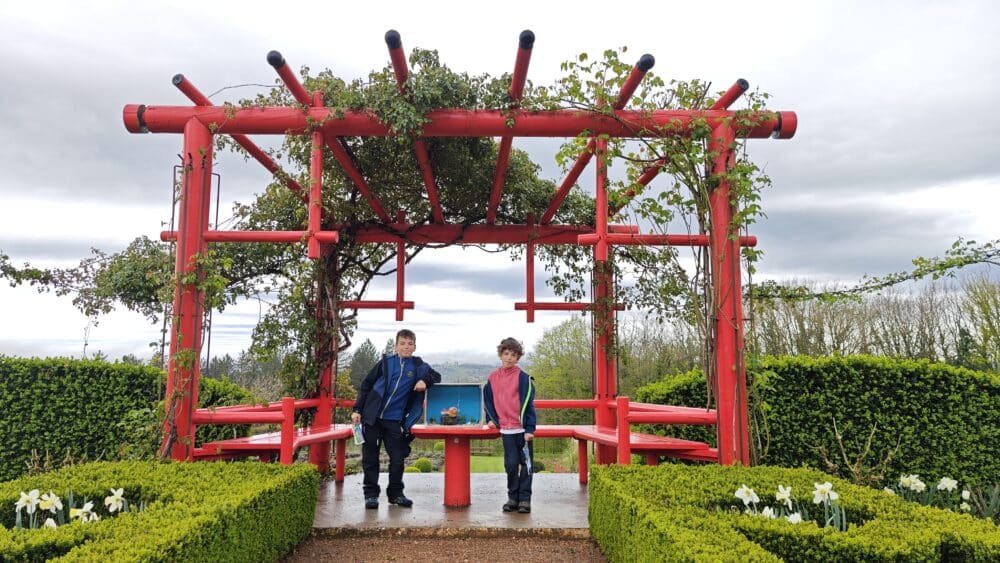
Stop 9: The gardens of the Eyrignac manor in Salignac Eyvigues
Between Montignac and Sarlat, we find the gardens of the Manoir d'Eyrignac, classified as "Notable Gardens" and "Historical Monuments of the 17th and 18th Centuries", in the middle of the Pays de Fenelon.
Here we find ourselves among the most beautiful gardens in the Périgord region, with a unique collection of plant sculptures. You can book a guided tour in Spanish or visit them on your own.
The gardens have a large parking area where, if you're traveling in a motorhome, you can sleep there; camping is not always permitted. We loved this place for an overnight stay, surrounded by nature and tranquility.
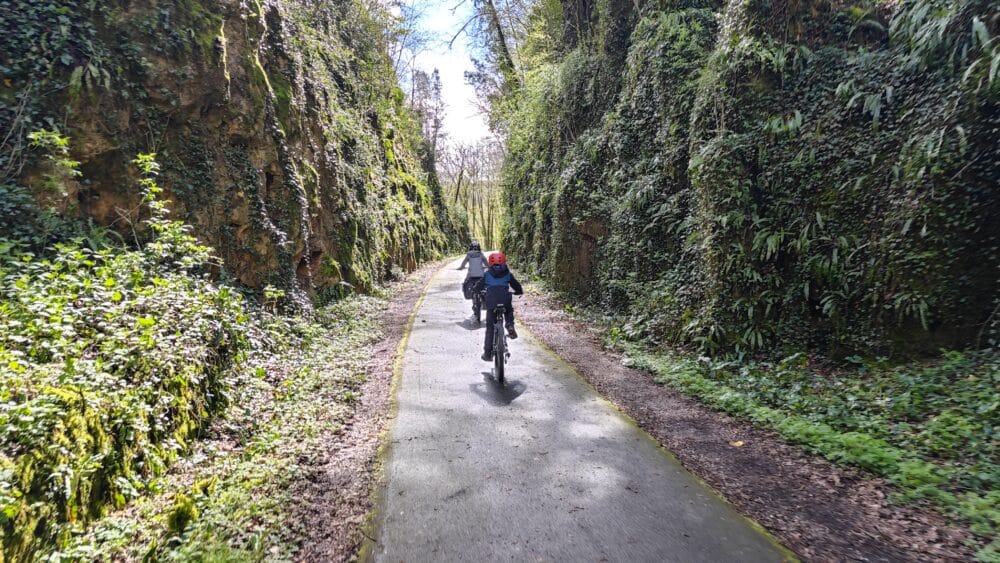
Stop 10: Via Verde Sarlat – Cazoulès
On our visit to the Pays de Fenelon, we couldn't miss cycling along the green route that runs through this territory. The Black Perigord greenway crosses most of the territory of the Pays de Fenelón.
In our case we parked in Sarlat, the last or first point of this famous and beautiful green route depending on your preference.
So, as family cycling enthusiasts, we couldn't resist pedaling along a section of the Sarlat – Cazaoulès greenway , a very easy 25 km cycling route that follows a railway line through the Perigord, where we can discover the beauty of the Perigord black landscape.
Our exit from this greenway is at the Madrazès roundabout parking lot , in Sarlat, in the direction of Peyrillac-et-Millac.
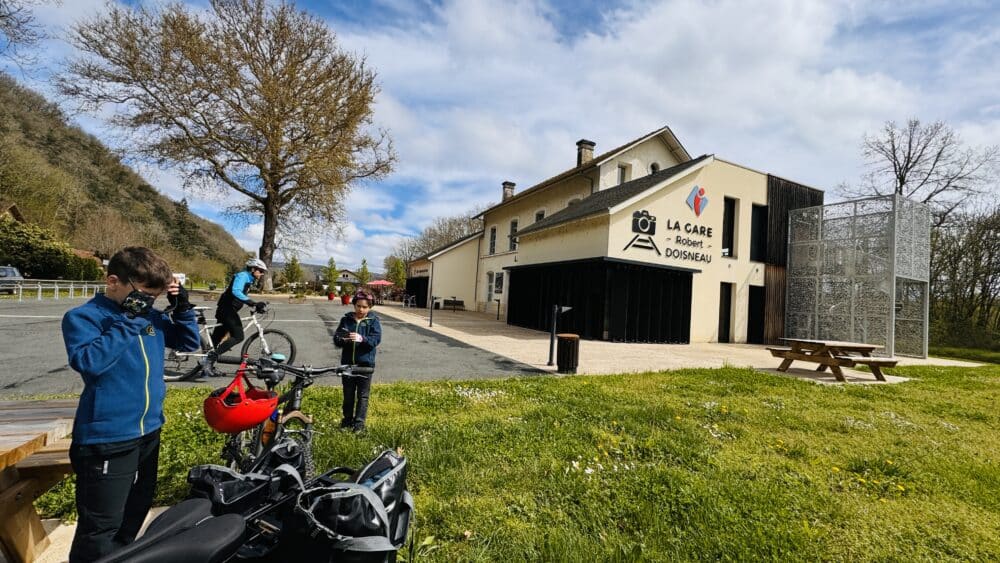
Stop 11: La Gare de Robert Doisneau
From there, Sarlat and the parking lot we mentioned in the previous point, we take the greenway and in our case we did the section up to the Gare de Robert Doisneau, one of the old train stations that today, with the greenway, has become a tourist information point with a museum exhibition about Robert Doisneau, a famous French photographer from the interwar period.
It is a free exhibition museum that is worth seeing to enjoy its photography.
Going there and back from Sarlat by bicycle along the Black Perigord greenway was almost 40 km that we pedaled with great pleasure among beautiful landscapes of green beech forests, charming villages and along the banks of the Dordogne River in some sections.
Stage 3: The Dordogne River Valley
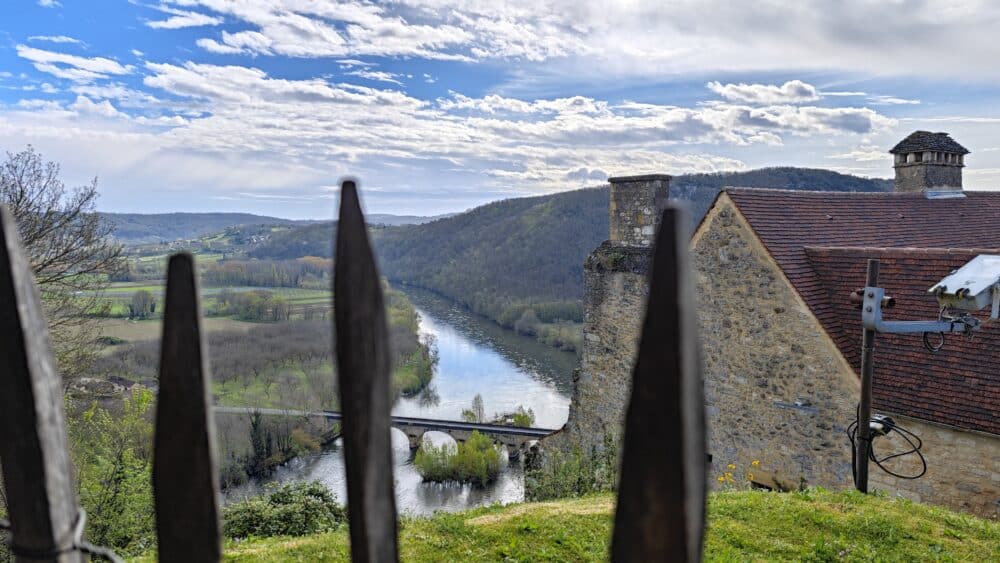
The Dordogne River Valley, within the Dordogne department in the Nouvelle-Aquitaine region, is one of the most picturesque and culturally rich destinations in France and the Black Perigord Department of Dordogne.
This valley is known for its stunning landscape of green hills, vineyards, and majestic cliffs along the meandering Dordogne River. Here you will find numerous villages classified among the "most beautiful in France", such as La Roque-Gageac and Beynac-et-Cazenac, each with its medieval charm and traditional architecture.
The valley is dotted with historic castles, such as Château de Beynac and Château de Castelnaud that offer a glimpse into the region's feudal past. Furthermore, the Dordogne Valley is famous for its gastronomy, especially foie gras, truffles and local wines. Outdoor activities such as canoeing, hiking and cycling are popular, allowing visitors to fully enjoy the natural environment and its spectacular views. The Dordogne Valley combines history, culture and nature in a harmonious way, making it an essential destination in France.
Stop 12: Sarlat La Caneda, the medieval jewel of the Dordogne to see in Perigord
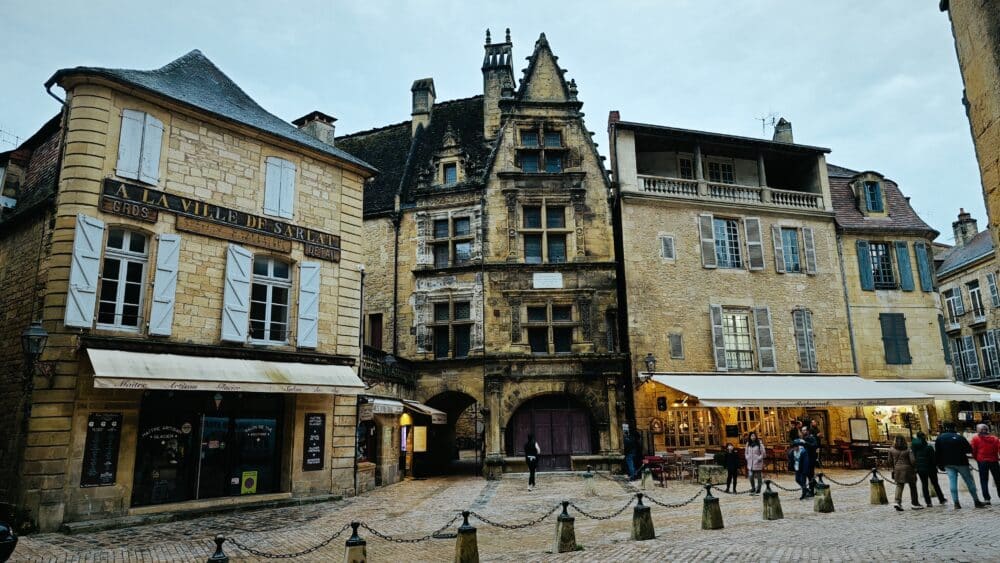
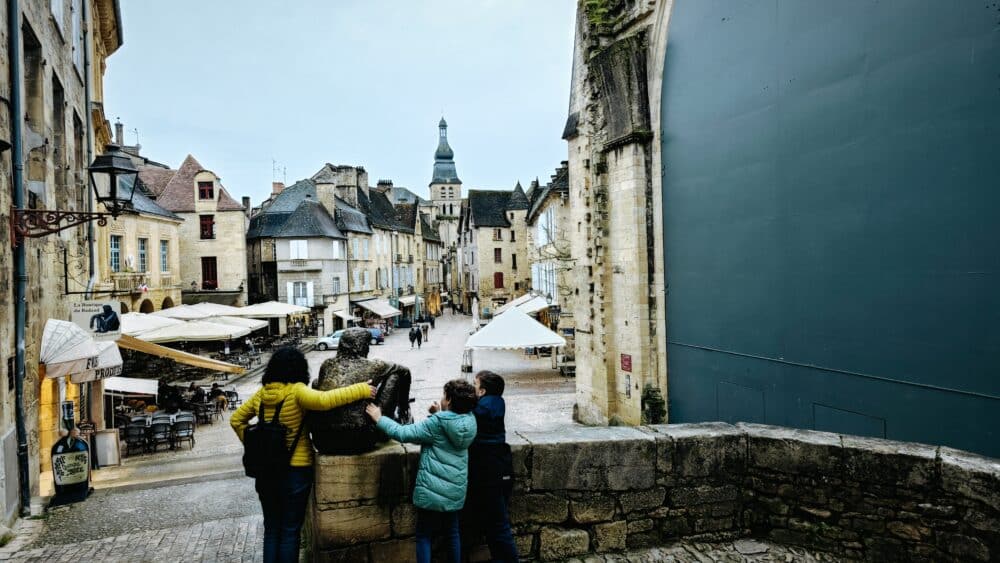
Located in the heart of the Dordogne region, Sarlat-la-Canéda is much more than just a tourist destination, and a must-see on any trip to the capital of the Périgord Noir . It's a living testament to the rich history and culture of France and the Dordogne . With its cobbled streets, perfectly preserved medieval architecture, and charming atmosphere, this town captivates visitors with its timeless elegance.
Sarlat is one of the most beautiful medieval towns in Europe . Protected from modernism by the Malraux Law, Sarlat has preserved the original architecture of its streets and the beauty of its monuments. The town boasts a record density of listed or nationally inventoried historical monuments, with 65 protected monuments and buildings.
Gastronomy, the extra key
But Sarlat is not just an open-air museum. It's also a gastronomic paradise where you can discover the best of Dordogne-Périgord cuisine . Its colorful and bustling markets offer a wide variety of local products, from black truffles to foie gras , delighting even the most discerning palates. Traditional restaurants, tucked away in cobbled alleyways, invite you to savor authentic Périgord cuisine, prepared with the freshest and most flavorful ingredients.
In addition to its exquisite culinary offerings, Sarlat is famous for its annual film festival , which attracts film lovers from all over the world to enjoy a selection of films in a truly unique setting.
In short, Sarlat-la-Canéda is a gem that perfectly combines history, culture and gastronomy, offering an unforgettable experience for all who have the privilege of visiting it.
Where to eat in Sarlat la Caneda
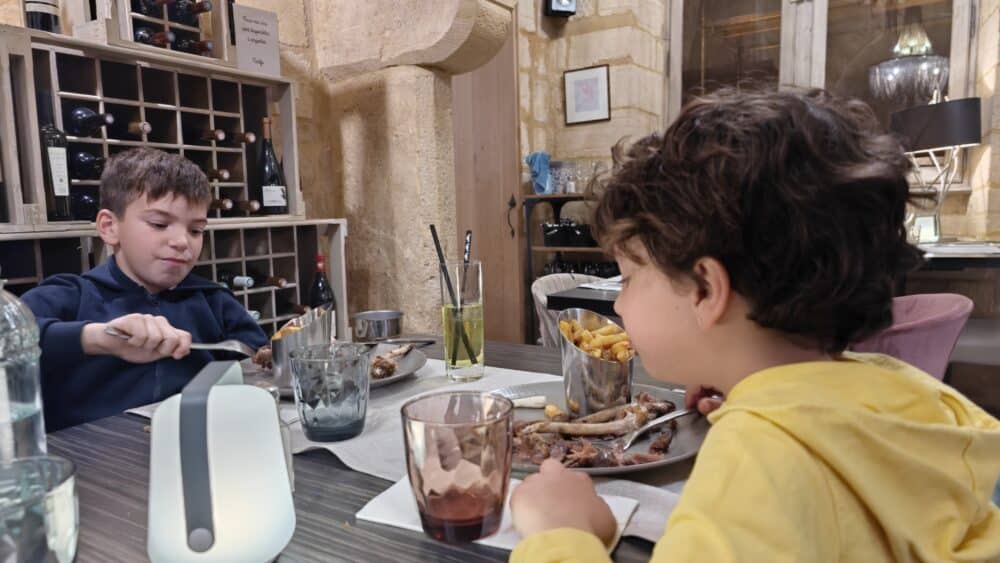
We don't usually recommend restaurants, but "LA COULEUVRINE" in Sarlat deserves a mention. If you want to try authentic Périgord cuisine, this is one of our favorites from our trip.
Where to sleep in Sarlat La Caneda
To sleep in Sarlat we recommend Camping Huttopia Sarlat or the paid motorhome area of Sarlat la Caneda.
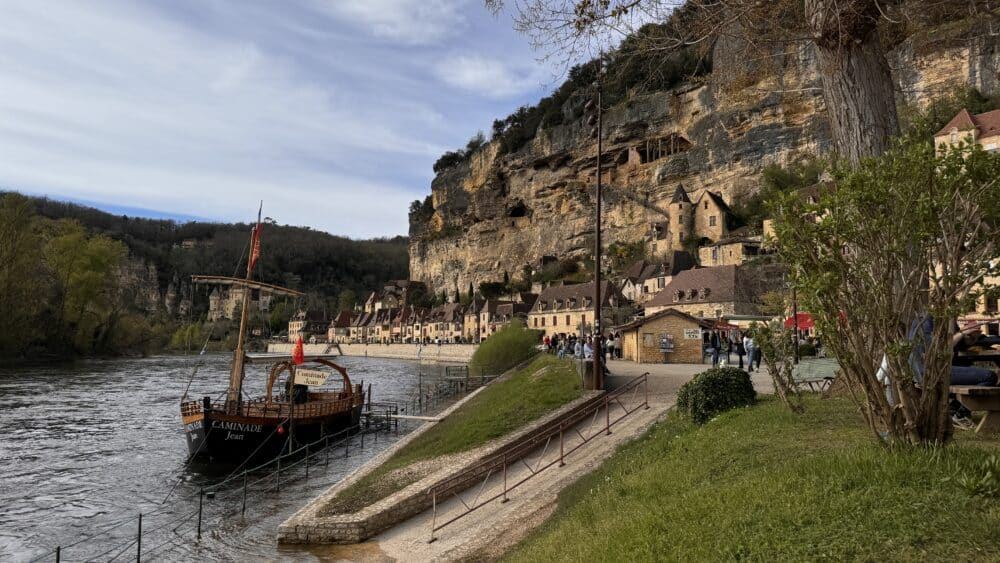
Stop 13: La Roque Gageac Perigord must and the third most visited town in France
Descending the Dordogne River on a barge in La Roque-Gageac is one of the must-do activities on a route through the Dordogne Perigord Noir, so we couldn't miss it on our Perigord Noir route.
Apart from visiting this beautiful town, we went aboard a replica of an 18th century ship, a barge. These guided walks cover ten centuries of history of the Dordogne Valley: the Middle Ages, the life of the boatmen, the migratory fish of the river, the ecosystem, the local fauna and flora.
In our case, we went with Gabaras Norbert , who had an audio guide in Spanish and even Catalan! In fact, the captain of the boat was Catalan.
To park and spend the night there is a motorhome area in Roque Gageac, so your visit is ideal and easy if you go in a motorhome or camper.
For overnight stays at a campsite, there's Camping "la plage" nearby in Vézac.
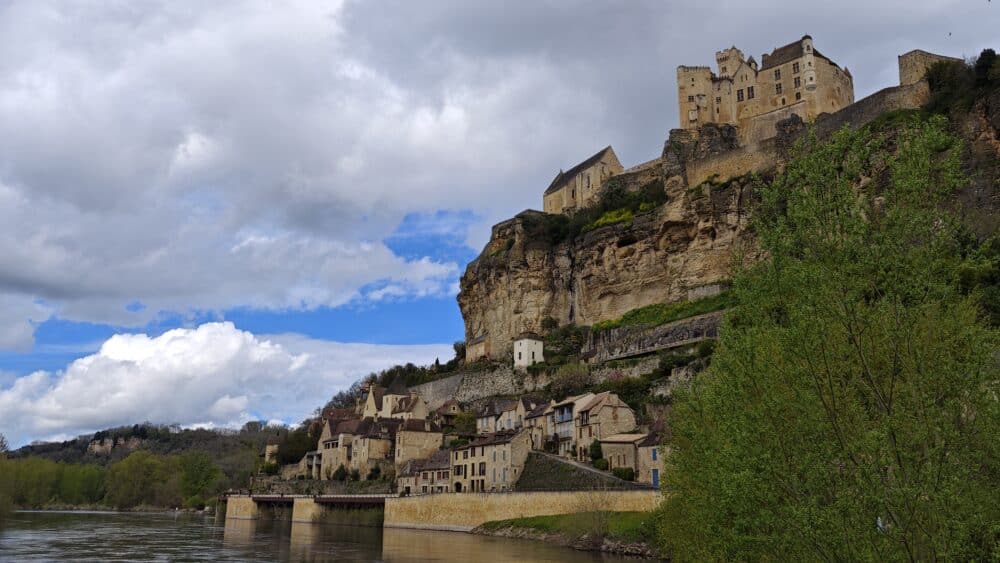
Stop 14: Beynac-et-Cazenac, another of the most beautiful towns in France
Just 10 minutes from La Roque Gageac we were able to visit another of the most beautiful towns in France.
Beynac et Ccazenac is beautiful and its castle at the top makes it even more special.
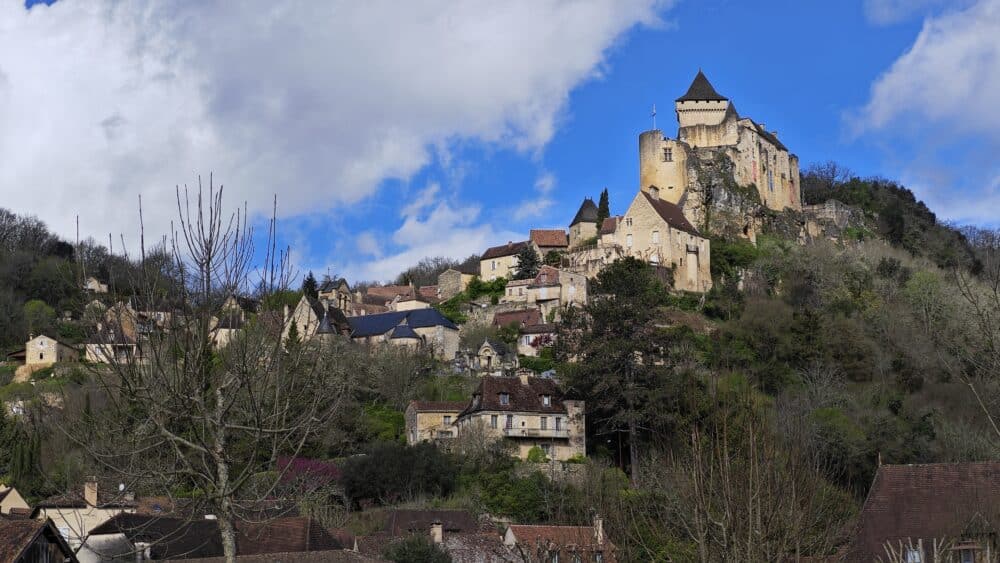
Stop 15: Visit of Castelnaud Castle what to see in Perigord as the last stop
Classified as a Historical Monument, this feudal fortress, which is the Castle of Castelnaud, offers a magnificent panorama of the Dordogne valley, so without a doubt this was going to be the icing on the cake as the last stop in the Dordogne Perigord Noir of our route.
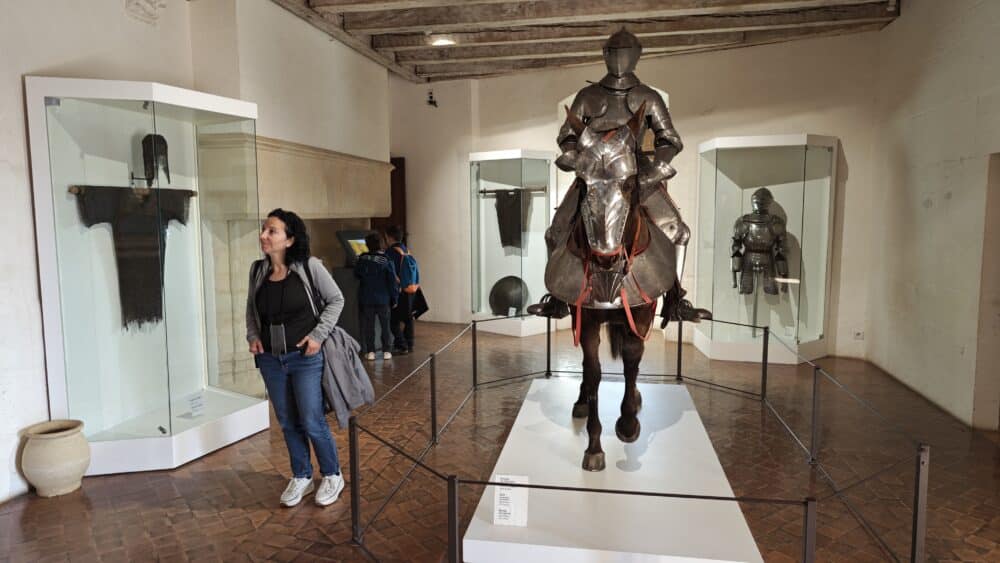
This castle houses the Museum of War in the Middle Ages. A collection of weapons and armor, life-size reproductions of war machines (mangonel, trebuchet, couillard, spierre, parapet) that allow you to discover the art of war in the Middle Ages and some aspects of the life of the lords of Castelnaud with the medieval-inspired garden and furnished dungeons.
An essential without a doubt on a route through the Dordogne Valley and through the Black Perigord on a route.
And here, with beautiful breathtaking views from Castelnaud Castle, our route through the Black Perigord and the French Dordogne ends.
A great trip and destination that we are sure will capture your hearts as much as it does us. When you go, tell us in the comments and share your experience and advice with other travelers here.
Latest posts from our blog
-
Definitive manual for traveling by motorhome【2024】
Super complete manual for traveling by motorhome with all the answers to your questions.
-
Namibia Trip: Complete Guide for Independent Travel (24-day Itinerary, What to See and Tips Based on Our Experience)
Are you thinking of planning a trip to Namibia on your own and don't know where to start? After traveling the country for 24 days as a family in a 4x4 with rooftop tents, we've put together this comprehensive guide with everything we wish we had known before our trip. Here you'll find information…
-

London with children: what to see and do as a family (royal guide with map) of the top 22 plans
If you're planning a trip to London with kids and don't know where to start, here you'll find the 22 best family-friendly activities, an optimized 3-day itinerary, money-saving tips, the best free museums, and an interactive map with all the must-see places. Basic summary: London with kids. Quick information. Recommended days: 3-5…
-
Guide to traveling to Canada: everything you need to know for a trip to Canada on your own
Welcome to a super guide for traveling to Canada from Spain or anywhere in Europe. One of our newest destinations in this wonderful world, where every trip continues to surprise us with its hidden gems. How lucky we are to have been born on Earth! How fortunate to be able to travel to Canada! Visiting Canada…


Ethical code:
On our blog you will find affiliate links. These are always placed with our highest ethics. We never publish any service or product that we have not used before and that we are sincerely happy with. That is why our recommendations are always ethical. In addition, there is no additional cost for you to book through our links and, on the other hand, it means a small commission for us that helps us maintain this blog so that you can continue enjoying it for free.