Table of Contents
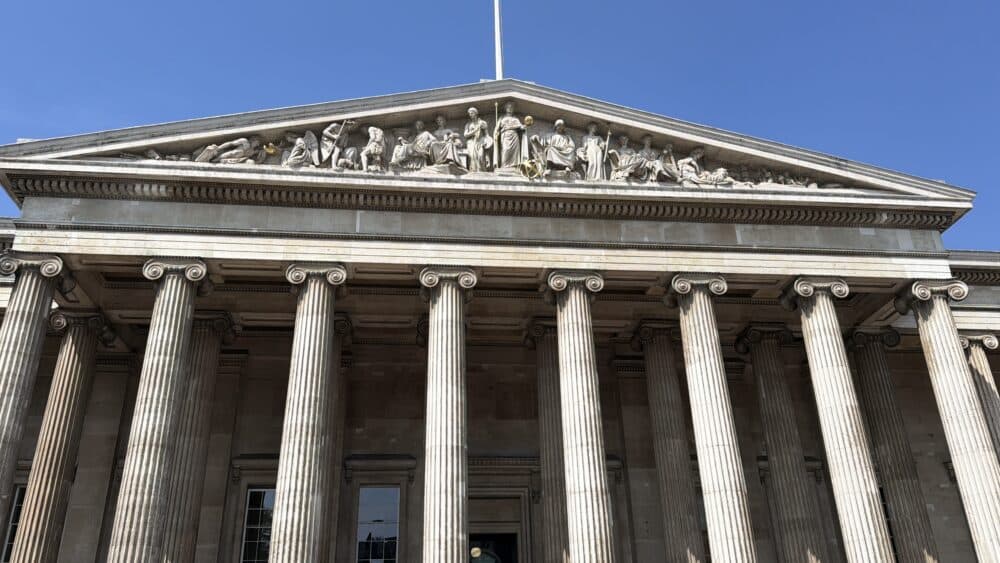
The British Museum may be one of the best things to see in London.
Or one of the most exhausting.
And honestly, we believe it all depends on one thing: entering with a clear route or a trick plan that we came up with, which I'll confess to you here...
Because the big problem with this museum is not that it's boring.
The problem is that it's ENORMOUS. Gigantic.
And many families come in thinking, "we'll see how it goes..." and...
Error!
Three things usually happen during the hour:
- tired children
- overwhelmed parents
- and the feeling of looking at rooms without really understanding anything.
We saw it very clearly the first time. That's why, after visiting it, we have a very specific recommendation:
👉 If it's your first time or you're going with children, just take the free tour of the British Museum.
And we're telling you this sincerely because it completely changes the experience.
Instead of:
- walking aimlessly
- waste time
- skip the important works
- or end up exhausted too soon
You get:
- a logical route
- understand the really important pieces
- Discover fascinating facts that really captivate children
- greatly optimize the visit
- and truly enjoy the museum
👉 BOOK THE BRITISH MUSEUM FREE TOUR HERE
Furthermore, although entry to the museum is free, you must book it on the website, whereas with the free tour your visit is already organized and you don't have to worry about getting the ticket in advance or preparing routes or researching what is really worth seeing in the museum.
And note: the tour lasts about 3 hours.
It may seem like a lot, but we sincerely believe it's the ideal time to:
- see the essentials
- understanding the museum
- and enjoy it without rushing or ending up frustrated.
Because less time is usually not enough... and more time with children can become too much.
And if you're still planning your trip, here's our complete guide to 👉 London in 3 days with children, including itineraries, maps, and day-by-day planning.
Is it worth visiting the British Museum with children?
Yes. Very much so.
But not as an “academic” museum.
The key is to turn it into an Indiana Jones-style explorer experience .
Because here children can see:
- royal mummies
- hieroglyphics
- ancient treasures
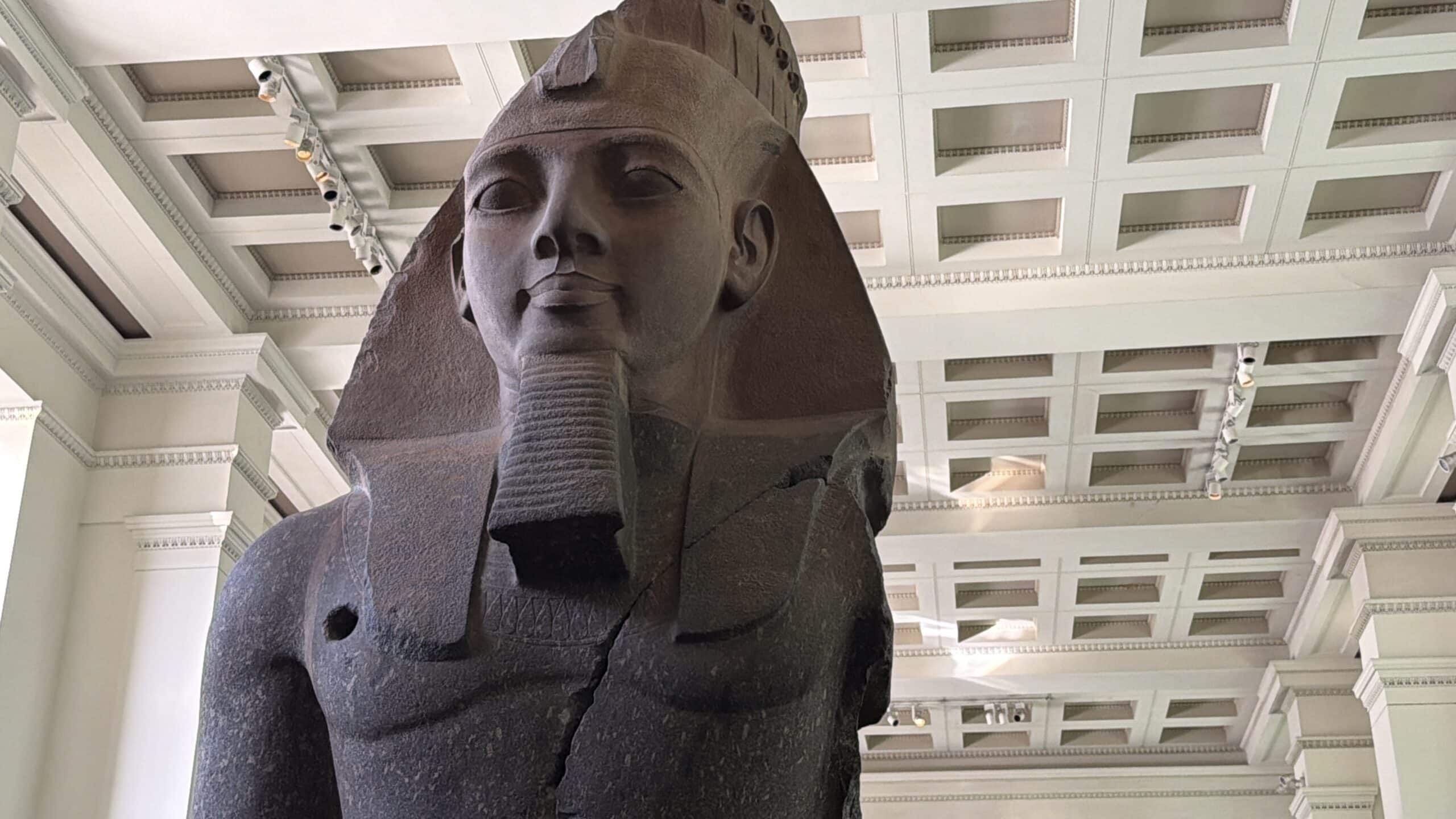
- giant sculptures
- samurai armor
- objects thousands of years old
And when someone also explains the interesting stories behind each piece, the museum is completely transformed. That's why the free tour really captivated our children.
That's precisely what we liked most about the free tour: the children weren't just looking at things. They understood them and had fun at the same time.
And that keeps the attention much longer throughout the entire visit.
In fact, the museum usually appears among our must-sees in London with children because it combines culture, history and a perfect plan for rainy days.
The big mistake that almost everyone makes at the British Museum
Try to watch the whole thing.
Honestly: it's impossible.
The British Museum has millions of pieces. As our free tour guide said, if we only spent one minute looking at each piece, we'd need more than 10 years!
So, going in without a clear selection usually ends up in:
- fatigue
- saturation
- bored children
- and the feeling of "we've seen a lot but we don't remember anything"
That's why we believe that: either you have a VERY well-prepared route... or it's much more worthwhile to do the free tour.
Because someone has already done the hard work for you: selecting what's truly essential. It might sound like I'm selling a free tour, but I'm not, believe me. I just know that if I have to give you advice based on my experience, this is the right one 😛 so you'll remember me fondly.
And if after your visit you still want to explore the city in a different way, here are some of our favorite original plans in London to do as a family and off the beaten path.
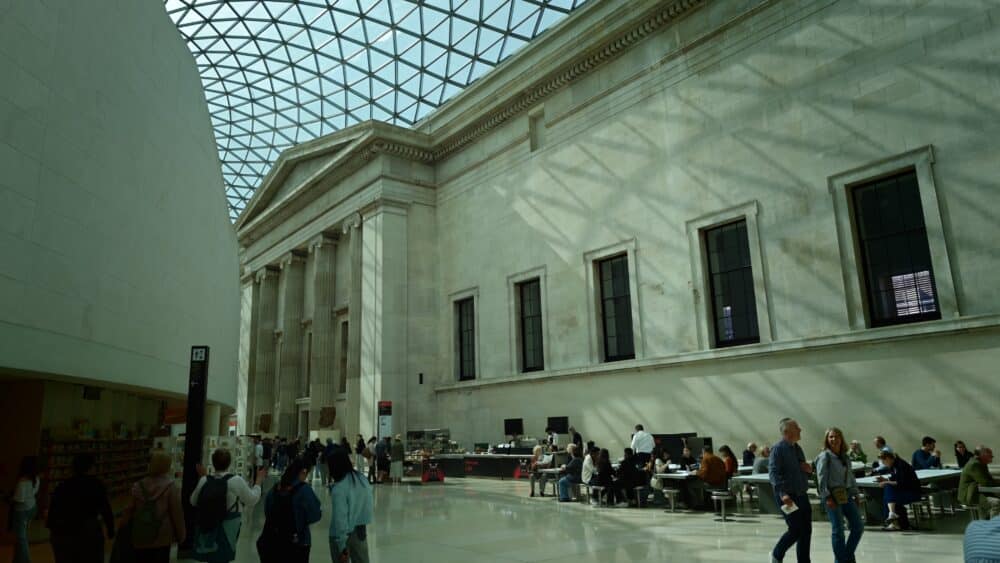
Practical information for visiting the British Museum
Opening hours
It usually opens:
From 10:00 to 17:00 hours
Although some Fridays they extend their hours.
Our advice: always go early, although there's usually a queue before opening time to go through security too, hehe.
Price
Entry to the museum is free. However, you must book tickets online in advance through the British Museum website (unless you're taking the free tour, in which case tickets aren't required).
But honestly, not everything in the museum is free; there are temporary exhibitions and other sections that require an entrance fee. They also ask for donations, as is the case in most British museums.
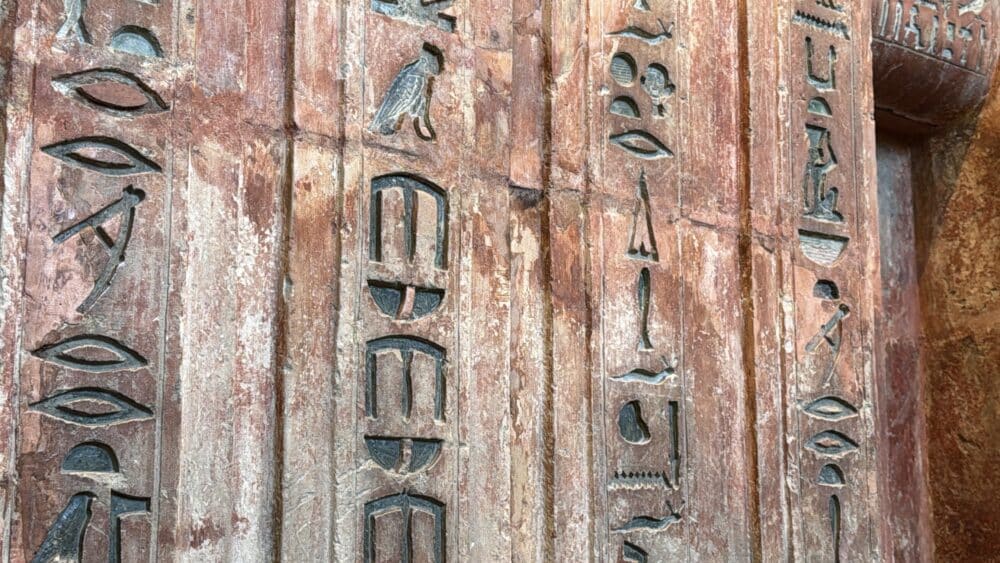
How to get to the British Museum
The most convenient stations are:
- Tottenham Court Road
- Holborn
- Russell Square
And if you're still figuring out how to get around the city, here's our complete guide on how to get around London by tube, buses, Oyster Card, and tips to save tons of time.
What to see at the British Museum in 3 hours
These are the pieces and areas that are really worth seeing.
And these are precisely the ones that are usually included in the free tour route because they are the most impressive for a first visit to the British Museum.
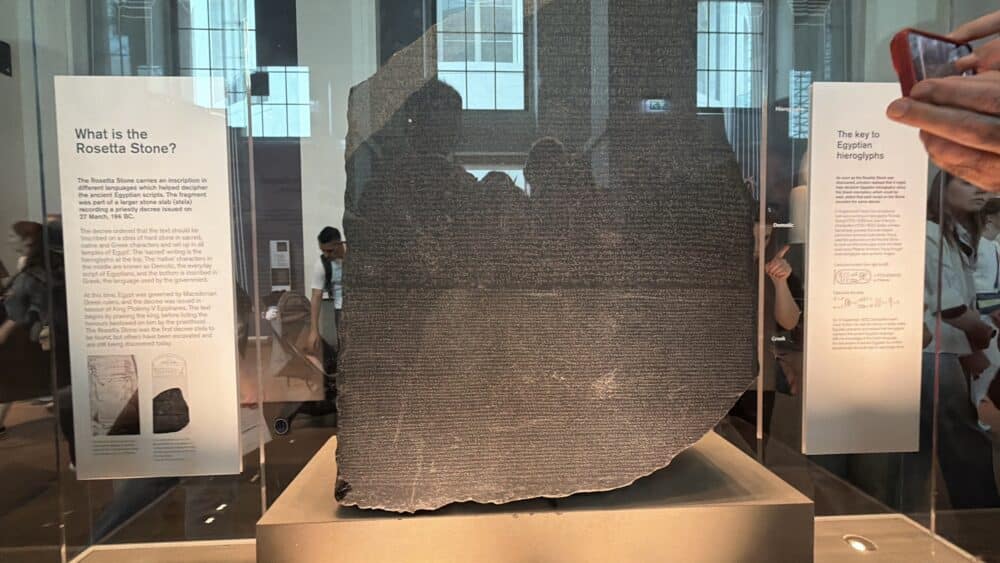
1. The Rosetta Stone
Probably the most famous piece in the museum.
And also one of the most difficult to appreciate if you're just passing by.
Because honestly…if no one explains why it's important, many people glance at it for 20 seconds and keep walking. Well, that's if you even see it, because it's always surrounded by a thousand people and it's not that big to notice, hehe.
But when you understand that thanks to this stone, Egyptian hieroglyphs could be deciphered… everything changes. And it's all thanks to the Frenchman Champollion , whose museum we visited on a trip through the Lot region of France , and whose story captivated us.
And this is where the free tour guide also made a huge difference for us. We were able to see it live and very well.
Especially with curious children like ours, they loved seeing the Rosetta Stone.
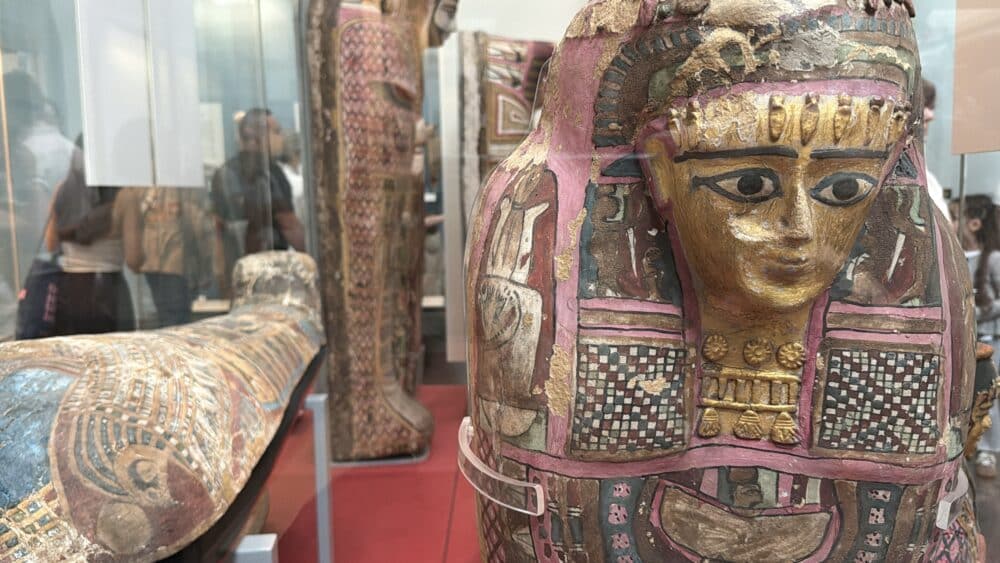
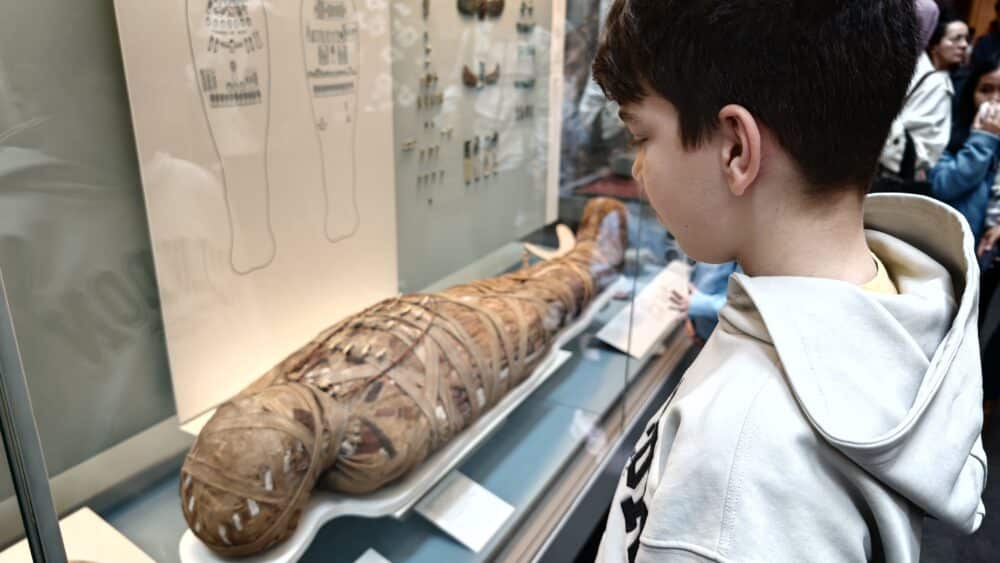
2. The Egyptian mummies
The real star for most families.
And honestly: it's the area where the difference between "shopping in windows" and having an experience is most noticeable.
Because when they explain it to you:
- how they mummified (we didn't know there were two types of mummies, those dried naturally and those we know with bandages)
- Why were they burying objects?
- What did the sarcophagi mean?
- or how they believed in life after death
The children are fully immersed in the story.
Our children were fascinated here.
And it was probably the part they remember most after the trip.
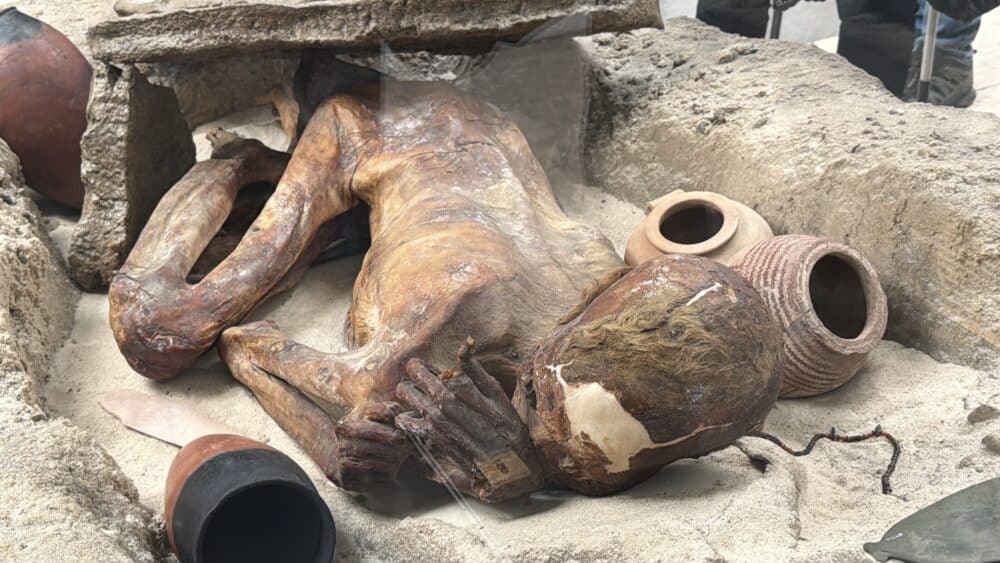
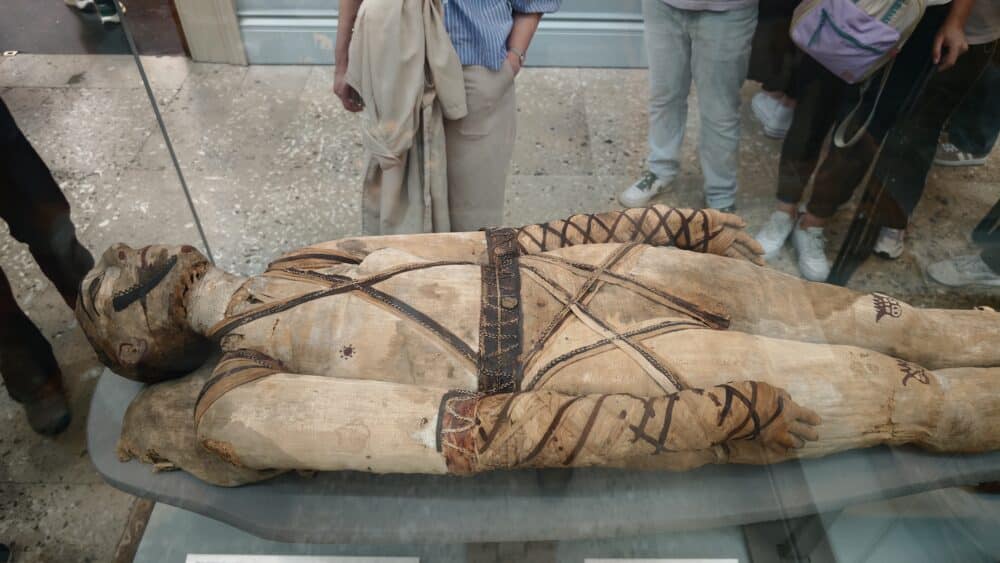
Ginger: the 5.000-year-old natural mummy that greatly surprises children
One of the most curious stories in the British Museum is that of "Ginger", one of the oldest and most surprising mummies in the museum.
And the most incredible thing is: 👉 he wasn't artificially mummified.
His body was preserved completely naturally more than 5.000 years ago thanks to the heat and dry sand of the Egyptian desert.
The name “ Ginger” comes from the reddish color of her hair, which is still partially preserved.
And honestly, this is one of those pieces that usually leaves children completely fascinated because it's hard to believe they are seeing such an ancient and well-preserved human body.
Furthermore, something very typical of the British Museum happens again here:
If you simply walk past it, you might just see "another mummy".
But when you understand:
- that is over 5.000 years old
- that was preserved naturally
- and how burials worked in ancient Egypt
The visit changes a lot.
👉 BOOK THE BRITISH MUSEUM FREE TOUR HERE
Because honestly, hearing these kinds of stories while walking through the rooms makes the museum much more entertaining and memorable for the whole family.
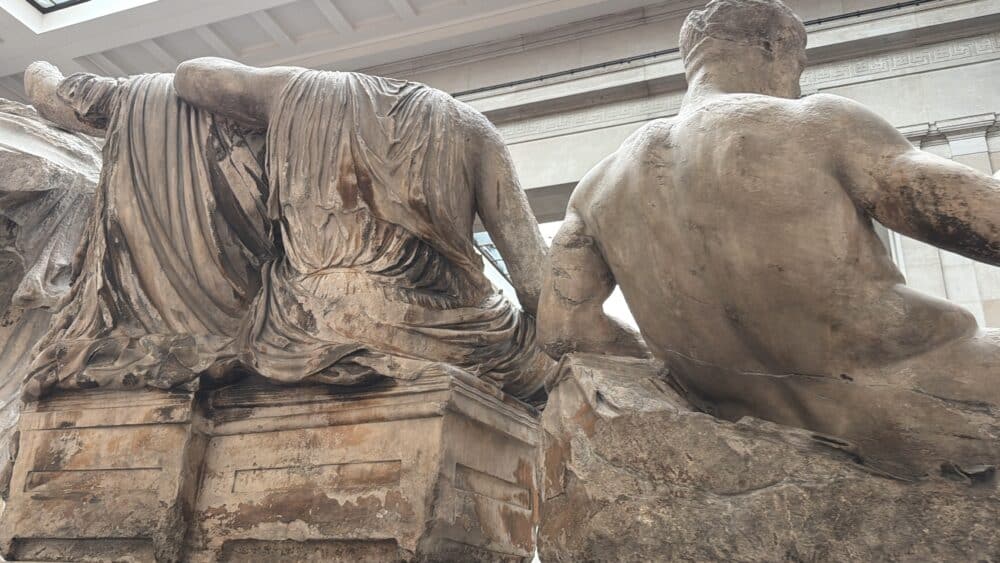
3. The Parthenon Marbles
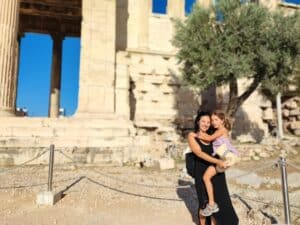
They are incredibly impressive in size, and if you have been to the Acropolis of Athens with children like we were before , you will experience something magical here, and at the same time with a strange bittersweet feeling, because you are not seeing it where it should be.
Something similar happens here again: without context, many people simply see "large sculptures" and that's it.
On the other hand, when you understand:
- Where do they come from and why are they here?
- Why are they so famous?
- and all the historical controversy surrounding
The visit becomes much more interesting. The best part is everything the guide on the free tour explains about these statues and figurines—incredible stories.
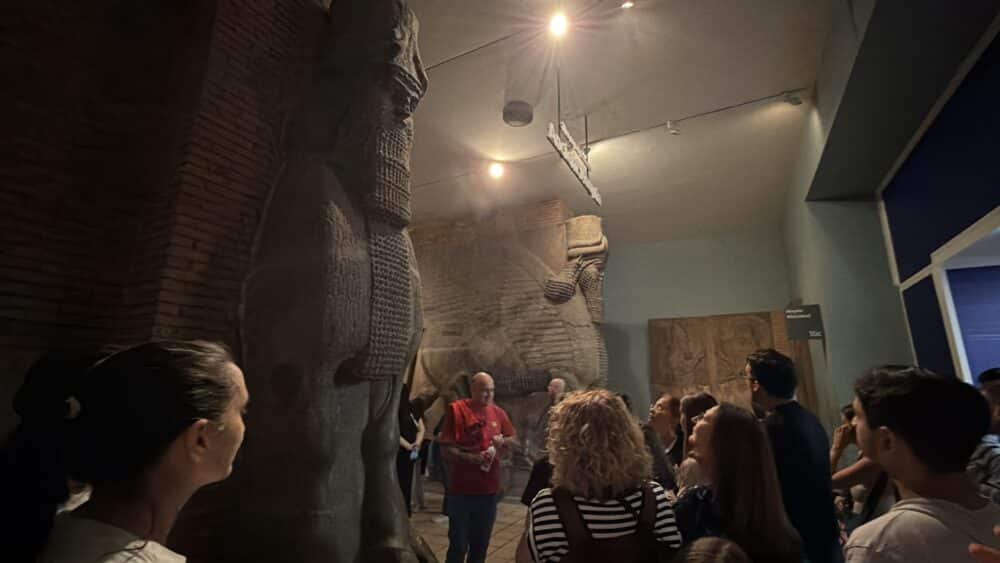
4. The giant Assyrian sculptures
This is where another big "wow" effect usually comes in.
The enormous figures called Lamassu, with wings and a bull's body, often fascinate children.
And they also help a lot to break up the rhythm of the museum because they are very visual pieces.
Honestly, these are some of the pieces that personally surprised and delighted me the most. Furthermore, the guide and his explanations helped me better understand the history of a place that is now the source of many wars.
The Lamassu are enormous Assyrian sculptures with the body of a bull, wings of an eagle, and a human head that protected ancient palaces and cities.
They are very impressive because of their size and because they look like creatures straight out of a fantasy film.
The most curious thing is that they have five legs to create an optical effect: from the front they appear still and from the side walking.
This room often fascinates children because it helps them imagine what ancient civilizations were like.
5. The Treasures of Sutton Hoo
This part is often a huge surprise. Especially if your children enjoy:
- treasures
- swords
- gentlemen
- medieval stories
The Sutton Hoo hull is a true marvel.
And when they tell you the story of the buried ship full of treasure, it's incredibly captivating.
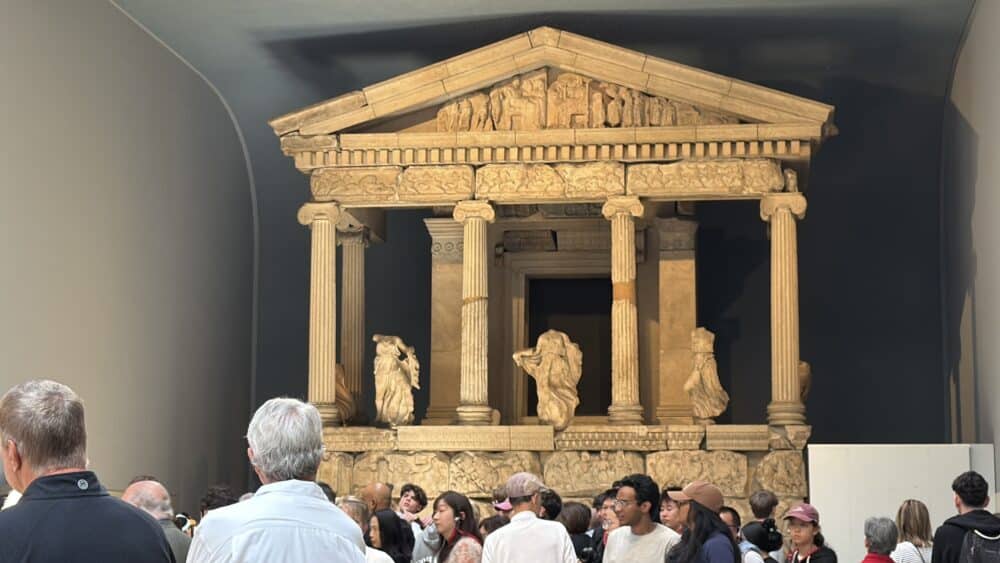
6. The Monument of the Nereids
One of the most impressive rooms in the British Museum is the one housing the enormous Nereid Monument.
And honestly, it's one of those pieces that makes both children and adults stare in silence for a few seconds as soon as they enter.
Because the feeling is pretty incredible:
It literally looks like an ancient temple reconstructed inside the museum.
In fact, many children react here with a:
"But how did they get this in here?"
Although many people think it is a Greek temple, it was actually a monumental tomb built more than 2.000 years ago in the ancient city of Xanthos, in present-day Türkiye.
The name comes from the female figures that appear between the columns:
The Nereids, sea nymphs from Greek mythology, appear to be floating around the building.
And honestly, it's one of the most visually spectacular pieces in the entire museum.
Because here you're not just looking at a shop window:
You are standing in front of a gigantic construction from the ancient world.
In addition, this room usually works great with children because:
- The size is very impressive.
- It looks like a movie set.
- It helps to imagine what ancient civilizations were like.
- and completely breaks the rhythm of “looking at small objects”.
And here again the value of taking the guided tour becomes very apparent.
Because when they explain it to you:
- Who built this monument?
- Why did he end up in London?
- how they moved it stone by stone
- And who were the Nereids?
the experience changes completely.
Honestly, these kinds of rooms are what make the British Museum stop seeming like "just a museum" and turn it into a real adventure through ancient civilizations.
7. Samurai armor
Another guaranteed success. They look like they're straight out of a movie.
And this is where the children usually become completely engrossed in the visit again.
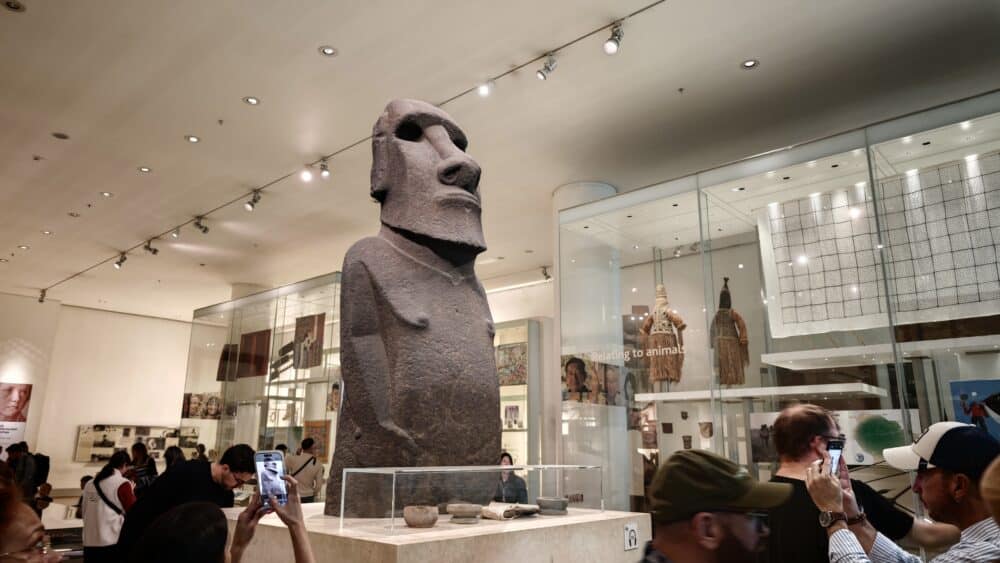
8. The moai of Easter Island
Yes, you can also see an authentic Easter Island moai at the British Museum.
And it's usually one of those pieces that makes children stare with a face like:
“How did they get this here?”
The moai Hoa Hakananai'a is a huge stone sculpture from Easter Island, in Chile, and is one of the most famous pieces in the entire ocean collection of the museum.
Furthermore, it has something that makes it even more special:
The back retains original engravings related to ancestral rituals of the island.
And honestly, it's incredibly impressive to see it live.
Especially since many children have already seen moai in:
- documentaries
- drawings
- films
- creative writing
- or even in characters inspired by Rapa Nui culture.
Something very interesting often happens here:
It's a piece that connects very emotionally with children because it constantly sparks questions:
- How did they build it?
- How did they move it?
- Why are those statues on Easter Island?
- How did he get to London?
And that's precisely where the difference of taking the guided tour becomes very noticeable again.
Because when someone tells you:
- the story of the moai
- the legends of Easter Island
- and how it ended up in the British Museum
The piece gains much more impact.
The key to enjoying the British Museum with children
After visiting it, we sincerely believe that the secret lies in this:
DO NOT try to make a perfect visit.
The best visit is:
- organized
- dynamic
- entertaining
- and very visual.
That's why we think the free tour is such a good idea.
Because it maintains a very balanced pace throughout the 3 hours and avoids the big problem of the museum: getting lost and overwhelmed.
👉 BOOK THE BRITISH MUSEUM FREE TOUR HERE
Is 3 hours in the British Museum too much with children?
Honestly, it depends a lot on how you do the visit.
On your own, 3 hours can feel like an eternity.
But with a dynamic route and entertaining explanations, time passes much faster.
In fact, we believe that:
- 1 hour is far too short
- 2 hours goes by too fast
- And 3 hours is the ideal balance for a well-done first visit.
Especially if you want to leave truly understanding the most important aspects of the museum.
What to see near the British Museum
One of the best things about the British Museum is that it's super well located for continuing to explore London on foot.
After the visit you can go to:
- Covent Garden
- Soho
- Leicester Square
- Chinatown
And if you want to continue making the most of the day without spending too much, here are also many free things to do in London.
In addition, very close to the museum you can also combine the day with a walk through Hyde Park in London , especially recommended if the children need to run around a bit after so many rooms

Where to eat near the British Museum
After several hours exploring the museum, you'll probably end up quite hungry 😅
And honestly, eating well in London without ending up paying a fortune isn't always easy.
That's why we've put together our guide to where to eat in London , with recommended restaurants, family-friendly options, and places that are really worth stopping at.
We did it very close to the tube near the British Museum at a Wasabi and Bento , a very economical takeaway sushi chain with a few tables, and since our children love sushi, it was a great choice.
Where to stay to comfortably visit the British Museum
If you're planning to include the museum in your London itinerary, the best areas to stay are:
- Covent Garden
- Soho
- Bloomsbury
- Holborn
This way you can get around on foot and save a lot of time.
FIND THE BEST FAMILY HOTELS IN LONDON HERE
In London, sleeping in a good location completely changes the trip.
Especially when you come back tired after walking all day.
Travel insurance for London: something we don't recommend forgetting
Even if you have the European Health Insurance Card, coverage in the United Kingdom is quite limited as it is outside the European Union.
And any medical problem or cancellation in London can be very expensive.
We always travel with family insurance, and here's a 5% discount on the insurance we use.
👉 GET IT HERE WITH A 5% DISCOUNT
Traveling with peace of mind when you're with children is priceless.
Our real experience visiting the British Museum as a family
We went in thinking, "Let's see how long we can last..."
Because we were honestly afraid that the museum would become tedious with children.
But the exact opposite happened.
And we believe it was because:
- We went on a free tour in Spanish.
- We had a great guide.
- We don't improvise
- and we turned the visit into something dynamic and full of learning
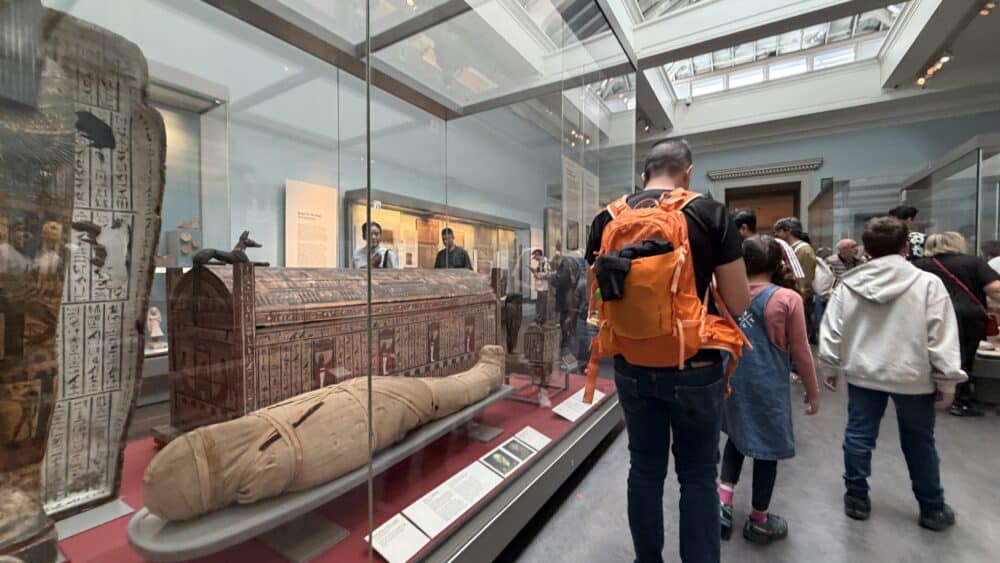
The mummies were a huge success, I confess, the kids were blown away.
But they also loved:
- the giant sculptures
- samurai armor
- and all the curious stories behind the pieces.
And that's precisely the difference: when you understand what you're seeing, the British Museum stops being "a huge museum." It becomes a genuine adventure full of learning and a great positive experience to remember.
I will say, though, that as a traveling family, this museum often made us feel conflicted and saddened to see pieces of incalculable historical value there instead of in their place of origin. A strange feeling, I confess.
Frequently Asked Questions about the British Museum
Is the free tour of the British Museum worth it?
Honestly, yes.
Especially if it's your first visit.
It helps you understand the museum much better and avoids wasting time improvising.
How long does the free tour of the British Museum last?
Normally about 3 hours.
And we sincerely believe that it is the ideal time for a comprehensive yet manageable first visit.
What is the most famous work in the British Museum?
The Rosetta Stone.
Although Egyptian mummies are probably the favorite area for many families.
Is entry to the British Museum free?
Yes.
General admission to the museum is free.
Conclusion
The British Museum may be one of the most impressive museums in London.
Or one of the most exhausting.
And we sincerely believe that the difference lies in how you visit it.
Because entering such a huge museum without a plan can end up being chaotic.
On the other hand, when someone guides you:
- select the best pieces
- He explains the most curious stories.
- and makes the visit dynamic
the experience changes completely.
And honestly, we think the British Museum fits perfectly into any 3-day London itinerary with kids like the one we did because it combines:
- crop
- adventure
- history
- and one of the best free plans in the entire city.
And the free tour is undoubtedly probably the easiest, most entertaining and smartest way to truly enjoy the British Museum as a family.
Enjoy it and tell me what you think!
Latest posts from our blog
-
Definitive manual for traveling by motorhome【2024】
Super complete manual for traveling by motorhome with all the answers to your questions.
-

Namibia Trip: Complete Guide for Independent Travel (24-day Itinerary, What to See and Tips Based on Our Experience)
Are you thinking of planning a trip to Namibia on your own and don't know where to start? After traveling the country for 24 days as a family in a 4x4 with rooftop tents, we've put together this comprehensive guide with everything we wish we had known before our trip. Here you'll find information…
-
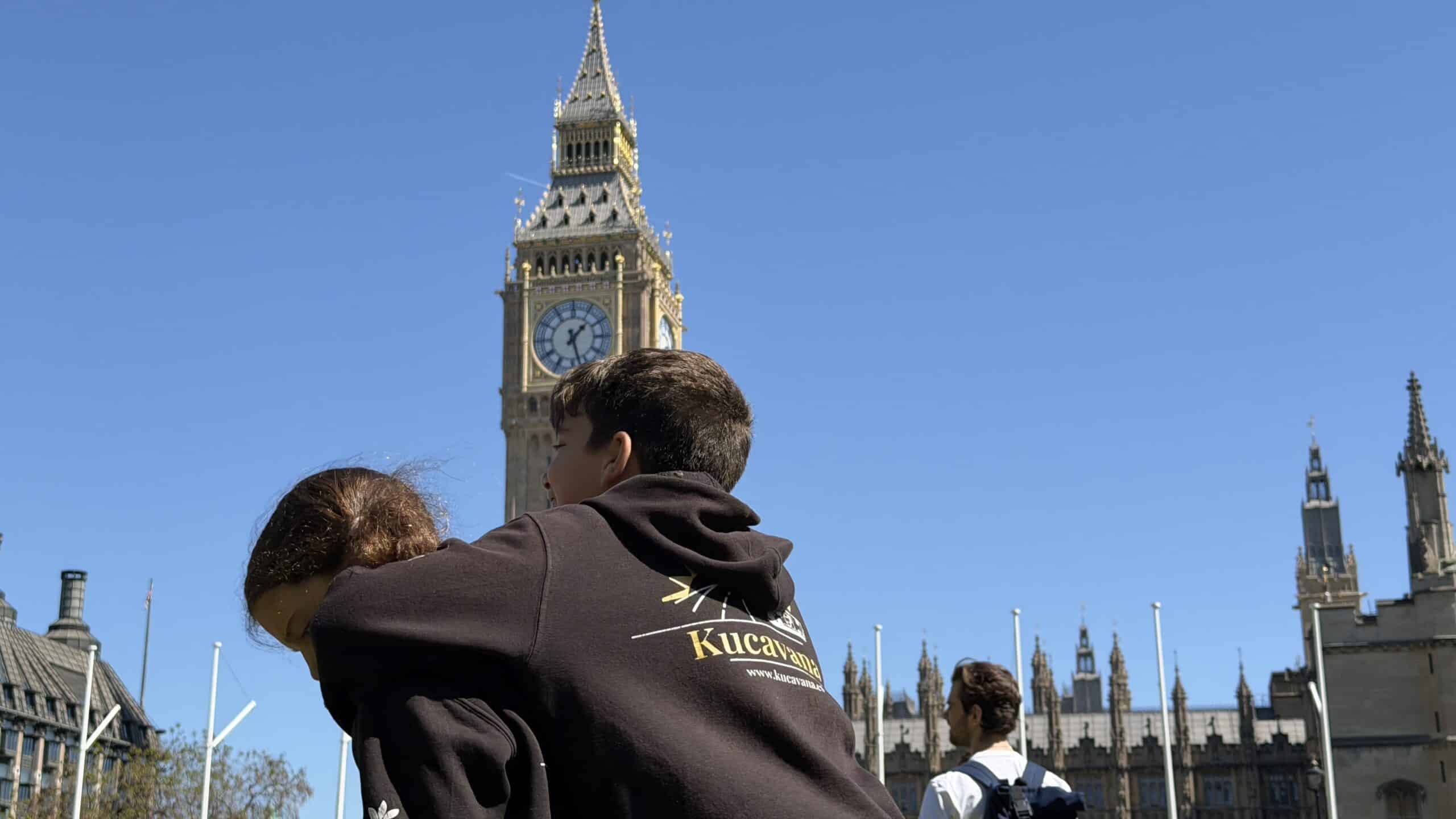
London with children: what to see and do as a family (royal guide with map) of the top 22 plans
If you're planning a trip to London with kids and don't know where to start, here you'll find the 22 best family-friendly activities, an optimized 3-day itinerary, money-saving tips, the best free museums, and an interactive map with all the must-see places. Basic summary: London with kids. Quick information. Recommended days: 3-5…
-

Guide to traveling to Canada: everything you need to know for a trip to Canada on your own
Welcome to a super guide for traveling to Canada from Spain or anywhere in Europe. One of our newest destinations in this wonderful world, where every trip continues to surprise us with its hidden gems. How lucky we are to have been born on Earth! How fortunate to be able to travel to Canada! Visiting Canada…
Ethical code:
On our blog you will find affiliate links. These are always placed with our highest ethics. We never publish any service or product that we have not used before and that we are sincerely happy with. That is why our recommendations are always ethical. In addition, there is no additional cost for you to book through our links and, on the other hand, it means a small commission for us that helps us maintain this blog so that you can continue enjoying it for free.