

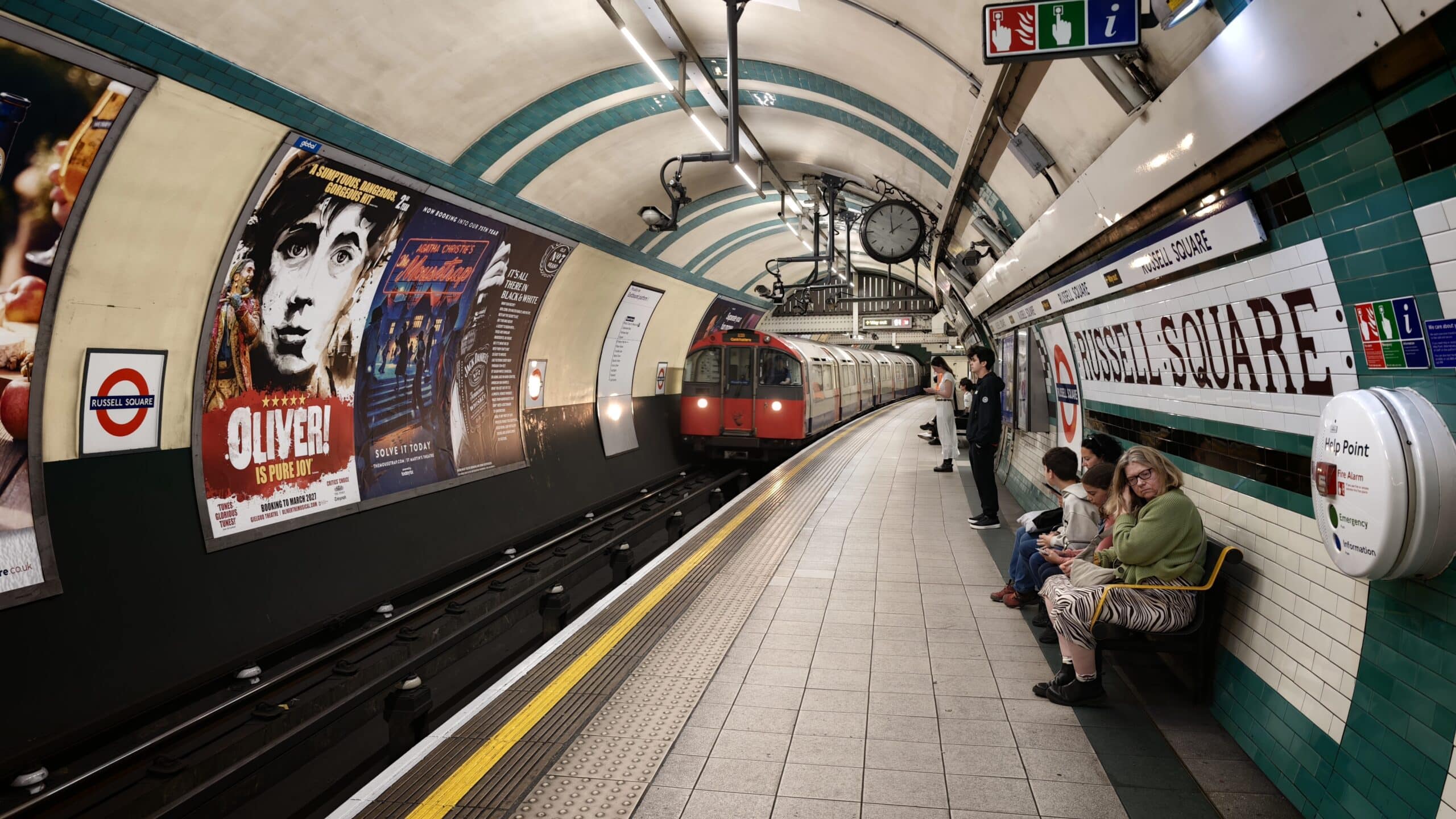
Before traveling to London, I admit that one of my biggest worries was transportation. You see the Underground map full of impossible colored lines, enormous stations, and unpronounceable names, and you think you'll probably end up lost on some platform while a voice announces things in English at breakneck speed.
But the reality was quite different. How easy!
After spending three days exploring London as a family, I can tell you that getting around the city is much easier than it seems before you go. In fact, we found it to be one of the most comfortable public transport systems we've used while traveling with children (although I remember that with a stroller it was quite a challenge... some subways don't have elevators...).
And that's a huge achievement in a gigantic city like London.
In this guide we tell you how the London Underground works, which options are best for getting around, how to save money on transport and several practical tips that would have been great for us before traveling.
And if you're still planning your trip, you can also see our complete guide here:
London in 3 days with children
Or our guide with all the essential plans:
What to see in London with children
How to get around London: our real experience
After this getaway, if I had to sum it up in one sentence, it would be this:
London is much more enjoyable when you organize the areas well and combine the subway with walking.
Because the big mistake here is trying to constantly cross the city from one end to the other.
London is enormous! Much bigger than it looks on a map. In fact, I think you don't really grasp the sheer size of the city until you're actually there.
It's all little houses, so imagine how many houses they need if there are almost 10 million inhabitants living there, and how much space each house takes up, hehehe
That's why it was crucial for us to stay in a central and well-connected area. We stayed in Earl's Court and, although the hotel was quite basic, bordering on a textbook London hovel, but cheap (compared to what was available), on the other hand, the location saved us a lot of time on travel.
And on a short getaway, that makes a huge difference.
The London Underground: how it really works
The London Underground, the famous Tube, is the fastest and most convenient way to get around the city.
It also works surprisingly well:
- It happens constantly
- It is very well signposted
- y Google Maps cCalculate routes brilliantly → The key to all your doubts 😛
Honestly, after the first couple of journeys you lose the initial fear pretty quickly.
Although I admit that the first time you see the whole map it looks more like the electrical diagram of a spaceship than a meter.
How to pay for the London Underground
Here comes one of the best pieces of news of the trip.
You don't need to buy physical tickets or understand strange fares before traveling.
The most convenient option is to use your contactless bank card directly or your mobile phone with your virtual card.
Simply tap your card when entering and exiting the subway and the system will automatically calculate the cheapest fare.
And here's the good news: at most, regardless of the number of trips you take on the metro or bus, it will cost you around €8,5 if the trips are within zone 1; if you change zones it will cost a little more, but not much more!
We used it like this for the entire trip and it worked perfectly. I assure you it's incredibly easy.
The only thing is, each person needs a different bank card to use on the subway 😛
Do I need to buy an Oyster Card?
Honestly, for a short getaway like ours (3 days) it's not really worth it.
A standard Oyster card currently costs around £10, and this money is non-refundable after your trip . Besides this initial cost, you then need to top up your card to pay for your journeys.
Honestly, for a short getaway like ours, we believe that nowadays it's much more worthwhile to use a contactless bank card or mobile phone, because:
- you pay exactly the same rates
- You have the same maximum daily limit.
- and you save on paying for the Oyster Card
We would only recommend Oyster if:
- You are traveling with teenagers aged 11 to 15 and want to activate the youth discount
- You don't have a contactless card
- Do you want to keep stricter control of your spending (they give you a detailed breakdown of everything)?
- Or you're going to London for many days (for more than 15 days it might be worth it, but not for less, the card has a cost that you don't recover)
For most travelers, using a bank card directly is much more convenient.

Children under 11 travel free
And this is greatly appreciated when traveling as a family.
Children under 11 can travel free when accompanied by an adult on the metro, buses, and some urban trains (not all, trains are a whole other story...).
Given how expensive London is, anything that includes the word "free" is quite welcome.
How children under 11 travel for free on the London Underground
This caused us quite a few doubts before traveling, and then we saw that it was much easier than it seemed.
Children under 11 years old do not need:
- Oyster card
- ticket
- special card
- nor do they normally show a passport or other documentation
They simply pass with you through the wide subway barriers, which are designed for:
- carts
- wheelchair
- families
These are the larger doors that are usually found next to the regular turnstiles.
The operation is very simple:
The adult swipes their contactless card and enters with the child through the same barrier.
And that's it
We were very surprised at how easy everything was.
In addition, there are often station staff in that area, and we found them incredibly kind to the children. Several times they even helped us by directing us where to go or opening the barrier for us when we were in a hurry or looking at the subway map.
And what do children over 11 and teenagers pay in London?
Things change a bit here.
From the age of 11, children no longer automatically travel for free like younger children, but they still receive quite interesting discounts on London's public transport.
| Age | Transport in London |
| Children under 11 years old | Free when accompanied by an adult |
| 11–15 years | reduced rates |
| 16 + years | Adult fare |
How to get the youth discount on the Oyster Card
If you are traveling to London with children between 11 and 15 years old , the most practical thing to do is usually to get a regular Oyster Card and ask them to activate the youth discount right there.
The discount is called:
Young Visitor Discount
And it reduces the price of journeys by approximately 50% for up to 14 days.
The best part is that you don't need to do anything online before the trip.
Simply:
- You can buy a regular Oyster Card at any machine or ticket office.
- and you ask for the discount at a large, staffed subway station
We saw that in many major stations there is staff constantly helping and it is usually quite easy to manage.
What do you need for the youth discount?
In theory they can request:
- passport or a document showing the child's age
Although many times the process is quite quick and simple.
Once the discount is activated:
- The child already has their own Oyster Card
- just like any adult
- using the regular subway turnstiles
And honestly, if you're going to London for several days, it's definitely worth it because the savings are quite noticeable.
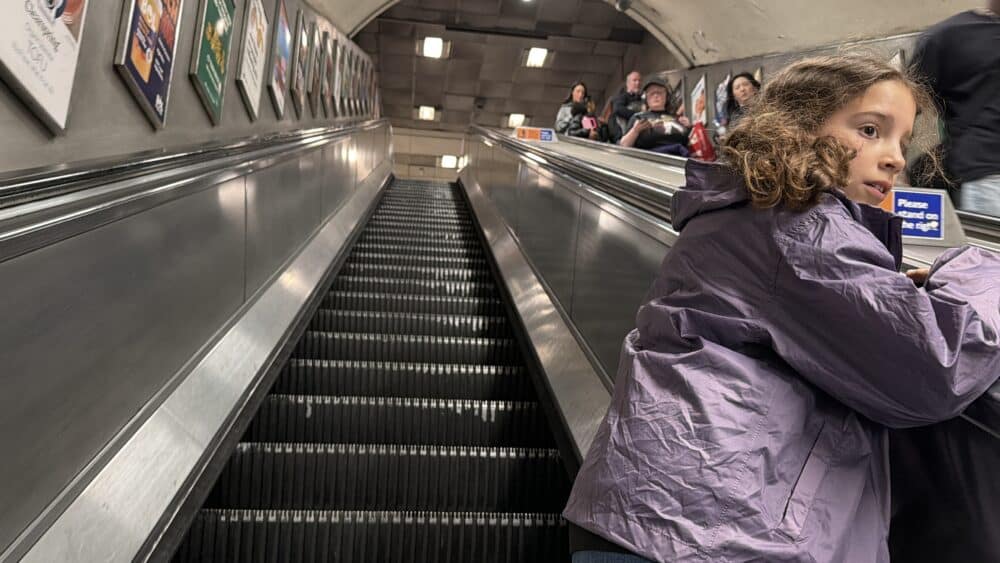
What nobody tells you about the London Underground
Here's probably the most useful tip in the post.
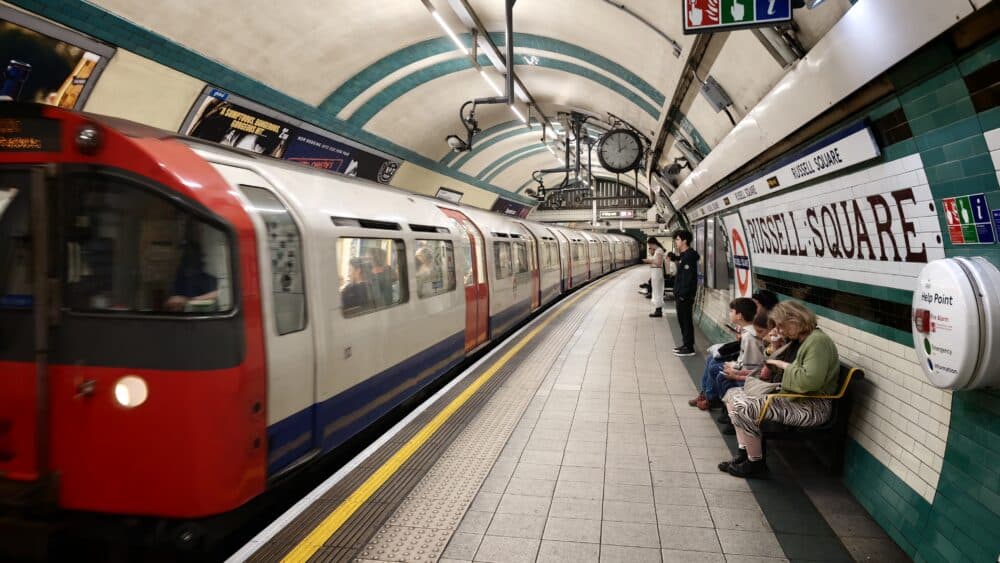
In London, it's not enough to just look at the color of the line. You also have to pay attention to the train's final destination.
Because you can be on the right track... but in the completely wrong direction, since on the same track there are sometimes several sub-tracks hehe.
And yes, obviously that happened to us on the first day.
After that you'll get the hang of it quickly, but at the beginning it's a good idea to carefully check the name of the last stop that appears on the panels and Google Maps, which can also be very helpful.
Are buses worth using in London?
Much more than I expected.
Yes, the subway is fast and convenient, but it also has a small drawback: you can't see anything of the city at all.
On the other hand, getting on the typical red double-decker bus ends up being almost another attraction of the trip.
Especially if you manage to sit up front.
The views as you drive through London are wonderful, and children usually love it.
How to get from the airport to central London
We landed at Gatwick and this was where we had the most doubts before the trip.
The main options for getting to the center are these:
| Choice | Advantages | Drawbacks |
| Gatwick Express | Faster and more convenient | Really expensive |
| Southern Train | Cheaper and works very well | A little slower |
| Private transfer | Very comfortable with children and suitcases | More expensive |
We booked a private transfer on arrival because we were landing at almost 11 pm and honestly it was wonderful not having to think too much after the flight.
For the return trip we used the train and it worked perfectly.
If you want to see all the options explained step by step, here's our complete guide: how to get from Gatwick to London
How we organize routes to get around London more easily
What worked best for us was to divide London into zones and explore each zone on foot at a leisurely pace.
For example:
- Westminster
- Soho
- Covent Garden
- Camden
- South bank
These are perfect areas to visit on foot without having to constantly go in and out of the subway.
And London also has something dangerous about it: interesting things are always popping up as you walk around.
A historic pub.
A curious shop.
A hidden bookstore.
A beautiful park.
A red booth.
Or a squirrel clearly too used to tourists.
Do you need to rent a car in London?
Honestly, I absolutely do not recommend it.
Between:
- the traffic
- drive on the left
- urban tolls
- parking impossible
- The inability to go downtown
…it seems more like a survival experience to me than a travel aid.
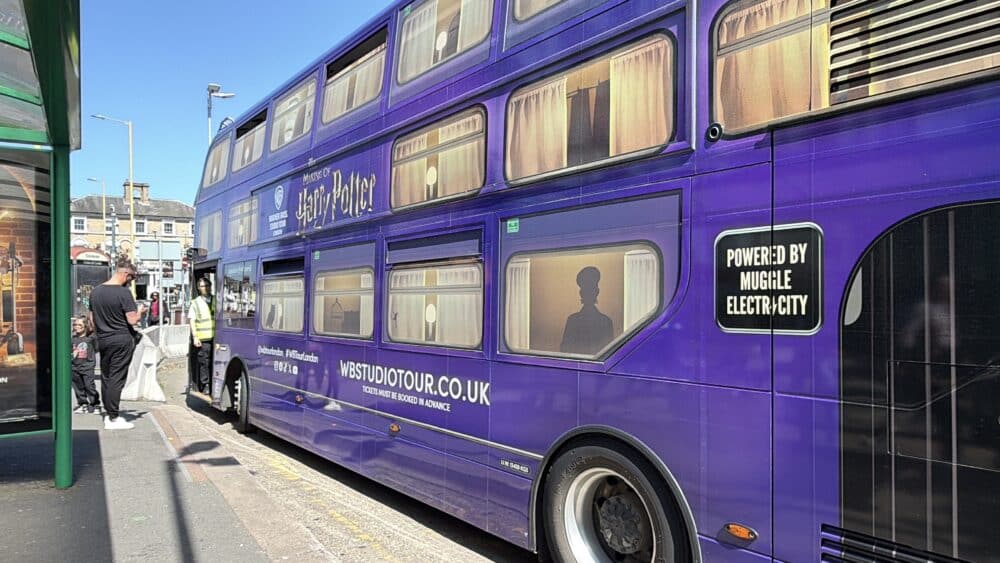
How to get to Harry Potter Studios from London
This is probably one of the most frequent questions when organizing a family trip to London.
Because the studios are NOT actually in central London and before you go it seems much more complicated than it actually is.
We took:
- train to Watford Junction
- and then the free official shuttle bus
Everything was very easy once you were there.
In fact, the most complicated thing was probably understanding before traveling which tickets to buy, which station the trains departed from, and where and with whom to buy them…
That's why, after comparing a lot, we ended up booking the tickets directly with the train included, and honestly, it was a very convenient decision.
Here's the full story: Harry Potter Studios London: how to get there and tips
Practical tips for getting around London with children
Always keep your mobile phone charged.
Google Maps in London practically becomes another member of the family.
Avoid peak hours if you can
Especially:
- from 7:30 a.m. to 2:00 p.m.
- and from 17 to 18:30 pm
Because the subway can get extremely crowded.
Don't try to do too many things in one day
This advice applies to both transportation and travel in general.
London is much more exhausting than it seems on paper.
Our opinion on transport in London
We found it to be one of the most comfortable transport systems in Europe for family travel.
Yes, you will walk a lot.
Yes, you'll end up mentally saying "Mind the gap" without even realizing it.
And yes, you'll probably take a wrong turn sometime on the first day.
But once you understand how to organize the zones and combine the subway with walking, getting around London is much easier and more comfortable than you imagined before the trip.
Latest posts from our blog
-

Definitive manual for traveling by motorhome【2026】
Super complete manual for traveling by motorhome with all the answers to your questions.
-

Switzerland at Christmas: our family adventure between lights, snow and hot chocolate
If you're thinking of spending a magical Christmas in a fairytale destination, Switzerland at Christmas should be on your list. This year we took the plunge (and skis) and set off to explore Switzerland at Christmas with the kids, a plan we knew couldn't fail. Spoiler alert: everything we…
-
Guide to traveling to Alsace at Christmas: costs, map, route, tips and the 20 essential plans
Enjoy our guide to travelling to Alsace at Christmas. With this post we want to share our experience and learnings at the destination and help you prepare your next trip to Alsace at Christmas on your own. We are Kucavana, a family with two children and two dogs who love to travel. And if you want…
-

Guide to traveling to Iceland by motorhome
Traveling to Iceland in a campervan is a dream. If you're looking for everything about traveling to Iceland by campervan, stay tuned to this article because we'll tell you everything! Iceland is a country that seems straight out of a fairy tale, with breathtaking landscapes, majestic waterfalls, imposing glaciers, and active volcanoes. For many travelers, exploring this unique island…




Ethical code:
On our blog you will find affiliate links. These are always placed with our highest ethics. We never publish any service or product that we have not used before and that we are sincerely happy with. That is why our recommendations are always ethical. In addition, there is no additional cost for you to book through our links and, on the other hand, it means a small commission for us that helps us maintain this blog so that you can continue enjoying it for free.