


Welcome to this article about 20 things to do and see in Banff National Park . This post is part of our ultimate guide to traveling to Canada . We've put together this guide full of tips and our own experiences to help you plan your next trip to Canada.
An article where, through our own experience of a 21-day trip through the Canadian Rockies , we tell you what you can do and see in Banff National Park.
Banff was our first Rocky Mountain National Park visit, before embarking on our trip to Jasper National Park , which was tragically cut short by the wildfires of summer 2024. Jasper National Park is undoubtedly, for us, the crown jewel of Canada and the Rocky Mountains.
Banff National Park is Canada's oldest national park and the third oldest in the world . It is undoubtedly the most beautiful and spectacular in Canada. Thanks to it, the Canadian Rockies are a UNESCO World Heritage Site —that says it all.
However, we must also say that while equally beautiful, it's also the most crowded and difficult to visit , especially since it requires a lot of planning to see all its best spots.
TIP to get started on basic requirements
AN IMPORTANT TIP: Don't travel to Canada without a good travel insurance, avoid big problems. It is one of the first requirements that they tell you on the Canadian government website along with the processing of the And so.
We recommend you the Iati Star We hired this insurance after a good comparison and study of the different ones on the market. It is the only one that exceeds one million euros of coverage. Without a doubt, it is the best for North America, where breaking a leg costs you €150.000, as happened to a friend of ours in the USA. Another positive thing is that Iati has an app for virtual visits.
I leave you here a link where you have a 5% off for any Iati travel insurance.
Highlights for a film tour in Banff National Park
To visit Banff National Park and its surroundings , we advise you to do so on a route of at least 7 days.
We also recommend not limiting yourself to Banff National Park. From here, you can also visit Yoho National Park and the spectacular glaciers and lakes of the Icefields Parkway , the famous road through the ice fields. These two nearby destinations are just a few minutes from Banff National Park.
In summary, we would recommend dedicating at least two days to visiting the Banff town area , along with nearby attractions like Lake Minnewanka and the Vermilion Lakes. Then, spend one day in the Bow Valley area with Johnston Canyon . Two more days in the Lake Louise and Moraine area . Finally, spend one day in Yoho National Park and one day exploring the Icefields Parkway , a scenic route through glaciers and beautiful lakes .
How to get to Banff National Park
On our trip, we arrived in Canada from Calgary airport . We visited the city on the way back, and I must say it wasn't spectacular either.
From Calgary, we reached Banff in 1,5 hours and 128 km, driving along the TransCanada Highway. A very well-maintained road, open year-round, located within Banff National Park.
Calgary is truly the best airport to enter Canada if you're going to visit the Canadian Rockies, and undoubtedly the closest.
The best way to get from Calgary to Banff is by car, as it gives you more flexibility for getting around. However, if you prefer public transport, you'll have no problems in Banff National Park. Everything is well-organized with shuttle buses and connections both from Calgary to Banff and within Banff National Park itself.
There are multiple shuttle bus services from Calgary Airport or Downtown Calgary to Banff Village or Lake Louise Village. You also have the option of traveling by train , an experience that takes you through the Rocky Mountains from Calgary or Vancouver.
TIP FOR GETTING INTERNET IN CANADA: Internet is essential in Canada, although coverage outside of towns leaves much to be desired—I'll tell you that right now! We used a Holafly SIM card with unlimited data and it worked great. You can buy it with a 5% DISCOUNT through this link.
Discovery Pass to access Banff National Park
To access Canada's National Parks, you must have a pass. This must be displayed in your vehicle and carried with you if you plan to visit any of the free museums.
There are passes for a single day or national park. Or, if you're going to be there for more than 7 days, like we were, and visiting different National Parks, the most cost-effective option is the annual pass, called the Discovery Pass.
There are different Discovery Passes at different prices . If you're traveling alone as an adult, there's one for $75. If you're traveling as a family or group, there's another for $151 , and if you're a senior citizen, it's $64. The Discovery Pass is valid for one vehicle and for a whole year. In our case, we bought the Family/Group Discovery Pass.
With the Discovery Pass, you can also access more than 80 destinations . These are located throughout Canada's National Parks and historic sites, and can be used for up to 7 people in a vehicle with the Discovery Family/Group pass.
You can buy it in person once inside the national parks in Canada, at the Park Visitor Centers or some road access points. Alternatively, you can purchase it online in advance and have it delivered to your home through the Discovery Pass website. However, if you order online, do so at least a month in advance, as it takes 20 days to arrive, or possibly longer if there are delays.
How to get to the places to see in Banff National Park
The first thing we find different between the countries of North America and Europe is the organization of the streets of cities and towns.
In Canada , just like in the US, the streets aren't designed for walking. They're very wide and designed for cars rather than pedestrians.
In Banff National Park, everything is generally like this as a rule, because it covers a large area. But, on the other hand, something we loved about Banff town is that it also has a completely pedestrianized downtown area.
However, to visit places of interest in Banff town or the surrounding area, you'll need a vehicle, either your own or public transport . Alternatively, we recommend visiting via one of the many tours that depart from Banff.
Finally, be aware that getting around by private vehicle is difficult due to the large crowds of people and cars in the summer. So, as a first piece of advice, if you're going in August like we did, get there early to find parking.
Sometimes, tours are the best option. Or , you can use public transportation, specifically the Banff National Park's bus network . This is especially useful for visiting Lake Louise, Lake Minnewanka , or Jonston Canyon, among other places.
Where to stay in Banff National Park
Banff will most likely be your base for visiting the Canadian Rockies . Or at least Banff National Park, which is the most visited of the seven national parks in the Canadian Rockies.
Banff village is one of the towns with the most accommodations in the area; Banff has 50 accommodations.
If you still don't have accommodation booked for your trip, we recommend one of these 50 hotels in Banff, due to its proximity to Calgary airport and the main attractions of the Canadian Rockies.
See which of the 50 best suits your tastes and budget, all of them in general in Canada are very good.
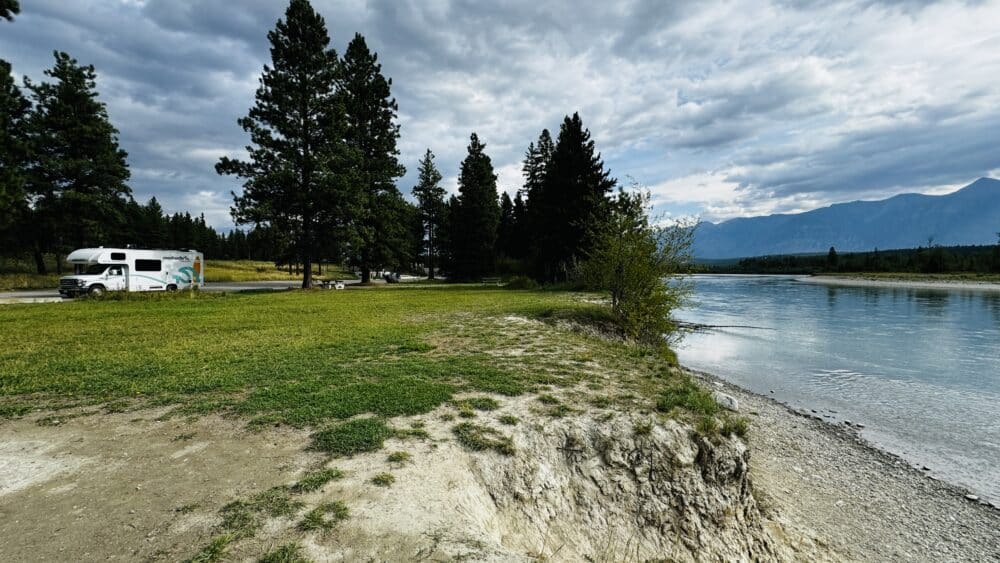
By motorhome or camper or tent: Campsites in Banff
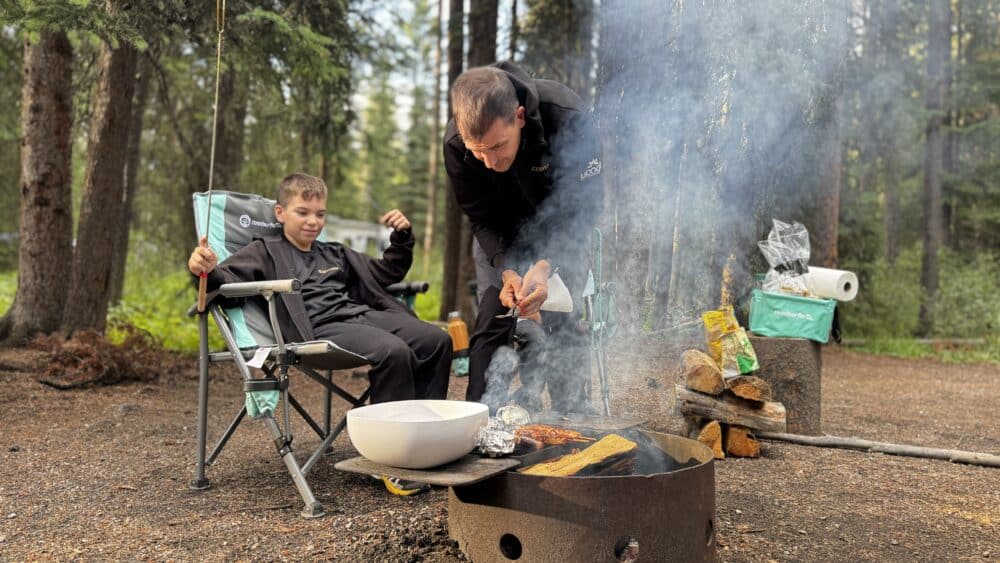
In our case, when we traveled through the Canadian Rockies in a motorhome , we stayed at different public campsites in Banff National Park , a very good option and a good price (around €25 per night) if you are traveling in a tent, campervan or motorhome as you are in the middle of nature and next to the main points of interest.
TIP: If you want to do this road trip through Canada in a campervan like we did, we recommend renting one. We suggest doing so in Calgary or Vancouver with Roadsurfer , a company we would definitely use again. Roadsurfer gave us a $ 150 discount that you, as readers, can also take advantage of by applying the DISCOUNT CODE: KUCAVANAAMERICA
Banff National Park What to See and Do
Below, I'll tell you about the main visits, activities, hikes and experiences in Banff NP. Everything that we consider the most essential things to see and do in Banff National Park.
Visiting the Cave and Basin National Historic Site, a must-see in Banff National Park
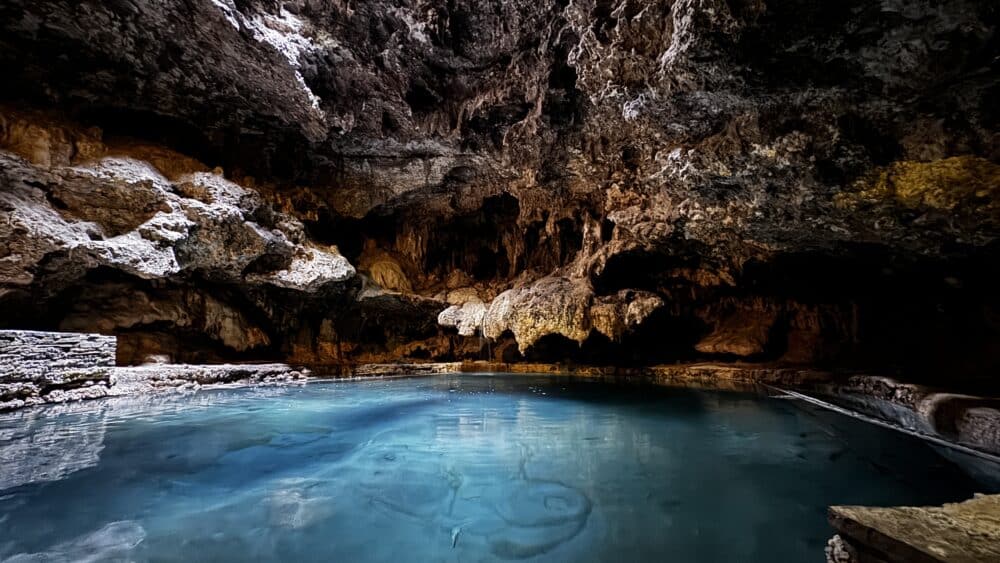
If there is one iconic historical place in Banff National Park, it is the Cave & Basin National Historic Site.
Thanks to the discovery of this cave by railway construction workers in 1883, the Canadian government declared Banff National Park in 1885. It was Canada's first national park and the third in the world , after Yellowston in the USA and Royal Australia Park.
Today at the Cave and Basin you can visit the original cave where the hot springs spring up. Another of the springs with hot spring water outside, where we can see protected mini black snails, a museum and various exhibits. There are ongoing guided tours in English free of charge. A special place for indigenous peoples for over 10.000 years.
Here are 4 of the 9 hot springs in Banff. Another spring is located in the thermal pool at Upper Banff Hot Springs.
Entry is free with the Discovery Pass card, which we mentioned above. Just show it and they'll let you in.
Finally, if you're traveling with children, ask for the Explorer booklet available here at Cave and Basin National Historic Site. It will make your visit more enjoyable. By answering the questions and completing the activities in the booklet, they'll receive a reward badge at the end. These badges can then be collected along with those from other places.
Bathing in the Banff Upper Hot Springs
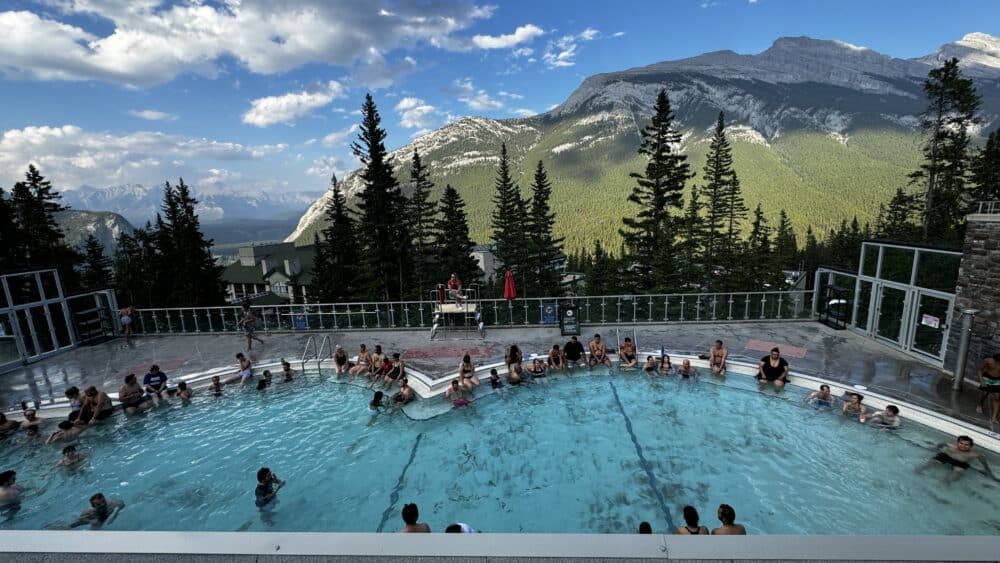
Outside the historic Cave, further up from Banff Village on a road leading to the Sulphur Mountain gondola, we find the spa. Here we can bathe in the thermal waters of the Banff Upper Hot Springs.
There used to be a pool at the original Cave and Basin, but this was added long ago to better preserve the historic site.
These hot springs in Banff are a cherished tradition for any visitor to Banff National Park. Relaxing here in these warm, mineral-rich waters is priceless.
The baths are in a federally listed heritage building. They have an outdoor pool overlooking the rugged peaks of the Rundle and Cascade mountains . The water temperature ranges from 37 to 40 degrees Fahrenheit.
The opening hours are from 10:00 AM to 10:00 PM , but the last entry is at 9:30 PM. Tickets cannot be purchased in advance or online; they can only be bought in person at the reception desk. Prices are $17,50 for adults and $15,25 for children. You should bring a swimsuit, flip-flops, and a towel. There is a family ticket for two adults and two children for $56,75, which is a small discount and not bad.
Walk along the Bow River in Banff Village and visit to Bow Falls
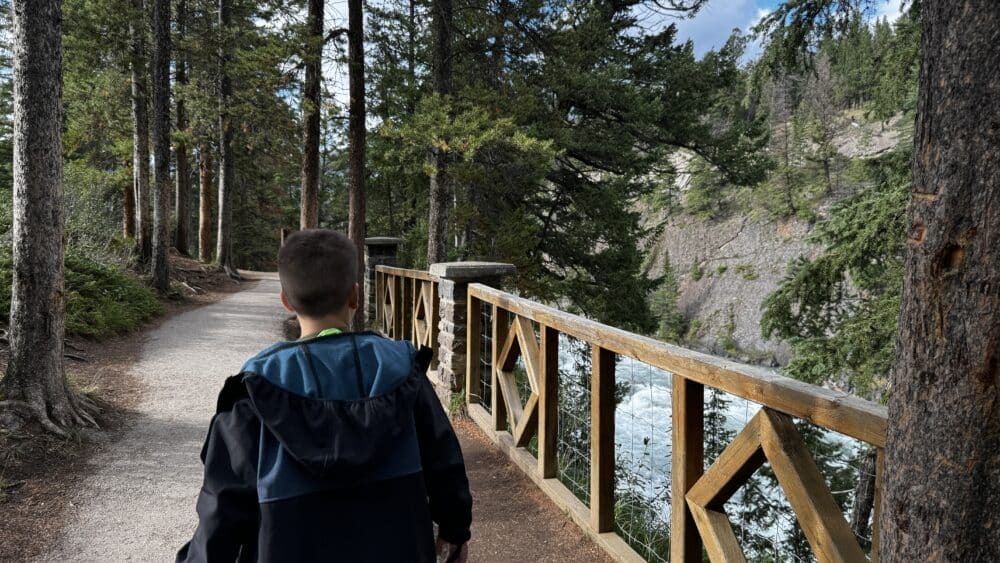
The Bow River flows through Banff Village and is one of the most important rivers in Banff National Park. Therefore, you shouldn't miss visiting its banks, waterfalls, and even strolling among its artistic displays.
I'll tell you a little about the route we took to visit it.
We strolled along Banff Avenue until we reached the Bow River, where there's a really cool bridge ( location ). There are wooden walkways and places to rent canoes and kayaks if you'd like a nice trip on the river. Then, we crossed the bridge to walk through Cascade Gardens , where the Banff National Park offices are located amidst a beautiful garden park. We continued a little further along the Bow River Trail, a path lined with artwork. Sculptures and paintings accompanied us on our walk until we reached the waterfall formed by the river.
An easy and very beautiful 1,5 km route .
Visit Lake Minnewanka and Stewart Canyon
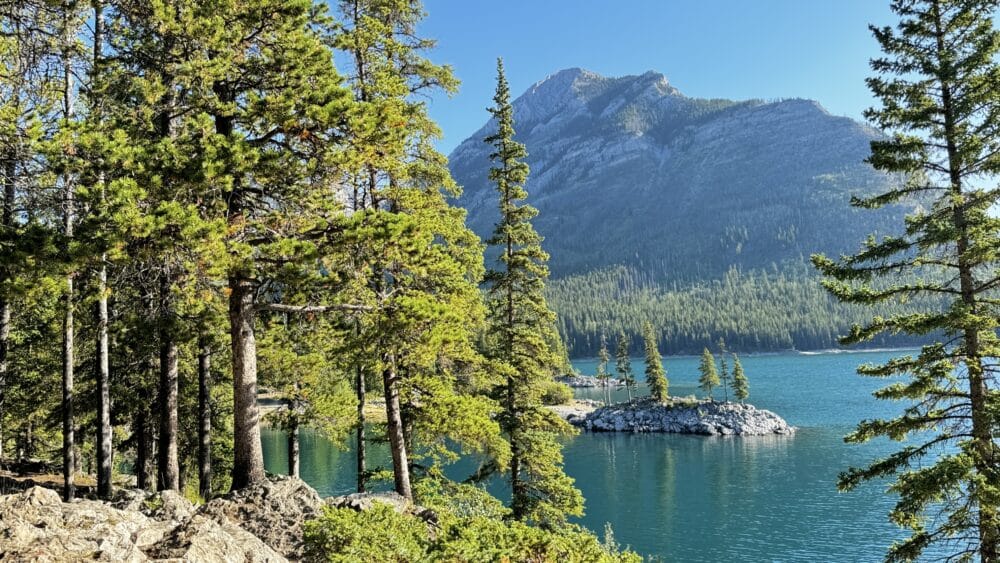
One of the closest and most famous lakes to Banff Village is Lake Minnewanka.
To visit this lake you have to do it on the Banff tour , or take your own car or the bus and park in one of its parking lots:
Parking GPS coordinates: 51°14'52.6″N 115°30'02.4″W/51.247944, -115.500667
From this parking lot there is a dock where you can take a boat for a tour of the lake, a bar cafe, an incredible and very large picnic area on the shores of a lake beach, kayak rentals and various treks.
This is the only lake in Banff National Park where you can rent a motorboat . The noise does detract from the lake's charm, but oh well.
We decided to walk a bit to see the lake from its shore and reach the Stewart Canyon Bridge . From there, the path was closed due to the presence of bears, but perhaps you could extend the route. The trail is 7,5 km round trip, easy and flat. After crossing the Stewart Canyon Bridge, if you enjoy climbing, you'll find a popular climbing area.
In return, we were able to enjoy a secluded paradise beach, with a swim included, where even a deer came to visit us and drink water.

Walking through the fairy chimneys, the Hoodos of Banff
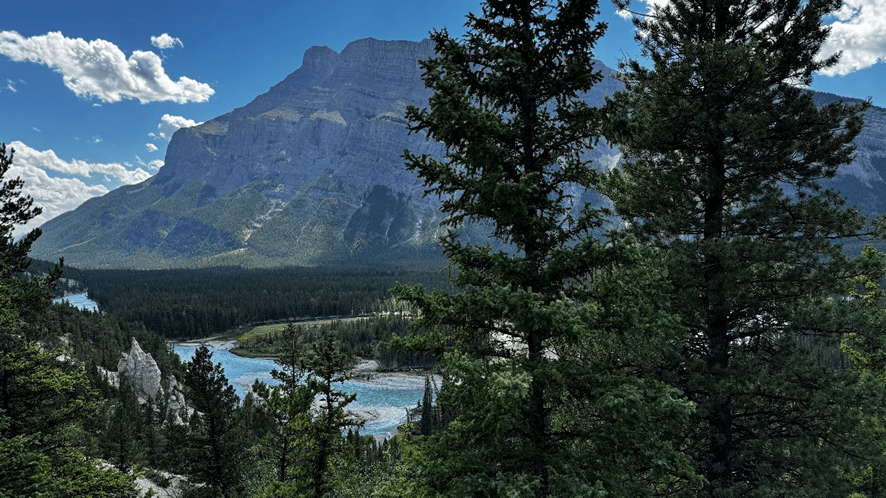
The Hoodos are unique and spectacular rock formations of sandstone, limestone, and sedimentary rocks, also known as fairy chimneys. They are another highlight of the Banff tour.
They are a cool geological attraction located along the banks of the Bow River near the Tunnel Mountain public campgrounds near Banff Village, where we stayed for two nights.
These rocky pinnacles help us understand how wind and water erosion has worked on the terrain over thousands of years. Erosion has left the rocks as thin columns at the top and larger ones at the bottom.
To see the Hoodoos you can do so from a viewing point or from a couple of trails that pass by them.
The best viewpoint, with a small parking lot, is the Hoodoos Viewpoint , where the Hoodoos Trail Head starts , an easy trail with good panoramic views of about 10 km to another of Banff's cool viewpoints, the Surprise Corner Viewpoint , where there is also another small parking lot.
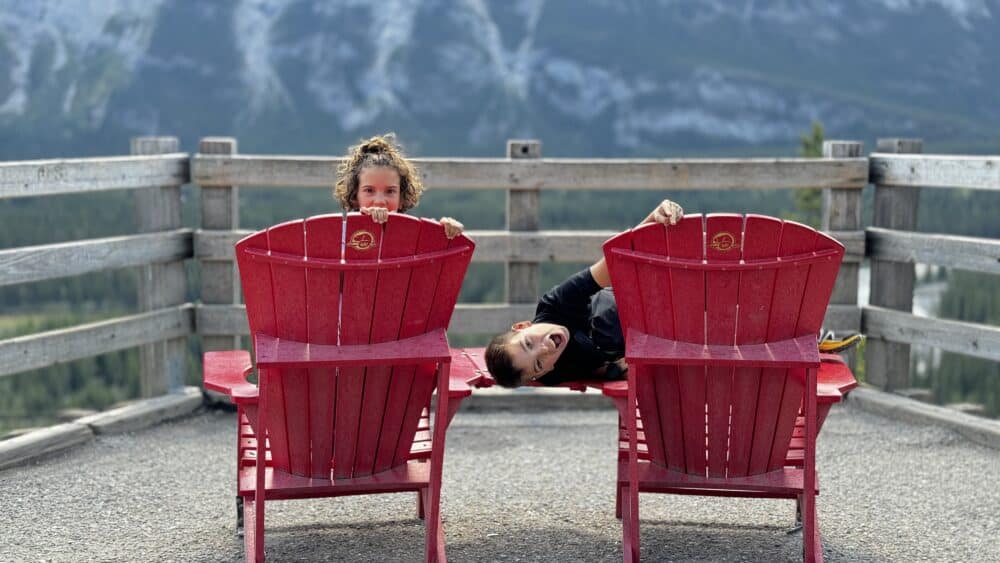
From the viewpoint, don't miss the photo on the typical red chairs of Canada Parks.
Climb to the top of Sulphur Mountain for the best views of the Bow Valley
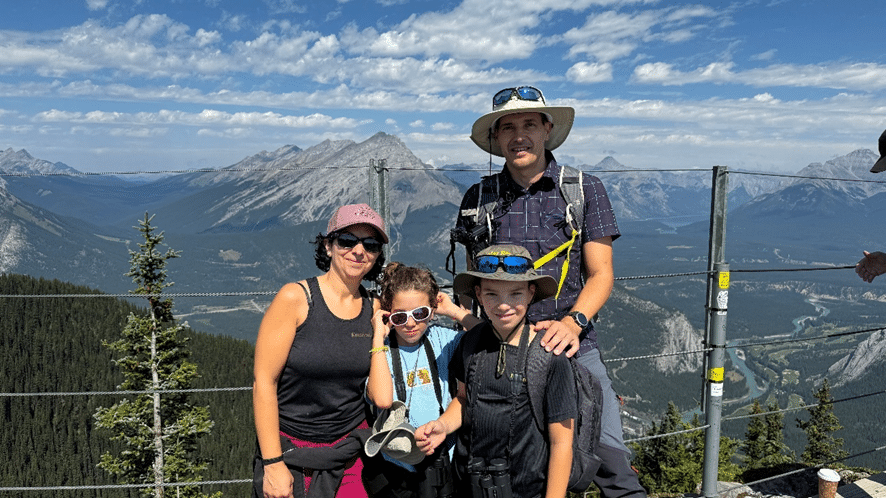
A mountain with great views in Banff Village is Sulphur Mountain. I dare say that for us it was the best viewpoint in all of Banff National Park. Nowhere else did we have such beautiful views as we did when we climbed here.
To climb to this peak with one of the best panoramic views of Banff and the Bow River valley, you have to come by public transport or private vehicle and park in the parking lot where the route to the summit of Sulphur Mountain starts.
Parking GPS coordinates: 51°08'53.7″N 115°33'28.0″W/51.148250, -115.557778
From here, the well-marked trail begins, a round trip of just under 12 km to the summit of Sulphur. It's a beautiful trail, but quite challenging if you're not used to hiking, due to the steep incline that accumulates on the climb with almost no respite until the top. Nearly 800 meters of elevation gain in just over 5 kilometers.
Although it was hard, my 8 and 11 year old children did it and I assure you that today they say that it was the best hike we did in Canada, and they did a lot of them hahaha!
The reward of reaching the top after the hard effort and seeing mountain goats and a lot of squirrels climbing on us, plus the views, make this trail something very special for our memories.
For those who prefer not to walk, there is the option of taking a cable car, the Banff Gondola , for a reasonable price.
Other amenities at the top of Sulphur Mountain
At the top we arrived at a restaurant, a small museum with exhibits and a beautiful viewpoint overlooking the town and valley at the very top, which you eventually reach via stairs and wooden walkways.
The best plan after coming down is to go to the hot springs, the Upper Hot Springs, which are right next to the Sulphur Mountain parking lot.
Take a horseback ride around Banff Village and surrounding areas
In Banff there is a Canadian horse farm that organizes horseback riding tours and excursions of different options and difficulties, some even with a carriage and barbecue at the end.
Visit the Cascade Gardens in Banff Village
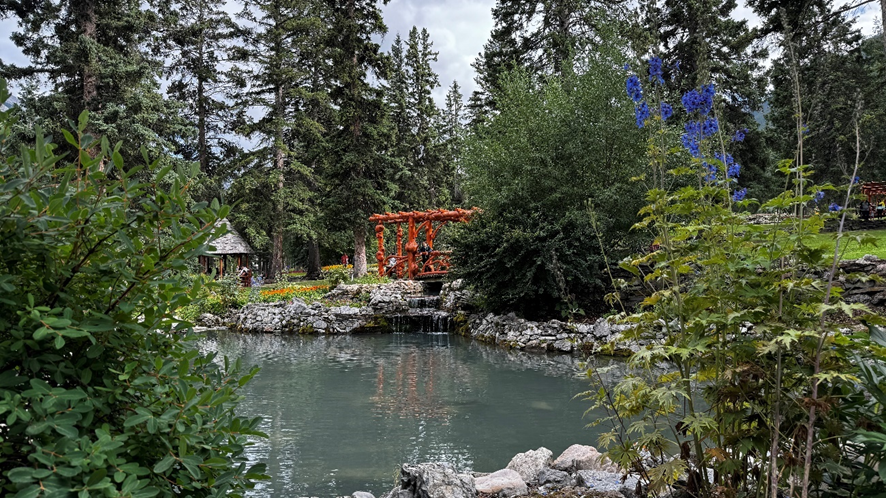
Cascade Gardens is a haven of peace and beauty in Banff Village.
These gardens are located at the base of Mount Cascade , tastefully designed and offering beautiful views.
The gardens have a combination of built and natural decorative elements , with a wide variety of ornamental flowers and plants of all colors.
These gardens are accessible to everyone. Organized with different thematic areas, which guide the visitor through their paved paths.
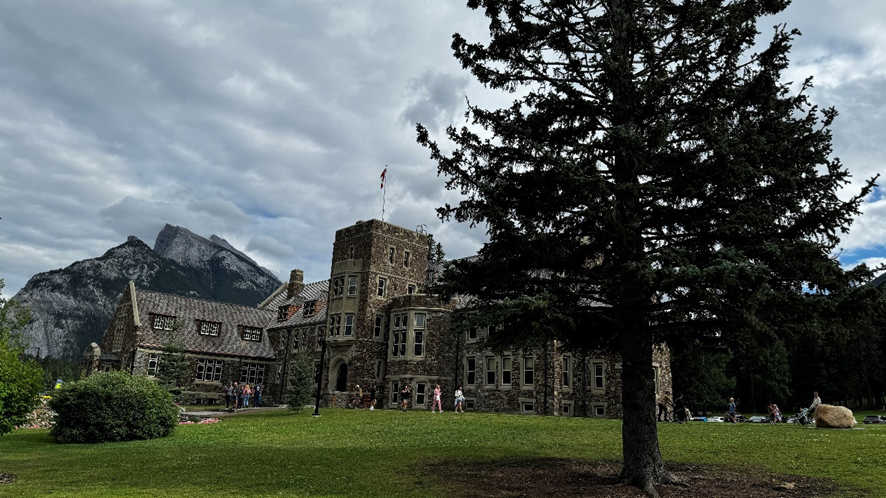
In addition to having ponds, fountains, bridges and wooden pergolas there is a large historical building that is where the headquarters of Banff National Park is located today, which looks like a palace.
It's full of Columbian ground squirrels, so keep an eye out for them, they're very playful.
Climb Tunnel Mountain
If you prefer to climb a summit, but on a shorter route with less elevation than the Sulphur, and with also impressive views of the Bow Valley and Banff, there is an alternative.
The alternative is to climb Tunnel Mountain. It's a 4 km round trip with 418 meters of elevation gain, easy and with an exceptional reward at the end. The parking lot is very small, but if there's no space, you can park down below.

Excursion to Lake Boom
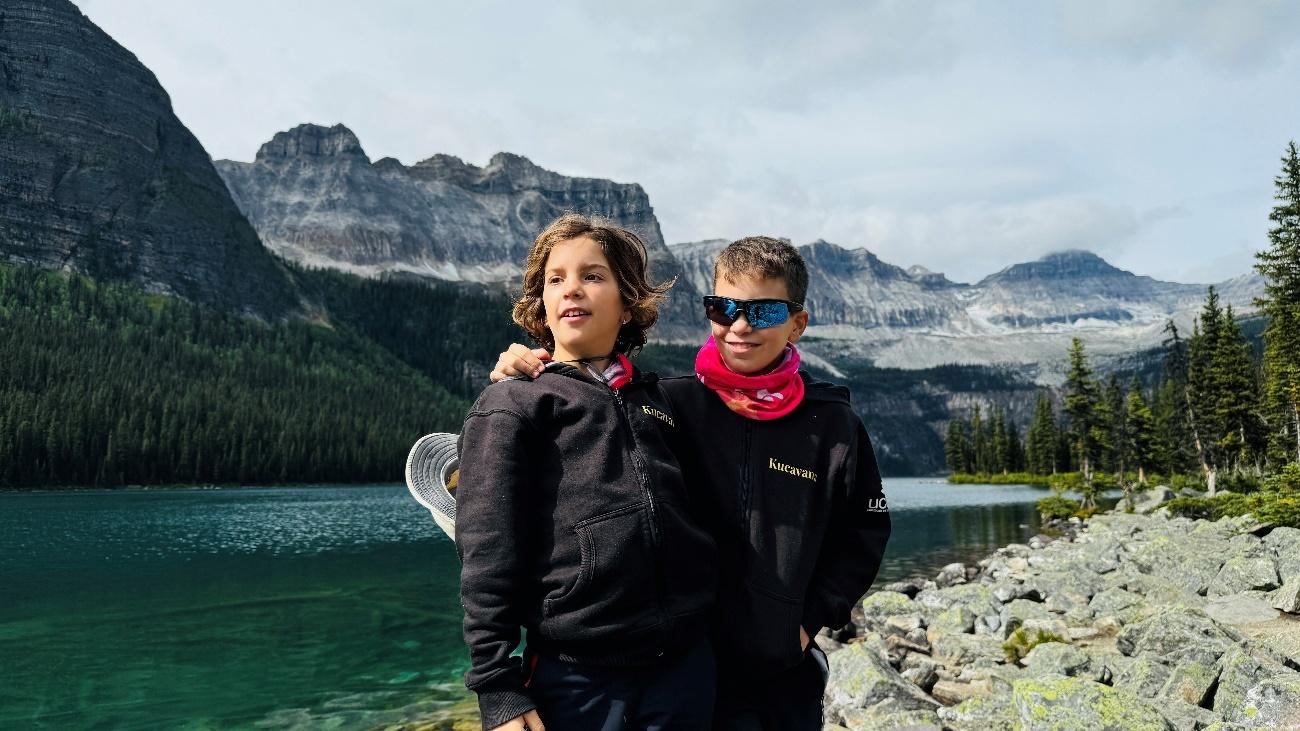
One of the hikes that we all enjoyed the most, along with Mount Sulphur, in Banff National Park, was the one to Boom Lake. A little-known hike, but easy and spectacular at the end.
A 10km trail route, there and back, with less than 200 metres of elevation gain and a spectacular emerald lake with glaciers as a backdrop. In addition, it is a route that is not crowded, very different from what we have seen in other glacial lakes in Banff National Park.
Park here with a picnic area where the well-marked trail starts.
We definitely recommend it highly and I would say that it is essential to experience the peace and calm of the splendid nature of Banff National Park.
Canoeing on the Bow River in Banff Village
In Banff Village, you can rent a canoe or take a group canoe tour. The rental point is right on the banks of the Bow River at a small boat launch before crossing the bridge that takes you to Cascade Gardens in Banff Village.

Visit the Banff Park Museum National Historic Site.
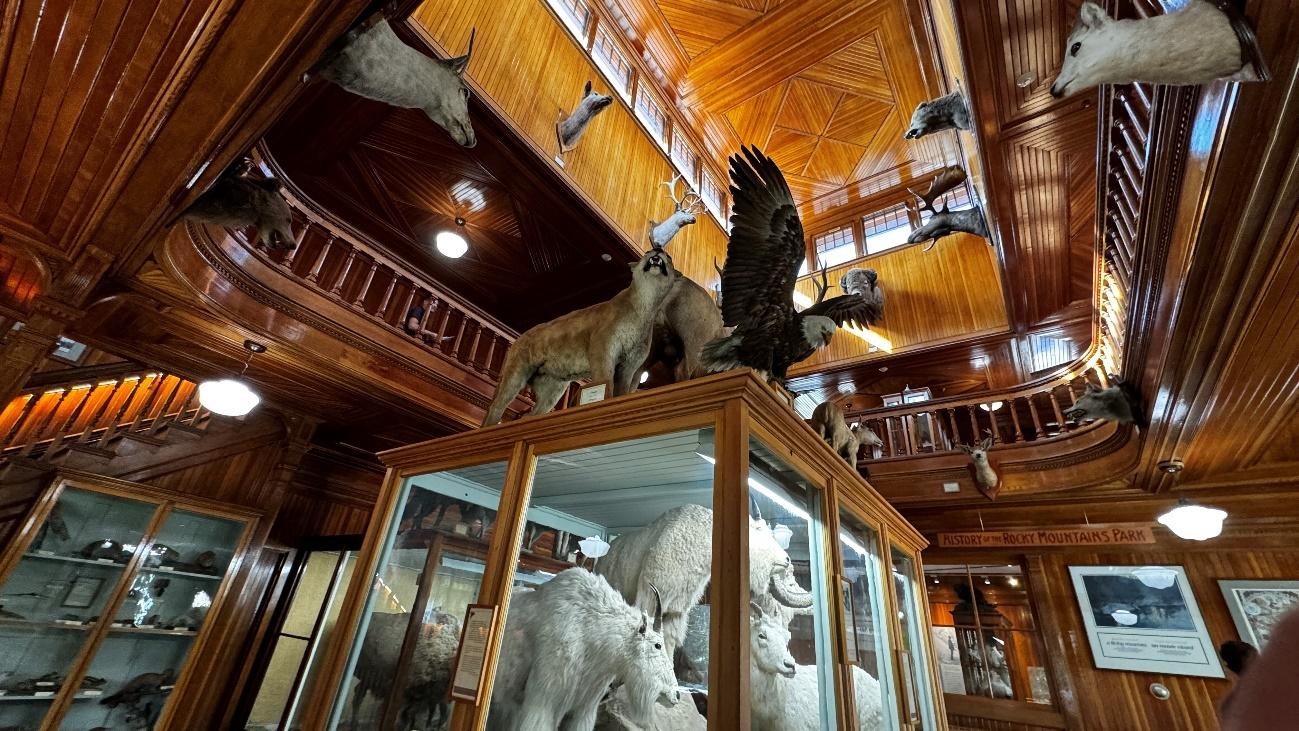
The Banff Park Museum National Historic Site is free with the Discovery Pass, which, as we have indicated above, you must have in order to access Banff National Park.
There are many stuffed animals in this museum, which left us with a bit of a strange feeling. Honestly, we didn't know if we liked what we saw or not. We love animals, but stuffed animals are something else…
On the other hand, all the well-explained exhibits were very educational and entertaining for the little ones in the house.
Here you can also pick up the Explorer booklet, just like at Cabin Basin and the Banff National Park Information Center. These are the three locations in this area that offer the Explorer program, and children receive badges when they complete the booklets.
Buffalo Nations Museum
A small but interesting museum to understand the origins of these lands and the importance of the buffalo to indigenous history.
Your visit lasts approximately one hour exploring the different exhibits with very complete information about indigenous cultures and histories.
It closes at 18pm and costs $12 for adults and $6 for children, free for those under 7 years old.
Visit to Lake Louise and canoe ride
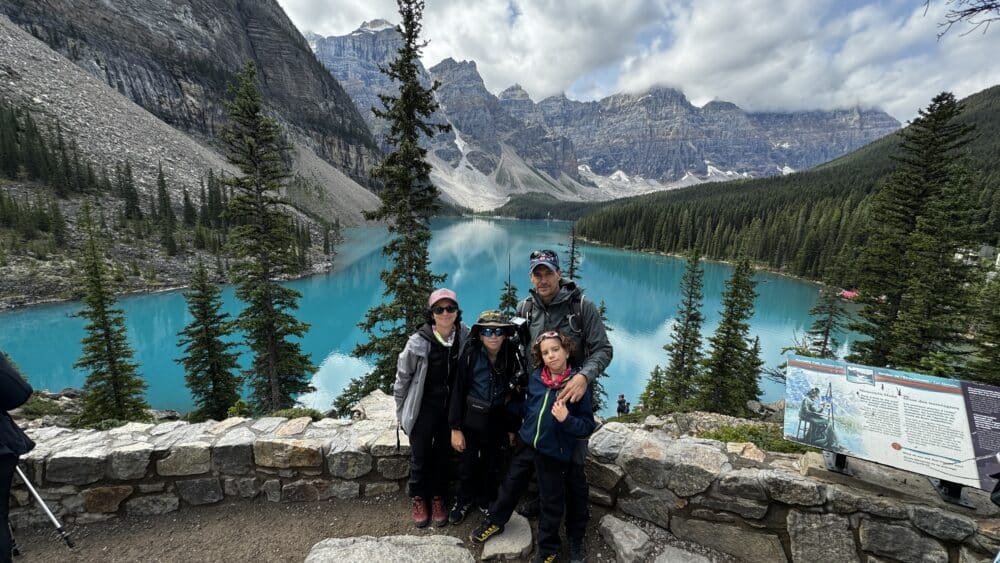
If there's one famous lake in Banff National Park, it's Lake Louise . While undeniably beautiful and a must-see, for me, the most spectacular lakes in Banff National Park are Morain Lake or even Boom Lake, and nearby, Peyto Lake or Emerald Lake in Yoho.
It's so famous that it's the most expensive place to visit because of parking restrictions at the lake and the overcrowding there in summer.
To visit it, you need to plan your trip to Lake Louise very carefully. That's why I've written a more detailed post with all the options for getting to Lake Louise and everything you can see and do there.
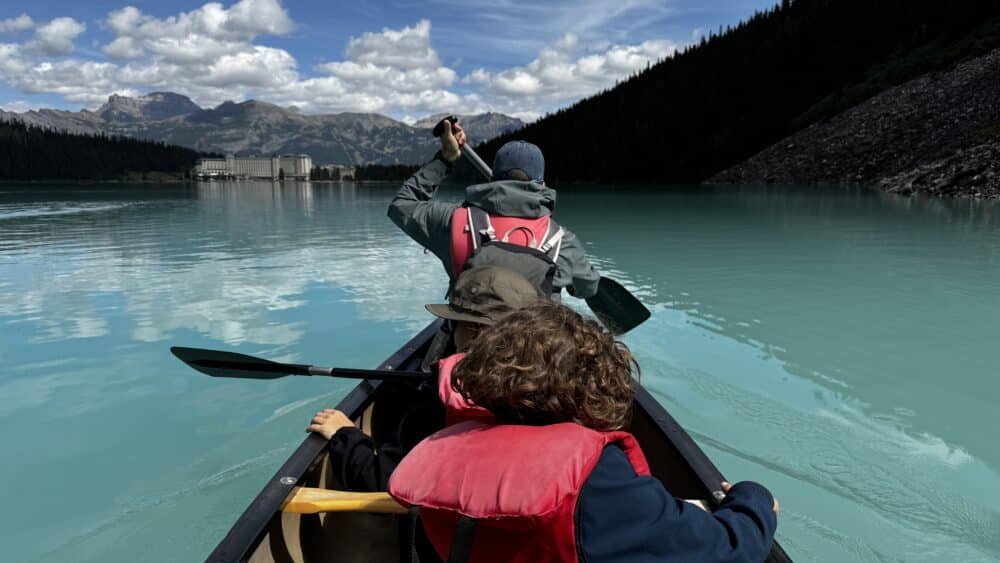
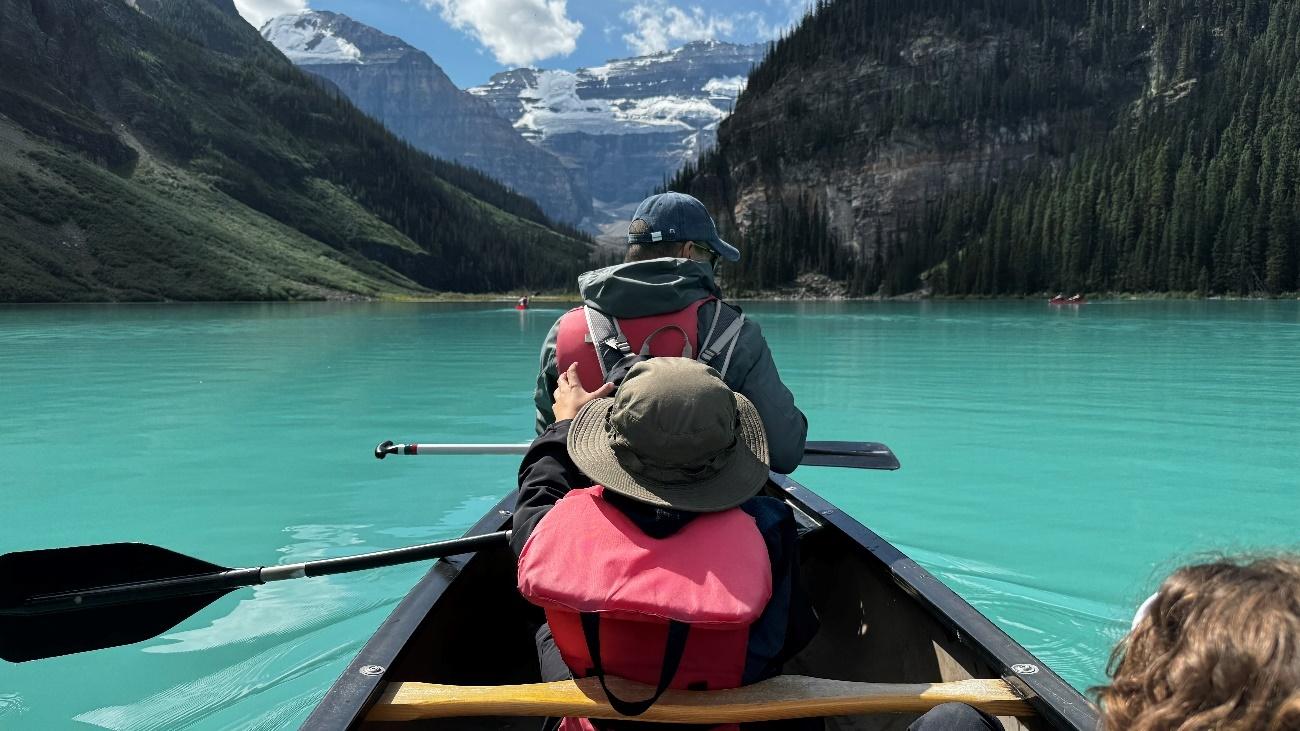
We opted to enjoy Lake Louise by canoe , and I assure you it was the right choice to see it without the crowds of hundreds of tourists who gather on its access shore. The canoe rental for the four of us cost $160, which is among the most expensive canoe rentals for an hour, but the extraordinary location truly makes it worthwhile.
In Lake Louise, you can not only admire a beautiful lake, but you can also take many beautiful hikes of all levels.
From the easy , flat 2km loop trail with constant lake views that circles the lake, to the 7km round-trip trail with 385m of elevation gain that climbs to the Lake Agnes Tea House . Finally, another legendary Lake Louise route is the famous Plain of Six Glaciers . This moderately difficult 11km round-trip trail offers views of incredible glaciers . Allow at least 5 hours for this hike.
See the Vermilon lakes
From the center of Banff you can take a 6,5 km round trip hike to visit the Vermilon Lakes, a group of lakes very close to Banff Village.
If you prefer not to go trekking, you can go by public transport or by private car park in a small parking lot on the side of the road that goes up to Lake Louise.
There are no canoes or kayaks to rent here.
Take the bus to Lake Moraine and go trekking
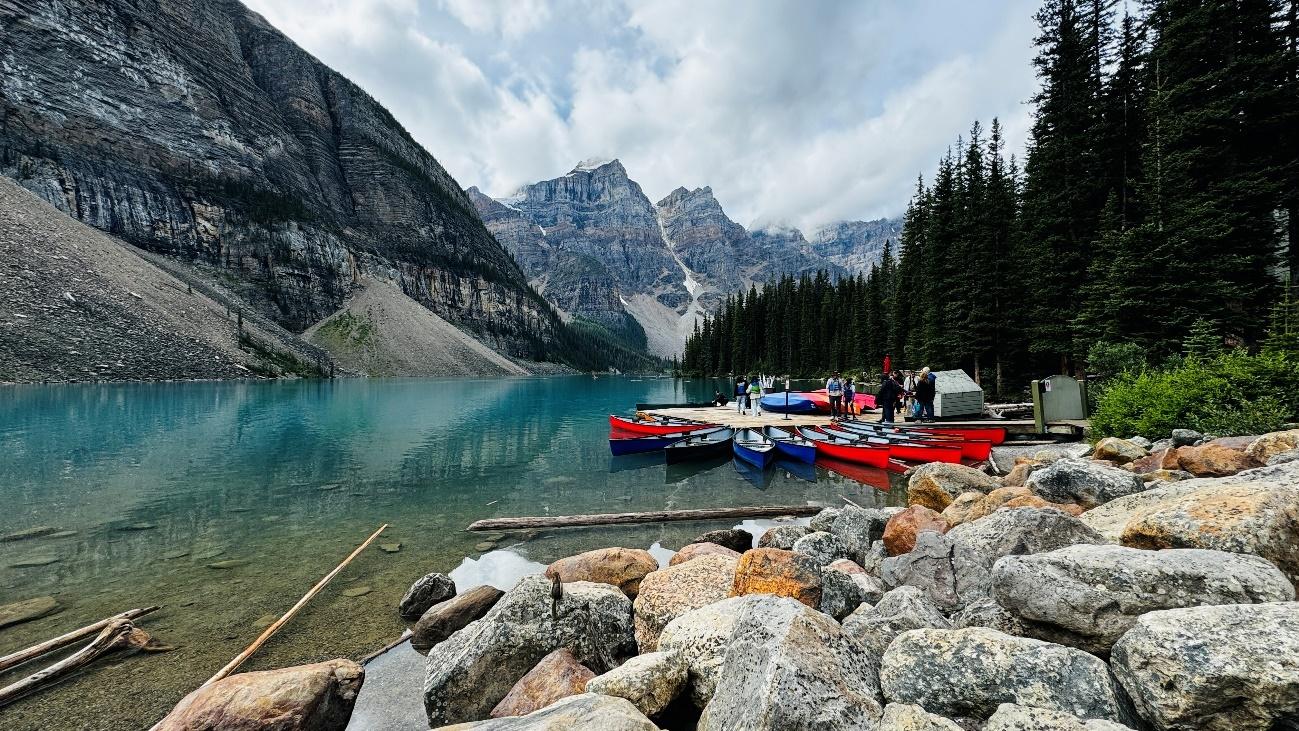
From Lake Louise, there is a shuttle bus to Lake Moraine, another of the beautiful lakes in Banff National Park.
In summer, only buses are allowed on that road; it's closed to private vehicles. Therefore, the only two options for visiting are a tour or a shuttle bus, for which you must book your ticket in advance (it's the same bus as for Lake Louise).
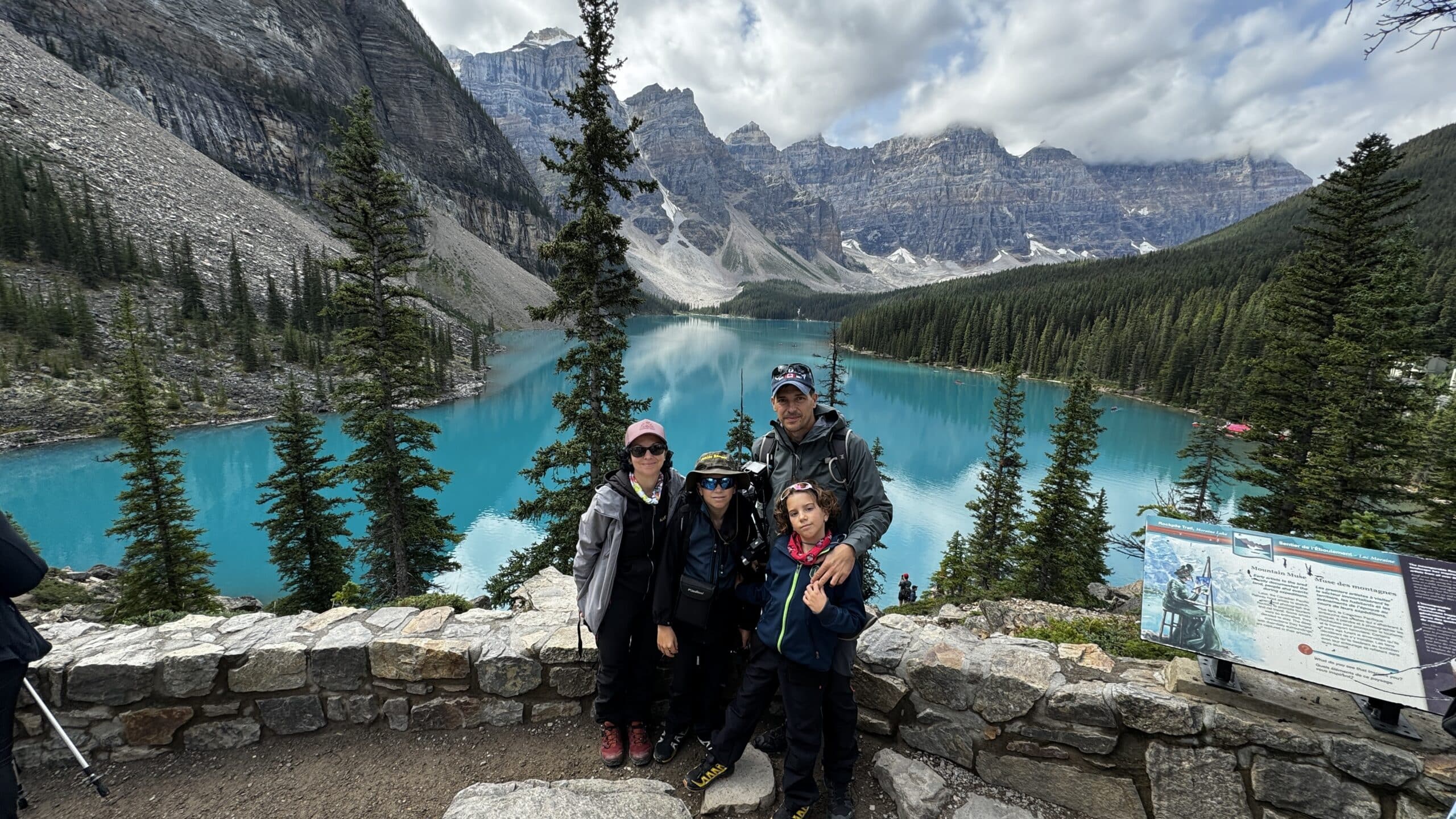
Once you arrive at Lake Moraine, you have several trails to choose from. The easiest and most accessible for everyone are the 1,5 km loop along the lake shore and the trail to Rockpile, iconic rock formations offering views of the lake and the Valley of the Ten Peaks. The Rockpile trail is a loop, only 800 meters long with a 35-meter elevation gain , making it a very easy hike.
If you are looking for routes of moderate difficulty, you will find the Eiffel Lake route of 12 km round trip and 370 meters of elevation gain or the Larch Valley and Minnestimma Lakes route of 10 km round trip and 535 m of elevation gain.
Finally, and only for experienced mountaineers, here at Morain Lake starts a mythical route of the Rocky Mountains from Sentinel Pass that leads to two famous and beautiful valleys, Larch Valley and Paradise Valley, through 725 m of elevation gain and 6 km one way , 12 km round trip.
Bathing at Johnson Lake Beach
Below Lake Minnewanka, we find a small lake, Johnson Lake, with a beach and a swimming area. It is the lake recommended by the tourist office for swimming, with the best temperature in the area and the most suitable for children to enjoy.
It has parking and a picnic area around it, ideal for a hot summer day in Banff National Park.
Hiking Johnstone Canyon Trail
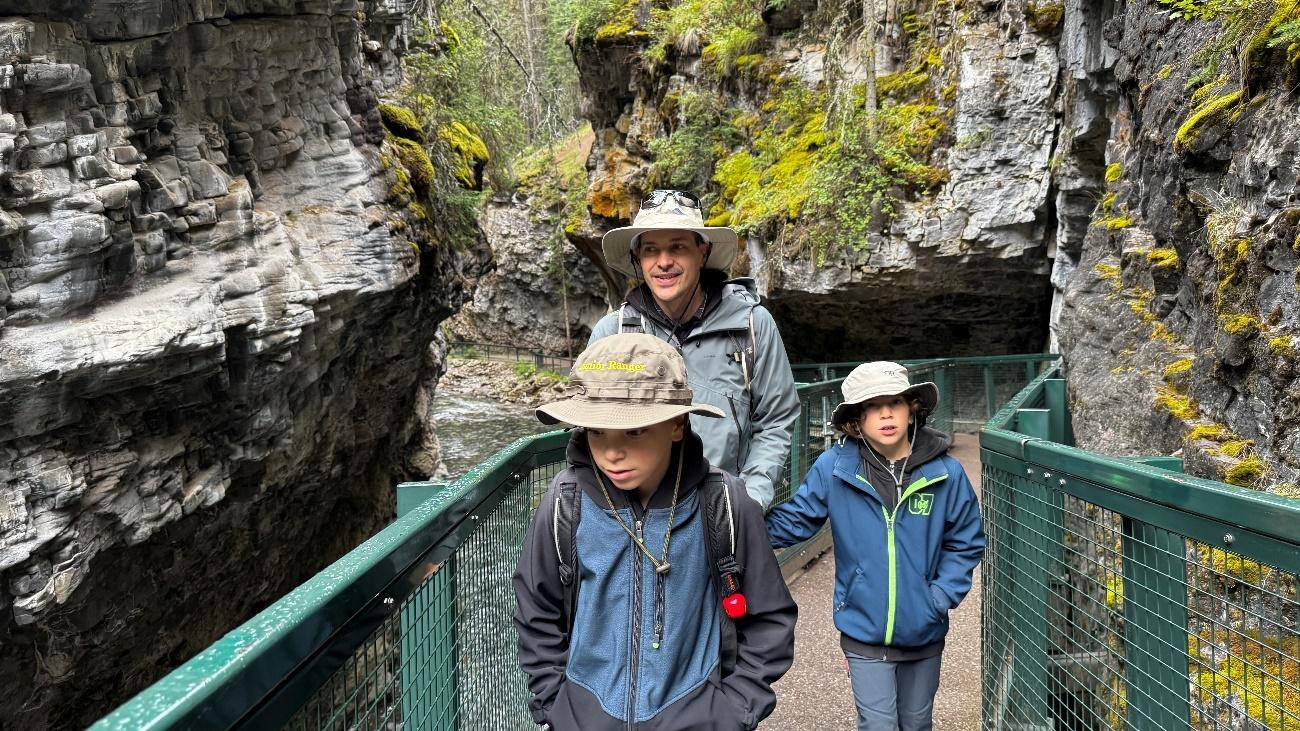
The big draw of the Bow Valley area is the stunning and beautiful Johnstone Canyon.
To visit it there is a very well marked trail which is the Johnston Canyon Trail which I explain in this detailed post.
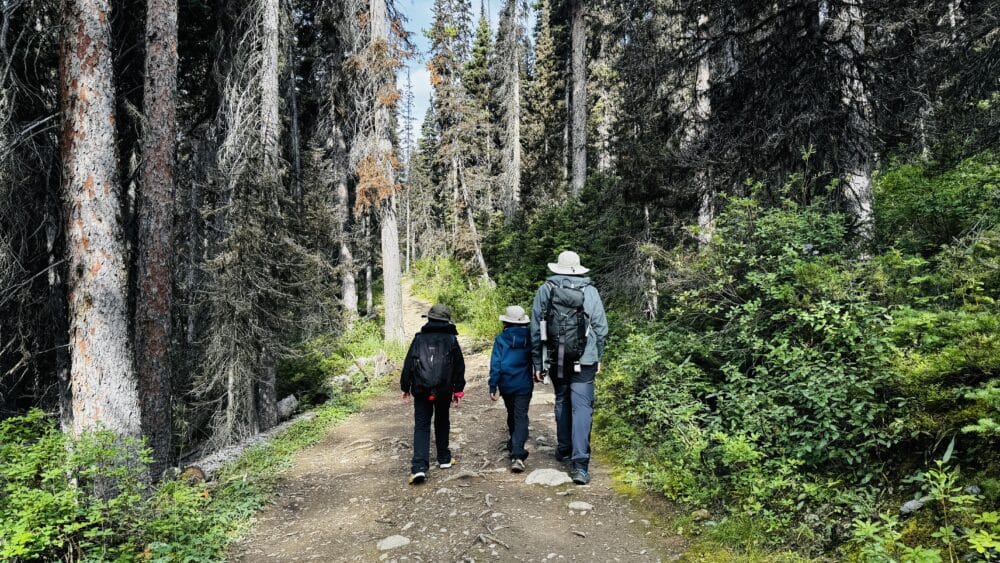
This well-marked trail is 12,5 km round trip with an elevation gain of 412 meters . We did it with our 8 and 11-year-old children and it was very easy and fun.
To park here we must do so in front of the campground in the designated parking area of Johnston Canyon , where the Trail starts.
This Trail, however, is divided into different sections and visits and can be made shorter or longer, depending on what each person wants and can do.
If you want to do the shortest one, go to the lower waterfall; otherwise, you can do a 6 km round trip to the upper waterfall, and for the adventurous, reach the last point where we find the Ink pots, 7 turquoise water springs located in a meadow three kilometers past the last waterfalls.
Visit and walk through the Moose Meadows
From Johnston Canyon, a very short drive away, you can park in this parking lot and enter a beautiful meadow in the middle of the Bow River valley.
Apart from simply enjoying the meadow, a route starts from here that goes to the turquoise pools of the Ink Pots, although the route is more monotonous than the previous one, since you only see forest and there are not as many views and landscapes.
Silverston Falls from Castle Junction
A little further on from Moose Meadows, we find Castle Junction , one of the important road junctions where we can get to Highway 1 Trans Canada.
Right at Castle Junction we can park the car here and take the Rockbound Lake Trail and in 1 km and with almost no elevation change we reach Silverston Falls.
Map of Banff National Park what to see
Below is this interactive map of Banff National Park that we have made with all the places to see in Banff National Park, both those we mentioned above and some others that may be of extra interest to you if you are going for more days.

Tips for visiting Banff National Park
Overall, I can tell you that Banff National Park is the most impressive of the National Parks we have visited, but also the most visited and crowded, so you have to plan well before going.
Based on our experience visiting Banff National Park, I would give you the following advice :
Tips on Route Planning in Banff National Park
On food and saving, tips
Tips on trails and wild animals
Latest posts from our blog
-
Definitive manual for traveling by motorhome【2024】
Super complete manual for traveling by motorhome with all the answers to your questions.
-
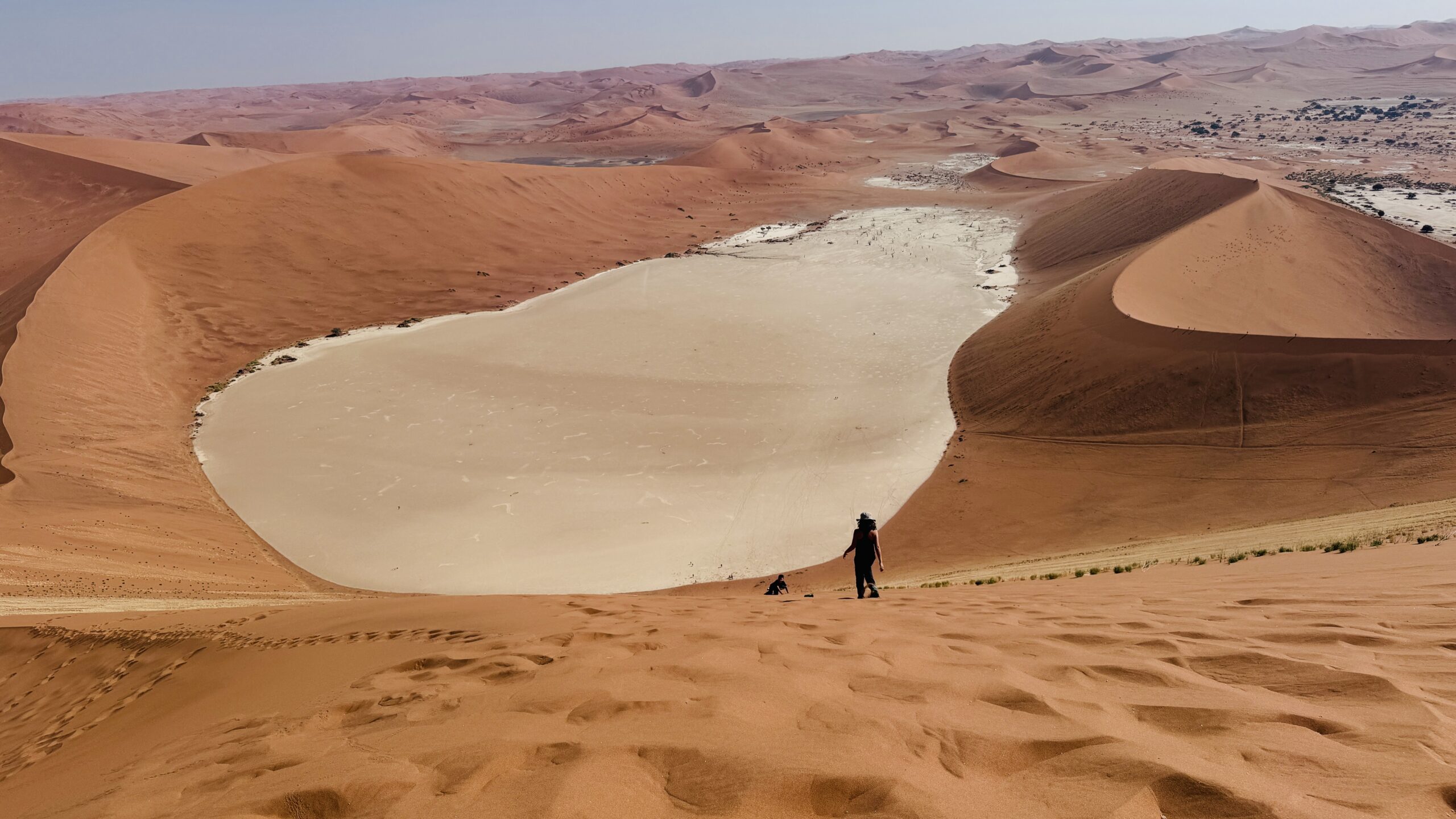
Namibia Trip: Complete Guide for Independent Travel (24-day Itinerary, What to See and Tips Based on Our Experience)
Are you thinking of planning a trip to Namibia on your own and don't know where to start? After traveling the country for 24 days as a family in a 4x4 with rooftop tents, we've put together this comprehensive guide with everything we wish we had known before our trip. Here you'll find information…
-
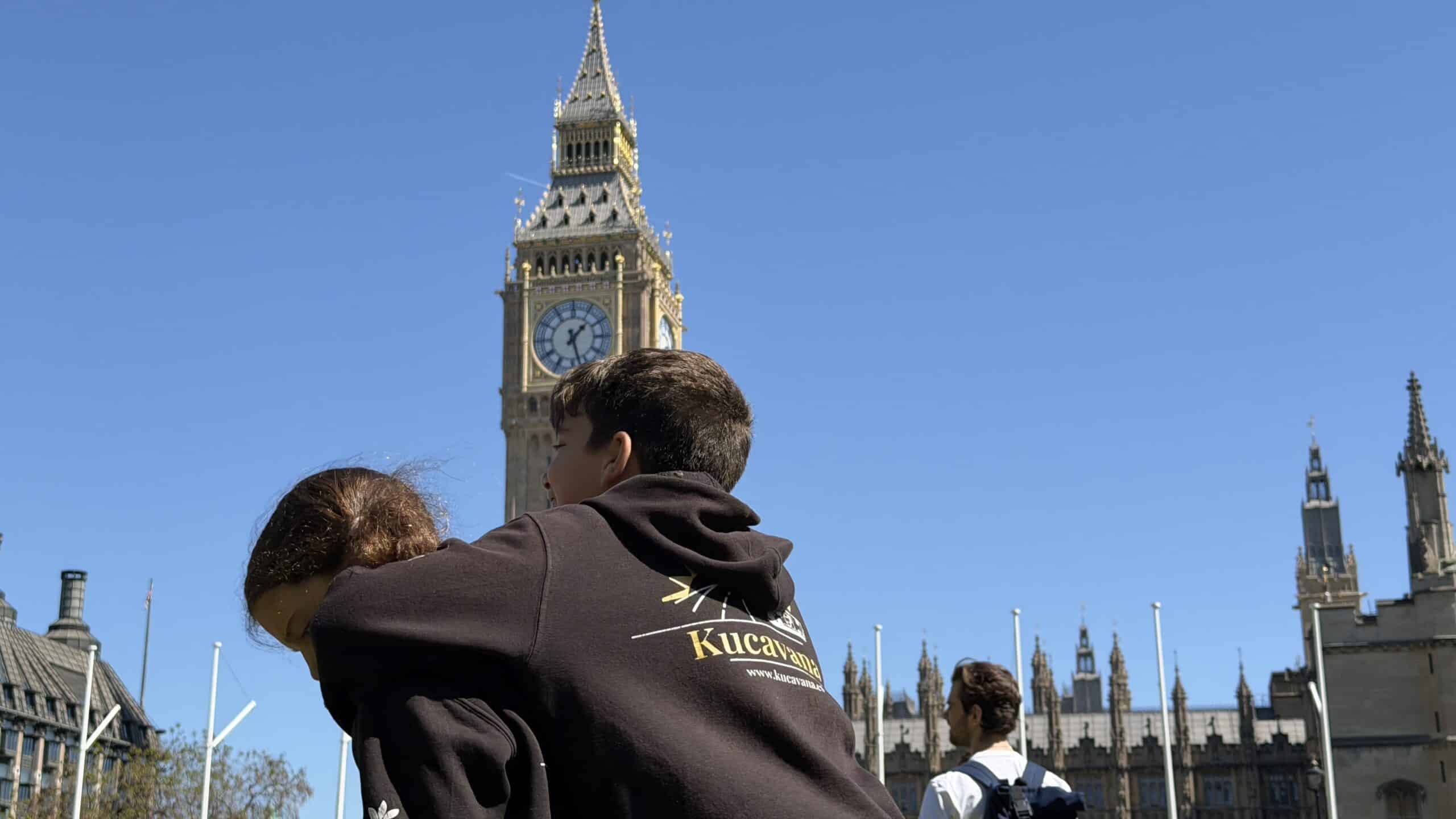
London with children: what to see and do as a family (royal guide with map) of the top 22 plans
If you're planning a trip to London with kids and don't know where to start, here you'll find the 22 best family-friendly activities, an optimized 3-day itinerary, money-saving tips, the best free museums, and an interactive map with all the must-see places. Basic summary: London with kids. Quick information. Recommended days: 3-5…
-
Guide to traveling to Canada: everything you need to know for a trip to Canada on your own
Welcome to a super guide for traveling to Canada from Spain or anywhere in Europe. One of our newest destinations in this wonderful world, where every trip continues to surprise us with its hidden gems. How lucky we are to have been born on Earth! How fortunate to be able to travel to Canada! Visiting Canada…


Ethical code:
On our blog you will find affiliate links. These are always placed with our highest ethics. We never publish any service or product that we have not used before and that we are sincerely happy with. That is why our recommendations are always ethical. In addition, there is no additional cost for you to book through our links and, on the other hand, it means a small commission for us that helps us maintain this blog so that you can continue enjoying it for free.