Table of Contents
Welcome to Canada by RV. One of our newest RV routes through this wonderful world, where every trip continues to surprise us with its hidden gems.
How lucky we are to have been born on Earth!
This article aims to help you navigate the world of motorhomes and campervans, as part of our comprehensive guide to traveling to Canada.
Canada by RV is a great destination and plan . It's an ideal country to explore this way, thanks to its stunning natural attractions and scenic roads.
For our part, our last trip was a 21-day route through the Canadian Rockies , and it's a destination and route that we 1000% recommend!
Canada in a motorhome is amazing, you will surely end up falling in love as much as we did with the second largest country in the world in a motorhome or camper.
About us
We are the Kucavana family , and we travel with our two children and our adopted dog, Max. We usually travel in our motorhome, also called Kucavana, hence the name of our blog (as a baby, Anna couldn't pronounce "motorhome" and said "Kucavana"). But we also enjoy traveling by bicycle, by plane, and backpacking—the point is to have adventures as a family. The one writing this is me, Pilar, the mom of the family and perhaps the craziest one. I enjoy every new experience we have as a family, and I hope to help you enjoy traveling as much as we do.
To stay connected with you, follow us on our social media channels: YouTube and Instagram
Checklist for traveling to Canada in a motorhome or camper
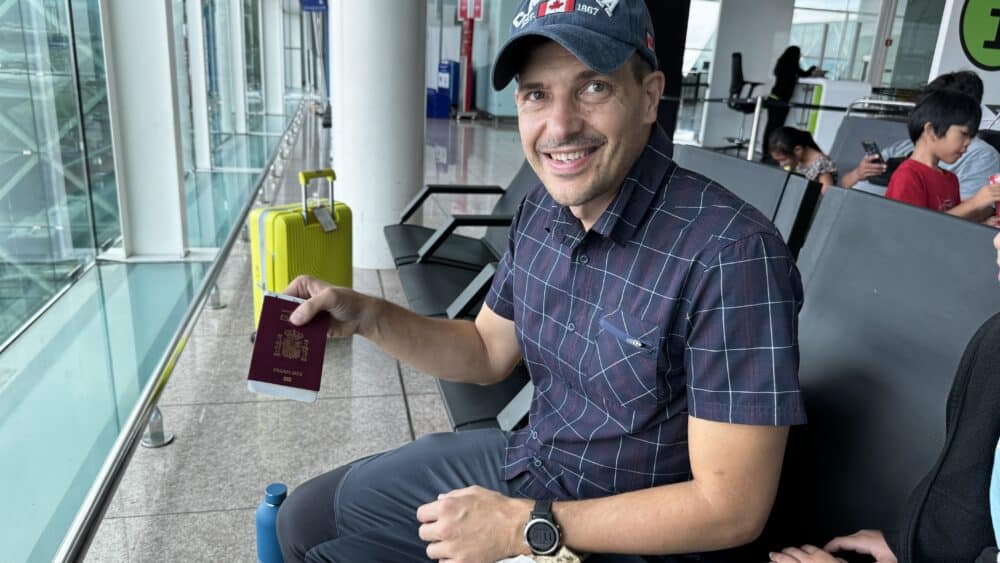
Have a valid passport and process the eTA (Electronic Travel Authorization, the visa
During the month before traveling, remember to check that your passport is valid. Then you will need to apply for the eTA, the fast-track electronic visa, which you can get on the official Canadian government website. It's easy to apply for yourself; the information is even available in Spanish. However, the application process is only available in English or French, which you can translate with the Google Translate web plugin if needed.
It is a fast electronic visa for European citizens flying to Canada for tourism and is valid at the time of travel.
It costs $7 and it's very easy to do on the official Canadian government eTA website.
Buy a plug adapter for Canada
Before you leave, remember to bring your Canadian plug adapter ; it's the same type as the one used in the United States. It uses flat prongs , the type A and B outlets , and operates at 120V and 60Hz.
We have had this one for years, it has a lot in one and it works great.
Take out travel insurance
Canada is spectacular, but it's also a very wild and remote place, so before you continue planning your route, the first thing you should do is buy travel insurance . Oh, and if you want it to include cancellation and refunds for flights, remember to do it before buying your tickets or at least five days after purchasing them ! Keep this tip in mind because it's important.
Here's a 5% discount with the company we always use for our travel insurance. For Canada especially, get either IATI Familia or IATI Estrella insurance . If you choose the standard IATI plan, your coverage might be insufficient if you break an arm, for example, which happened to a friend of mine and cost him €135.000!
Buy a mobile data card and navigate with GPS
In Canada you won't have the European roaming that we are so used to, and there roaming can cost you an arm and a leg.
In short, either you buy a data SIM card to have internet access there , or you won't be able to use your mobile phone in Canada, which I don't recommend. You'll need internet for GPS navigation and a thousand other things, so what I recommend is doing what we did: buying a couple of SIM cards for Canada, which you can easily install before you go, all from Spain, and then having internet access from the airport in Canada.
We bought one for each of our phones from Holafly with a 5% discount using this link and it's great, unlimited data and the price seemed the best we found, 54 euros for 20 days and it's an e-SIM which is super easy to download and configure with the manual they send you with the card.
Processing the international driving license
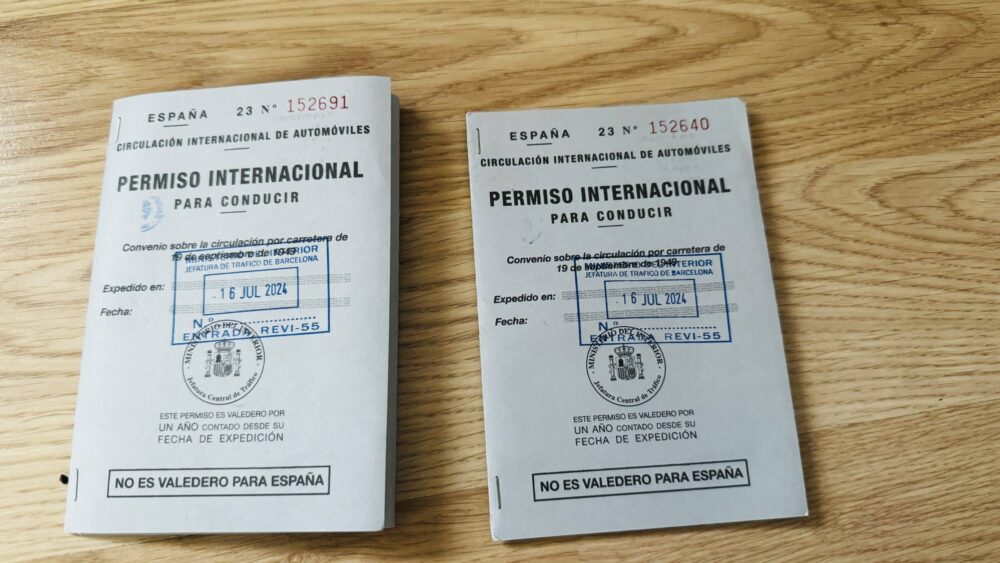
To drive in Canada, you'll need an International Driving Permit , which you must apply for from the DGT (Spanish Directorate General of Traffic) before you go. I've already explained how to apply for it on the DGT's online portal.
It's easy, you go to the DGT's Electronic Headquarters website and process it electronically through the electronic registry by entering with your electronic certificate or PIN code, paying the issuance fee which is approximately 11 euros.
Once you have done this, you must go to the DGT office you indicated on the application to collect the International Driving Permit after 2 business days and bring a photograph of your driver's license. You do not need to make an appointment to collect the International Driving Permit, but they will give you a number there and you should be patient because there is usually a queue.
Booking the motorhome at the best price: the key
Of course, if you are going to travel to Canada in a motorhome, I recommend that you, like us, book a motorhome or camper well in advance so that it costs you as little as possible.
When booking the motorhome, keep in mind that if you can travel outside of the high season, the rental costs can be almost half of what they are in the high season. If I could have, we would have traveled in April and not in August as we did, due to the price and the people we met, so keep that in mind.
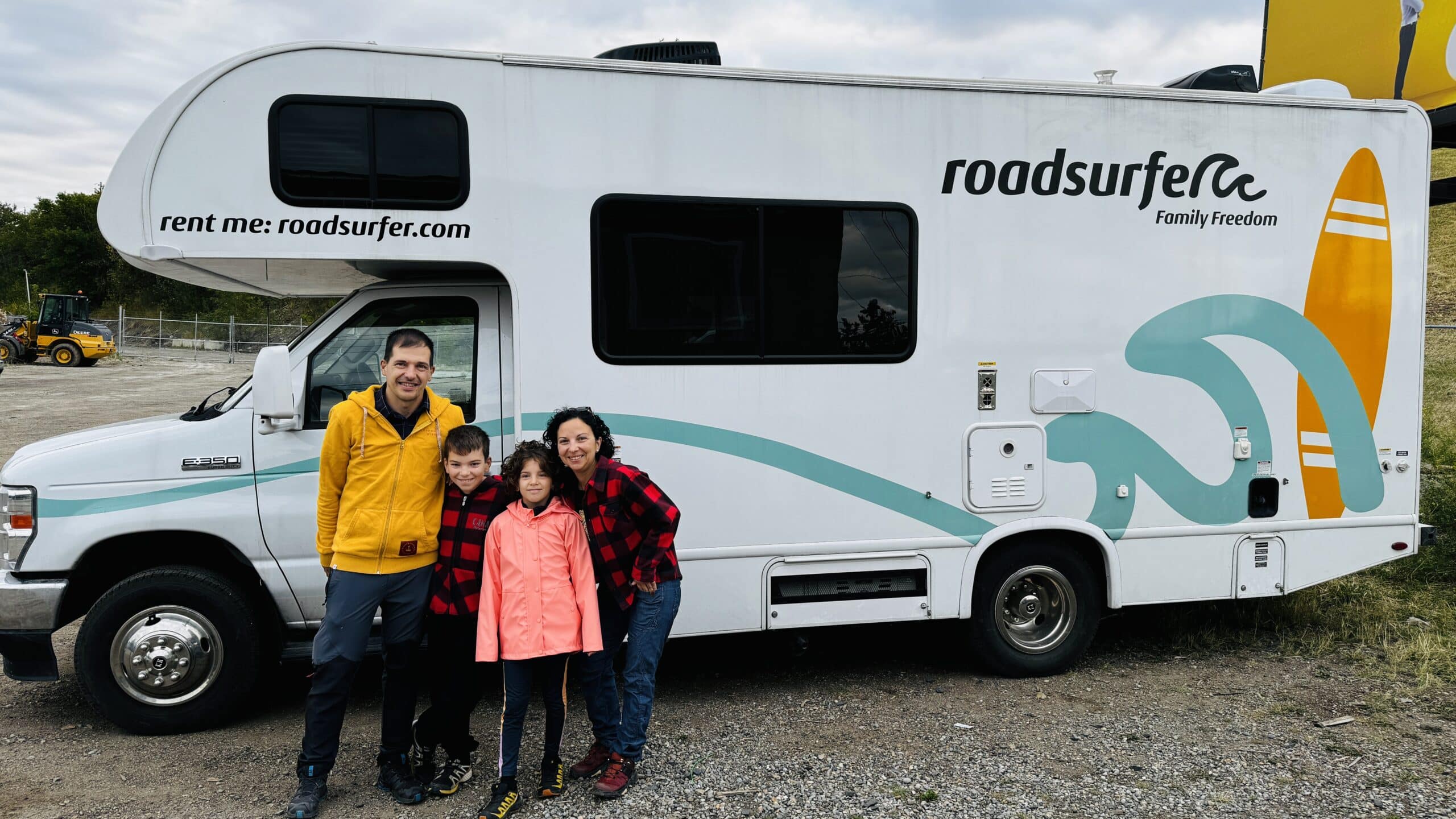
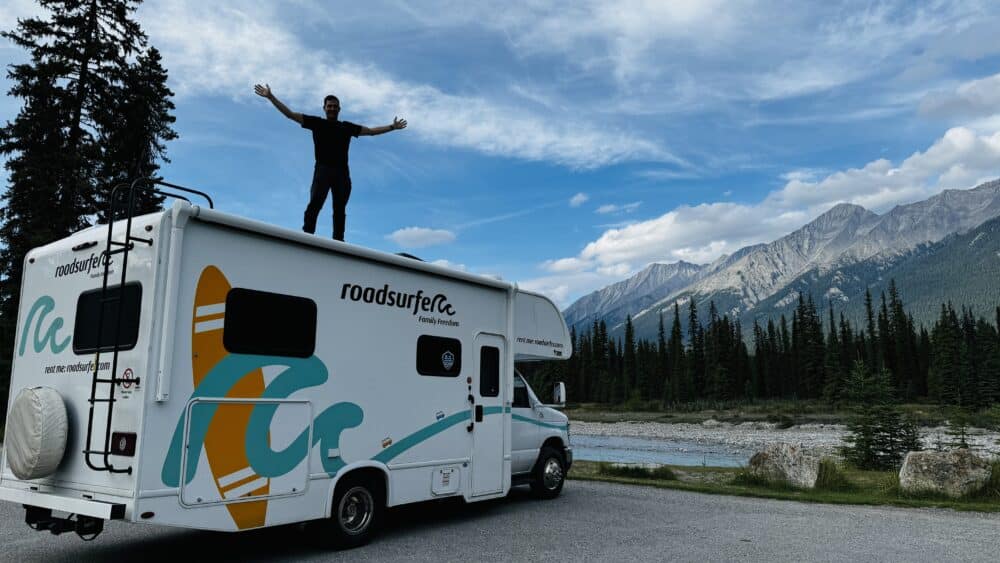
We rented our campervan from Roadsurfer . It was the second time we'd rented from them; the first time was in the United States for a West Coast road trip. And honestly, just like in the US, the campervan worked perfectly. We didn't have a single problem, and returning it and getting our deposit back was super easy and hassle-free. I definitely recommend them.
TIP: If you want to do this road trip through Canada in a campervan like we did, we recommend renting one. We suggest doing so in Calgary or Vancouver with Roadsurfer , a company we would definitely use again. Roadsurfer gave us a $ 150 discount that you, as readers, can also take advantage of by applying the DISCOUNT CODE: KUCAVANAAMERICA
Plan your route and book campgrounds
As I explain in detail below, in Canada both overnight stays and wild camping are totally prohibited outside of designated places, which are campgrounds or designated recreational areas, some free and others with a very reasonable fee.
There's a large network of campgrounds and recreational areas, but surely on your trip, like we did, you'll want to be in the best camping areas in the middle of the main national parks, so we advise you to plan your route and book well in advance as places fill up quickly in the summer.
Below, when I explain everything about overnight stays, I will tell you where to find the campgrounds and how to reserve.
What to pack for your summer trip to Canada in a motorhome
Below, we detail our luggage for 21 days in Canada in a motorhome in summer, which we recommend you take on your trip.
Above all, remember that the best thing to do when trekking in the mountains due to the Rocky Mountain tick is to always wear long pants, closed shoes, and socks.
Clothes per person (we will wash by hand during the route what is necessary, it is better to travel light based on experience):
- 3 complete changes of long technical summer mountain trousers + short-sleeved T-shirt
- 2 changes of shorts + short t-shirts
- 5 changes of underwear and socks
- 2 fleece or long-sleeved sweatshirt-type jackets
- 1 lightweight down jacket, one of those that fold up from Decathlon
- 1 cap
- 1 raincoat
- 1 flip flops
- 1 swimsuit
- 1 Gore-tex trekking shoes
- Toiletry bag with solid soap and bamboo toothbrush to be sustainable
Things for the motorhome that we carry, are the result of experience and very useful:
- Small Italian coffee maker + a package of ground coffee, if you are a coffee drinker like us
- Foldable memory foam travel pillows, if you have trouble sleeping on those thin pillows from Ikea, which is what they will give you in the rental motorhome. It also works for the plane, which low-cost airlines don't provide.
- A couple of small travel blankets, for the cold people in the house and also for the plane, which the low cost airlines don't provide. In the motorhome, as at home, there are cold people and hot people, so in order not to turn on the heating when the hot people are, we have learned that by carrying a couple of blankets we can solve our broken thermostats hahaha
- Tablets for chemical toilets We know that they work and remove the smell. We have learned from other times that sometimes they give out liquids that we don't really like the smell of, so we bring our own.
- Water purification tablets for the water tank of the motorhome, so we always boil the macaroni quietly with the water from the motorhome.
- 2 extendable skewers for barbecuing and making marshmallows
- 1 multi-purpose knife
- Rags for cleaning and a scouring pad for scrubbing dishes
- 1 lighter to light the barbecues
- Mosquito repellent
- Sunscreen
- Binoculars for National Parks
- Canada plug adapter
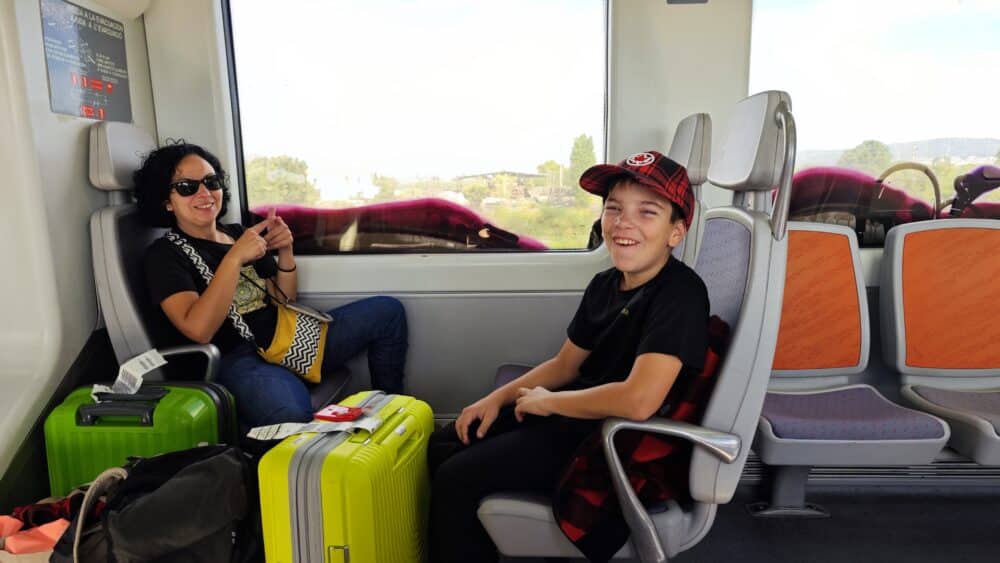
Budget for a trip to Canada by motorhome: our expenses
As for the budget, we'll be clear and give you the costs of our 21-day trip through the Canadian Rockies and Western national parks.
What you should know is that, luckily for us, the euro is stronger than the Canadian dollar, and that's the key to why traveling to Canada is currently so affordable. 100 Canadian dollars is currently worth 66 euros (as of August 2024).
Here are the costs:
- Cost of the flights per person: €875 round trip with Air Canada, with a stopover in Toronto, from Barcelona.
- Daily cost of motorhome rental: €275/day (for the 4 of us travelling and in August, high season)
- Average daily cost of accommodation, campgrounds: €25/night (for the 4 of us and a motorhome). This is the average price of campsites there.
- Average daily costs for activities, food, souvenir shopping, restaurants, etc: 40 € (for the 4 of us)
The total cost of our 21-day RV trip in Canada was $2.550 per person . Keep in mind that there were two adults and two children, and the RV rental cost was split four ways.
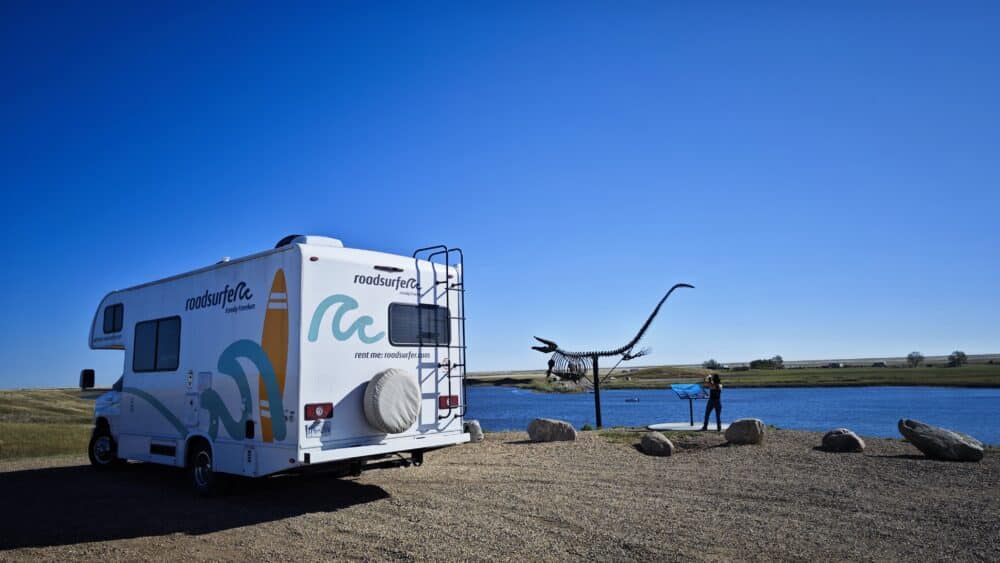
Canada by motorhome: driving, where to sleep and camp, rules you should know
Canada by motorhome
From Calgary, having just landed at the airport, we picked up our reserved rental campervan from Roadsurfer , a company we had already rented from a year earlier to travel the West Coast of the United States in a campervan.
This time we decided to rent a motorhome instead of a camper, which is much more comfortable for a family like us with two children.
After our pickup, our 18-day road trip from Calgary through the Canadian Rockies in a motorhome was one we'll never forget. A route through more than five national parks and several state parks gave us the best of nature in this wonderful world.
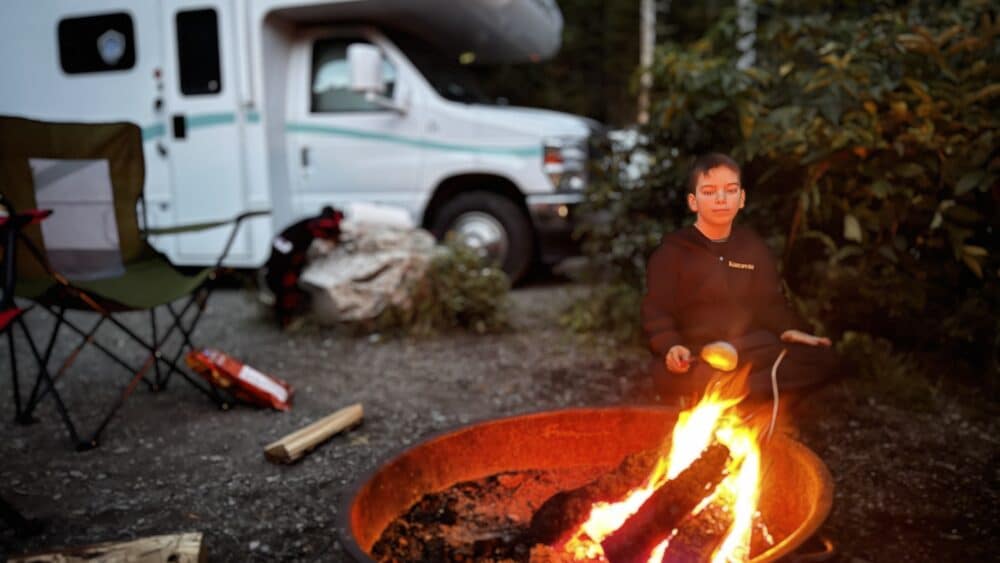
Traveling in a motorhome, as we always do, gave us the freedom and the power to always experience our trip in the most beautiful natural environments, comfortably and with our daily nightly ritual of lighting the campfire and making the best smashmallow of the trip each day at the campground we happened to be at that day.
But I won't lie to you, if you want a perfect trip, don't improvise and do as we did: plan your route well and book the public campgrounds in the national parks well in advance so you don't run out of space if you travel in the summer and so that your experience is truly as beautiful as possible.
Now I'll tell you everything you need to know to plan a great trip to Canada in a motorhome.
Driving in Canada: Rules you should know
Driving in Canada is a joy; it boasts one of the world's largest networks of highways and scenic routes . From the iconic Trans-Canada Highway, stretching from the Atlantic to the Pacific, to the Icefields Parkway in Alberta, which we enjoyed on our Rocky Mountain road trip from Banff to Jasper, with its breathtaking views of glaciers, rugged mountains, and idyllic turquoise lakes.
Discover everything you need to know about driving in Canada in this post, with very useful tips for driving and refueling.
International driving permit
First of all, you should know that in Canada you'll need an International Driving Permit , which you must request from the DGT (Spanish Directorate General of Traffic) before you go. I've already explained how to obtain it on the DGT's online website . Otherwise, check the checklist above.
Traffic rules in Canada
Traffic laws in Canada are generally very similar to those in Europe, so you'll have an easy time. Furthermore, the roads are similar to those in the United States: wide and often with long straight stretches, making them easy to drive on. In our experience, we found the roads to be fantastic.
You must drive on the right , respect traffic signs and speed limits which are normally 25 miles per hour (40 km/h) on urban roads, 55 miles per hour (96 km/h) in rural areas and 65 miles per hour (104 km/h) on highways.
Other rules you should know are the following:
- Bringing child seats or booster seats up to 9 years or height of 145 cm.
- If the Police stops you, do not get out of the vehicle. Turn off the engine and sit patiently with your hands visible.
- You cannot pass school buses when they have their lights on., even if they are stopped.
- El emergency phone of police, fire and ambulance in Canada is the 911.
- Do not use the mobile phone while driving.
- You can always turn right yielding first, even if the traffic light is red.
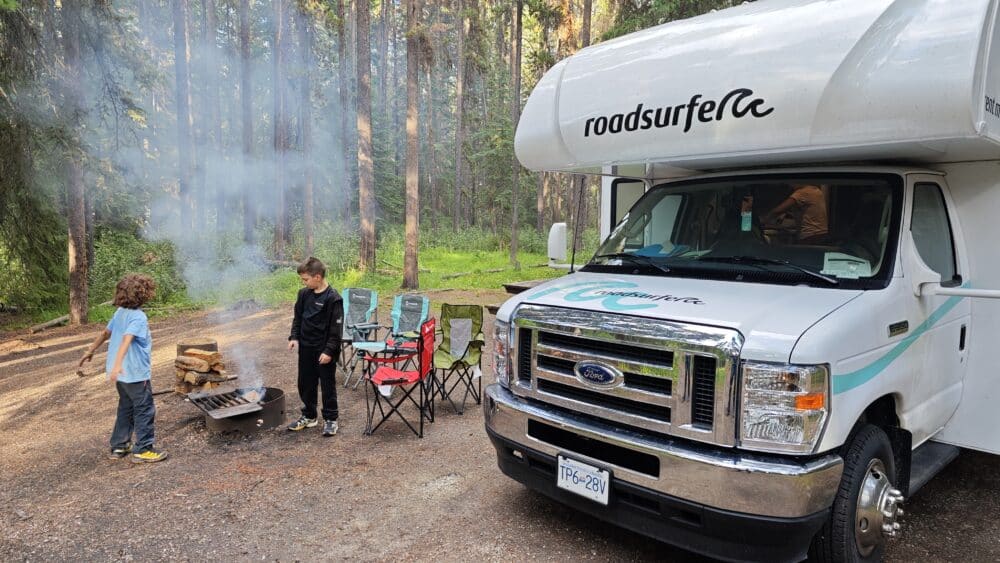
Overnight stay in Canada in a motorhome: where to sleep in an RV
If we go to the official Canadian tourism website , they are very clear on this aspect in terms of regulations:
In Canada, the only places where you can legally park overnight with an RV, motorhome , camper or caravan, as they call recreational vehicles of any kind there, are official campgrounds or recreational areas (these are sometimes free or very cheap) , camping grounds or campsites as we more commonly call them in Europe.
In bold, they also highlight that spending the night anywhere else, such as highway rest areas or shopping centers, except for Walmart supermarkets, is totally prohibited.
Walmarts, also acclaimed as legal free overnight places in the United States, point out that you must first ask permission at the supermarket.
In our case, we have always slept in public campgrounds within national parks, but we do warn you that we made the reservations well in advance because the plots fill up quickly for summer.
To find public campgrounds, the official website for campgrounds in the national parks is this one, where they are all listed and where you can book. You should know the length of your campervan beforehand, though, so you can then choose the exact available pitch at each campground.
In summary, plan your route, look for campgrounds to stay overnight and book them, and keep in mind in your budget that a campground can cost you from 15 to 30 euros per night ( recreational areas are usually very cheap and private campgrounds are the most expensive).
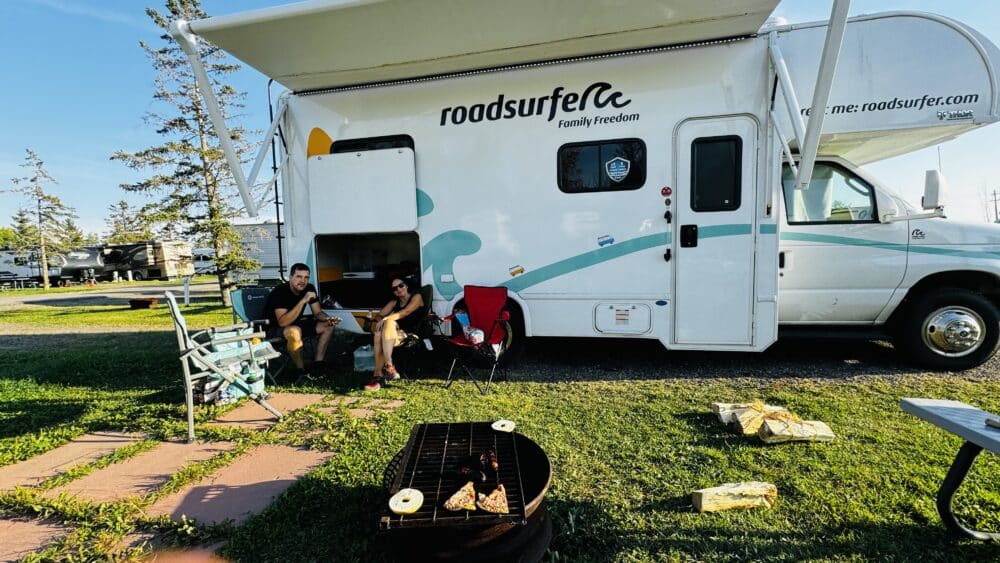
Camping in Canada in a motorhome
Camping in a motorhome or campervan includes anything that involves setting up a table, chairs, awning, cooking outdoors, hanging clothes to dry, etc.
Camping, as well as overnight stays in Canada, is completely prohibited outside of campgrounds , and camping is not allowed in Walmarts or any other overnight location.
So, as we did, camp in the magnificent public or private campgrounds of Canada.
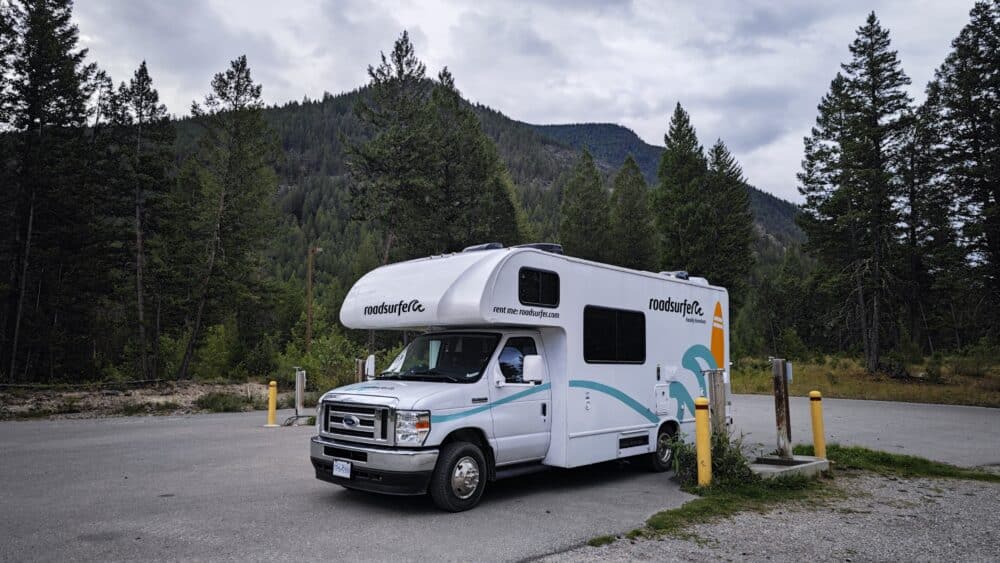
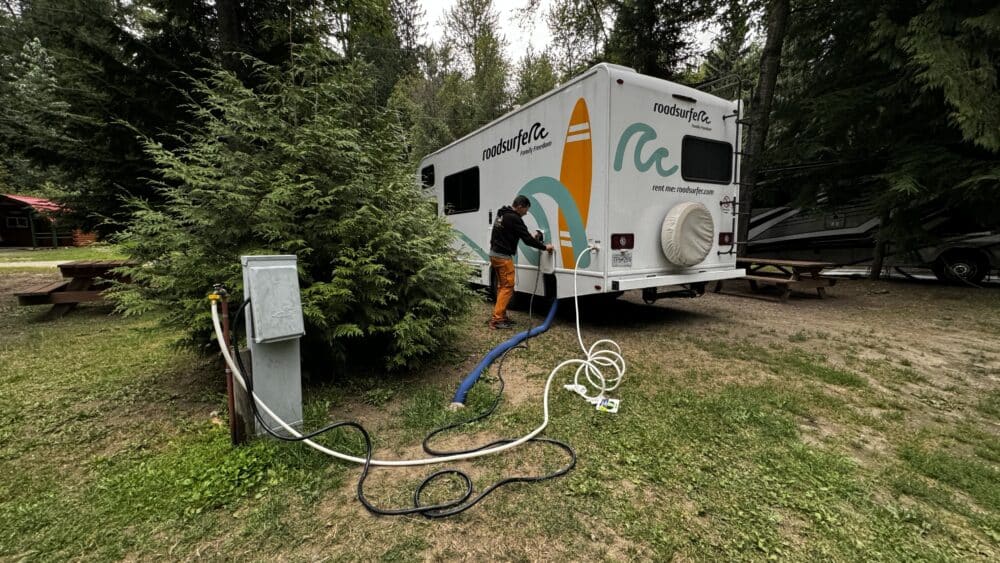
Performing RV, motorhome, water emptying and filling services in Canada in a motorhome
In most campgrounds, not recreation areas , you will find a dump station, a water filling and emptying station for RV services.
In addition, in some public campgrounds and always in private ones on the same plot you will find hook-ups, connection towers where you will have electricity and to empty and fill water on the same plot.
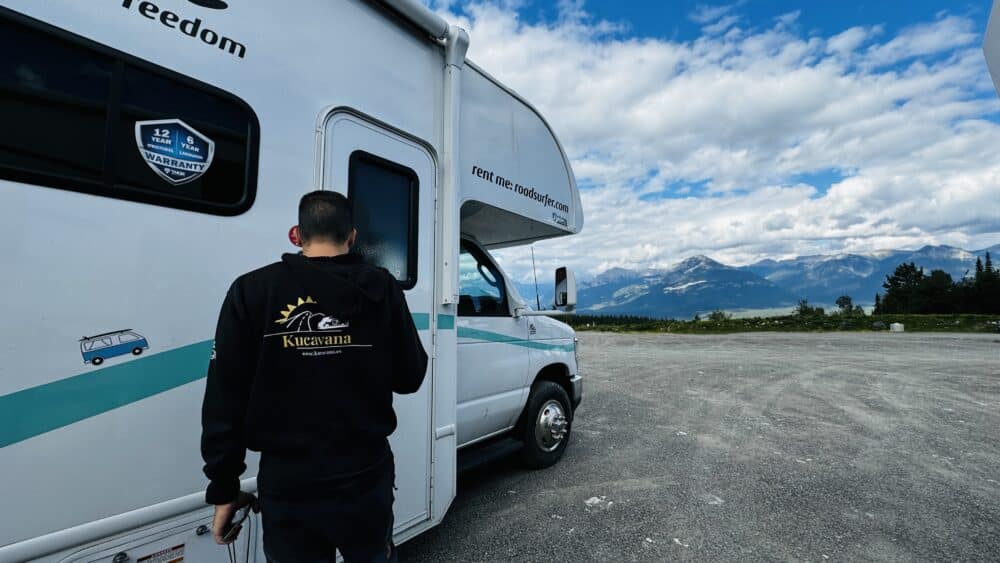
The best route through Canada by motorhome
After knowing everything about what it's like to travel to Canada in a motorhome or camper, it's time to start planning the route, in addition to completing the checklist I mentioned above.
The best route never exists, especially if it serves as the best route for everyone. That is why I advise you to design your own route inspired by the trips that others have made and to choose what attracts your attention the most and that, depending on the number of days you have, best suits you.
In our case, we took a route full of nature where we only visited Calgary one day, which was our arrival and return point to the airport from Barcelona.
Our route was a circular route through different National Parks, but also Provincial Parks, less crowded in the Canadian Rockies and surrounding areas.
To see it in full, with all the destinations, visits, and places of interest along with our own experiences, I recommend you read the article I wrote about our 21-day route through the National Parks of the Rockies in Canada.
A route that I can tell you had to be redesigned 15 days before leaving, due to a fire that completely closed Jasper National Park, the largest in the Canadian Rockies. We were not able to visit Jasper but the 5 days we were going to spend there gave us time to visit 3 more very cool and surprising Natural Parks.
Our Route through the Canadian Rockies
Our route finally took us through the following Natural Parks and destinations; here are some articles we've written about them that might interest you:
- Day 1: Barcelona – Calgary
- Day 2 to 6: Route and what to see in Banff National Park in Canada
- Day 2-3: Banff Village Area What to See
- Day 4-5: Lake Louise area what to see
- Day 6: Johnston Canyon
- Day 6: Route and what to see on the Icefields Parkway, ice fields highway
- Day 7-8: Route and what to see in Yoho National Park
- Day 8-9: Route and what to see in Canada's Glacier National Park
- Day 9-10: Route and what to see in Mount Revelstoke National Park
- Day 10: Route and what to see in Golden village
- Day 10-12: Route and what to see in Kootenay National Park
- Day 12-14: Route and what to see in Waterton Lakes National Park
- Day 14-15: Route and what to see in Glacier National Park in Montana, United States
- Day 16: Route and what to see in Alberta's Dinosaur Provincial Park
- Day 17-18: Route and what to see in the Valley of the Dinosaurs in Drumheller
- Day 18-19: Route and what to see in Calgary
- Day 20-21: Calgary - Return Home
And if you want to read about what to see in Jasper National Park, like how I prepared the route for it, I'll leave you our article about the route and what to see in Jasper National Park that I initially organized.
I hope this article has helped you and if it has, please the best way to thank us is to comment below and write to us on social media to tell us about it, remember.
Good route friends!
Latest posts from our blog
-
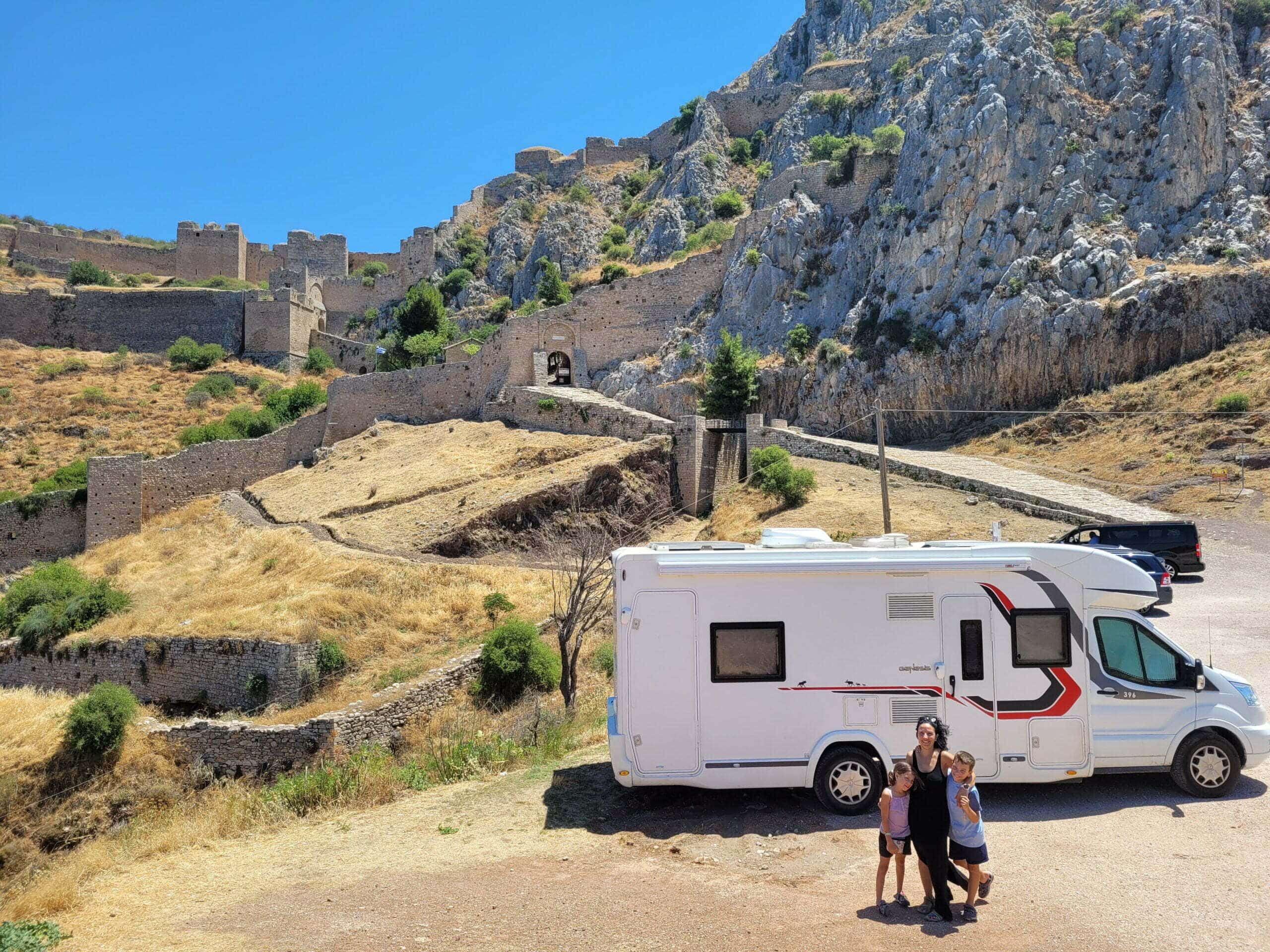
Definitive manual for traveling by motorhome【2024】
Super complete manual for traveling by motorhome with all the answers to your questions.
-
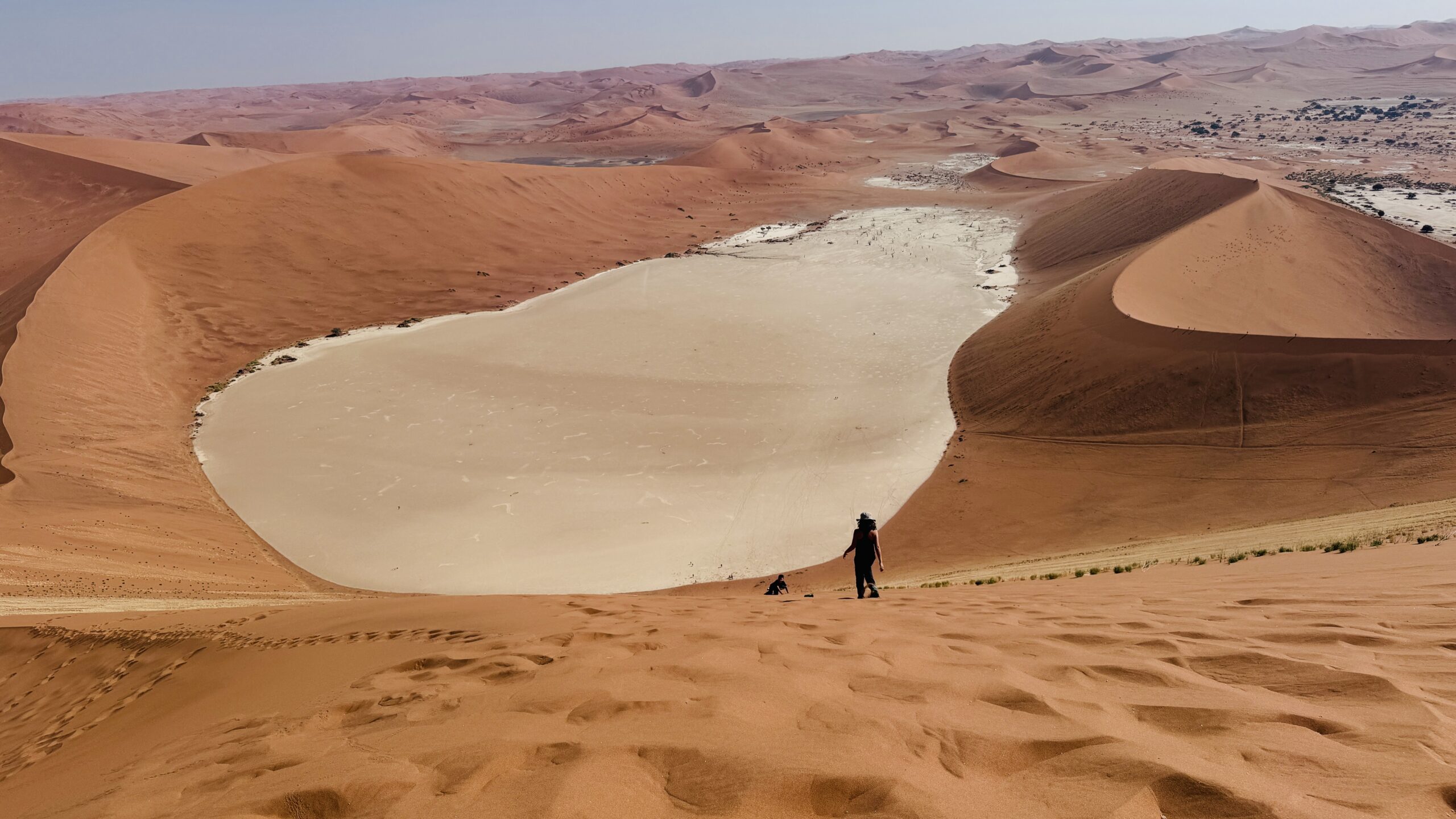
Namibia Trip: Complete Guide for Independent Travel (24-day Itinerary, What to See and Tips Based on Our Experience)
Are you thinking of planning a trip to Namibia on your own and don't know where to start? After traveling the country for 24 days as a family in a 4x4 with rooftop tents, we've put together this comprehensive guide with everything we wish we had known before our trip. Here you'll find information…
-
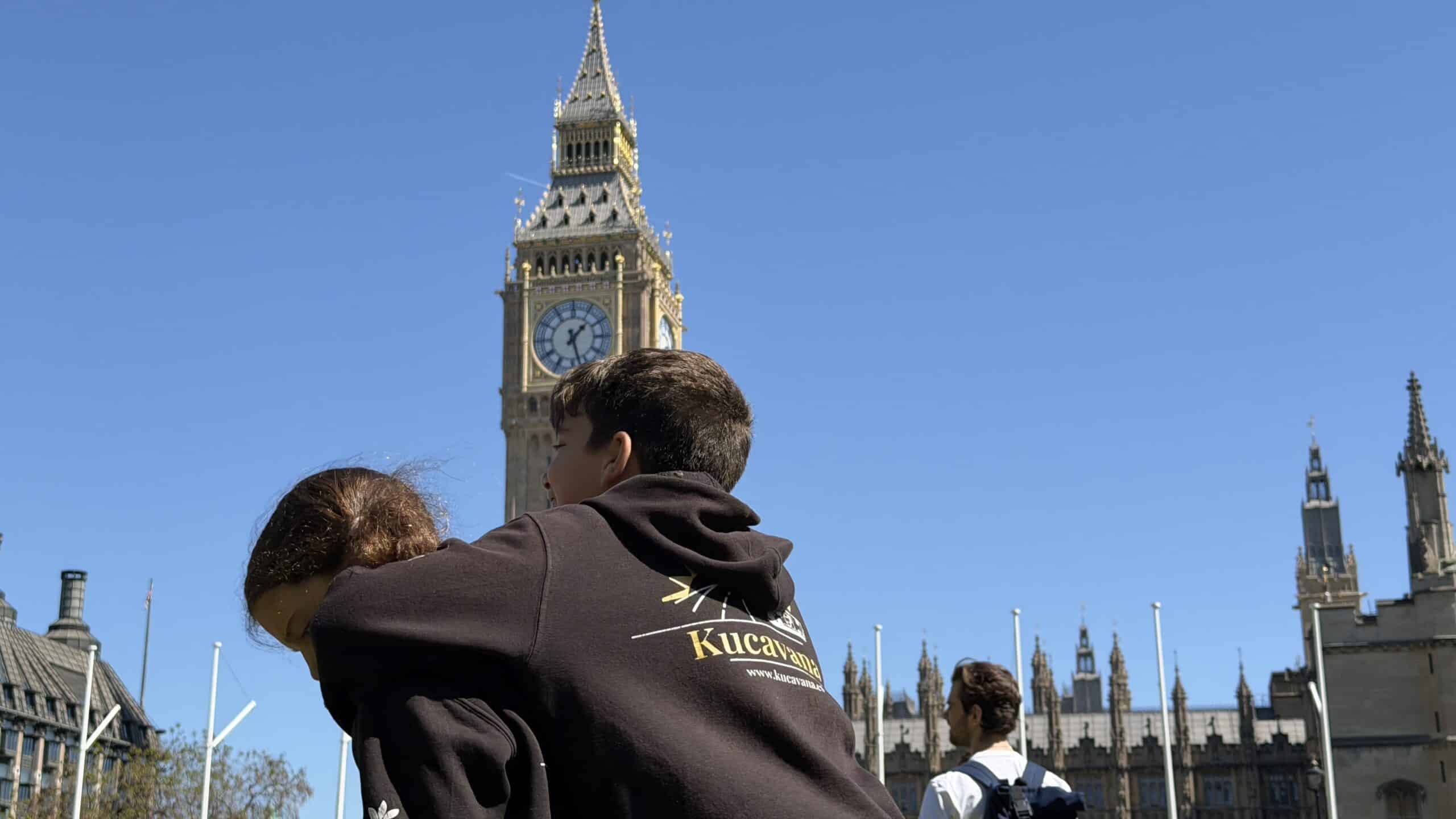
London with children: what to see and do as a family (royal guide with map) of the top 22 plans
If you're planning a trip to London with kids and don't know where to start, here you'll find the 22 best family-friendly activities, an optimized 3-day itinerary, money-saving tips, the best free museums, and an interactive map with all the must-see places. Basic summary: London with kids. Quick information. Recommended days: 3-5…
-
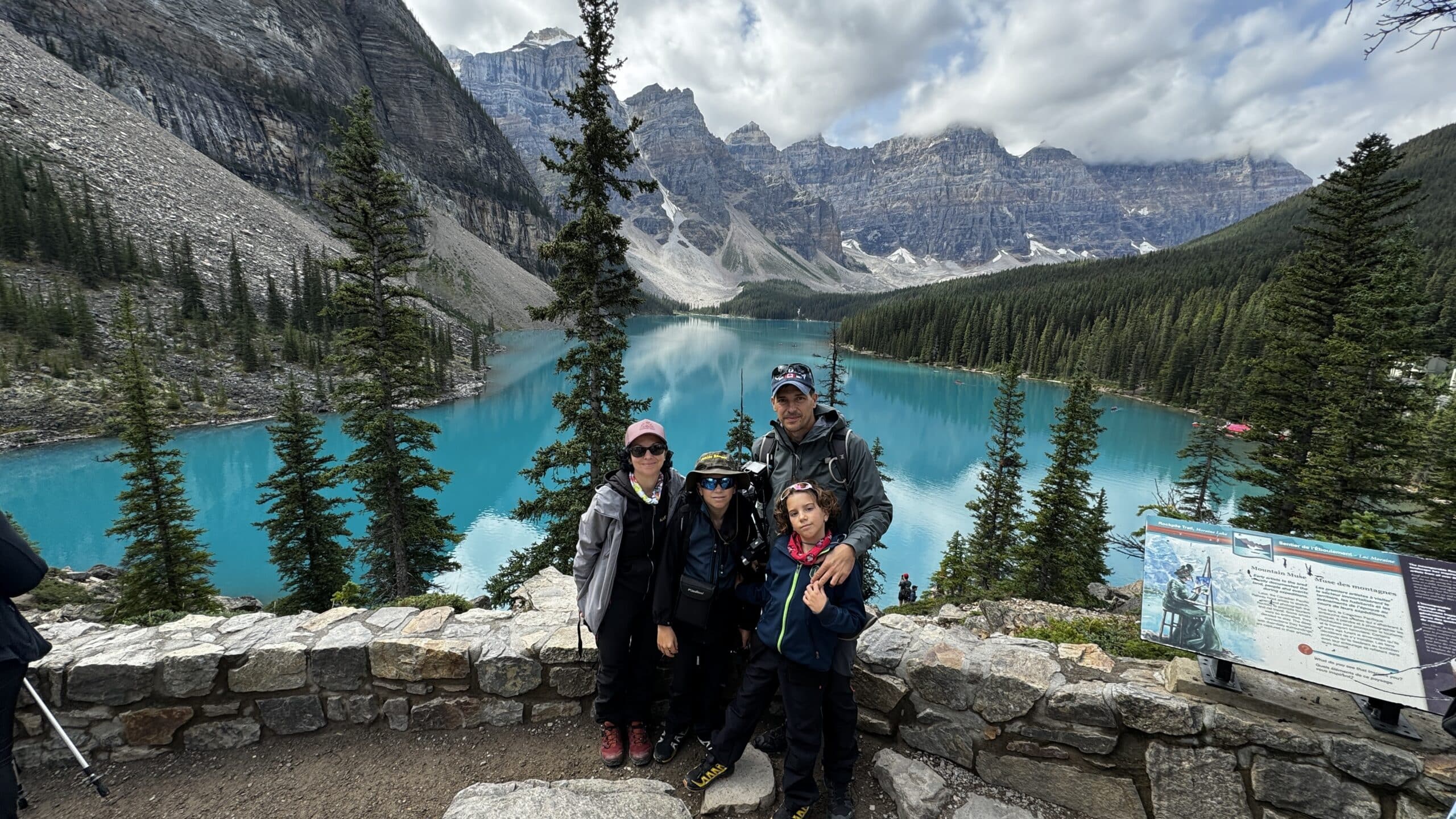
Guide to traveling to Canada: everything you need to know for a trip to Canada on your own
Welcome to a super guide for traveling to Canada from Spain or anywhere in Europe. One of our newest destinations in this wonderful world, where every trip continues to surprise us with its hidden gems. How lucky we are to have been born on Earth! How fortunate to be able to travel to Canada! Visiting Canada…
Ethical code:
On our blog you will find affiliate links. These are always placed with our highest ethics. We never publish any service or product that we have not used before and that we are sincerely happy with. That is why our recommendations are always ethical. In addition, there is no additional cost for you to book through our links and, on the other hand, it means a small commission for us that helps us maintain this blog so that you can continue enjoying it for free.


First of all, I will thank you for all the information you provide.
I would be happy to contact you for any questions.
We are preparing the trip for August 2025.
We are 6 adults, and we plan to get a “large” motorhome,
Sortim from Barcelona and the idea is to end up in Calgary, and visit (Banff, Jasper, Yoho), and return from Vancouver.
Thanks in advance.
I would appreciate it if we can contact you by email.
one abracada
Loam
[email protected]
Hello,
We plan to do the Western Canada route in August 2025.
We are going as a family of 6 people, and in a motorhome.
I would like to contact you to ask you some questions we have.
We are planning the route.
We left from Barcelona, and we are studying whether it is better to go to Vancouver or Calgary.
If you provide us with an email address, we will contact you.
My name is Marga, and my
E-mail is [email protected]
I hope to be able to contact you
Gràcies
Hi Marga, you'll find exactly what we recommend in our tips. Depending on the number of days, routes, and your plans, if you're mainly interested in the Rockies, Calgary is always a better option 🙂 Our email address is [email protected] if you have any questions 🙂
Hello family!
As in the previous post, we are planning to do the Western Canada route in August 2025. I was planning the trip and the first thing I did was to check with Roadsurfer how to rent a camper van. I have already seen that, due to the arrival times in Calgary, we would have to sleep in the city for one night, since I see that camper vans are not rented after 17pm.
But my doubt is that the pick-up and return location indicated on the website:
Pick-up and drop-off location:
9524 Horton Rd
AB T2V 2X4 Calgary
And looking at it, it seems like a place a bit "in the middle of nowhere", without it seeming to be any kind of company. So it puts me off a bit. Could that be the place where you picked it up?
Greetings, and thank you very much in advance!
Hi Alfonso, it seems like a strange place but it is correct, it is a fenced dirt parking lot with a module where they have the office.
We also slept one night in a hotel 10 minutes walk from the pick-up location.
regards
Hi family, I'm trying to access the link for the Jasper Park route and I can't find the page. Is there any way I can access it? Thank you very much.
Thank you so much for all your information! We want to go this summer and all your advice is very helpful as we don't speak any languages and we were a bit worried.
We are glad to read your comment! It is a very easy country and with a phone you can download a translator like the one from Google that allows you to use it offline, let us know how it goes, greetings
Hello family!
We finally booked with Roadsurfer using the discount code you provided. Thank you so much!
There's not much left to go, and after watching the tutorial, I have a lot of questions, but especially one: the propane gas cylinder. Is it easy to find places to refill it? The tutorial says it's at campsites, but apparently, it's prohibited at "official" ones. It also says it's prohibited at some gas stations, but of course, I don't know if that's at most or just a few. Is there an app or website where I can check which ones allow it? Thank you so much!
Hi Alfonso, I don't think you should worry. You should be there for many, many days to use up the butane gas cylinders it comes with, at least a month. Otherwise, you'll find them at private campsites without any problem.