Table of Contents
Welcome to this article about 17 essential things to do and see in Kootenay National Park . A must-see in Canada, a UNESCO World Heritage Site.
Discover, through our own 21-day travel experience through the Canadian Rockies , everything you can do in Kootenay National Park.
Having completed the tasks of obtaining the eTA visa on the official Canadian government website, purchasing the required travel insurance, checking the validity of our passport , buying the necessary plug adapter , purchasing a SIM card for mobile internet in Canada , booking tours and activities , and packing our bags with the essentials, leaving the unnecessary items at home, we can now depart for Canada and its breathtaking landscapes!
On our road trip through the Canadian Rockies, this is our 5th National Park explored. We visited Kootenay National Park after visiting Mount Revelstoke National Park and Glacier National Park , and just before embarking on our visit to the 6th national park in the Canadian Rockies: Waterton Lakes National Park.
Kootenay National Park (pronounced "kutny") is named after one of the large rivers that flows through it, the Kootenay River. In fact, besides the National Park, there is a large region in southeastern British Columbia, Canada, also known as The Kootenays or Kootenay Country , named after the Kootenay River. This region should not be confused with the National Park, which is the protected natural area.
In this article we will focus on Kootenay National Park, but there will also be some extra nearby destinations within the Kootenay region that I will explain to you in case you are interested.
About us
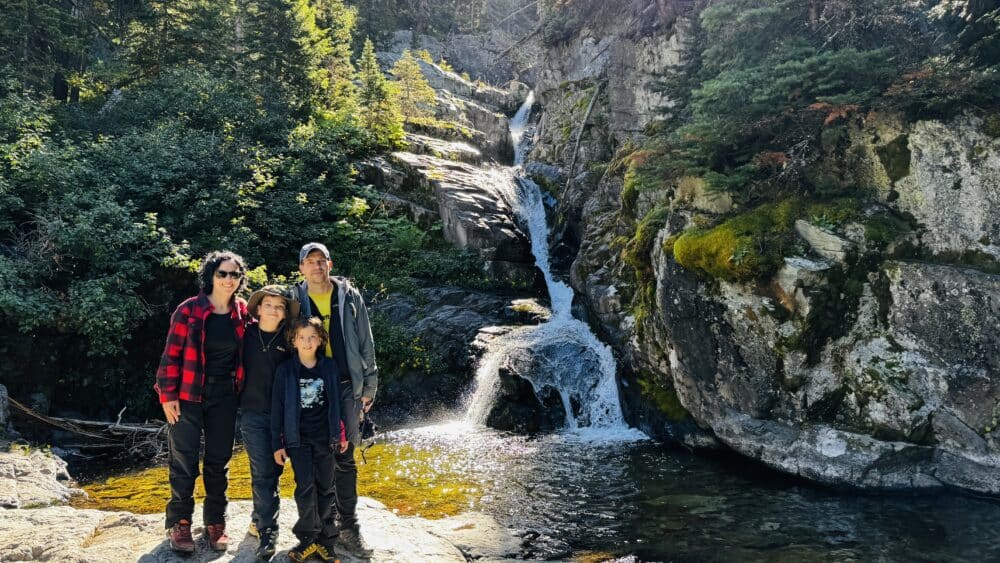
We are the Kucavana family , and we travel with our two children and our adopted dog, Max. We usually travel in our motorhome, also called Kucavana, hence the name of our blog (as a baby, Anna couldn't pronounce "motorhome" and said "Kucavana"). But we also enjoy traveling by bicycle, by plane, and backpacking—the point is to have adventures as a family. The one writing this is me, Pilar, the mom of the family and perhaps the craziest one. I enjoy every new experience we have as a family, and I hope to help you enjoy traveling as much as we do.
To stay connected with you, follow us on our social media channels: YouTube and Instagram

Where is Kootenay National Park?
Kootenay National Park is located in the eastern part of Canada's British Columbia province , bordering Alberta, Banff National Park , and Yoho National Park.
Despite being located in British Columbia, it follows the so-called Mountain Time, which is none other than Alberta's time, 8 hours behind Spain.
The closest towns to this National Park are Radium Hot Springs in the south, Golden and Lake Louise in the north, and Banff Village in the east.
TIP FOR GETTING INTERNET IN CANADA: Internet is essential in Canada, although coverage outside of towns leaves much to be desired—I'll tell you that right now! We used a Holafly SIM card with unlimited data and it worked great. You can buy it with a 5% DISCOUNT through this link.
How to get to Kootenay National Park
On our trip, we arrived in Canada at Toronto airport and from there connected to a flight to Calgary . From Calgary, you can reach Kootenay National Park in 1,5 hours and 128 km by driving along the Trans-Canada Highway. It's a very well-maintained road and open year-round.
Actually Calgary, if you are going to visit the Canadian Rockies, is the best airport to enter Canada, the closest without a doubt.
The best way to get from Calgary to Kootenay National Park is by rental car . There are no regular public transportation options to this Canadian national park.
Discovery Pass to access Kootenay National Park
To access Canada's National Parks, you must have a pass that must be displayed on the vehicle's rearview mirror at all times.
There are passes for a single day and national park, or if you're going to be like us for more than 7 days and visiting different National Parks in Canada, the one you should buy, which is much more cost-effective, is the annual pass called Discovery Pass.
There are different Discovery Passes at different prices . If you're traveling alone, there's one for $75; if you're traveling as a family or group, there's another for $151; and if you're a senior citizen, the price is $64. They are only valid for one vehicle.
With the Discovery Pass, we can also access more than 80 destinations in Canada's National Parks and historic sites, a host of museums and other interesting sightseeing options to see in Canada.
How to visit Kootenay National Park?
The best way to visit Kootenay National Park is to stay in Radium Hot Springs for about 2 nights and from this base visit everything we show you below in this post.
Kootenay National Park shares a common characteristic with almost all Canadian national parks: it's all accessible from a single, wide, and comfortable road , though with zero cell phone coverage . However, despite the lack of coverage for 100 km of road, as many signs indicate, there are clearly marked landline phones for emergencies.
Its main attractions are not only the Radium Hot Springs , but also places like Olive Lake, Marble Canyon, Sinclair Canyon and the Paint Pots, which are must-see attractions in Canada.
Also, if you like cool hiking trails, here you'll find the Stanley Glacier Valley excursion , one of the legendary ones in Kootenay National Park.
Where to stay in Kootenay National Park
To comfortably visit this vast Rocky Mountain National Park, we recommend making your base at one of the 36 accommodations that Radium Hot Springs has.
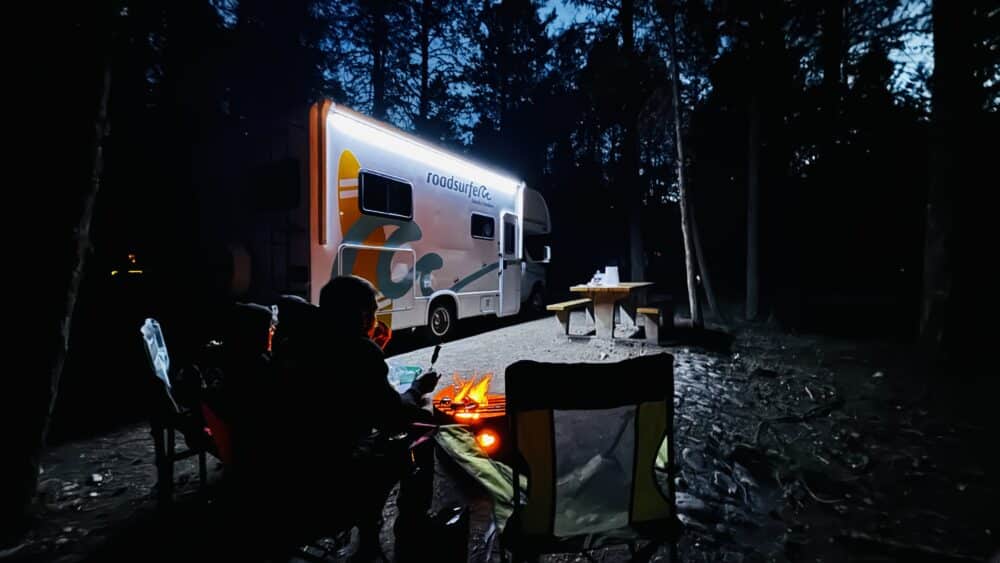
In our case, we stayed at the Radium Hot Spring public campsite on one of its pitches, since we did this trip through Canada in a motorhome.
AN IMPORTANT TIP: Don't travel to Canada without a good travel insurance, avoid big problems. It is one of the first requirements that they tell you on the Canadian government website along with the processing of the And so.
We recommend you the Iati Star We hired this insurance after a good comparison and study of the different ones on the market. It is the only one that exceeds one million euros of coverage. Without a doubt, it is the best for North America, where breaking a leg costs you €150.000, as happened to a friend of ours in the USA. Another positive thing is that Iati has an app for virtual visits.
I leave you here a link where you have a 5% off for any Iati travel insurance.
Kootenay National Park Route Recommendation
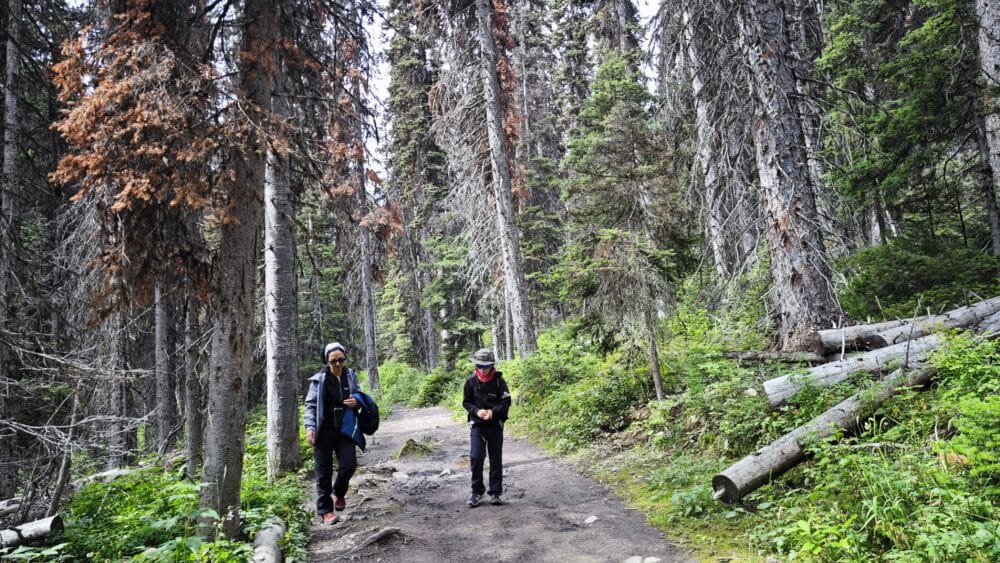
The itinerary we recommend for your visit to Kootenay National Park is to dedicate at least one day to enjoying the Radium Hot Springs , hiking the Sinclar Canyon Trail , which starts from the town of Sinclar Canyon at the western entrance or from the hot springs parking lot and is approximately 5 km (1 miles) long and takes about two hours. Finally, on your first day, take a short drive along Highway 93 and visit Olive Lake and the Kootenay Valley Overlook , which are very close by. If you're still looking for more hiking, there's a trail just before you reach the overlook that leads to Cobb Lake.
For day 2 of your visit, I would suggest starting the day with a visit to Stanley Glacier Valley or Boom Lake , a good 10-12 km hike. Then, continue down Highway 93 back to Radium Hot Springs and stop to see Marble Canyon , the Paint Pots , Numa Falls, hike to Dog Lake if you have the energy , and have a picnic at the Kootenay River Day Use Area before returning to your overnight accommodation.
What to see in Kootenay National Park: 17 must-sees
Next, based on our experience, I'm going to explain 17 plans and visits that, for us, are the best things to see in Kootenay National Park and its surroundings.
Hike through Sinclair Canyon, where Kootenay National Park begins
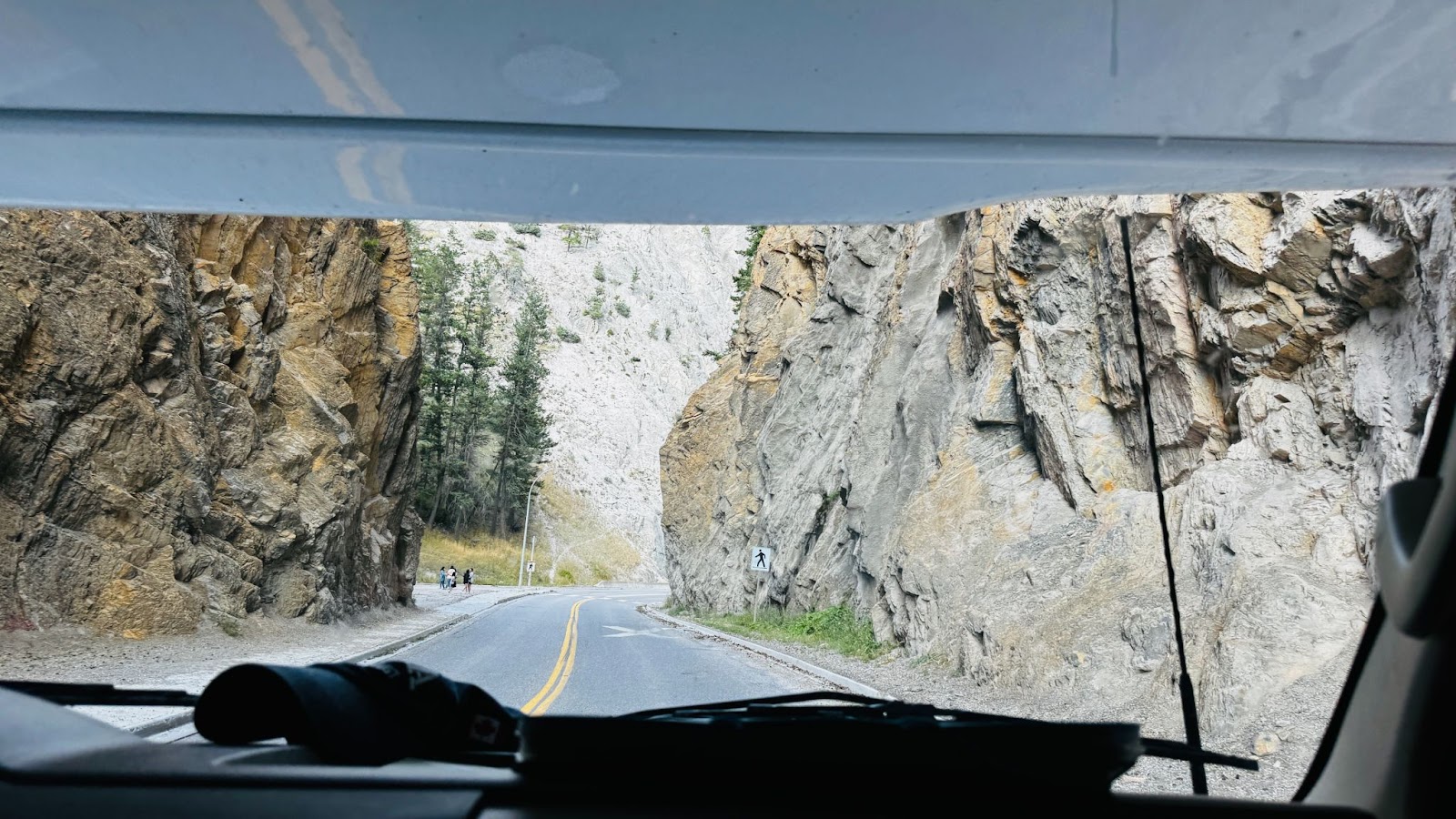
Sinclair Canyon is a narrow canyon that can be seen from the road leading into Radium Hot Springs. It is one of the landmarks marking the entrance to Kootenay National Park.
A canyon that can be visited on a 5 km round trip route , about two hours walking with 350 m of easy elevation gain.
The starting point for this route is from the parking lot at the west gate of Kootenay National Park, very close to the entrance of Radium Hot Springs.
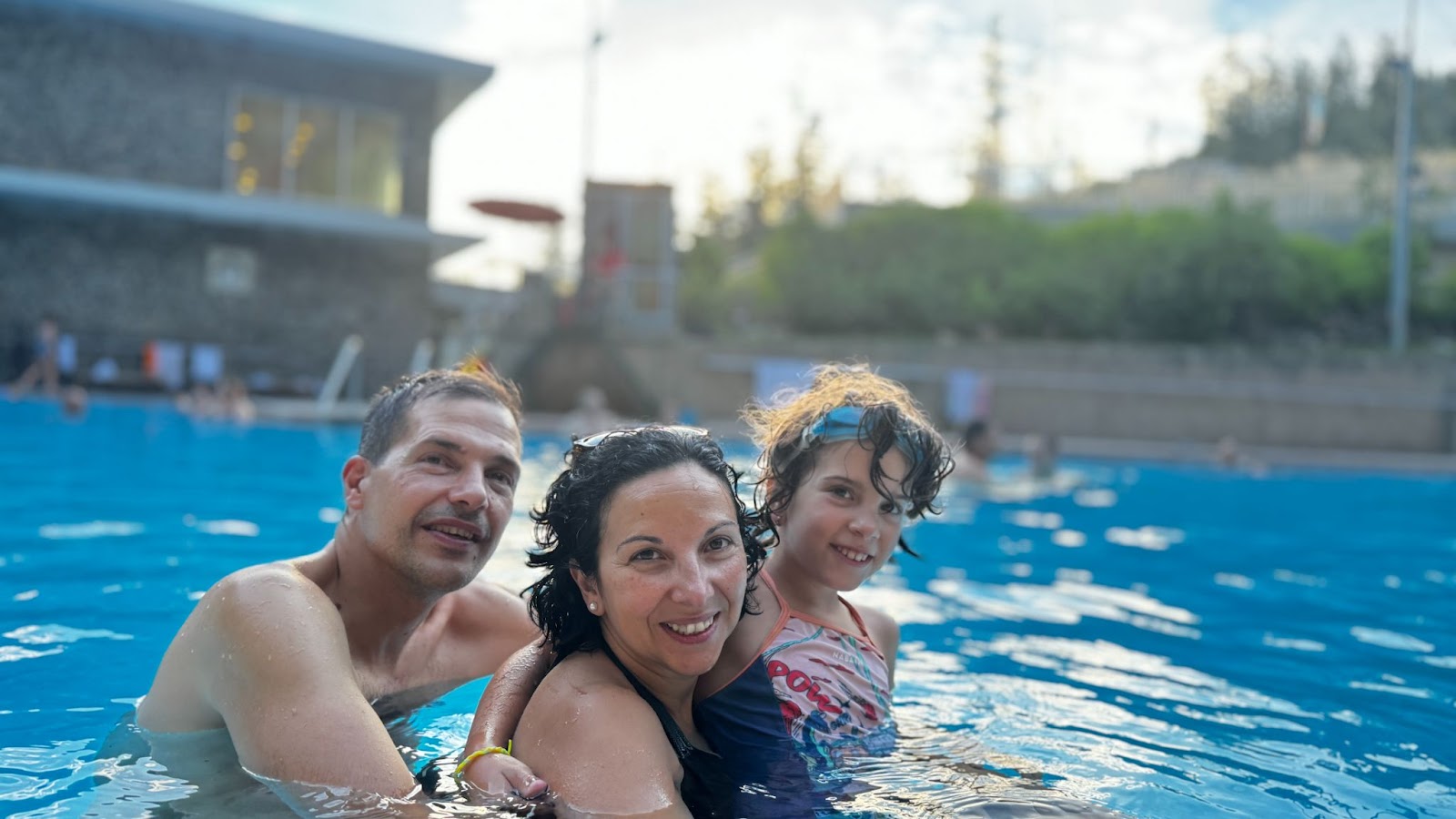
Radium Hot Springs village and its hot springs, a “must” see in Kootenay National Park
The most important town in Kootenay National Park is Radium Hot Springs and is the essential place to stop and stock up in its shops and also to visit the Kootenay National Park Visitor Centre.
Remember, if you're visiting with children, ask for the Explorer educational program booklet. Upon completion, they'll receive a badge that will be a wonderful souvenir of this National Park.
After visiting the town, it is essential to go and bathe in the Radium Hot Springs ( location ), the thermal baths that gave this town its name.
The thermal pools are, in our opinion, much better than those in Banff . The thermal pool is much larger and also has a small cold plunge pool and an outdoor Olympic-size pool.
It closes at 22pm and there is a family pass for $56 for 4 people in the family.
Olive Lake, the olive-colored lake
Driving along Kootenay Windermere Highway 93, we continue past Radium Hot Springs, and after about 12 km we'll see Olive Lake. We can stop at the picnic area parking lot and from there take a short, marked half-kilometer round-trip interpretive trail along the shores of the small, tranquil lake.
Right here, very close by, on this stretch of road, we saw our first Canadian bear. What a thrill! We saw it up close, calmly crossing the road. It was 7:00 a.m.; I don't think they'd be so easy to spot later in the morning with the traffic.
Cobb Lake, an easy route
From the road we can park where the Cobb Lake Trail starts, a 5,2 km round trip route with 155 meters of elevation gain through a forest and stream until reaching the small Cobb Lake.
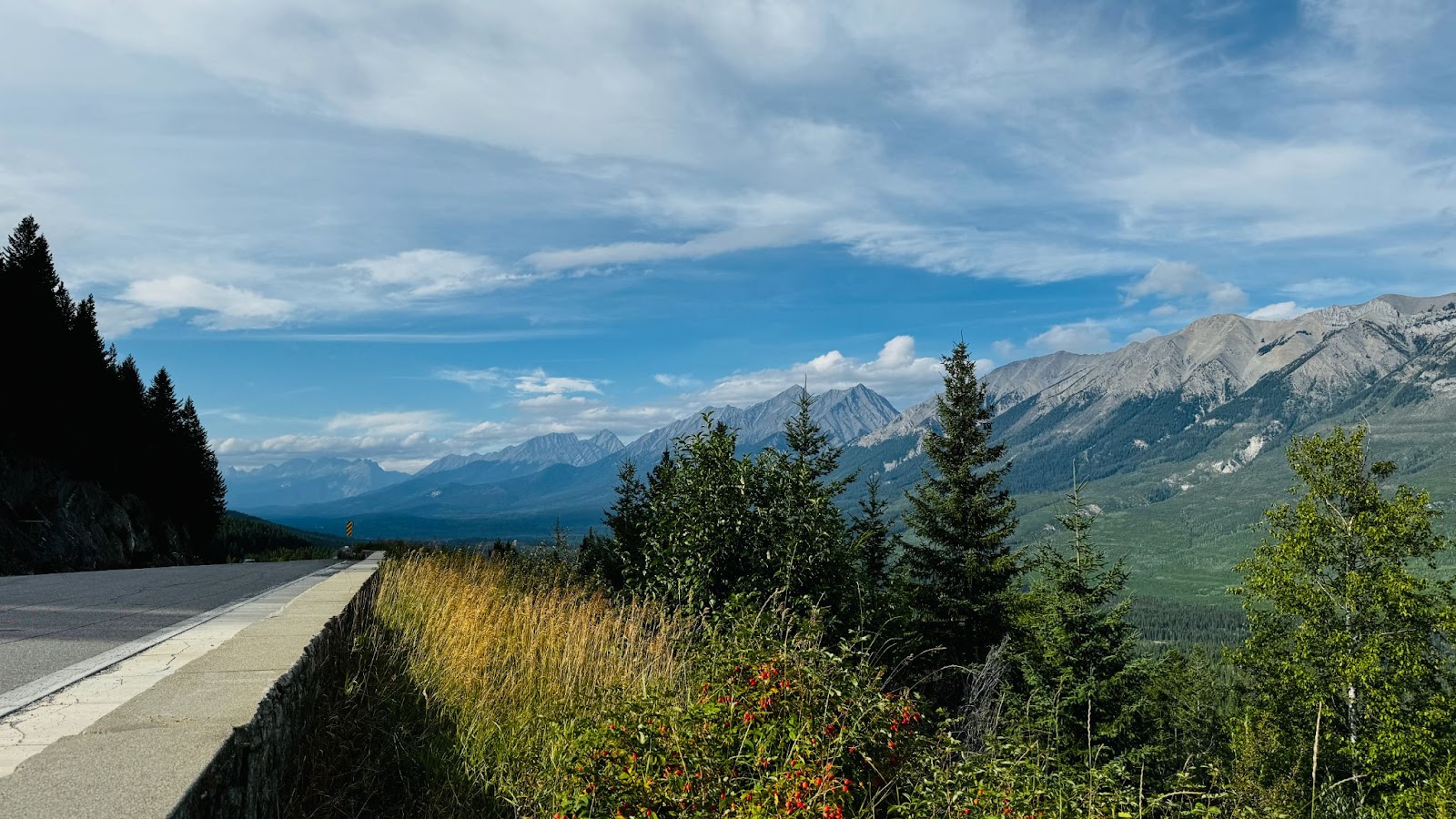
Valleyview Overlook
Parking at the Valleyview lookout point next to the road allows us to reach the best views of the valley.
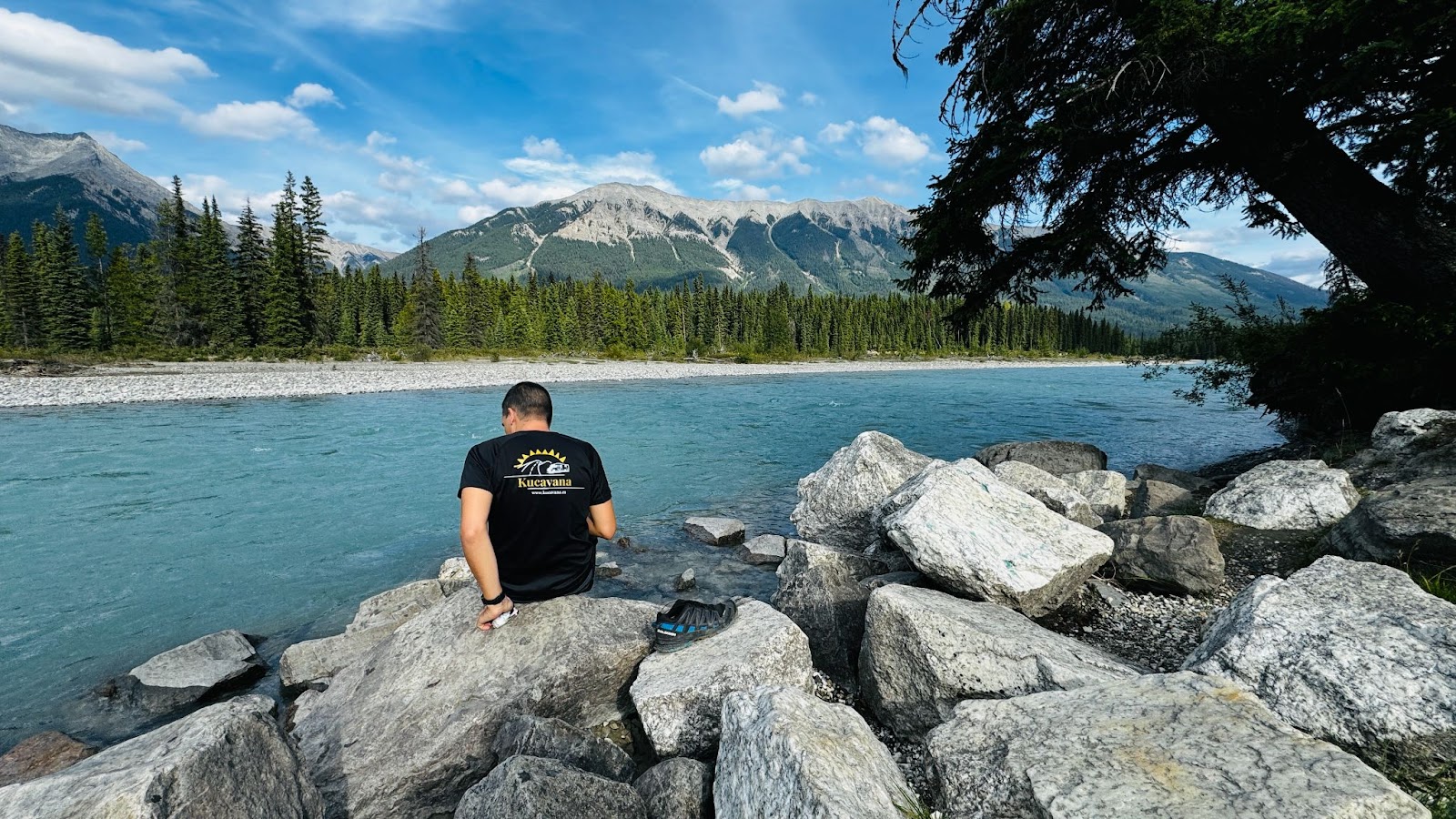
Kootenay River picnic area to dip your feet in icy water
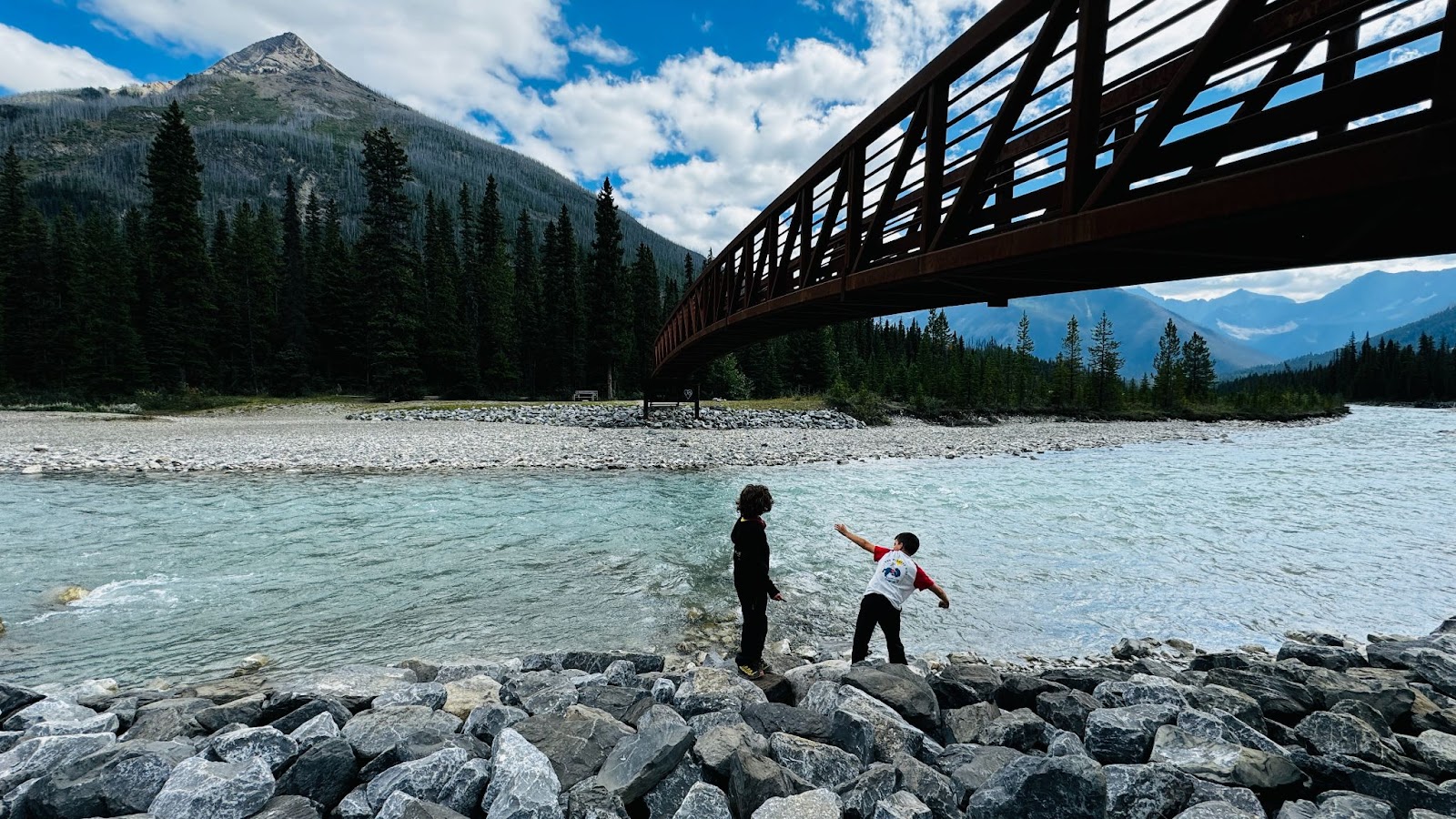
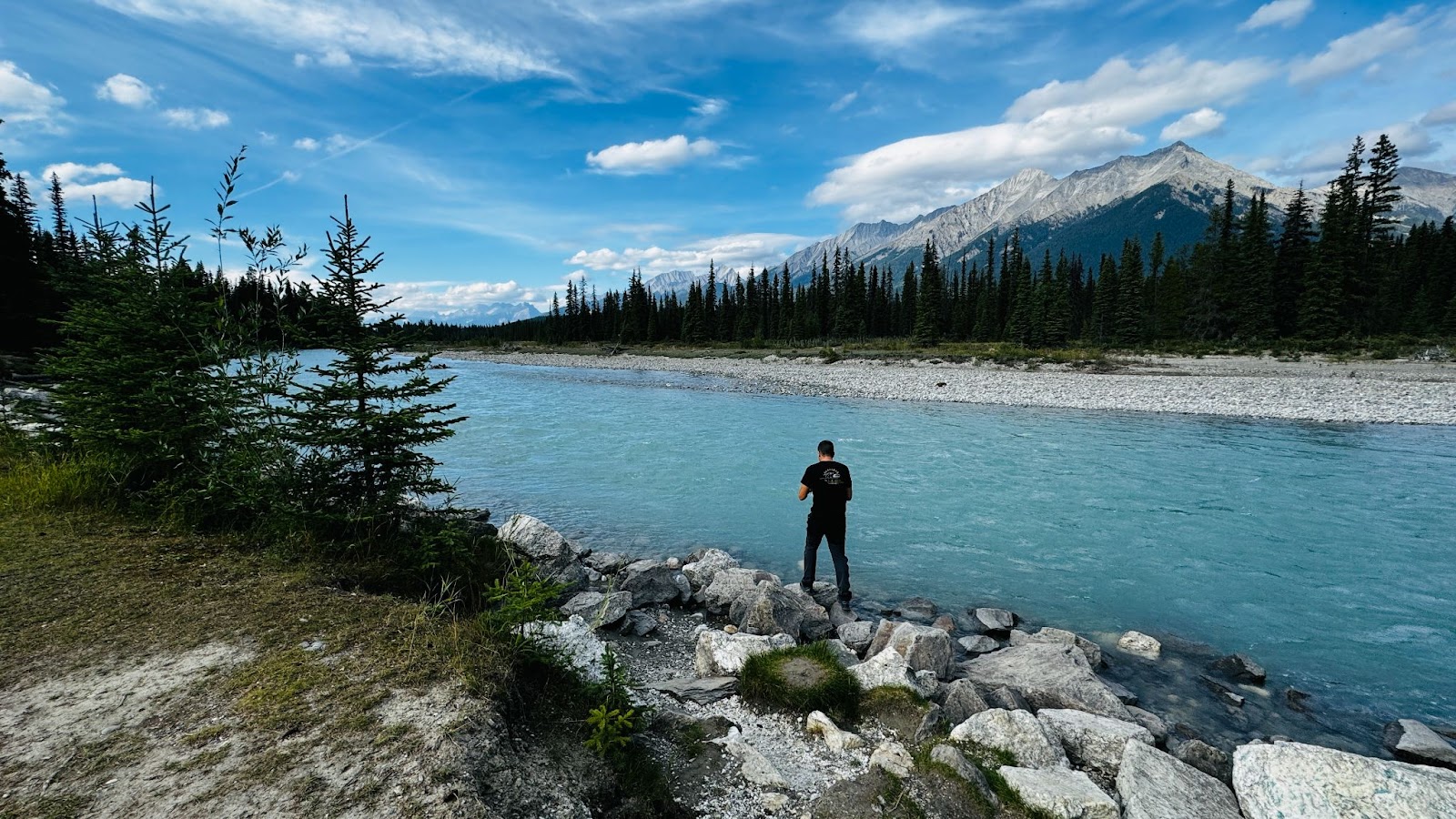
Beside the river, which gives its name to Kootenay National Park, in a lovely area, we found a place to park and have a picnic . From there, there's easy access to the river, and it's a beautiful spot to relax, dip your toes in the water, or enjoy a picnic.
Dog Lake
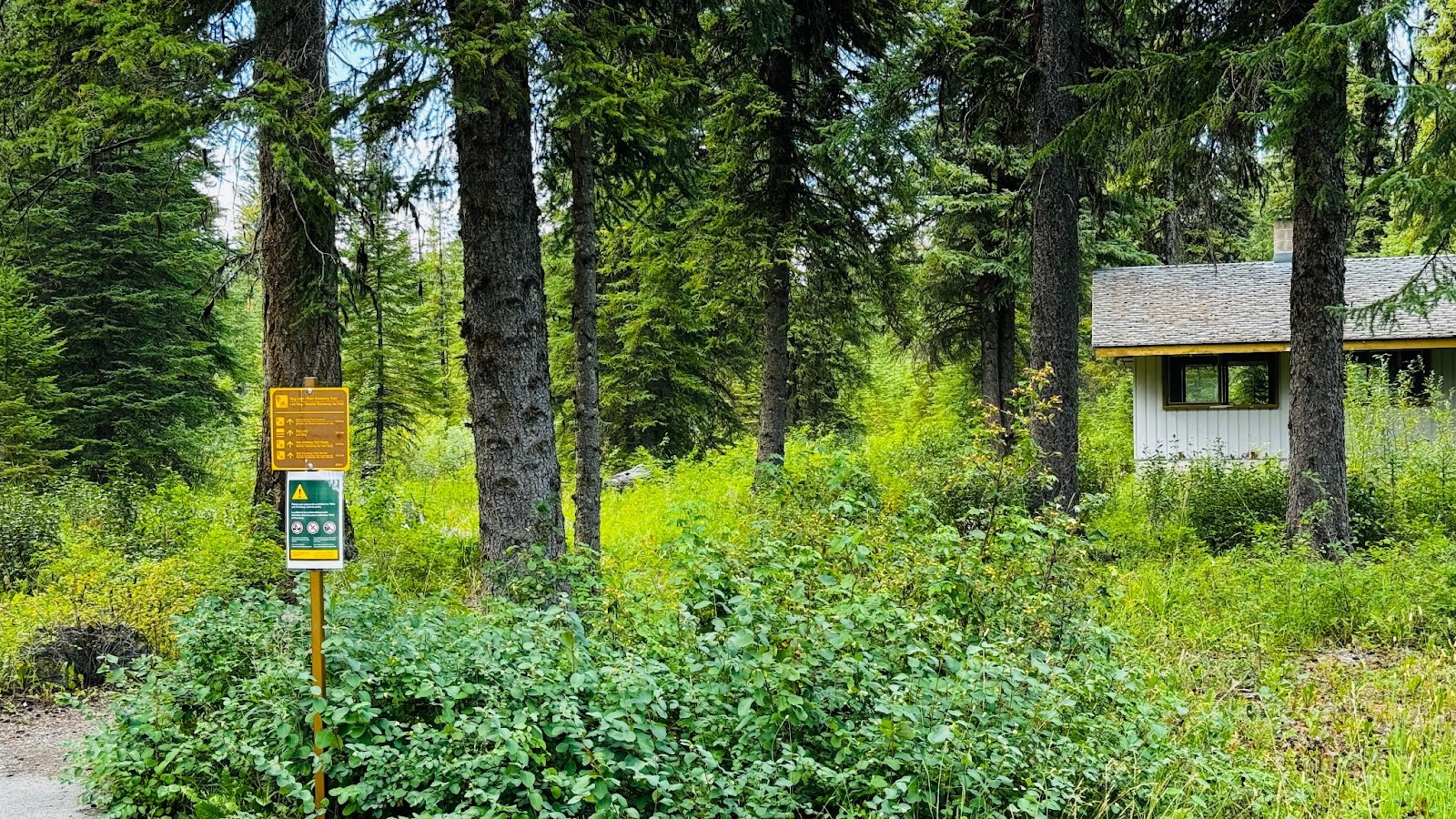
From McLeoc Meadows Campground or the Dog Lake picnic area parking lot, 28 km from Radium Hot Springs, along the highway, you can take a 5 km round trip to Dog Lake. This route crosses two bridges and passes through an old-growth forest, offering views of the Daer Mountains and Mount Harkin throughout.
Numa falls, accessible waterfalls
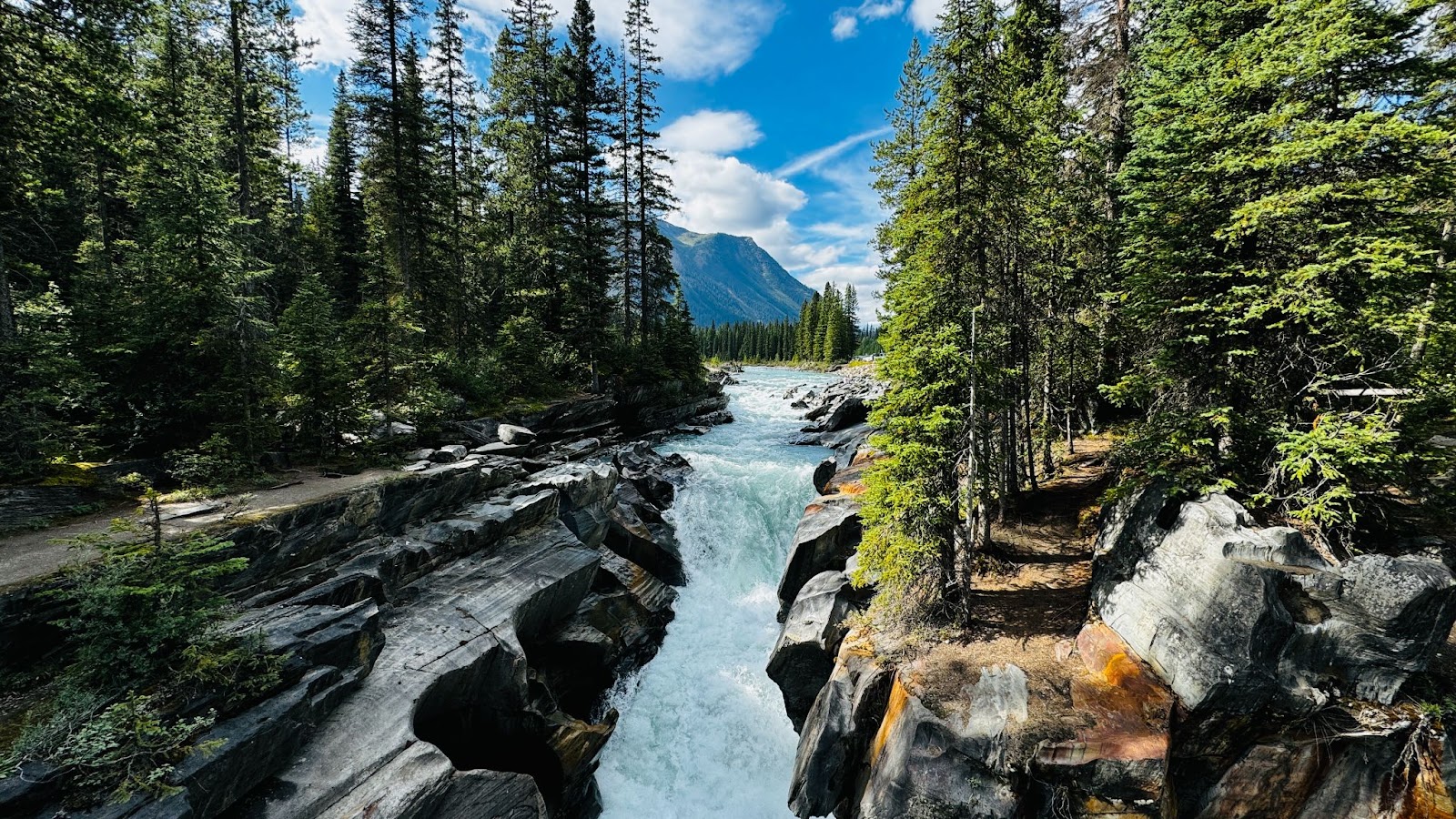
We continued along the road towards Kootenay and found this parking area , where just a couple of meters away we could already admire the beautiful and tranquil Numa Falls. The light emerald color of the Kootenay River continued to captivate us as it flowed over these waterfalls.
Paint Pots, a different place in Kootenay National Park
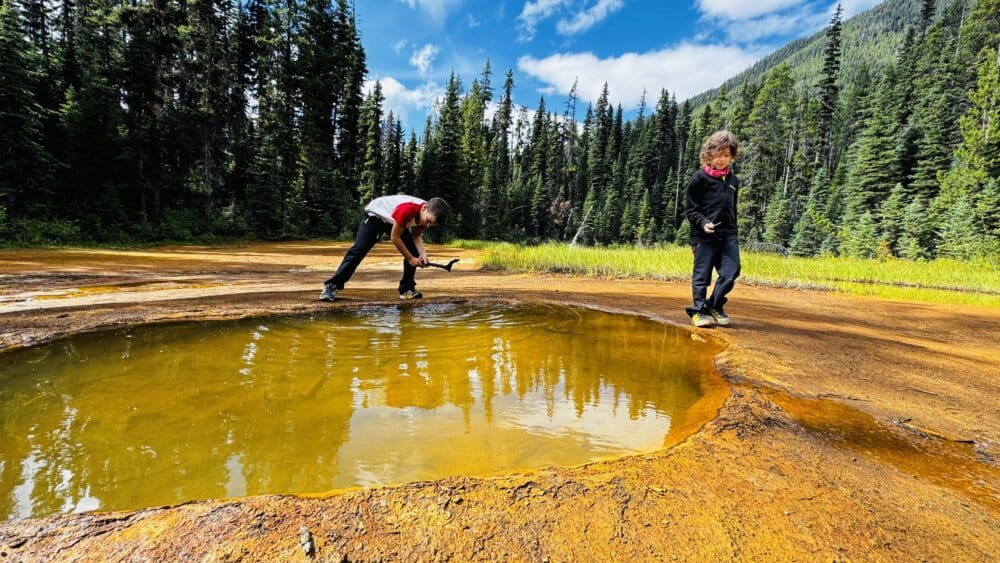
Another unique must-see in Kootenay National Park is the Paint Pots , ochre and reddish-colored pools rich in minerals and iron that give the soil in this area a distinctive hue. For years, ochre-colored paint was extracted from these pools.
They can be seen quickly on a short 4km round trip from the Paint Pots parking lot by the roadside.
Before you get to them, you'll cross a bridge over the Kootenay River, then some wooden walkways, but you'll have to continue to the end of the path to really see the original, large Paint Pots themselves.
Marble Canyon, a must see in Kootenay National Park
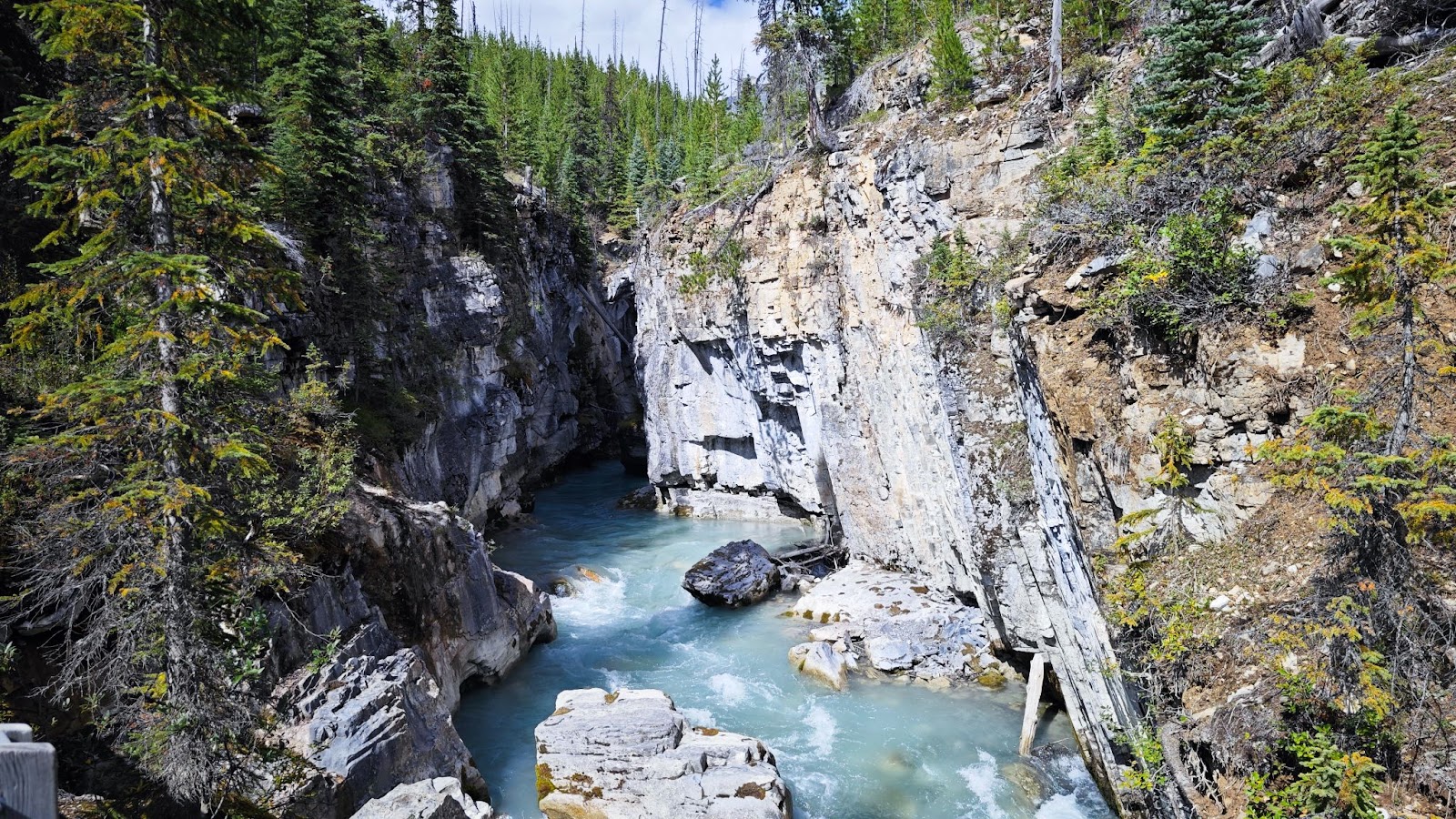
If there's one place you absolutely can't miss in Kootenay National Park, it's Marble Canyon. A stunning canyon with turquoise waters, nestled among breathtakingly sculpted rocks. For me, it's one of the must-see attractions in Canada if you're visiting the Canadian Rockies.
To explore this canyon trail, you must first park by the road in the access parking area . Then, follow the marked, easy 2 km (1.2 mi) hiking route with a 32 m (10.5 mi) elevation gain.
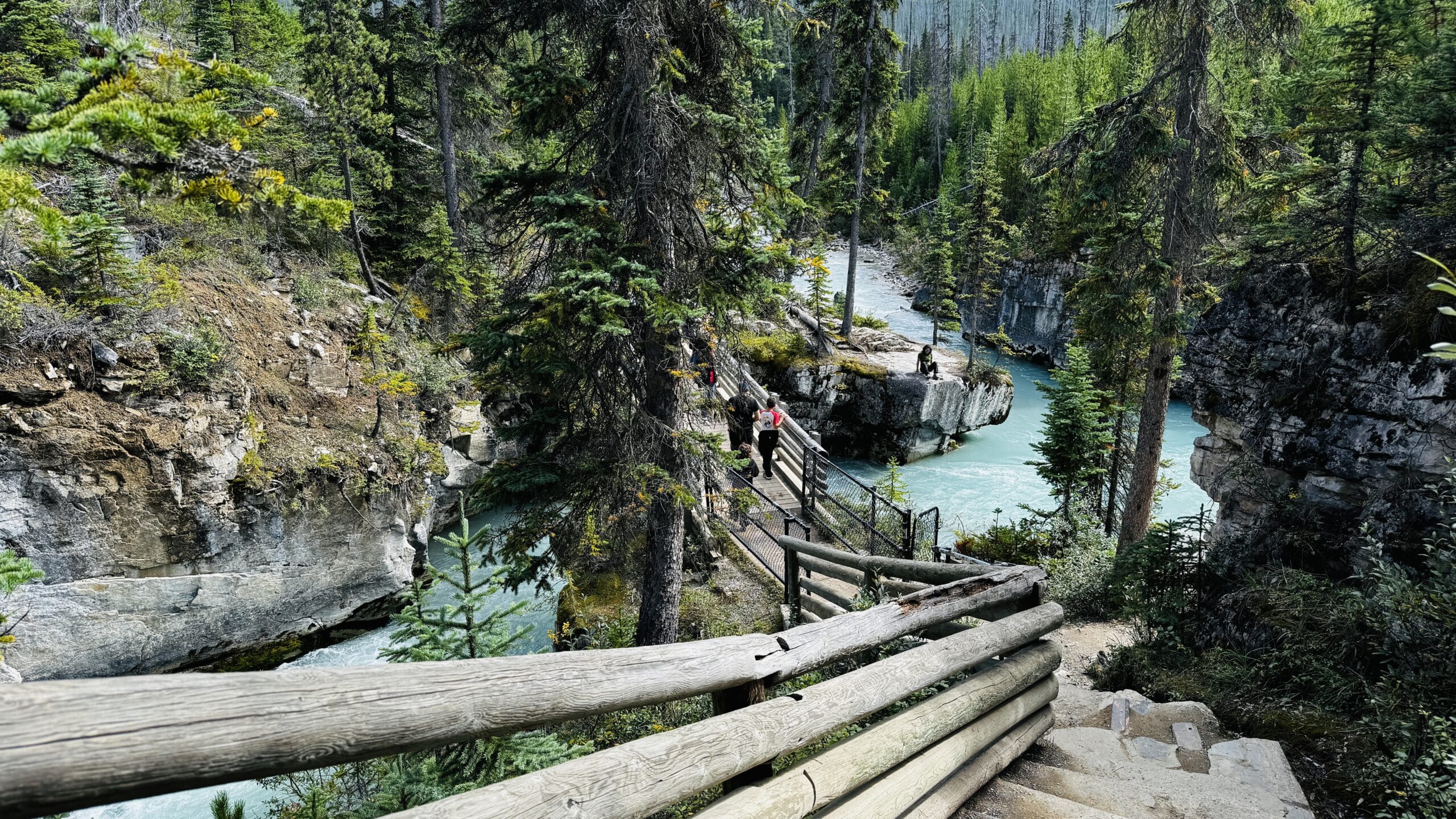
The canyon looks like something out of a book, deep, steep and with impossible shapes between the rocks. You will cross different bridges to see it from different perspectives, don't miss any of them!
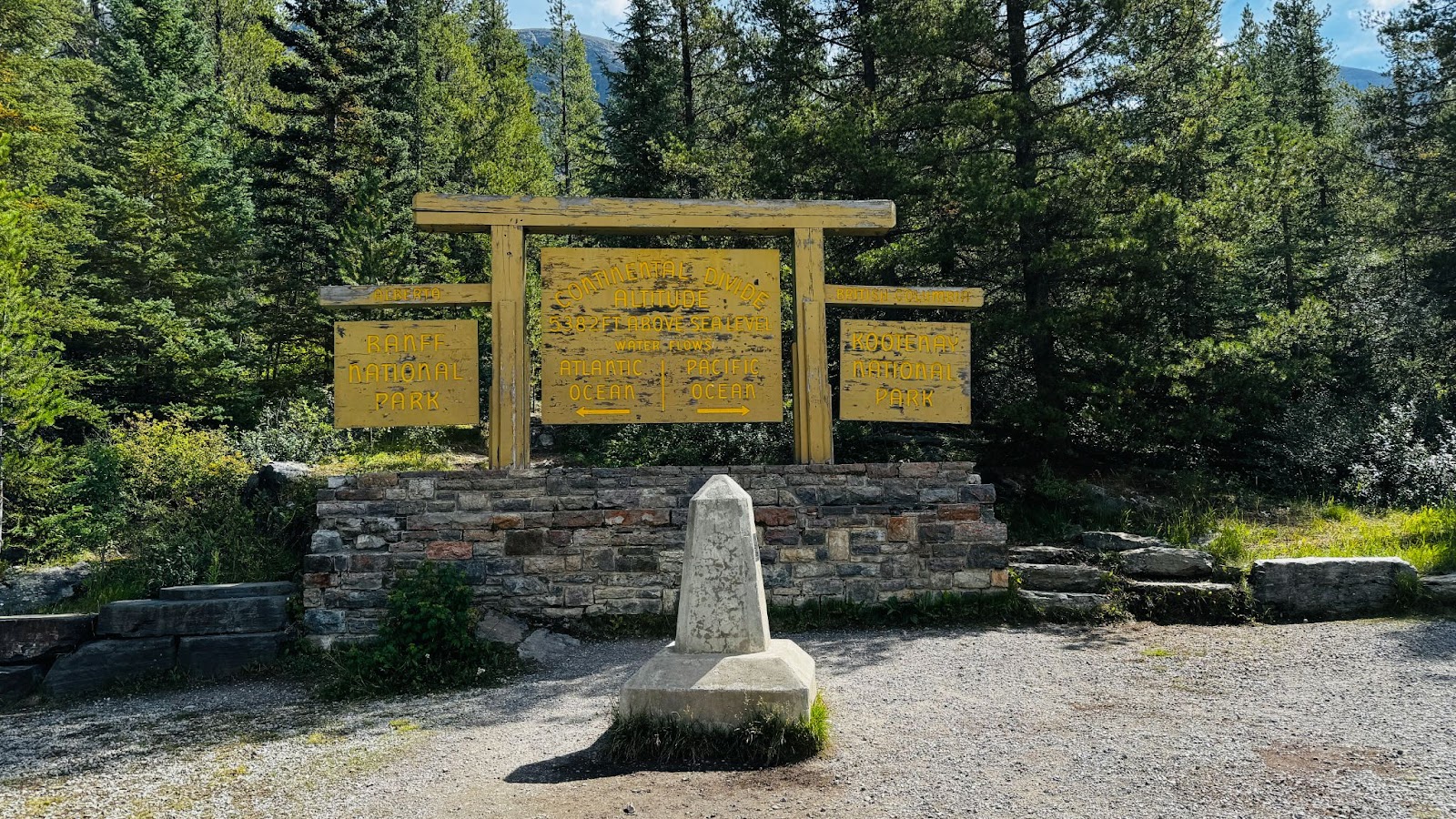
Continental Divide, where the waters divide
At this point, with ample parking , we'll find a place of great environmental importance. It's a simple rest stop with informational signs. We're at the Continental Divide, a longitudinal landmark that marks the change in the direction of the natural flow of water.
All water systems such as rivers, streams, and creeks west or east of this line flow into the Pacific Ocean . All water systems east of here flow into the Atlanta Ocean.
Route to the Stanley Glacier Valley
This is one of the legendary high-end routes in Kootenay National Park.
The route to the Stanley Glacier valley is 12 km round trip with approximately 600 meters of elevation gain , mostly concentrated at the beginning of the trail. It is classified as a difficult route, primarily due to the initial incline and a more challenging section of the final trail.
Either way, even if you don't complete the entire route, the views of this historic shrinking glacier are beautiful.
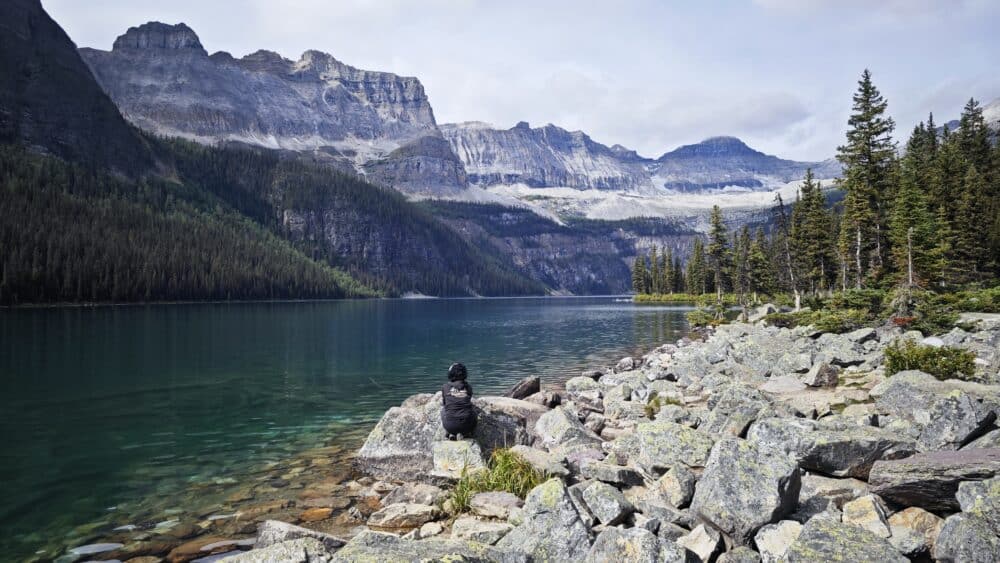
Boom Lake, Banff National Park but on the same highway 93
Parking in this roadside picnic area, we found the trail to visit the beautiful Lake Boom. A stunning emerald lake, it's a 5 km hike (10 km round trip) that's consistently steep, making it challenging if it's hot and you're not in shape.
Bathing in the Natural Mineral Hot Springs Pools at Faimont Hot Springs
At Fairmont Hot Springs, 38 km south of Radium Hot Springs, we find a small town with a small ski area in winter and other important hot springs in Kootenay National Park. In fact, this hot spring is the largest in all of Canada.
Here, you can even find free-access natural hot springs nestled among beautiful rocks. These are thermal pools that require a short walk to reach. Park at the paid hot springs above and take the gravel path to the right towards the RV Park. This path leads to the river and passes under a pedestrian bridge. Afterward, you'll find a path that descends to the river and zigzags to the other side. You'll begin to hear the waterfall. Head towards the waterfall, which feeds the hot springs, and there they are. They aren't scalding hot, but they are quite warm.
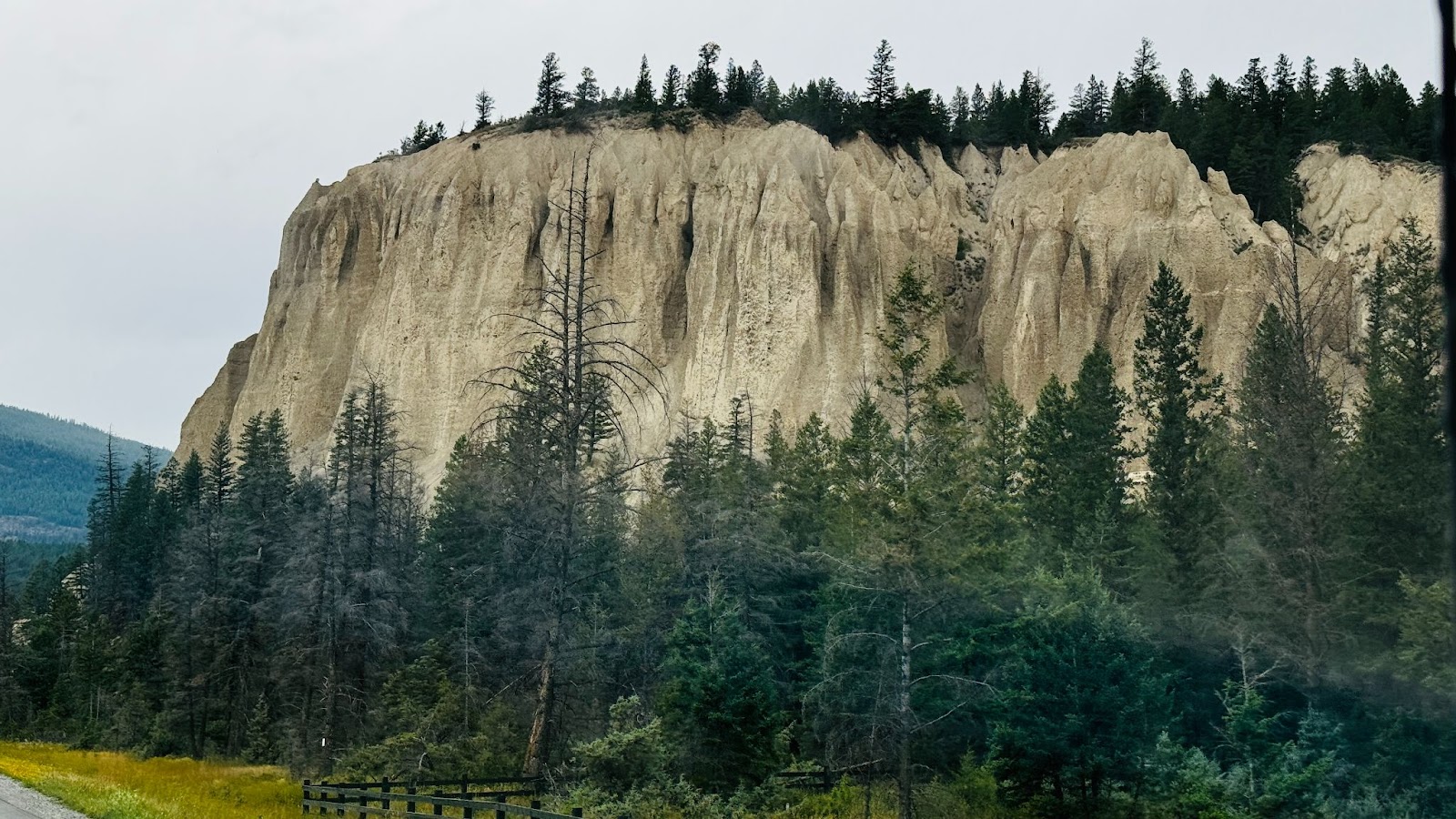
Visit the Fairy Chimneys, Hoodos of Fairmont Hot Springs
Another attraction at Fairmont Hot Springs is its fairy chimneys, or hoodoos as they're called there. These curious sandstone rock formations create otherworldly landscapes. You can park here and hike the short Duth Creek Hoodoos Trail to see the fairy chimneys.
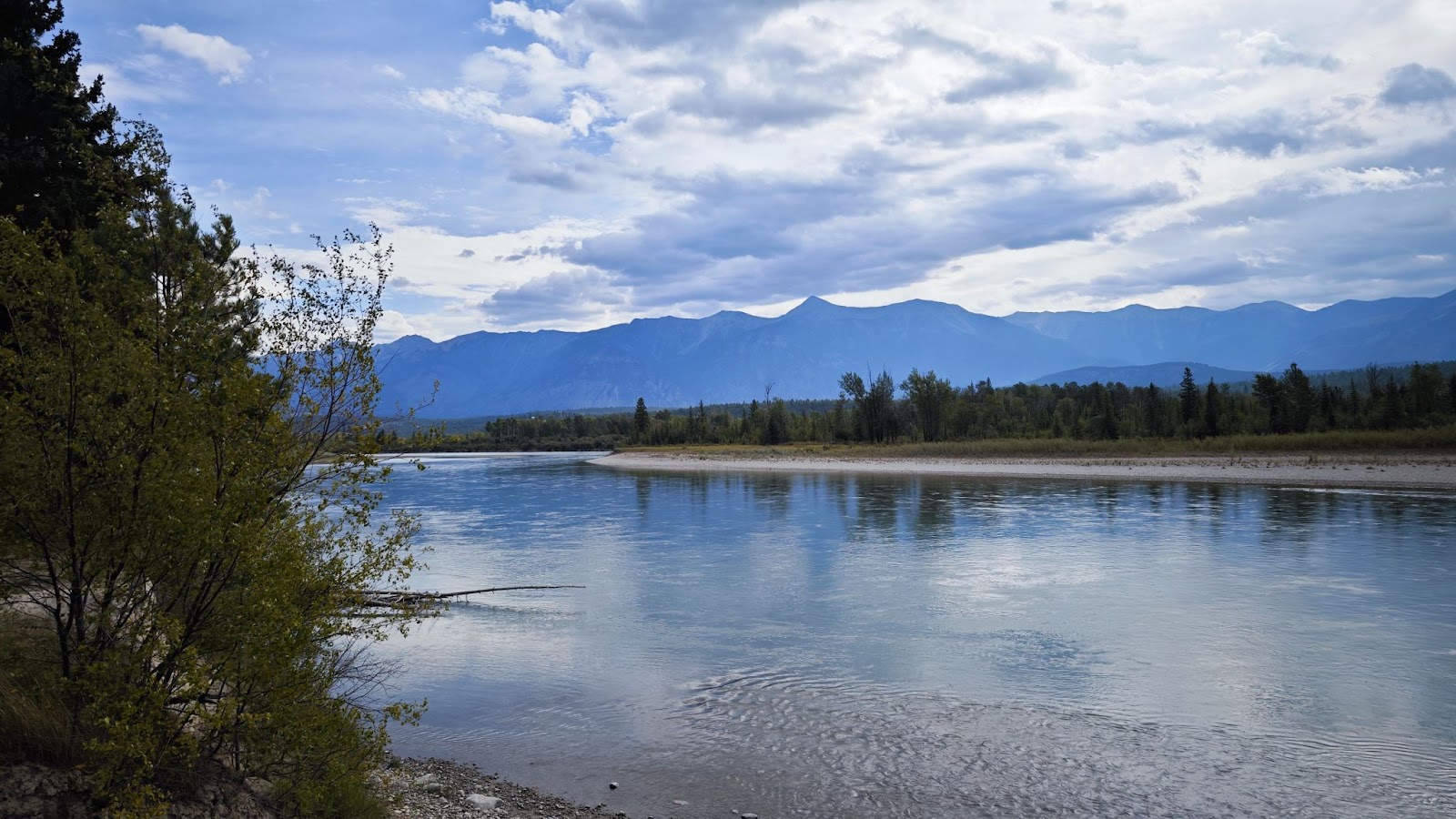
Columbia Lake
Following Highway 93, very close to Fairmont Hot Springs we find a very large lake, Columbia Lake, a beautiful lake that is already part of a provincial Natural Park called Columbia Lake Provincial, but it is worth even if you just take a look at the Columbia Lake viewpoint that is on Highway 93 itself.
At the end of the lake we will find again the beautiful Kootenay River that continues running south towards Canada to touch the USA.
Fort Steele Heritage Town
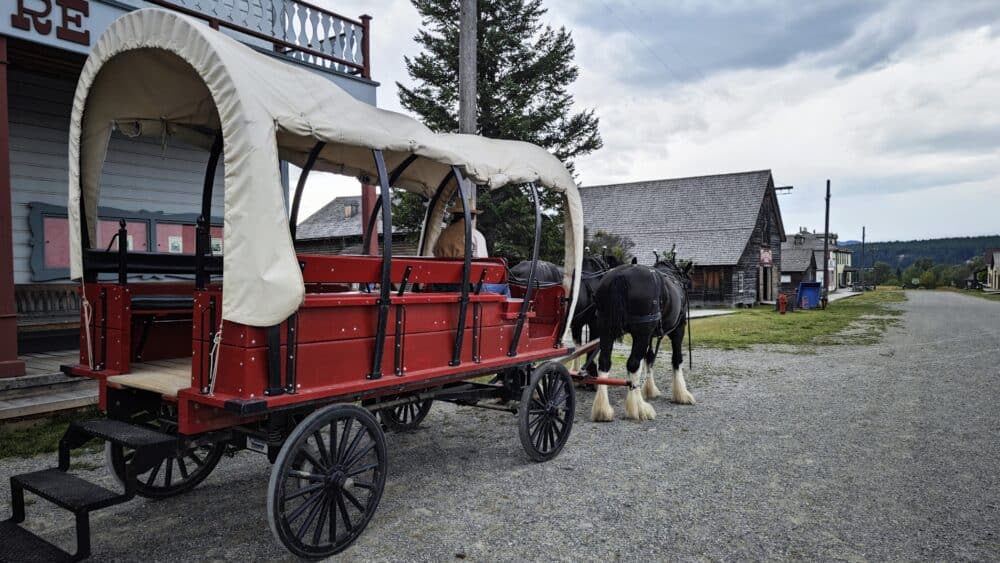
About 1,5 hours from Radium Hot Springs and further down from Columbia Lake, but still on Highway 93 heading towards the US, we found Fort Steele Heritage Town, which I just had to mention. It's an open-air folklore museum that our whole family loved.
There are lots of buildings you can visit, actors and activities. We even went on a horse-drawn carriage ride where they explained the history of this town, which was abandoned for fear of flooding.
A museum that takes you back to 1898 in a small old town full of historic buildings and Canadian history. For a change from so many natural parks, if you like this type of museum we encourage you to visit it.
We went because it is on the way to Waterton Lakes National Park, our next destination. So if you go there, it is an ideal and essential stop.
Kootenay National Park Map of what to see
Below is a map of what to see in Kootenay National Park that I created to help us plan our route. It includes both the places to see and the parking areas. You'll find the 17 must-see spots described above, plus a few more that might interest you.
Conclusions on Kootenay National Park
At this point, after reviewing everything we experienced in Kootenay National Park, we can only recommend a visit.
It is one of the most peaceful, least crowded and most beautiful National Parks in the Canadian Rockies that we have visited.
The waters of the Kootenay River themselves are quite a spectacle due to their great beauty and its hot springs at Radium Hot Spring are a must-see in Canada in any case.
If you visit Kootenay, remember to experience it to the fullest to create lasting memories . We certainly did, and we'll never forget it! From long hikes and hot springs to seeing our first bear in Canada and getting up close to wild deer, we'll always be reminded that Kootenay National Park is pure life and natural beauty.
Good route, friends!
Latest posts from our blog
-
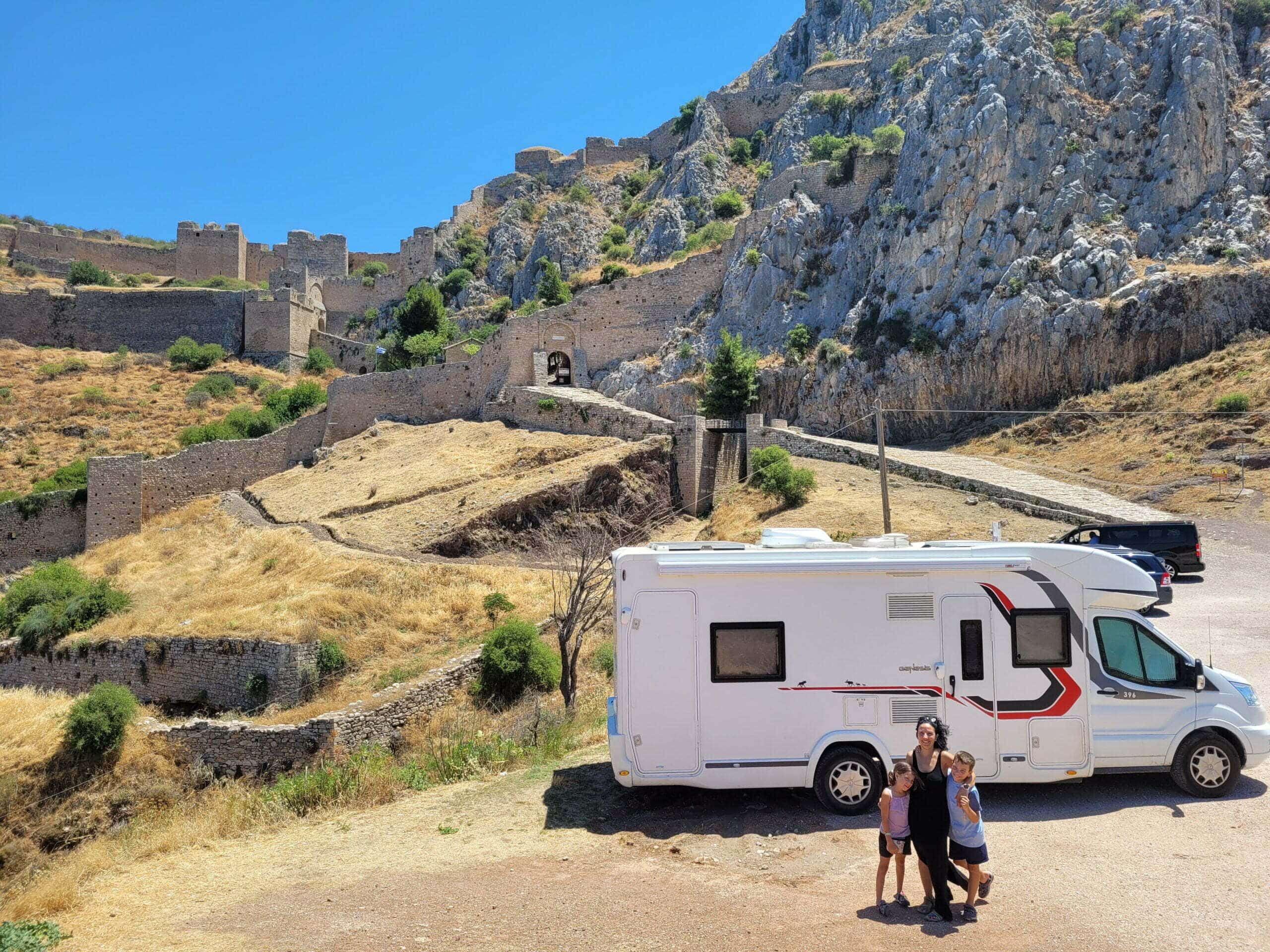
Definitive manual for traveling by motorhome【2024】
Super complete manual for traveling by motorhome with all the answers to your questions.
-
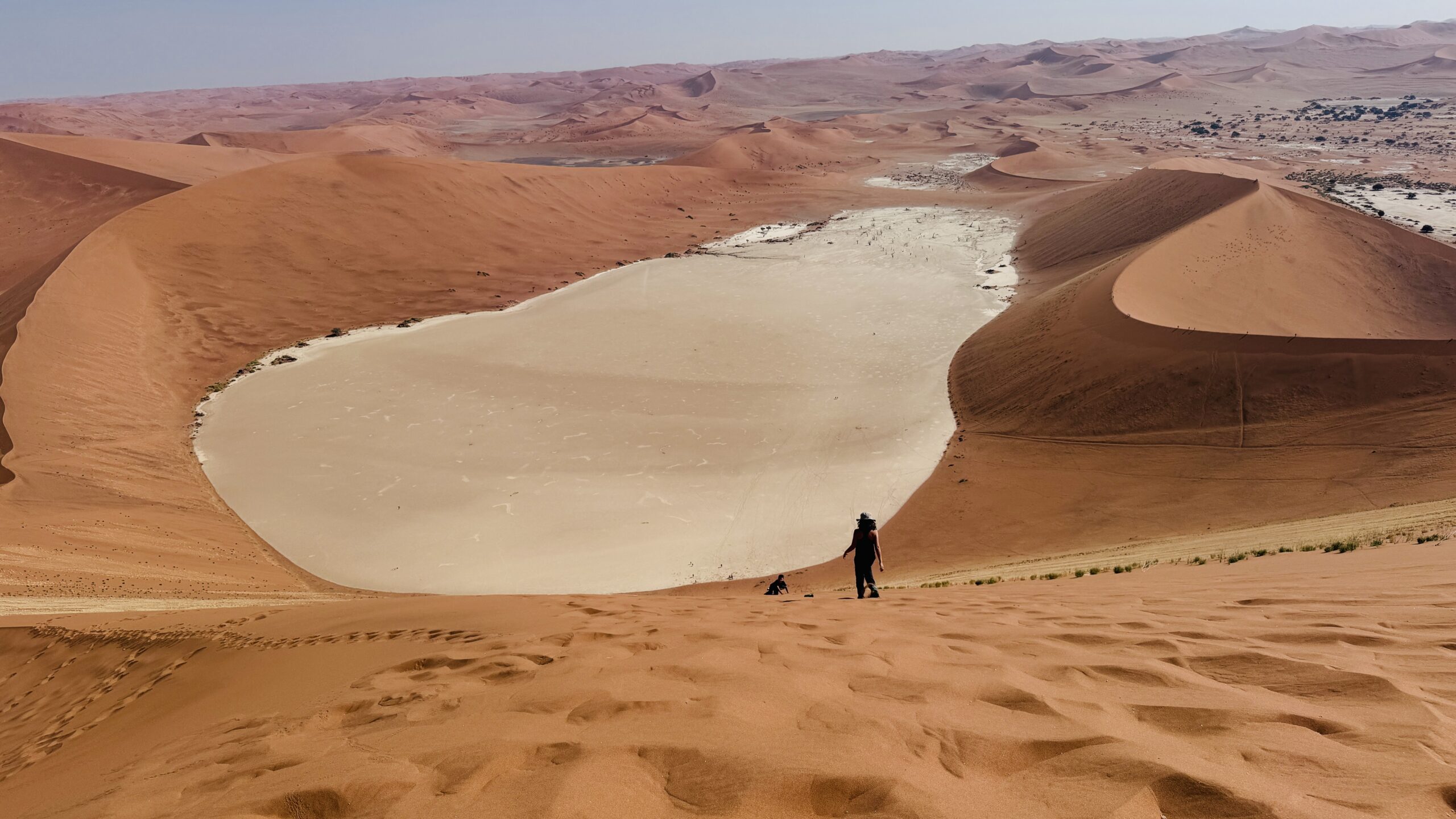
Namibia Trip: Complete Guide for Independent Travel (24-day Itinerary, What to See and Tips Based on Our Experience)
Are you thinking of planning a trip to Namibia on your own and don't know where to start? After traveling the country for 24 days as a family in a 4x4 with rooftop tents, we've put together this comprehensive guide with everything we wish we had known before our trip. Here you'll find information…
-
London with children: what to see and do as a family (royal guide with map) of the top 22 plans
If you're planning a trip to London with kids and don't know where to start, here you'll find the 22 best family-friendly activities, an optimized 3-day itinerary, money-saving tips, the best free museums, and an interactive map with all the must-see places. Basic summary: London with kids. Quick information. Recommended days: 3-5…
-
Guide to traveling to Canada: everything you need to know for a trip to Canada on your own
Welcome to a super guide for traveling to Canada from Spain or anywhere in Europe. One of our newest destinations in this wonderful world, where every trip continues to surprise us with its hidden gems. How lucky we are to have been born on Earth! How fortunate to be able to travel to Canada! Visiting Canada…
Ethical code:
On our blog you will find affiliate links. These are always placed with our highest ethics. We never publish any service or product that we have not used before and that we are sincerely happy with. That is why our recommendations are always ethical. In addition, there is no additional cost for you to book through our links and, on the other hand, it means a small commission for us that helps us maintain this blog so that you can continue enjoying it for free.