
Table of Contents
Who was César Manrique and why is his legacy unique?
To speak of César Manrique is to speak of Lanzarote , but also of a different way of seeing the world. Artist, architect, painter, sculptor, and defender of nature when no one was yet talking about sustainability, Manrique transformed the island into a work of art.
Born in Arrecife, he was fascinated by the colors and shapes of the volcanic landscape. While others dreamed of escaping, he decided to stay and turn his homeland into his canvas. Thanks to his vision, Lanzarote did not succumb to mass tourism and retains that balance between art, architecture, and nature that makes it so special today.
His philosophy was simple, yet profound: “I don’t understand art without nature. I can’t conceive of life without respect for the earth.”
Therefore, visiting any of the César Manrique's house museums It's not just a tourist stop, but an immersion into their inner world.
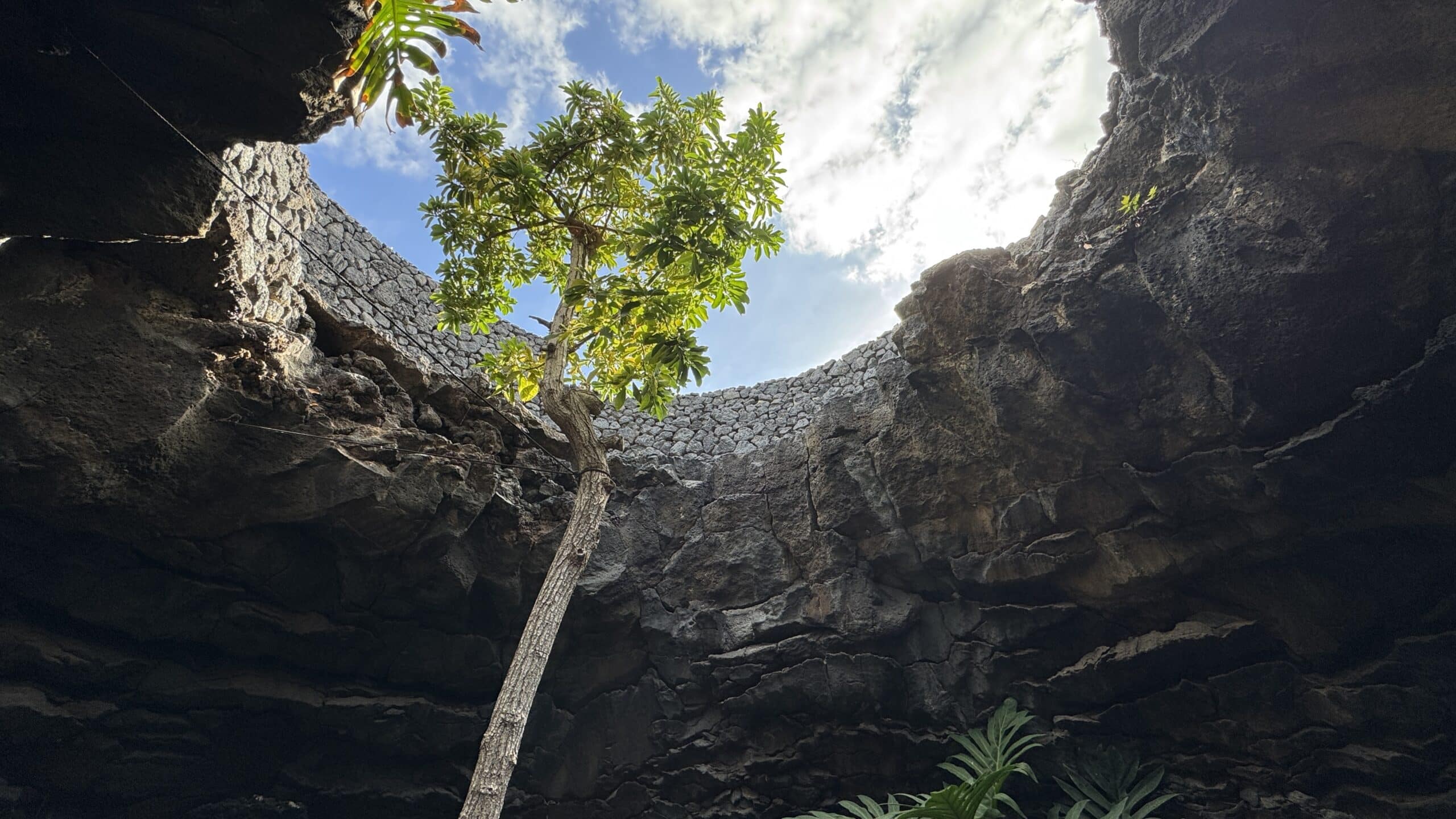
César Manrique's two house museums: Tahíche and Haría
The volcano house: the artist's most iconic home
The first and most famous of the artist's residences is the César Manrique House Museum in Tahíche , also known as the House of the Volcano . Built on a solidified lava flow, this house encapsulates his understanding of architecture: a complete fusion between the natural and the human.
He lived in this house for almost twenty years, and it was here that it all began. Manrique took advantage of natural volcanic bubbles to create living spaces, connected by white tunnels and decorated with local materials. The result is a place that seems otherworldly: a house that breathes art, light, and lava.
Today it houses the César Manrique Foundation , and in addition to touring its rooms, you can see part of his work, his private collection and personal objects that transport you directly to his creative universe.
The house in the palm grove: the final refuge in Haría
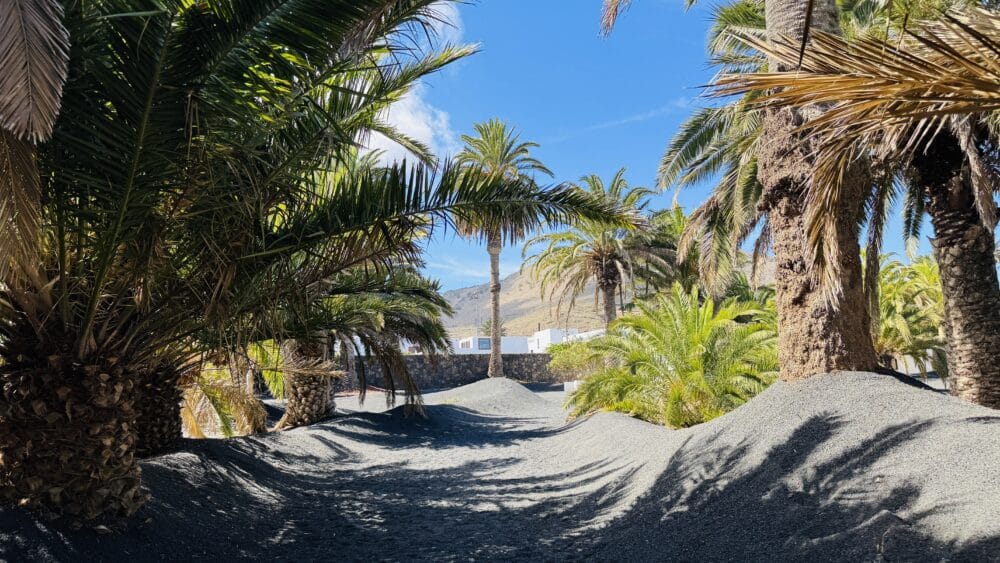
At the northern tip of the island, surrounded by vegetation, lies the César Manrique house in Haría , known as the palm grove house . It is the home where the artist spent his final years, and it has a completely different feel from Tahíche.
Here there is no lava, but palm trees, silence, and an intimate atmosphere. It was his refuge, the place he retreated to when he sought peace. César Manrique's house museum in Haría preserves his studio exactly as he left it on the day of his death, his brushes, his sketches, his books… It is the most human and personal side of the artist.
If Tahíche reveals his genius, Haría reveals his soul. And together, these two houses complete the portrait of the man who forever changed the way Lanzarote is seen.
Differences between the two: which one to visit and why
Although both are part of César Manrique Lanzarote 's legacy , each offers a different experience:
- Tahíche (the house of the volcano) It's more striking and architecturally spectacular. It's a must-see if you're visiting the island for the first time.
- I would do (the house in the palm grove) It's more intimate, more emotional, perfect if you're interested in her creative process and want to see how she lived her day-to-day life.
If you can, visit both. They're two sides of the same coin: the public artist and the private man. Plus, you can buy combined tickets for a better price, and they're only a 30-minute drive apart.
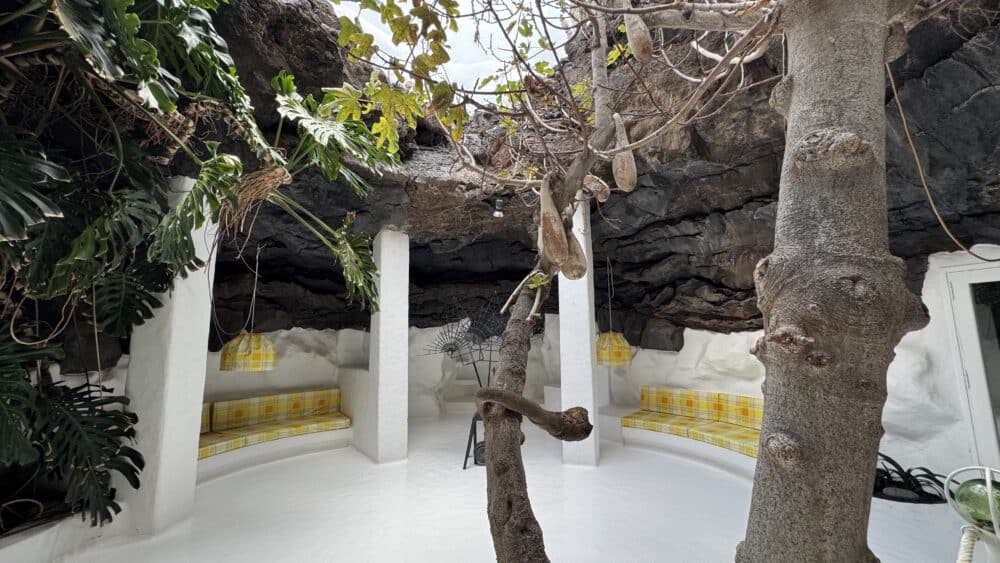
César Manrique's house museum in Tahíche and foundation: House of the Volcano
My first-person experience visiting the volcano house
We woke up in Arrecife on our second day on the road, to that warm, gentle sun that always hints at a special day. We had breakfast by the Charco de San Ginés, among small boats, reflections, and the murmur of the sea. It was our first real taste of the island's unhurried pace: even in its capital, Lanzarote exudes tranquility.
Following in the footsteps of César Manrique, we set off north with the excitement of discovering one of the most anticipated places of the trip: the César Manrique Foundation , his former home on the volcano in Tahíche.
The moment you step inside, you're enveloped in the feeling of being in a dream. The rooms carved into volcanic bubbles, the white corridors connecting the subterranean spaces, and the details in black stone make every corner seem like a living work of art. It's a place that compels you to slow down and look closely.
The house is a tribute to the balance between art and nature. Manrique didn't just live here; he imagined how to coexist with the lava, the light, and the wind without disrupting their harmony . It was one of the most impressive places we visited on the entire island, both for its beauty and for the message it conveys.
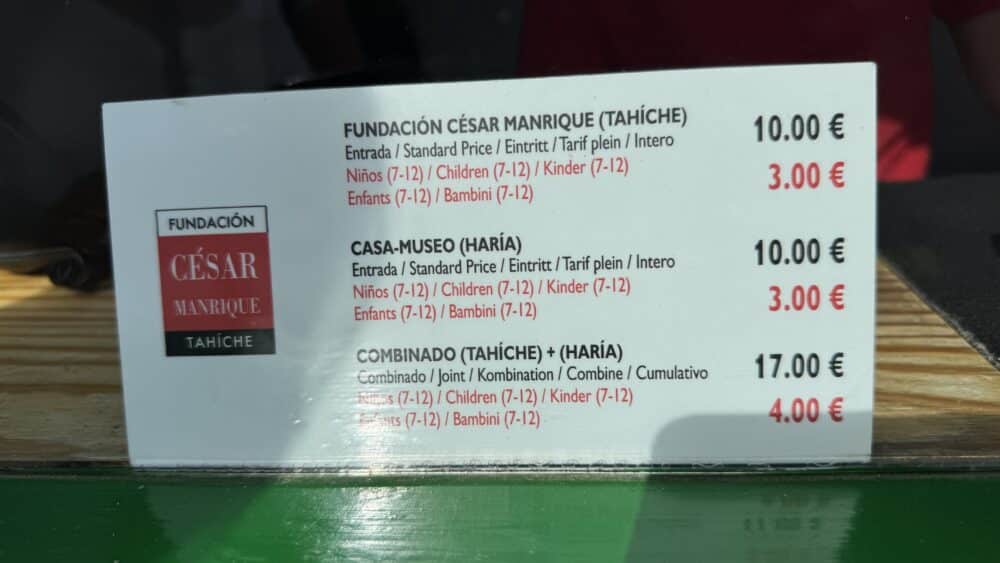
Tip: The entrance fee to the César Manrique Foundation is €10, but there's a €17 pass that also includes the Haría House Museum. This saves you €3, which you can use for a beer and some wrinkled potatoes afterwards.
We left with the feeling that we had finally understood what makes this island unique. Lanzarote cannot be understood without César Manrique.
Architecture on lava: art, light and volcanic landscape
César Manrique's house museum in Tahíche is undoubtedly one of the most fascinating places in Lanzarote . This is where it all began. It was the artist's first major personal project, a declaration of intent regarding his understanding of art and life.
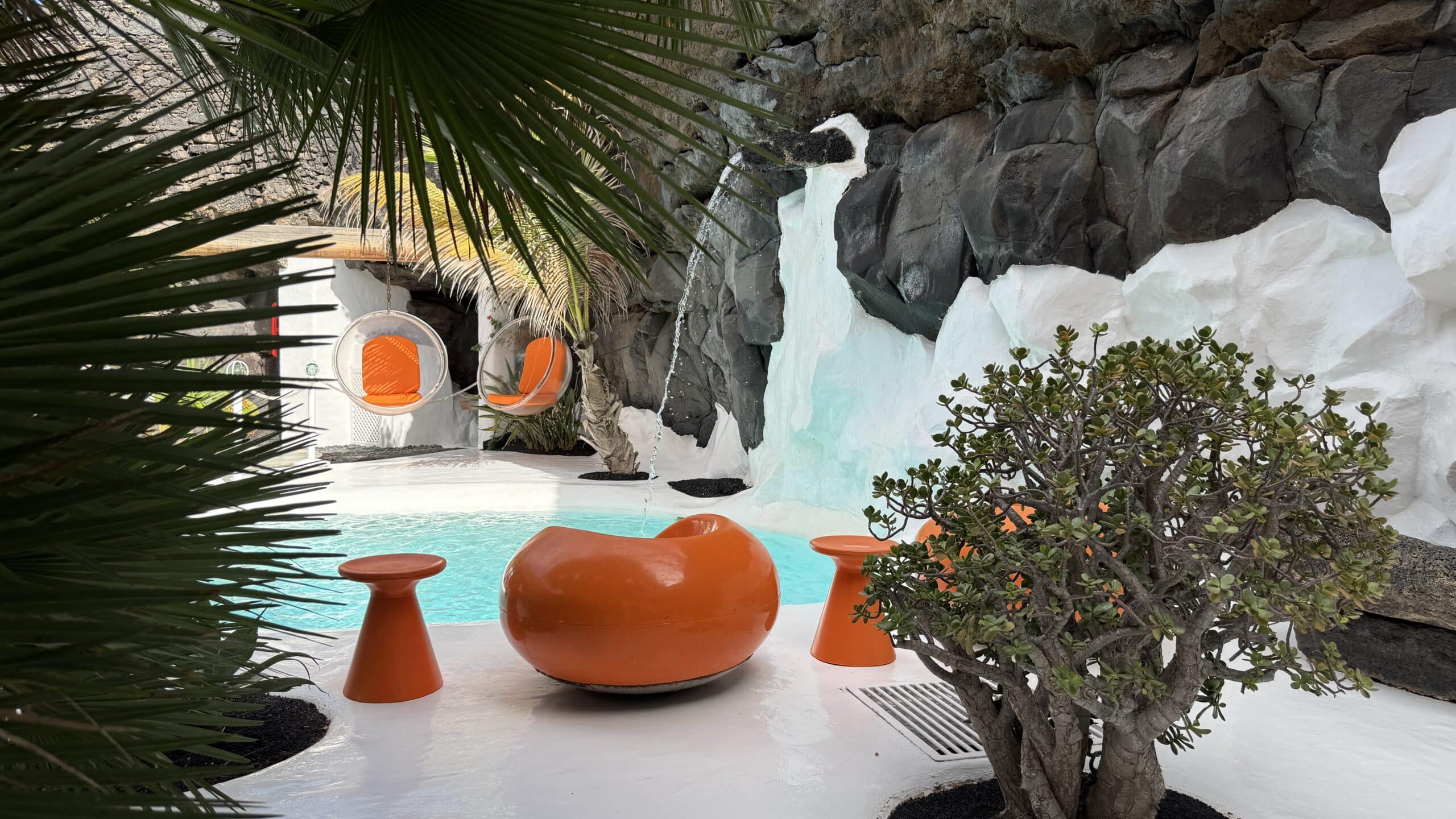
Built directly over a river of solidified lava, the César Manrique House takes advantage of five natural volcanic bubbles that the artist transformed into habitable spaces. Entering them is like stepping into another world: white tunnels that snake underground, black rock walls that contrast with the whitewashed walls, and corners where art and nature blend effortlessly.
Each space has its own personality: subterranean halls filled with organic curves, patios open to the sky, and an exterior that breathes the island's tranquility. Here, design doesn't impose itself on the landscape, but rather embraces it.
Manrique lived in this house for almost twenty years, until he left to move to his retreat in the palm grove of Haría. Since then, the building has housed the César Manrique Foundation , which safeguards his artistic and environmental legacy.
What to see inside the house museum
A visit to the César Manrique Tahíche House Museum is a multisensory experience. It's not just about looking, but about feeling how art can be integrated into everyday life.
These are some of the places you can't miss:
- Volcanic bubbles, five interconnected natural cavities that serve as living rooms, with furniture designed by the artist himself.
- The main hallBright and minimalist, where white dominates and light enters as another element of the decoration.
- The garden and the pool, one of the most photographed areas, where geometric lines coexist with the natural chaos of the lava.
- The exhibition area, which houses a collection of the artist's works and sketches, as well as photographs that tell the story of his life and his relationship with Lanzarote.
Every corner reflects his vision: that art should not be separate from nature, but integrated into it.
How to get to the César Manrique house museum
The César Manrique House Museum is located in Tahíche , in the east-central part of the island, just 10 minutes from Arrecife and 15 from Costa Teguise.
- By car: This is the most practical option. From Arrecife, take the LZ-2 north and follow the signs to Tahíche. There is free parking right in front of the museum.
- By bus: Intercity buses connect Arrecife with Tahíche (see lines 7 and 9).
- GPS coordinates: 28.9956°N, 13.5494°W
The museum is open daily from 10:00 to 18:00 (last entry 17:30). Admission costs around €10, although you can purchase a combined ticket with the César Manrique House Museum in Haría and save some money.
Traveler's tip: Arrive early or late in the day. This way you can enjoy it in peace and quiet, with hardly any crowds. The contrast of the light on the black and white lava is simply mesmerizing.
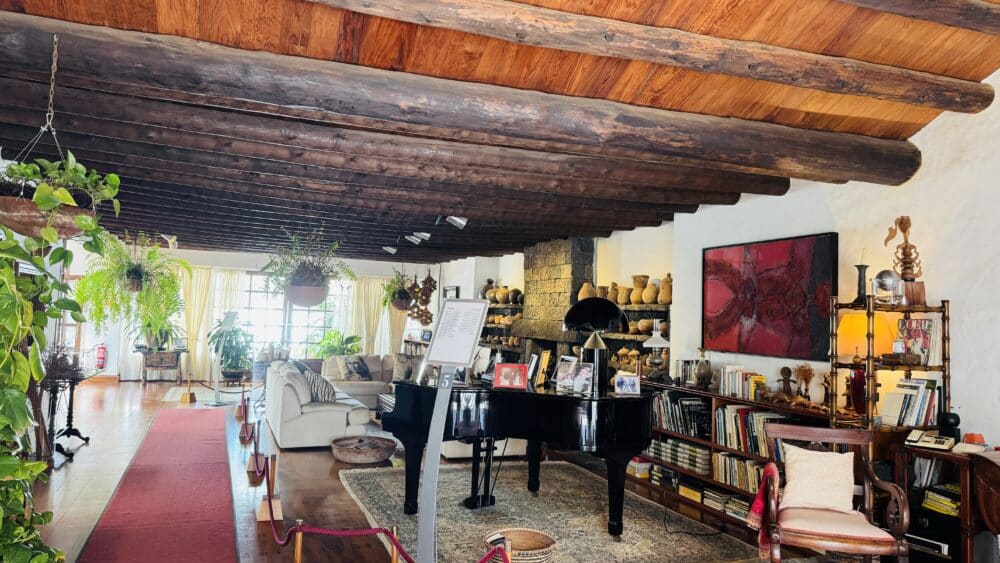
César Manrique's house museum in Haría: Casa del Palmeral
My first-person experience visiting the Palmeral house
After hiking the less than 5 km round trip to the Corona volcano crater and visiting the Mirador del Río viewpoint, on our fourth day exploring the island, we headed down to Haría for lunch. Also known as the village of a thousand palm trees, it's a green oasis amidst the black volcanic rock of the malpaís . We were lucky enough to catch the Saturday artisan market , brimming with local products and an authentic atmosphere. Try to fit it into your itinerary to see something you'll find in Lanzarote in a week.
After lunch, we visited the César Manrique House Museum , the one in the Palmeral, his other home where he spent his final years. It perfectly conveys his connection to the island and its traditions. This house isn't built on lava flows, but it reflects his other passion: the more traditional and human side of Lanzarote. It's also well worth a visit.
César Manrique's most intimate and personal corner
If the house in Tahíche is the expression of his creative genius, the César Manrique house museum in Haría is the expression of his soul. Located in the heart of the Valley of a Thousand Palms , this was the refuge where the artist sought peace and connection with nature after years of intense public activity.
Manrique fell in love with the north of the island, with its cool air and palm groves. In this house, he found the balance he always championed: a simple life surrounded by natural beauty. Everything here has a more intimate, more human feel. The rooms retain their original furnishings, his books, his tools, and even his studio, just as he left it on the day he died.
Exploring it is almost like visiting its soul: there are no grand structures or architectural effects, only calm, filtered light and that green silence that contrasts so much with the volcanic energy of Tahíche.
The house-workshop and its surroundings in the Haría valley
César Manrique's house in Haría is located on the outskirts of the village, surrounded by fields and palm trees. It is a traditional Canarian building, with white walls and wooden ceilings, which the artist adapted with his personal style: colorful details, mosaics, corners open to the landscape, and above all, harmony.
His workshop , located next to the main house, remains exactly as it was. Seeing his workbench, the stained brushes, the open tubes of paint, and his personal notes is a moving experience. It's easy to imagine him there, working quietly as the valley breeze drifted in through the windows.
The visit also includes the garden and inner courtyard, where art blends with simplicity. Here there is no spectacle, only authenticity. It is a place that invites you to pause, breathe, and understand that, for Manrique, beauty lay not in ostentation, but in what is essential.
Useful information: opening hours, tickets and tours
The César Manrique house museum in Haría is open every day from 10:30 a.m. to 18:00 p.m., with the last entry at 17:30 p.m. Entry costs around €10 , although the best option is to buy the combined ticket that includes this house and the one in Tahíche for €17 (valid for 14 days).
Address: Rincón de Haría Road, Haría, Lanzarote
Access: By car from Arrecife it's about 35 minutes via the LZ-10 (scenic road with spectacular views).
Parking: free next to the entrance.
Practical tip: Haría is a lovely place to linger a while longer. Take advantage of your visit to stroll through the village, enjoy a coffee under the palm trees, or visit the Saturday artisan market , one of the most beautiful on the island.
César Manrique Foundation: the living legacy of the artist
What it is and where it is
The César Manrique Foundation is based at the Tahíche House Museum , where the artist lived for almost two decades. Established in 1992, a few months after his death, the Foundation plays a fundamental role: preserving his work, protecting his legacy, and keeping alive his philosophy of respect for the environment.
In addition to managing the two house museums, the Foundation promotes temporary exhibitions, cultural activities, art scholarships, and educational programs. Its exhibitions are essential viewing for understanding the true scope of his work: not only an artist, but also a champion of a sustainable tourism model when that concept was still in its infancy.
His role in preserving the legacy of César Manrique
The César Manrique Lanzarote Foundation has been key to maintaining the island as he envisioned it. Thanks to its work, many of the art, culture, and tourism centers created by Manrique continue to be managed in the original spirit: the Cactus Garden , Jameos del Agua , Mirador del Río , and the Monument to the Farmer.
The foundation also acts as a critical voice against urban speculation, keeping alive Manrique's fight for a balanced island, without excessive construction or visual impacts.
Visiting the foundation is not just about meeting an artist: it's about meeting a man who changed the destiny of his land.
Tips for visiting the house museums and the foundation
Visiting the three spaces linked to Manrique— the Tahíche House Museum , the Haría House Museum , and the César Manrique Foundation —is almost an initiatory experience. It's not just about seeing places; it's about understanding a way of looking at the world.
1. Start with Tahíche: It's the most striking and immerses you in the artist's visual universe. The volcanic bubbles transformed into rooms are something you won't forget.
2. Continue with the Foundation: It's in the same building and will help you understand his philosophy, his struggle, and his legacy.
3. It ends in Haría: more intimate and personal, ideal for closing the tour with a feeling of connection and calm.
Practical tip: You can buy a combined pass that allows you to visit both museums for €17, valid for 14 days. This way you can take your time and enjoy other places on the island between visits.
If you travel in summer, avoid the middle of the day, especially in Tahíche. And if you travel in winter, Haría will reward you with a soft, magical light perfect for photography.
César Manrique's main works in Lanzarote
Exploring Lanzarote is like following in the footsteps of César Manrique , the artist who transformed the island into an open-air museum. His vision united art, landscape, and sustainability long before those words became fashionable. Today, almost every iconic corner of the island bears his mark.
Here's a summary of his main works and spaces that you shouldn't miss if you want to understand his legacy:
1. César Manrique Foundation (Tahíche)
His old house, built on volcanic bubbles, is the most representative of his style: a total integration of art, architecture, and nature.
2. César Manrique House Museum (Haría)
The artist's final refuge, where he lived his last years. An intimate and very personal visit, featuring original objects and his painting studio.
3. Jameos del Agua
A masterpiece of natural architecture. A magical space inside a volcanic tube, with an interior lake and the famous endemic albino crabs.
4. Cave of the Greens
A volcanic cave transformed into an artistic experience. Its lighting, the route, and the final surprise make it a must-see.
5. River Viewpoint
Located on a cliff in the north of the island, it offers one of the most breathtaking views in the Canary Islands, with La Graciosa in the foreground. A work that masterfully combines art and landscape.
6. Cactus Garden
Built on an old quarry, it brings together more than 4.000 specimens of cacti from all over the world in a circular space full of visual harmony.
7. Monument to the Peasant
A tribute to the people of Lanzarote and their connection to the land. The sculpture, visible from afar, is constructed from recycled materials from old marine tanks.
8. Casa del Palmeral (Haría) and Taro de Tahíche
His two most emblematic residences, now converted into museums, represent the duality of his life: the volcanic artist and the tranquil man.
9. Urban and landscape interventions
Manrique also designed roundabouts, viewpoints, traffic signs, gardens and street furniture throughout the island, always seeking to beautify without altering.
Each of these works reflects his most powerful message:
“You cannot love what you do not know, nor defend what you do not love.”
That's why visiting Lanzarote is much more than tourism: it's entering the universe of an artist who knew how to turn nature into art and art into a way of life.
César Manrique beyond Lanzarote
Although Lanzarote was his great canvas, César Manrique also left his mark on other islands and places in Spain. His vision transcended island boundaries and extended to projects in Tenerife , La Palma , and Madrid , always guided by the same idea: to integrate art, architecture, and nature in perfect balance.
In Tenerife , his legacy shines especially brightly in the César Manrique Maritime Park in Santa Cruz. This space, with its saltwater pools surrounded by volcanic rock, gardens, and sculptures, is a more urban version of his philosophy. Here, you can literally swim inside a work of art.
Also in Tenerife, we find the César Manrique Secondary School and the César Manrique Vocational Training Center , two educational centers that bear his name and where the artist's creative and technical spirit is fostered. They are a testament to how his influence remains alive, not only in art, but also in the education and thinking of new generations.
Beyond the Canary Islands, Manrique also left his mark on Ceuta , with the design of the Mediterranean Maritime Park, and in various artistic interventions on the Iberian Peninsula. But it is in Lanzarote where his work reaches its fullest expression: a true manifesto in stone, light, and wind.
My personal experience: discovering the essence of Manrique in Lanzarote
I remember perfectly the moment I entered the César Manrique House Museum in Tahíche : a cool, white silence, broken only by the sound of the wind whizzing through the lava tunnels. I stood motionless for a second, trying to understand how someone could have had the sensitivity to see beauty where others would only see stone.
In every corner, you can feel his free, nonconformist spirit, deeply connected to the land. His ability to create a dialogue between art and nature was breathtaking. As I walked through the rooms carved into volcanic rock, I thought that few artists have managed to blend so completely with their surroundings.
Later, in Haría , the emotion was different. There was no spectacle or grandeur there. Only the simplicity and elegance of a lived-in home, its personal belongings, and the feeling of entering the private world of a genius who, in the end, sought the same thing as everyone else: peace.
Leaving there was like closing a book you didn't want to end. And I understood why Lanzarote wouldn't be the same without him.
Latest posts from our blog
-

Definitive manual for traveling by motorhome【2026】
Super complete manual for traveling by motorhome with all the answers to your questions.
-

Switzerland at Christmas: our family adventure between lights, snow and hot chocolate
If you're thinking of spending a magical Christmas in a fairytale destination, Switzerland at Christmas should be on your list. This year we took the plunge (and skis) and set off to explore Switzerland at Christmas with the kids, a plan we knew couldn't fail. Spoiler alert: everything we…
-
Guide to traveling to Alsace at Christmas: costs, map, route, tips and the 20 essential plans
Enjoy our guide to travelling to Alsace at Christmas. With this post we want to share our experience and learnings at the destination and help you prepare your next trip to Alsace at Christmas on your own. We are Kucavana, a family with two children and two dogs who love to travel. And if you want…
-

Guide to traveling to the Dolomites at Christmas: costs, map, route, tips, 7 Christmas markets and 19 other essential plans
Enjoy our guide to travelling to the Dolomites at Christmas. With this post we want to share our experience and learnings at the destination and help you prepare your next trip to the Dolomites at Christmas on your own. About us We are Kucavana, a family with two little ones and a dog who love to travel. We want to share our experience and learnings at the destination and help you prepare your next trip to the Dolomites at Christmas on your own.
Ethical code:
On our blog you will find affiliate links. These are always placed with our highest ethics. We never publish any service or product that we have not used before and that we are sincerely happy with. That is why our recommendations are always ethical. In addition, there is no additional cost for you to book through our links and, on the other hand, it means a small commission for us that helps us maintain this blog so that you can continue enjoying it for free.