Table of Contents
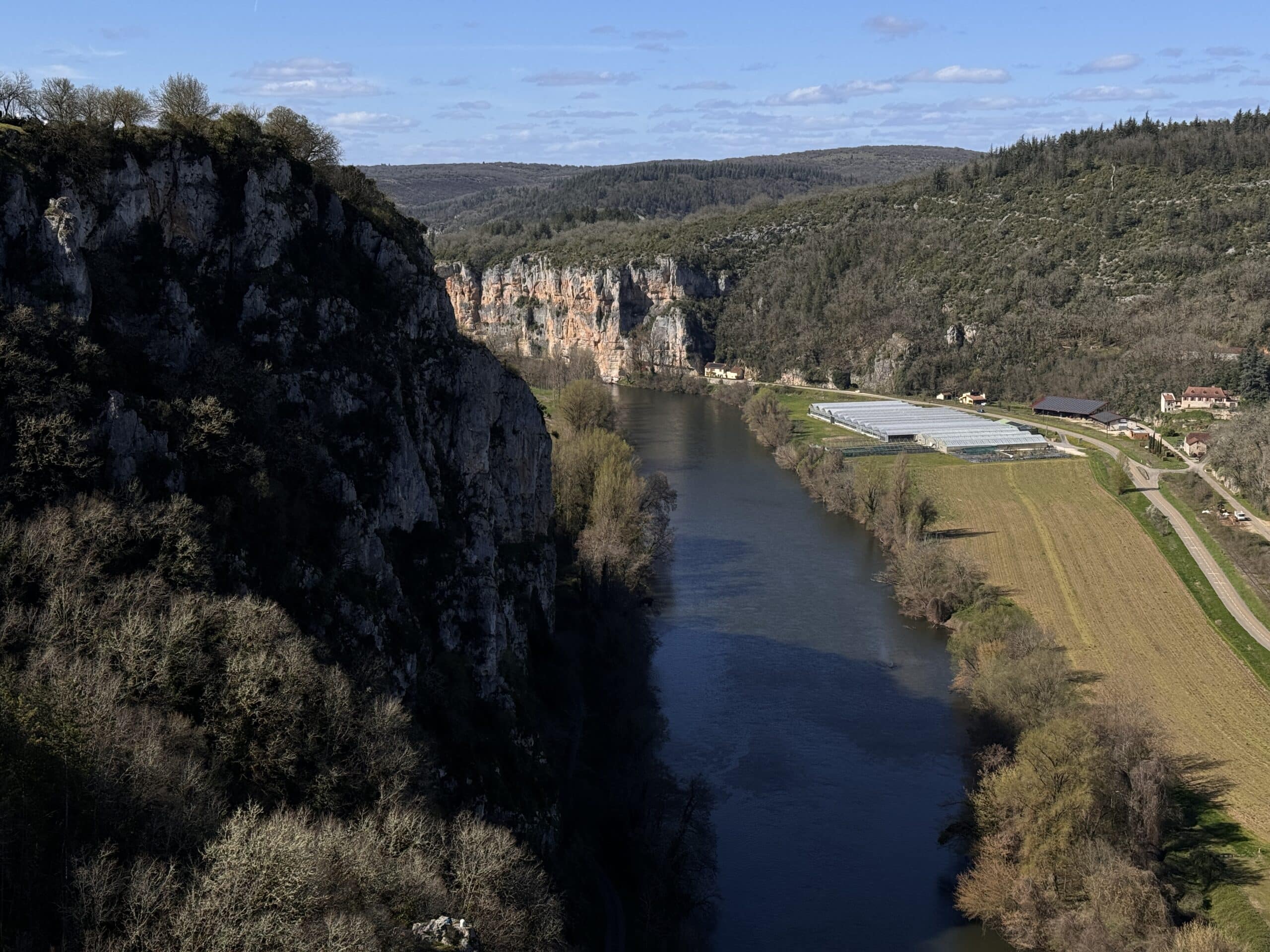
Discover the wonder of traveling through the Lot Valley in France. Stay and you'll understand why I call it a wonder.
In previous posts, we shared our trip through the Lot department on a 4-stage route, highlighting the must- see sights and everything you need to know about Cahors , its capital. But today, at the request of some friends, I want to expand on that information, providing more details about what to see in the Lot Valley in France, which was the first leg of our Lot route.
A tip: Don't travel without travel insurance . Avoid medical co-payments, have a doctor just a click away on your app, have a lawyer specializing in any issues that might arise during your trip, and avoid unpleasant surprises like cancellations or incidents along your route. The travel insurance that has convinced us the most for family travel so far is Iati Familia. Its price and coverage are ideal for traveling within Spain, Europe, and beyond. It covers everything on your trip, not just essential medical needs with 24-hour access to a doctor and pediatrician via the app's chat . I've included a discount they'll give you at the end of your quote request.
Where is the Lot Valley in France.
The Lot Valley is located in the south of the French department of Lot . It runs along the course of the river of the same name, the Lot River.
The location is ideal for those of us who live in northern Spain. Less than a 5-hour drive from Barcelona, we can easily reach it by car. This is a major draw, making it one of the top destinations for a 3 or 4-day weekend getaway.
How to get to the Lot Valley, France
In our case, we left Barcelona for the Lot Valley in France, taking the AP-7 to Narbonne, heading towards Carcassonne. There, we took the A-61 to Toulouse, and from there, we continued straight on the A-20 until we reached the Lot Valley. If you've never visited Carcassonne, this is a must-see first stop on your route.
We arrived in the Lot River Valley through the capital of the Lot, Cahors, a city we already wrote an article about which you can see what to see in Cahors.
Our round trip cost us just under €500 in our car , although if it's a small car it will surely cost you €100 less.
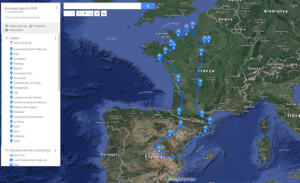
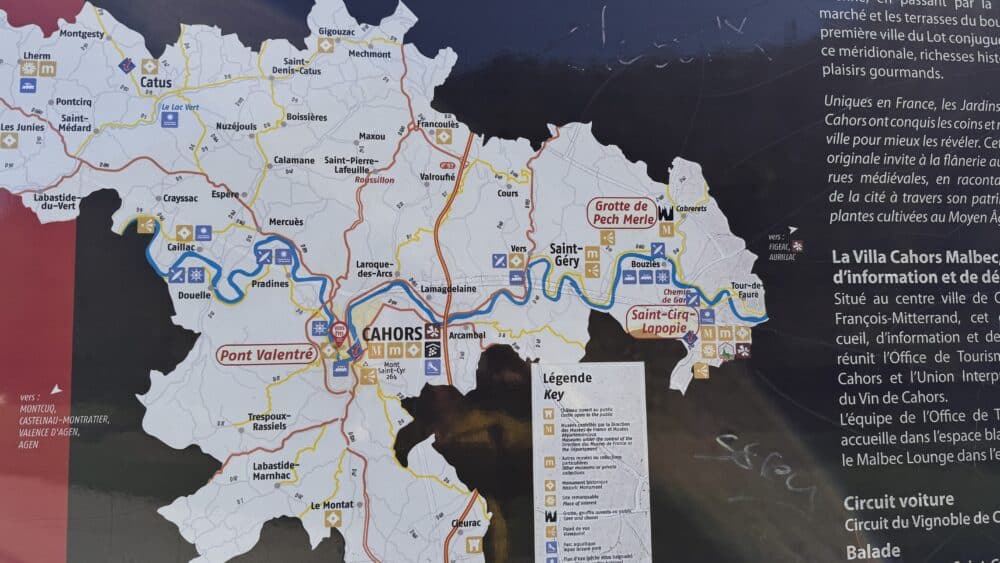
Lot Valley Map
Our route through the Lot Valley
Our route through the Lot Valley in France began in the city of Cahors, to see one of the Lot's must-see sights: the Devil's Bridge . We then continued along the river through its charming villages, visiting Saint-Cirq-Lapopie , one of the most beautiful villages, and ending in Capdenac , another of France's most beautiful villages , as the final stop on our Lot Valley tour. But we also made sure to visit Figeac, one of the most important medieval towns in the Lot.
This was our main route through the Lot Valley, but we continued on to visit the stunning Célé Valley and the valley leading from Cardaillac towards Rocamadour. In the following video, you can see the entire route we took through the Lot department in France, including the Lot Valley itself and other areas and sections of the region.

What to see in the Lot Valley France: the 6 essentials of the top Lot Valley route
I won't ramble on any longer, and here I'm going to explain what I consider to be the 6 essential things to do and see in the Lot Valley.
1 Cathedral of Saint Etiénne de Cahors, UNESCO World Heritage Site
We begin our top 6 list of things to do in the Lot Valley with one of the best gateways to the Lot: Cahors, its capital.
Our first suggestion for what to see in the Lot region is to visit the Cahors tourist office first. Then, stroll through the medieval cobblestone streets of Cahors' historic center and from there visit the Cathedral of Saint-Étienne. And opposite the cathedral, if it's a Saturday, you'll almost certainly see one of the best golf courses in the Lot.
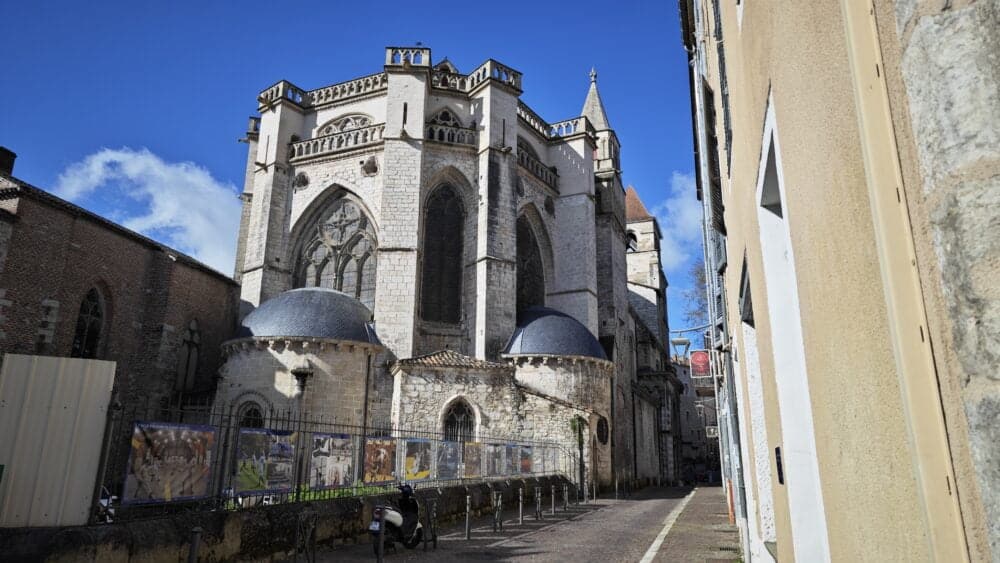
The Cathedral of Saint-Étienne in Cahors is located in the heart of the medieval city of Cahors. It is a prominent historical and architectural monument in France. This cathedral, a UNESCO World Heritage Site , is also part of the French Routes of the Camino de Santiago , so you will likely see pilgrims passing by during your visit.
The Cathedral of Saint-Étienne in Cahors is a prominent Romanesque church built between 1080 and 1135 in Cahors, France. This building is notable for its architecture, history, and cultural significance.
UNESCO World Heritage Site, a must on the Lot Valley route
It's a cathedral that surprises with its two oval-shaped, Byzantine-style domes , the largest in southwest France, reaching a height of 32 meters. It reminded us a bit of a Gothic church combined with the Hagia Sophia in Istanbul. It blends Romanesque and Gothic elements that reflect its long history.
Another of its greatness is its stained glass windows that magically give luminosity to the church in its nave, which is 20 meters wide and 40 meters long.
Finally, what stands out about the cathedral is that it also houses a precious relic: the Holy Cap. According to tradition it was used by Jesus and brought to Cahors by Bishop Géraud de Cardaillac after a trip to the Holy Land.
2 Visit Saint-Cirq-Lapopie, one of the most beautiful towns in France and the Lot Valley in France
We continue our journey through the Lot Valley and head towards one of the most beautiful villages in France. A village that we can vouch for; if it's not the most beautiful, it's certainly one of the most beautiful we've seen in France—and we've seen quite a few!
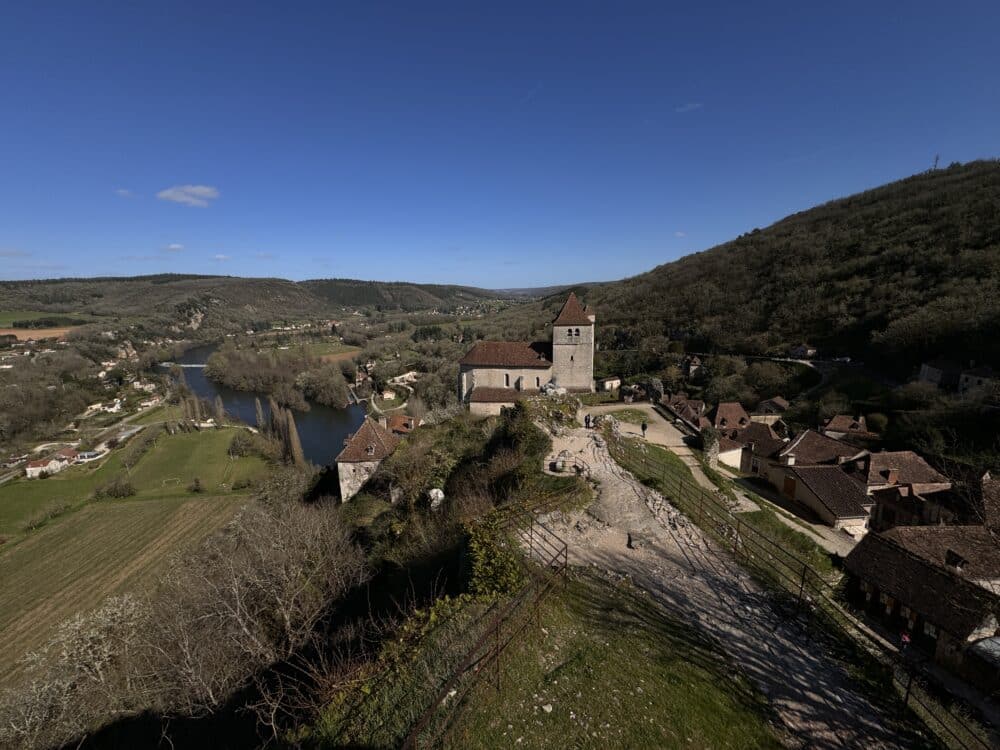
Upon arriving in Saint Cirq , the first thing that struck us from atop the rocky cliff that supports the town was the view. It's incredible to see the Lot River in France and the valley it forms from Saint Cirq to Lapopie . You won't stop taking a thousand photos!
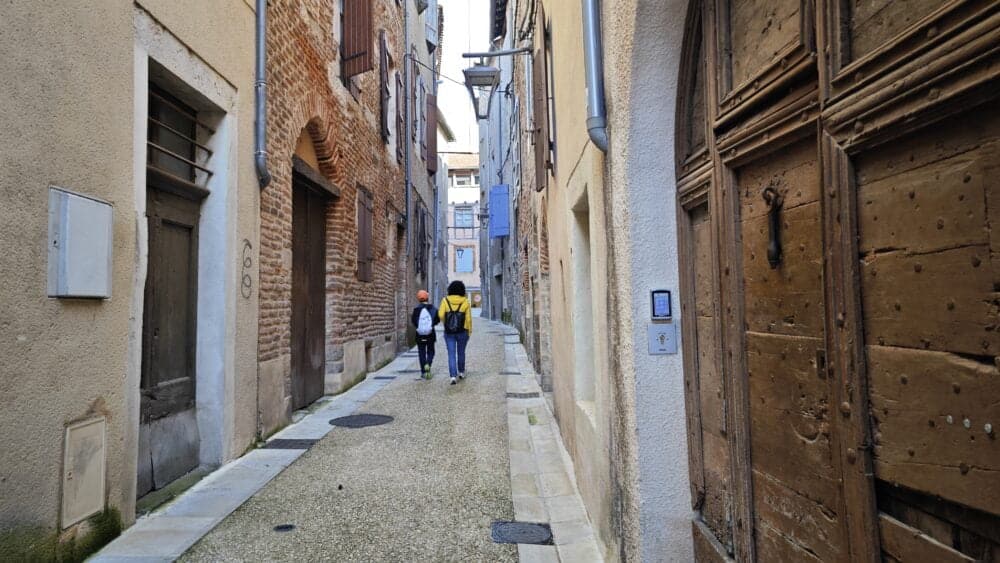
The village couldn't be more beautiful, cobbled houses with typical Lot-style reddish roofs, arranged as if in a parade, among artisan workshops and restaurants with lovely terraces.
There's a tourist office and you can't miss going up to the top viewpoint.
A town to simply enjoy and feel like you are in a story.
3 Cahors and the Valentreé Bridge in Cahors, World Heritage of Humanity
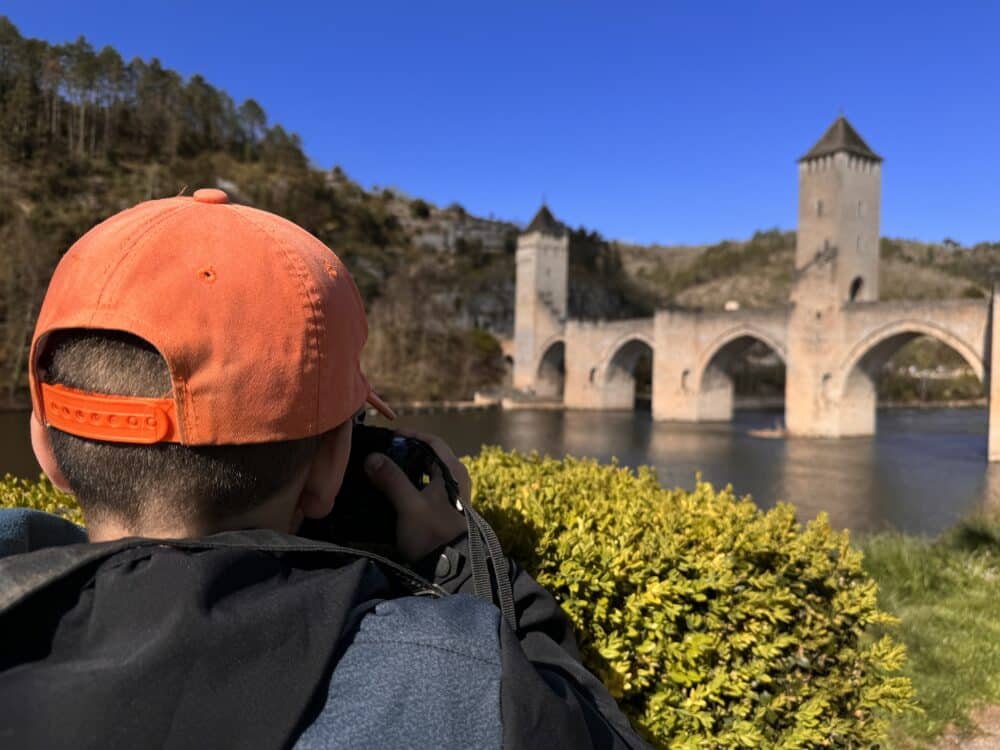
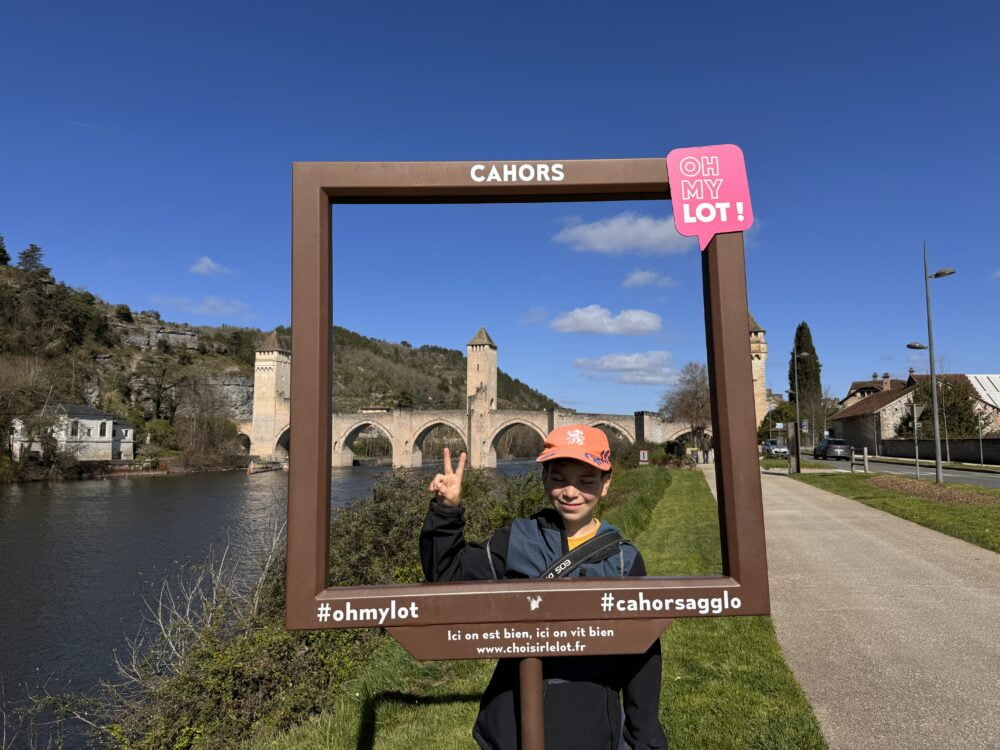
After wandering and discovering some secret gardens in Cahors's alleyways, we strolled through large parks filled with Malbec vineyards , famous for their excellent wine. We then reached the Lot River, where boats usually offer tours, but which is incredibly peaceful in the off-season. There, we climbed up and crossed the Pont de Valentré, an iconic medieval bridge with fortified towers, a UNESCO World Heritage Site . It was a delightful surprise. Access is free ; the Pont d'Avignon, which is very similar, requires an entrance fee.
The Valentré Bridge is a stunning example of medieval architecture located in Cahors, France. Its construction began in 1308 and was completed in 1378, amidst the Anglo-French Wars. The bridge is 138 meters long and features six Gothic arches spanning the Lot River. It is fortified with three square, crenellated towers , giving it a crucial defensive role for the city of Cahors.
The Valentré Bridge is considered a magnificent example of medieval fortified bridges and has been a UNESCO World Heritage Site since 1998, as part of the French Way of St. James , so you will see pilgrims crossing it, as we did.
The legend of the Valentreé bridge, essential in the Lot Valley France
The bridge is remarkable not only for its architecture but also for the legend surrounding it. According to this legend, the bridge's master builder made a pact with the devil to expedite construction. However, after tricking the devil at the end of the project, the latter swore revenge and supposedly returned every night to remove a stone from the central tower , now known as the Devil's Tower. During a restoration in 1879, the architect Paul Gout placed a stone carved with the figure of the devil in the central tower, ensuring it would never be moved again.
4 Visit Capdenac- Le Haut, one of the most beautiful towns in France
We arrived at our last stop in the Lot Valley, France , but not before taking an impressive road trip along the banks of the Lot River through beautiful little villages and the stunning rock cliffs of the Casusas-Quercy National Park.
In Capdenac – Le Haut, we park in the entrance parking lot . There's a children's playground and a book exchange booth right next to it, and my children enjoy themselves there for a while.
Capdenac – Le Haut, is the upper Capdenac, the historic medieval one, but from the parking lot we look out and see the Lot River below the mountain and next to it the new Capdenac and its curious reproduction of the Eiffel Tower in the distance.
At the entrance to Capdenac Le Haut, we found a map of a planned route, which we followed. It's a beautiful medieval village with cobbled streets and remnants of its Roman walls. They say it was the last Gallic village to fall to the Romans , and that it's the one that actually inspired Asterix and Obelix, although many believe it was in Brittany, France.
What to see in Capdenac
From our visit, I curiously remember the animals of the village as one of those curious points that travel leaves a trace for us.
Firstly, because of the several affectionate cats we encountered on our stroll through its streets—very affectionate indeed! And secondly, because of the curious donkey that kept calling its owner insistently from the doorway, hehehe. You can see it in the video we have on YouTube.
Aside from that, Capdenac surprised us with its hidden corners . Like a garden with a giant insect house , the largest we'd ever seen. Or the Roman baths located beneath a steep staircase ; if you want to access them, you must first go to the tourist office to get the keys. In our case, we were disappointed, as the tourist office was closed.
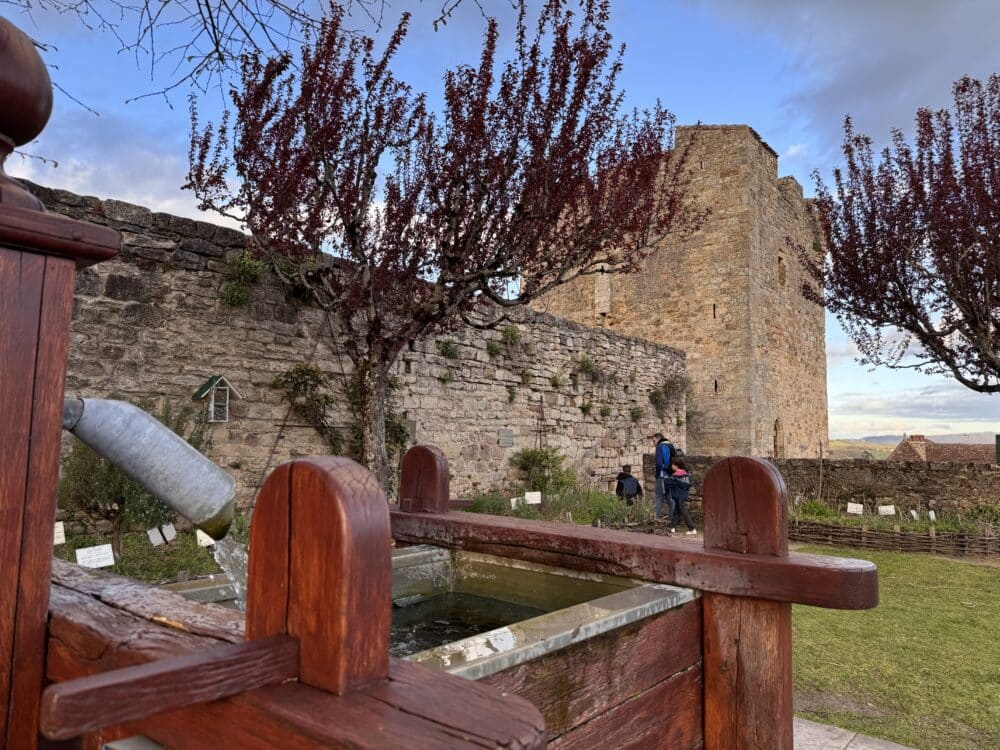
Besides that, the corner above the church at the base of the castle wall, next to the remaining tower, is beautiful with its fountain and gardens , as is the balcony with the monument to the fallen at the end of the church street. Every corner in Capdenac has something special.
Before leaving after our lovely visit, we were lucky enough to stumble upon the Oltís creperie . That very evening, there was a live musical duo playing, which we absolutely loved! What a fantastic atmosphere this restaurant had for such a small village! We loved having dinner there and ending our evening in Capedenac-le-Haut in such a wonderful way.
5 The Roman Fountains of Chartreaux
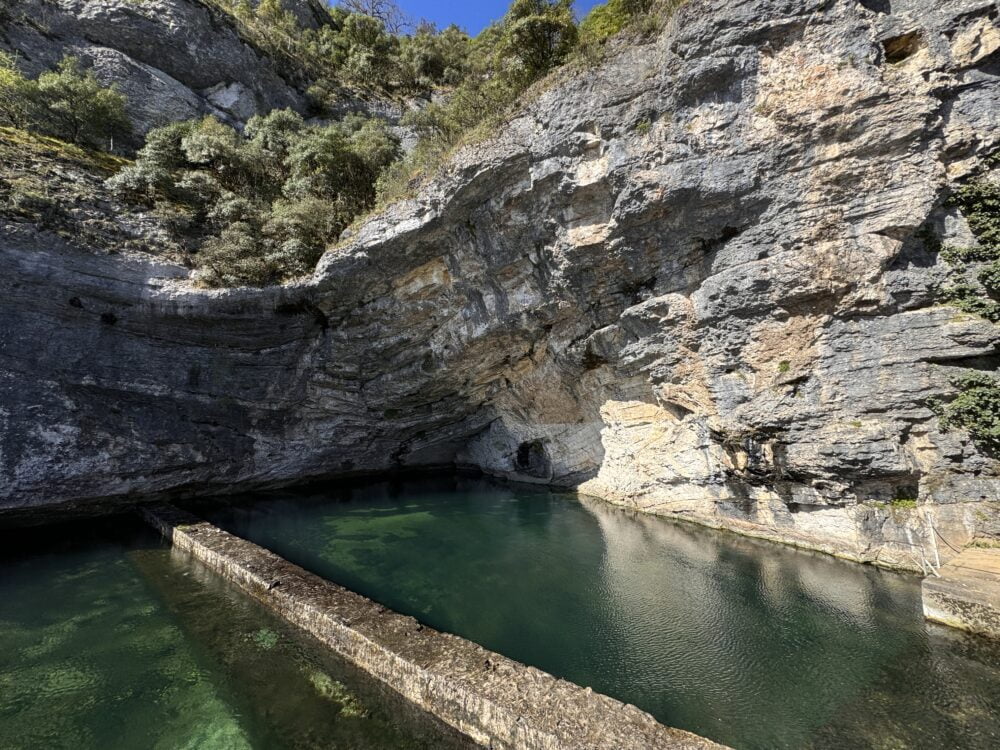
Crossing the Valentré bridge in Cahors, we turn left and in 5 minutes arrive to marvel at the turquoise Roman pools under some rocks.
The Roman Fountains of Chartreaux, located in Cahors, France, are a notable example of Roman hydraulic engineering. These fountains, dating back to the 1st century AD, were built to harness and distribute water from an underground spring, an example of advanced Roman technology in water management.
Description and history
The sources consist of a series of underground pools and channels that allowed the collection, storage and distribution of water. The water was channeled from the spring into a large main pool, from where it was distributed to various cisterns and reservoirs in the city. This infrastructure not only served to provide drinking water to the population, but also for irrigation and other urban needs.
The Roman Fountains of Chartreaux were not only essential to the daily lives of the inhabitants of Cahors in Roman times, but also became a symbol of Roman skill and ingenuity in engineering. The presence of these fountains indicates the importance of Cahors during the Roman occupation, serving as a strategic military and commercial center.
Today, the fountains are an important archaeological site and tourist attraction. Visits to the Chartreaux Roman Fountains offer a fascinating insight into Roman engineering and its impact on ancient urban life.
These fountains not only represent a technical achievement, but also a cultural legacy that continues to attract the admiration of historians, engineers and tourists alike.
From the fountains we cross the Valentré bridge and stroll along the banks of the Lot on the greenway in the city of Cahors to end an excellent day.
6 Figeac, the second essential town in the Lot
We continue our journey along Stage 2 to visit Figeac, the second largest town in the Lot region of France. A must-see in the Lot Valley, without a doubt.
The first thing that surprises us is precisely its medieval center . It's very well-maintained, clean, and quite large , with excellent preservation . You can't even see the power lines in the streets, something that immediately catches my eye. It has charming squares and a great number of shops, cafes, restaurants, and a vibrant atmosphere thanks to its residents.
We loved the atmosphere immediately and after an evening walk we sat down at the Le Seth restaurant to have something to eat. The food is very good, although the prices are not so good.
Guided tour day to discover the adventure of Champollion in Figeac, essential in the Lot Valley France
The day after our arrival in Figeac, we had booked a guided tour with a local Spanish-speaking guide from the Lot region : Audrey, from Aventures & Vous.
Audrey would show us Figeac through the story of Champollion in Spanish. For €15 per adult and €5 per child, she gives a fantastic guided tour that lasts all morning and is not to be missed if you go to Figeac. Here's her WhatsApp number to book a tour if you'd like: +33 664809415. She speaks excellent Spanish and knows everything about Figeac and the Lot region! The tourist office gave us her contact information, and it was a great find!
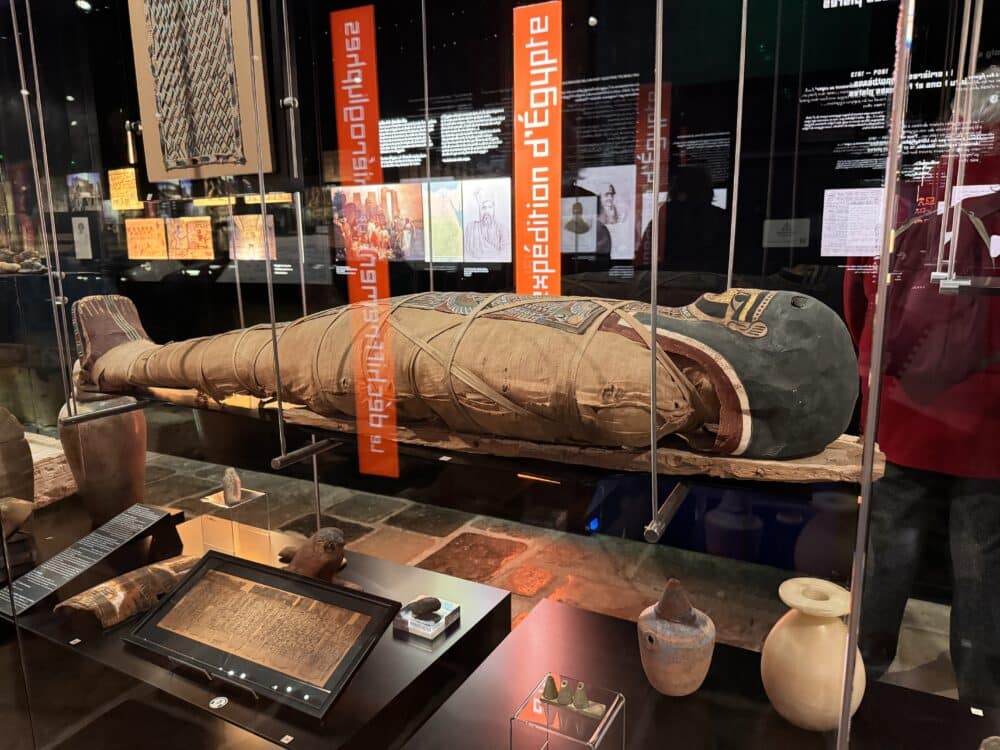
Figeac is important because of Champollion, the Egyptologist who was an expert in languages and writing and who deciphered hieroglyphics with the Rosetta Stone , with a beautiful and curious history.
After visiting the best spots in Figeac with Audrey and taking us to the best viewpoint in the city on a beautiful little trek through the forest , we went to eat at a small restaurant opposite the tourist office, Marché des Délices, which had a daily special and was a great choice, good price and good food.
After lunch, we finally set off to visit the great Champollion Museum, the world's largest museum of scripts. This museum left us speechless, revealing a world of writing throughout history, much of which remains undeciphered. It's not to be missed.
Figeac has really been one of the great surprises on our route so far, we have loved it!
Much more to visit in the Lot Valley
That's it for our article on the places we liked the most in the Lot Valley, although we have to confess that the Lot Valley is much more and much to discover and enjoy slowly.
It is a valley full of panoramic views and outdoor activities such as hiking, cycling and canoeing or kayaking.
A valley to enjoy small, large, beautiful fairytale towns.
And a valley full of UNESCO World Heritage Sites and those not for their historical and cultural value.
In short, the Lot Valley is a destination that combines natural beauty, rich history and a vibrant culture, making it a perfect place to explore and enjoy authentic French life.
More information: Lot Valley Tourism
Latest posts from our blog
-
Definitive manual for traveling by motorhome【2024】
Super complete manual for traveling by motorhome with all the answers to your questions.
-
Namibia Trip: Complete Guide for Independent Travel (24-day Itinerary, What to See and Tips Based on Our Experience)
Are you thinking of planning a trip to Namibia on your own and don't know where to start? After traveling the country for 24 days as a family in a 4x4 with rooftop tents, we've put together this comprehensive guide with everything we wish we had known before our trip. Here you'll find information…
-
London with children: what to see and do as a family (royal guide with map) of the top 22 plans
If you're planning a trip to London with kids and don't know where to start, here you'll find the 22 best family-friendly activities, an optimized 3-day itinerary, money-saving tips, the best free museums, and an interactive map with all the must-see places. Basic summary: London with kids. Quick information. Recommended days: 3-5…
-
Guide to traveling to Canada: everything you need to know for a trip to Canada on your own
Welcome to a super guide for traveling to Canada from Spain or anywhere in Europe. One of our newest destinations in this wonderful world, where every trip continues to surprise us with its hidden gems. How lucky we are to have been born on Earth! How fortunate to be able to travel to Canada! Visiting Canada…
Ethical code:
On our blog you will find affiliate links. These are always placed with our highest ethics. We never publish any service or product that we have not used before and that we are sincerely happy with. That is why our recommendations are always ethical. In addition, there is no additional cost for you to book through our links and, on the other hand, it means a small commission for us that helps us maintain this blog so that you can continue enjoying it for free.