
Table of Contents
The first time I visited Jameos del Agua in Lanzarote, I was speechless. And that, for me, is saying a lot. This place isn't just seen: it's felt . Its energy, its calm, its raw beauty… here, nature speaks, and one simply listens.
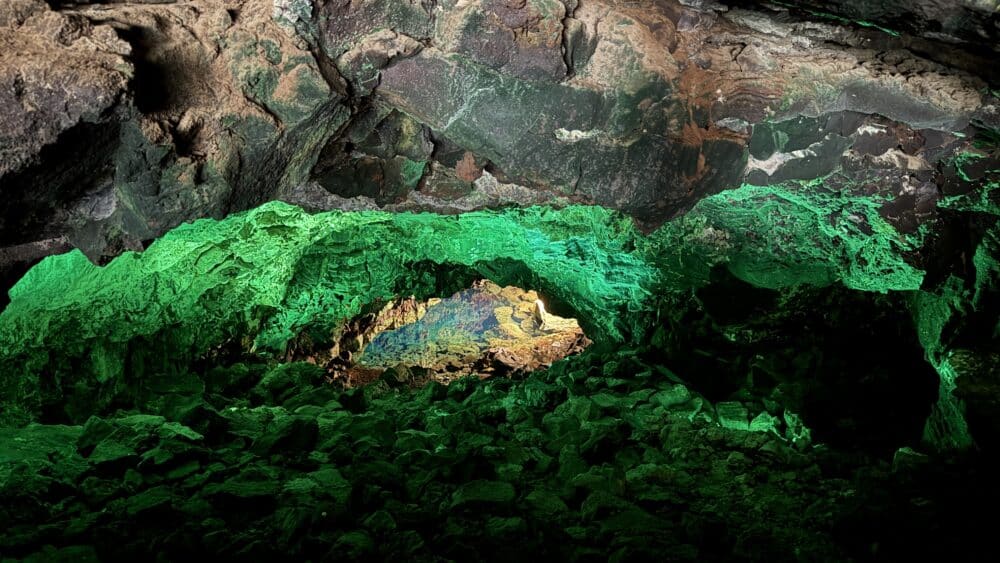
Jameos del Agua is part of the volcanic tube of the Corona Volcano , the same one that connects to the Cueva de los Verdes (Green Caves ). But here, something different happens: where the lava sank, life emerged. César Manrique understood this and transformed it into a space where art, landscape, and architecture integrate seamlessly. They simply complement each other.
Discover all of César Manrique's works in Lanzarote , his museum houses, his history as an illustrious figure of this island and everything he did for it.
What are the Jameos del Agua?
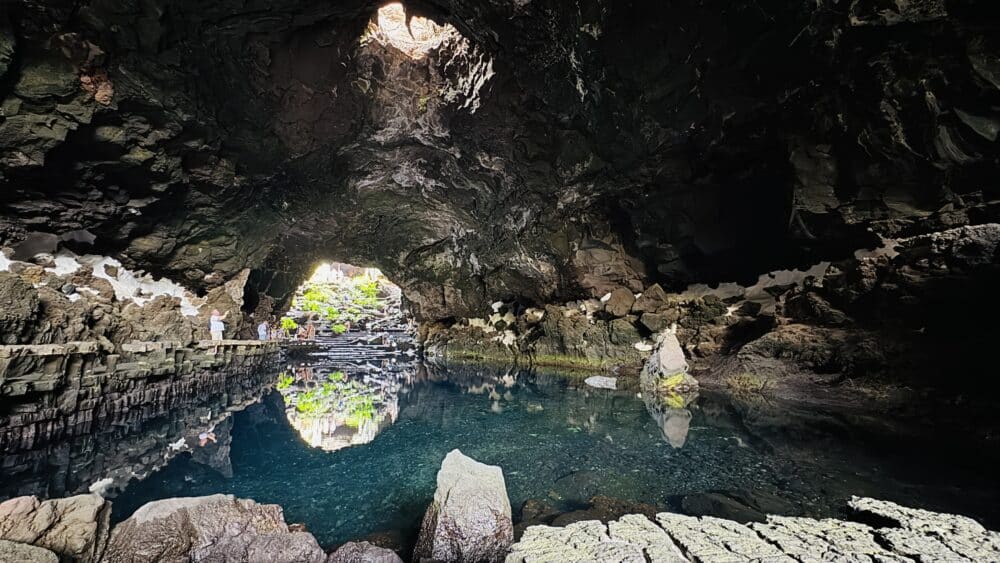
A jameo is a natural opening created when the roof of a volcanic tube collapses. Imagine a lava tunnel kilometers long that one day collapses in one section, revealing a cave open to the sky. That's a jameo.
Here, something extraordinary also occurs: there is an inland lagoon connected to the ocean where the albino blind crab lives , a tiny species unique in the world. It is delicate, white, almost transparent, and protected. Observing it is like witnessing a small geological and biological miracle.
When César Manrique He arrived here, decided that this space didn't need to be changed, but revealed.
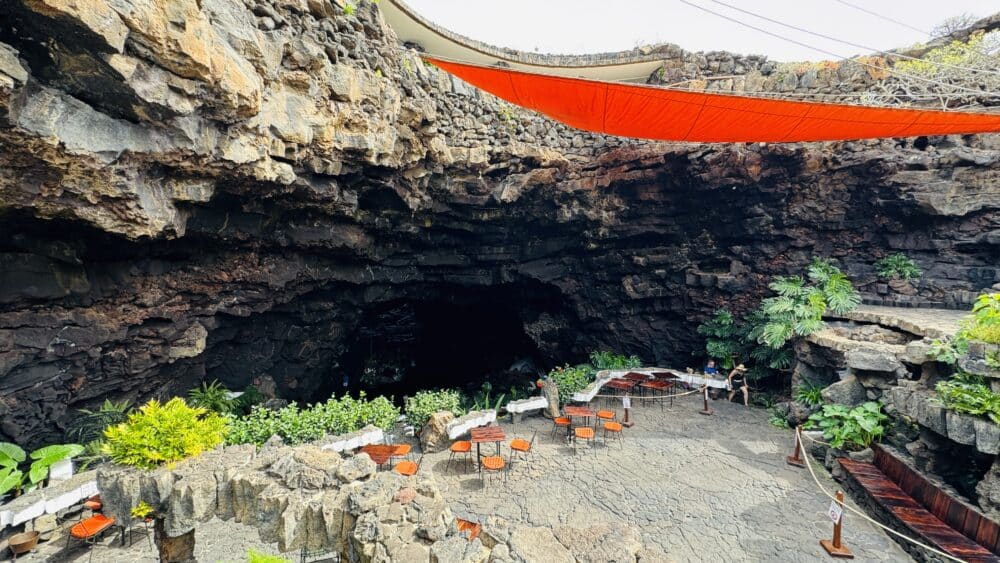
He designed walkways, gardens, a natural auditorium and a restaurant that blend in with the volcanic rock.
Nothing seems added. Everything seems to have originated here.
It is, perhaps, the work where his message is best understood:
Nature is the true artist. We simply need to learn to live in harmony with it.
By the way, we always travel with travel insurance , so don't forget it! It covers not only any problems in case of an accident or medical issues, but also cancellations, legal support, luggage... a must-have! And here's a discount:
My experience visiting Jameos del Agua in Lanzarote: travel diary
After visiting the César Manrique House-Museum in Tahíche and the Cactus Garden, our second day on the island took us to two more essential places of Manrique's work that completely captivated us: Jameos del Agua and the Cueva de los Verdes.
Both spaces are natural environments transformed into works of art, created after the massive eruption of the Corona Volcano some 25.000 years ago in northern Lanzarote. That eruption created the well-known Malpaís de la Corona , a volcanic rock landscape resembling a sea of lava frozen in time, and also an impressive volcanic tube over 7,6 km long. This tube, called the La Corona-Atlántida Volcanic Tube, extends more than 1,6 km underwater, and its end remains unknown. Hence the name "Atlántida."
César Manrique designed two unique spaces on this volcanic tube: Jameos del Agua and Cueva de los Verdes. They are true masterpieces of integration between nature and art. In my Lanzarote guide, you can also find the complete experience of visiting Cueva de los Verdes.
Eating at Jameos del Agua: an absolute success
We arrived at Jameos as planned. The parking lot is spacious, so we parked without any problem and went straight to the restaurant. They don't take reservations, so we knew it was best to arrive early. We were there by 13:00 PM and got a table without waiting.
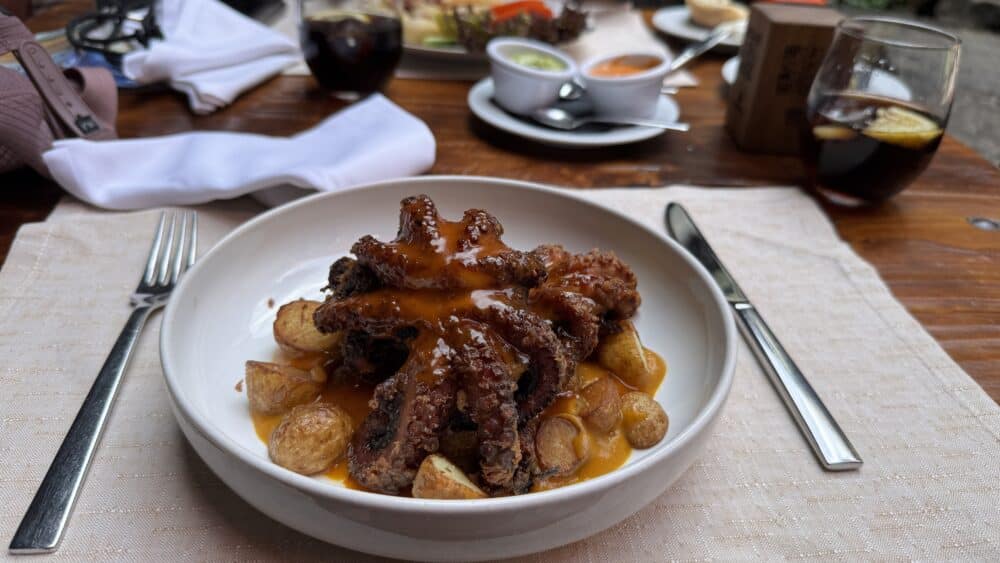
Eating at the Jameos del Agua restaurant was a fantastic choice. Honestly, I think it was one of the best meals of the trip. The octopus with sweet potato parmentier was spectacular. I still remember it. What's more, the setting is beautiful. From the table, you can see part of the illuminated volcanic tunnel, and although the restrooms aren't anything special, walking down to them through the volcanic rock has a certain charm. The atmosphere is peaceful and relaxed, ideal for taking a break on your hike.
TIP: If you're looking for something different to do, here you can see all the activities you can do in Lanzarote. Don't miss out and book them in advance!
A tour of the Jameos: nature, design and tranquility
After lunch we went to see the famous blind crabs in the first jameo, a charming little natural lake. They are tiny and there are so many of them. It's nice to observe them quietly so as not to disturb them.
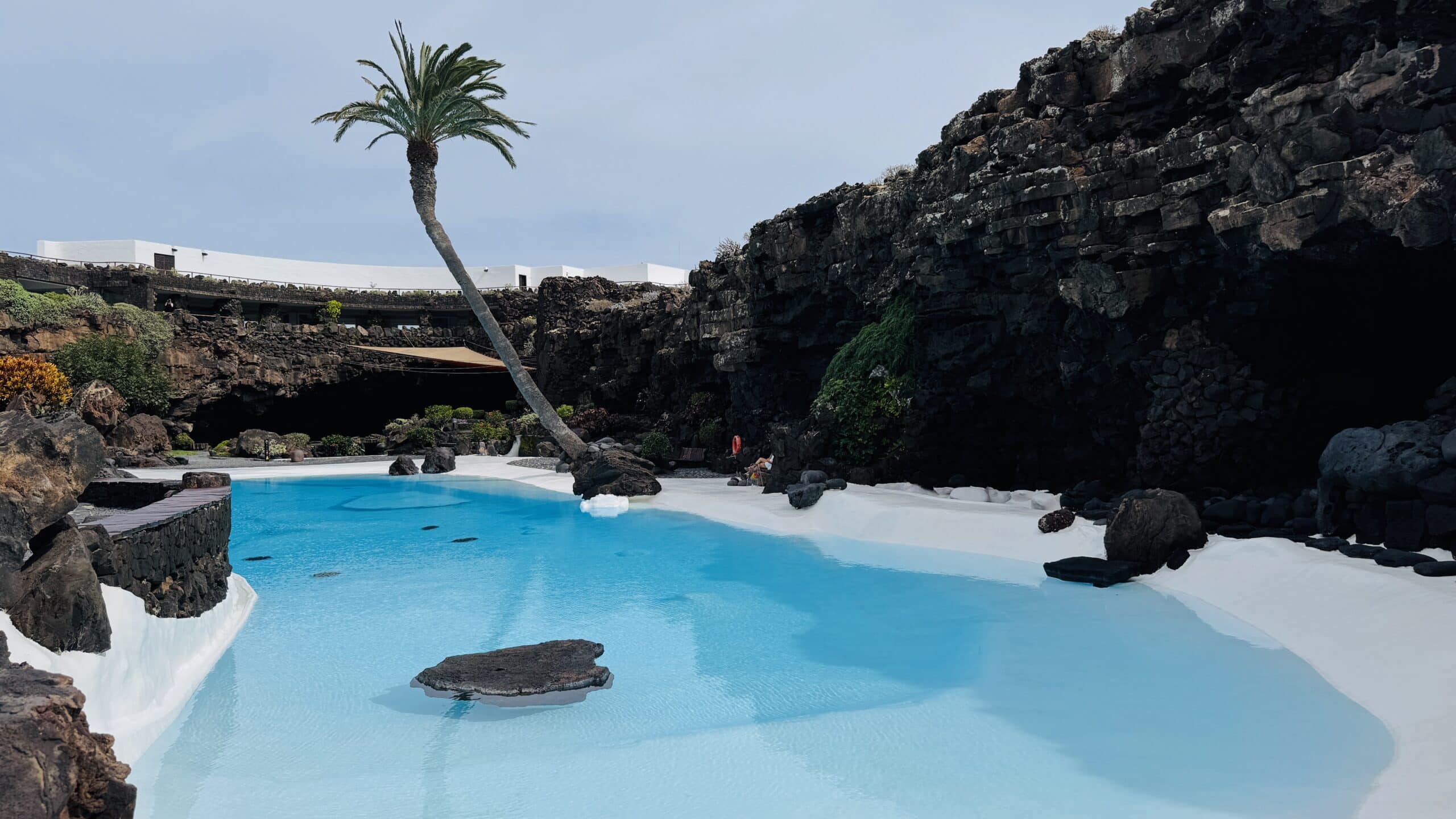
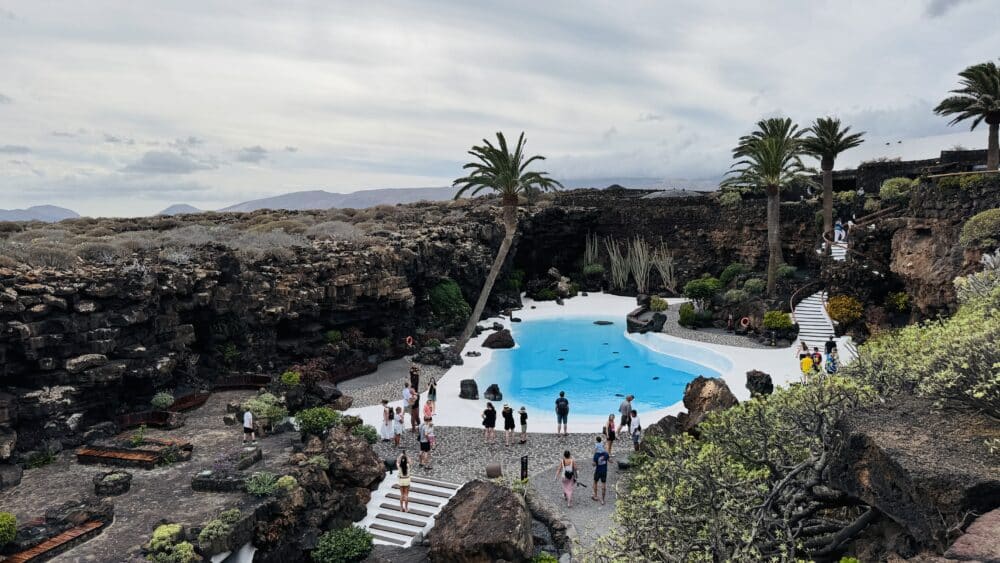
The second jameo is an artificial lagoon designed in Manrique's distinctive style, perfectly integrated into the volcanic landscape. The white, blue, and black volcanic rock create an unforgettable scene.
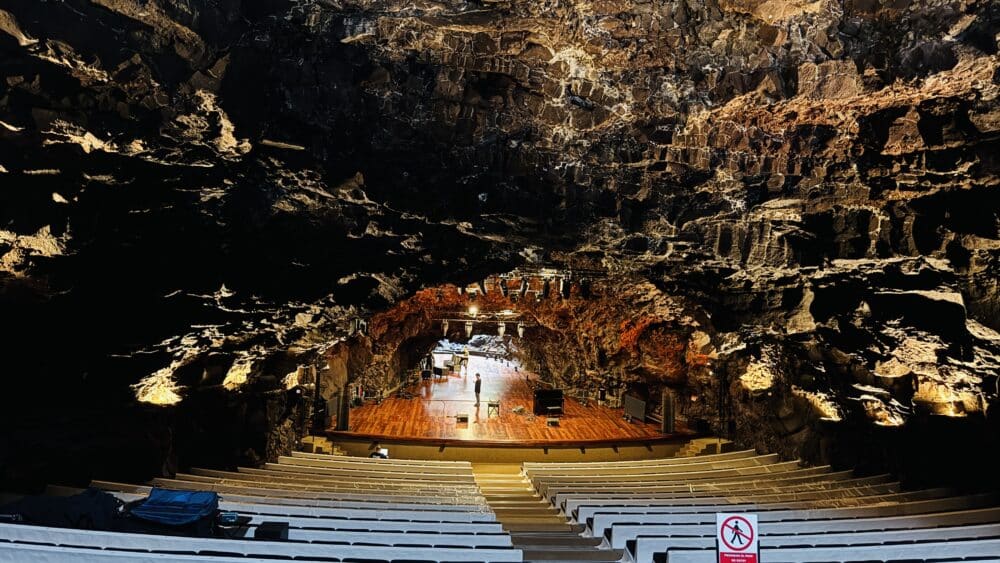
The tour ends at the third cave, which has been converted into an auditorium. The acoustics are incredible, and yes, you'll be tempted to try the echo and play a note, even if just for the fun of it.
Final opinion
The place is beautiful, without a doubt. The visit is relatively short, and I found the price a bit high. If you also decide to eat there, it would be nice if they offered a combined discount, because the whole experience is worthwhile, but it comes at a high cost.
Even so, I would absolutely recommend a visit. It's one of those places that stays with you.
If you're planning your trip to Lanzarote, here's my guide. Complete guide to traveling to Lanzarote with routes, tips and must-see places.
Where are they and how to get there
Jameos del Agua are located on the northeast coast of the island, on the LZ-204 road , very close to the town of Punta Mujeres.
Exact location:
Jameos del Agua – LZ-204, Punta Mujeres, Lanzarote.
- From Arrecife: about 25 minutes by car.
- From Costa Teguise: about 15 minutes.
- From Orzola: just 8-10 minutes.
The road is easy, well signposted, and surrounded by beautiful volcanic landscapes. If you're driving, don't worry: there's free parking right at the entrance.
How to get there if you don't have a car:
- Intercity bus (infrequent).
- Organized excursion combining Jameos del Agua + Cueva de los Verdes + Mirador del Río + TimanfayaIdeal if you don't want to drive or buy separate tickets and they come to pick you up at your hotel.
Why is this place so special?
Because here Lanzarote is on display as it is: pure, volcanic, silent.
Because César Manrique He achieved something that almost no one else manages: to intervene in a landscape without breaking it.
Because you'll notice that you breathe differently, as if everything were slower, softer, more authentic.
There are places on the island that you can visit. But Jameos del Agua is something you can experience.
History and creation of space: the legacy of César Manrique
To speak of Jameos del Agua is to speak of César Manrique . Before him, this place was an inaccessible and unknown volcanic cave. He understood that nature possessed a beauty here that should not be hidden, but rather enhanced. His intervention was minimal, delicate, and profoundly symbolic.
Manrique envisioned a space where human beings could live in harmony with the landscape. No grand constructions, no disrupting the environment to "make room." Here, everything adapts to what the lava had already created.
What's most surprising is that this space is part of the same volcanic tube as the Cueva de los Verdes (Green Cave) , located very close by. Therefore, visiting both places on the same day makes perfect sense : you'll see two different interpretations of the same natural wonder.
Jameos del Agua is art.
Cueva de los Verdes is raw nature.
Combining both visits allows you to understand the volcanic soul of Lanzarote.
What to see inside Jameos del Agua
A visit to Jameos del Agua in Lanzarote is a leisurely affair, taking you along volcanic stone walkways, bathed in soft light, and through open spaces that suddenly surprise you. Don't come here in a hurry. It's a place to observe, breathe, and let the surroundings work their magic.
Highlights of the tour:
The Jameo Grande
It's the central space of the complex. It opens up like a natural amphitheater, with palm trees, black volcanic rock, and the iconic white-water pool that you've surely seen in photos.
Important: the swimming pool It's not for bathingIt is prohibited for conservation reasons and out of respect for the original design.
The inland lake
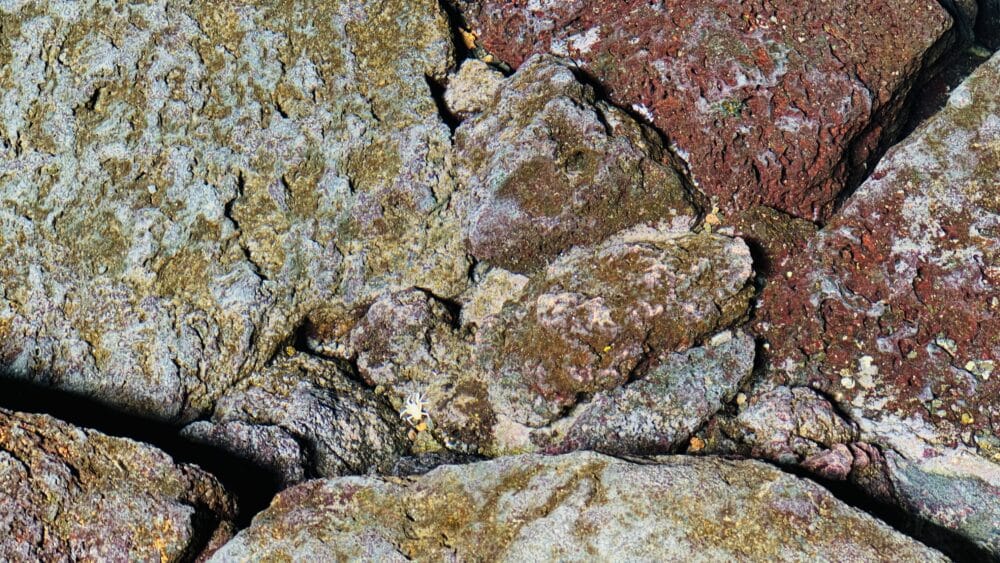
Here lives the area's most emblematic species: the blind crab , or jameito , a small, white, unpigmented crustacean found only here, at this exact spot on the planet. The lake was formed by ocean seepage through the rock, making this location a global biological rarity.
The underground auditorium
A unique space with stunning natural acoustics. It's used for concerts and cultural events, and is one of the most incredible volcanic auditoriums in existence.
The outdoor pool and gardens
César Manrique 's most significant intervention in the landscape: soft lines, pure white, organic curves, and palm trees. The integration between architecture and nature is absolute.
Blind crabs: a unique treasure of the planet
The blind crabs of Jameos are the symbol of the place. They are known as Munidopsis polymorpha and live only here, in this inland volcanic lake.
- They measure barely one centimeter.
- They have no pigmentation, that's why they are white.
- They are blind because they live in complete darkness.
- They are extremely sensitive to pollution and any changes in the environment.
For this reason:
- Is prohibited toss coins into the water (something that, unfortunately, people still do).
- It is forbidden to touch them.
- The observation must be made from the marked corridors.
This little creature explains, better than any speech, why Lanzarote is no ordinary destination . The island holds hidden life in its rocks and silence, and it is the duty of those who know it to protect it.
Opening hours, tickets and best time to visit
A visit to Jameos del Agua can vary depending on the time of day. The place changes with the light, and it shows.
Official (indicative) schedules
- Open every day, usually from 10:00 - 18:30.
- Check the updated schedule on the official website of CACT Lanzarote before going.
- El audience It has special hours when there are concerts.
Entry price
- General admission: XNUMX pesos It usually hovers around €16,5 per adult.
- Children: reduced rate.
- There are also combined tickets for Jameos del Agua and Cueva de los Verdes (highly recommended if you are going to visit both).
Best time to visit
- If you want peace and quiet: first thing in the morning.
- If you're looking for the most beautiful light: late afternoon.
- If you can't stand crowds: avoid the stretch between 11:00 and 15:00.
Online entry
Buying tickets online avoids queues and guarantees access on busy days, especially during peak season.
How long does it take to see Jameos del Agua?
The visit to the Jameos del Agua It's not long, but it's worth taking your time. The recommended duration is... 1 hour to 1 hoursdepending on how long you spend looking at the indoor lake, the auditorium, or the design of the space.
If you come with children, the visit will probably be quicker, but it's still a place that impresses because it is very different from anything they have seen before.
I advise you:
- Enter without rushing and let your ear get used to the silence.
- Sit for a few minutes in the natural amphitheater of the auditorium.
- Look slowly at the water to see the blind crabs (they take time to distinguish).
- Walk around the outdoor pool paying attention to the design.
You don't come here to do things: you come to look and let yourself go.
Jameos del Agua Restaurant (and whether it's worth it)
Within the complex is the Jameos del Agua Restaurant , a very special place because it's located on a terrace overlooking the jameo (a natural cave) and the interior lake. It's one of those places where you eat more for the setting than out of necessity.
Is it worth eating here?
It depends on what you're looking for.
- For a complete mealIt might be a bit pricey for what it offers. The quality is decent but not outstanding.
- For a coffee, a drink or a dessert with a viewAbsolutely yes. It's a wonderful plan.
If you're looking for something local, authentic and unhurried, this isn't the place.
If you're looking for the pleasure of sitting under the volcanic rock, with soft music and a unique atmosphere, then yes.
A personal tip:
If you visit in the late afternoon, linger on the terrace with a drink. The light begins to fade, and the place becomes even more intimate.
Real opinions and my personal experience at Jameos del Agua: conclusions
Jameos del Agua is one of those places you may have seen a thousand times in photos… but nothing prepares you for the feeling of being inside.
I experienced it in silence.
With that mix of still water, volcanic black and soft light that seems designed to slow things down.
I felt what I felt many times in Lanzarote: that the island does not teach, but reveals.
And it reveals itself only to those who are willing to look slowly.
Some opinions that are commonly heard:
- “It’s small” — Yes, it is. But its value doesn’t lie in its size.
- “There’s not much to do” — Not really. It’s a place for feeling, not for doing.
- “It is one of Manrique’s masterpieces” — This is true.
If you're looking for a spectacle, you might leave indifferent.
If you're looking for a unique place in the worldYou'll probably remember it forever.
Practical tips for enjoying Jameos del Agua to the fullest
El best advice What I can give you is that you come without rushing.
The Jameos del Agua They are not just visited, they are experienced.
- Avoid rush hoursIf you can, come first thing in the morning or after 16:30 pm.
- Wear comfortable shoesVolcanic soil may have slightly irregular areas.
- Stop in silenceObserve the inner lake without speaking, let your eyes adjust, and you will see the small ones appear. blind white crabs, unique in the world.
- Combine it with the Cave of the GreensThey are only 5 minutes by carIdeally, you should see both on the same morning or afternoon.
- If you are coming with childrenIt's a quiet place, with no games or noise. Prepare them for looknot for running around.
And very important:
Don't try to photograph everything.
Experience it first. The rock, the still water, the soft light. The photo comes naturally afterward.
Where to sleep near Jameos del Agua
If you want to stay nearby to enjoy the area at your leisure, my personal recommendations are:
Great combination I recommend for a 1-day route:
Reef + César Manrique Foundation + Cactus Garden + Jameos del Agua + Cueva de los Verdes + Punta Mujeres
Recommended accommodations where we stayed nearby:
- Reef in the Cardona Hostel It's the best practical base: close, with restaurants and a beach.
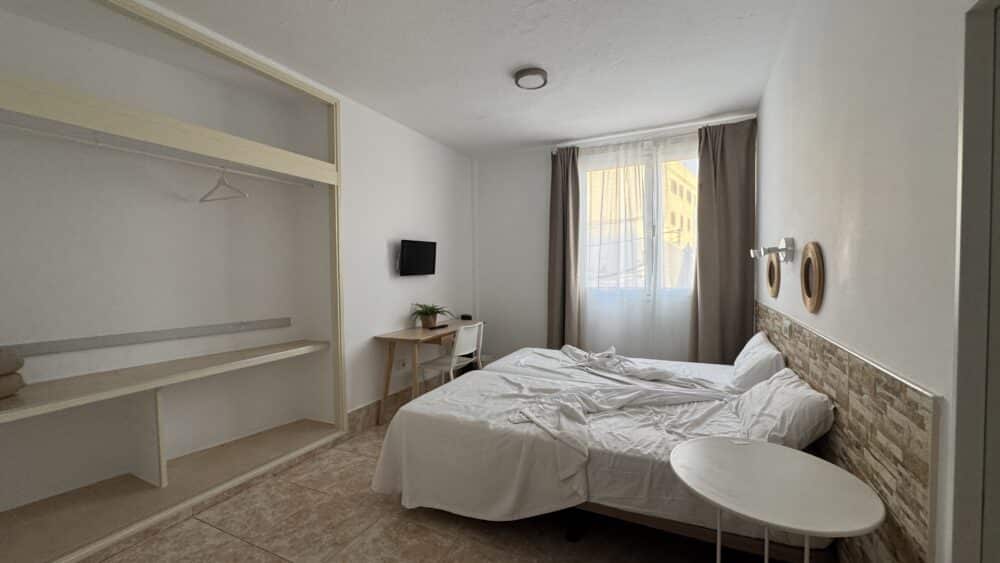
- Orzola to disconnect and experience the wildest side of the island (I always recommend it because of its tranquility). Private studio where we booked by phone 679 532 220
- Tinajo, in the center and near Timanfaya in the Buda Apartment
- In Puerto del Carmen, if you're looking for a good 4-star hotel, we stayed at the Hotel Costas 4 And ideal, beachfront, quiet, with a spa included…
If you're the type who prefers to sleep where the sea sounds and nothing else, Órzola is the place for you. If you prefer more restaurant options and an afternoon stroll, Arrecife or Puerto del Carmen are the better choices.
Latest posts from our blog
-

Definitive manual for traveling by motorhome【2026】
Super complete manual for traveling by motorhome with all the answers to your questions.
-

Switzerland at Christmas: our family adventure between lights, snow and hot chocolate
If you're thinking of spending a magical Christmas in a fairytale destination, Switzerland at Christmas should be on your list. This year we took the plunge (and skis) and set off to explore Switzerland at Christmas with the kids, a plan we knew couldn't fail. Spoiler alert: everything we…
-
Guide to traveling to Alsace at Christmas: costs, map, route, tips and the 20 essential plans
Enjoy our guide to travelling to Alsace at Christmas. With this post we want to share our experience and learnings at the destination and help you prepare your next trip to Alsace at Christmas on your own. We are Kucavana, a family with two children and two dogs who love to travel. And if you want…
-

Guide to traveling to the Dolomites at Christmas: costs, map, route, tips, 7 Christmas markets and 19 other essential plans
Enjoy our guide to travelling to the Dolomites at Christmas. With this post we want to share our experience and learnings at the destination and help you prepare your next trip to the Dolomites at Christmas on your own. About us We are Kucavana, a family with two little ones and a dog who love to travel. We want to share our experience and learnings at the destination and help you prepare your next trip to the Dolomites at Christmas on your own.
Ethical code:
On our blog you will find affiliate links. These are always placed with our highest ethics. We never publish any service or product that we have not used before and that we are sincerely happy with. That is why our recommendations are always ethical. In addition, there is no additional cost for you to book through our links and, on the other hand, it means a small commission for us that helps us maintain this blog so that you can continue enjoying it for free.