
Table of Contents
"We arrived in Kolmanskop after one o'clock, cameras ready and excitement through the roof. Closed. It only opens in the mornings. Welcome to the ghost town... which wasn't receiving any visitors that day."
That's how our story with Kolmanskop began , the famous Namibian ghost town that the desert has been swallowing up house by house. Luckily, we had two nights in Lüderitz , just 10 km away, and we returned the next day. This time, on time.
If you're planning your own trip to Namibia and wondering if it's worth venturing south, the short answer is yes : Kolmanskop is one of the most photogenic and unique places in the country. But be warned, it has office hours and doesn't make exceptions.
In this guide we tell you what to see in Kolmanskop and Lüderitz , opening hours, how to get there, the boat trip to see penguins, the wild horses of Aus and, above all, our real family experience: what we loved, what we didn't like so much and what we would do differently.
This post is part of our 24-day Namibia 4x4 route . Lüderitz and Kolmanskop were on days 18 and 19, right after Sossusvlei and Deadvlei.
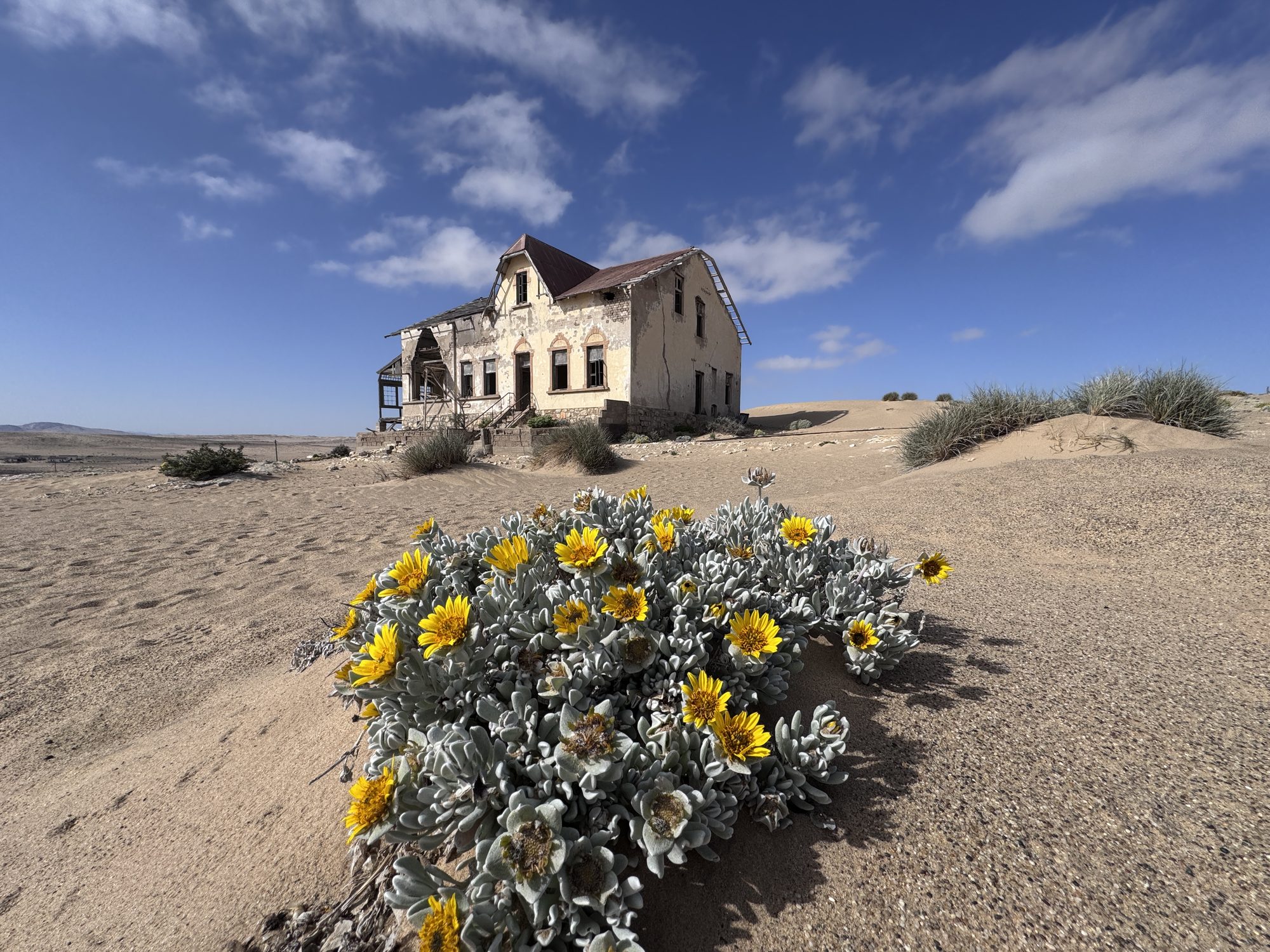
Lüderitz and Kolmanskop at a glance
| Information | Facts & figures |
| 📍 Location | Southern coast of Namibia, Karas region |
| 👻 Kolmanskop | A mining village dating back to 1908, about 10 km from Lüderitz |
| 🕗 Kolmanskop timetable | Mornings only (updated schedule in the official website of Kolmanskop) |
| 🎟️ Entry | Payment is required; it can be purchased at the door (price updated at the official website of Kolmanskop) |
| ️ recommended time | 1 full day (2 nights if you take the boat and go to Kolmanskop) |
| ???? Essentials Collections | Kolmanskop, Shark Island, Felsenkirche, the penguin ship and Garub's horses |
| 🏕️ Where we sleep | Camping Shark Island (NWR), in Lüderitz |
| 🚙 Vehicle | Paved B4 road: no need for a 4x4 to get there |
How to get to Lüderitz and Kolmanskop
Lüderitz is at the southern tip of Namibia's coast, and getting there is part of the journey itself. We came from Sesriem and it was about a 6-hour drive , with a landscape that changes every hour and a free safari included: oryx, springbok, mountain zebras, ostriches, and even bat-eared foxes.
After a long stretch of dirt track with climbs, descents, and changes in gradient, the asphalt finally appears, and you head south towards Aus . From Aus to Lüderitz, it's about 120 km along the fully paved B4 road. About halfway there, on the right, is the turnoff to Kolmanskop.
Along the way we passed the turnoff for Duwisib Castle , which was closed for renovations when we visited. I was very disappointed, because before the trip I had read Eduardo Garrigues' novel about the Lady of Duwisib, a fascinating true story. If it's open when you happen to be there, make a note of it.
We also saw many scattered farms: a large house where a white family lives, surrounded by shacks made of corrugated iron belonging to the Black families who work for them. It's a scene that repeats itself throughout the south, and it deeply affected us. Namibia is beautiful, but the inequality inherited from its history is plain to see.
Technical stop in Aus (and José MacGyver in action)
We stopped for lunch at a picnic area in Aus, a small village nestled in the mountains. And that's when the day's little drama unfolded: there was no way to open the trunk of the 4x4 because the cat had moved inside and was blocking the door. Luckily, we were traveling with José, aka MacGyver , who patiently solved the problem with a few words we won't repeat here.
That day we drove right past the wild horses of Garub because we wanted to get to Lüderitz quickly. We left them for the return trip, and thank goodness we did: we'll tell you about it below.
💡 Kucavana Tip
If you're coming from Sesriem or Sossusvlei, leave early. It's a long drive, and if you want to get to Kolmanskop that same day, you have to arrive in the morning because it's closed in the afternoon. We miscalculated and ended up staying right at the entrance.
Kolmanskop, the ghost town swallowed by the desert
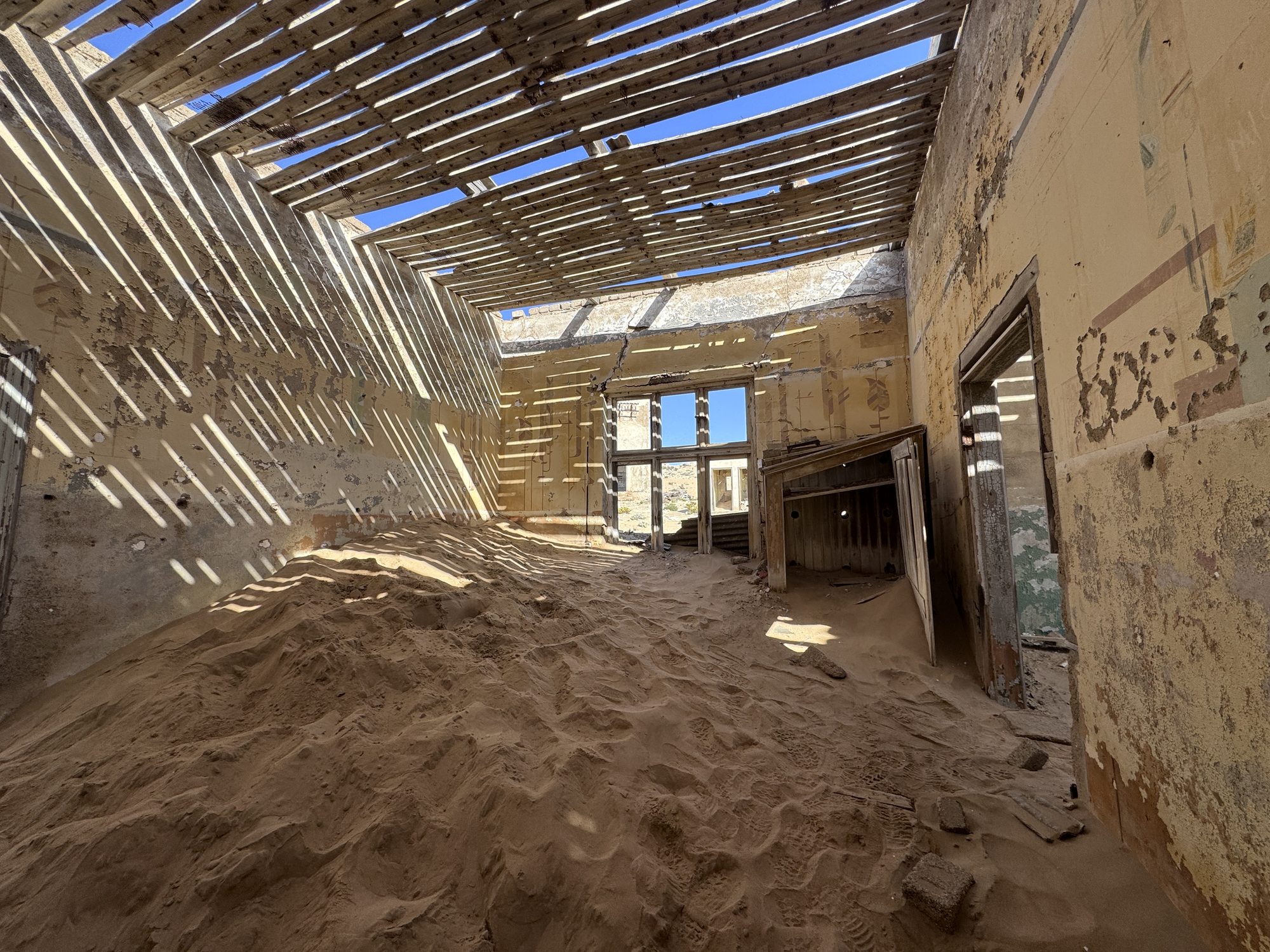
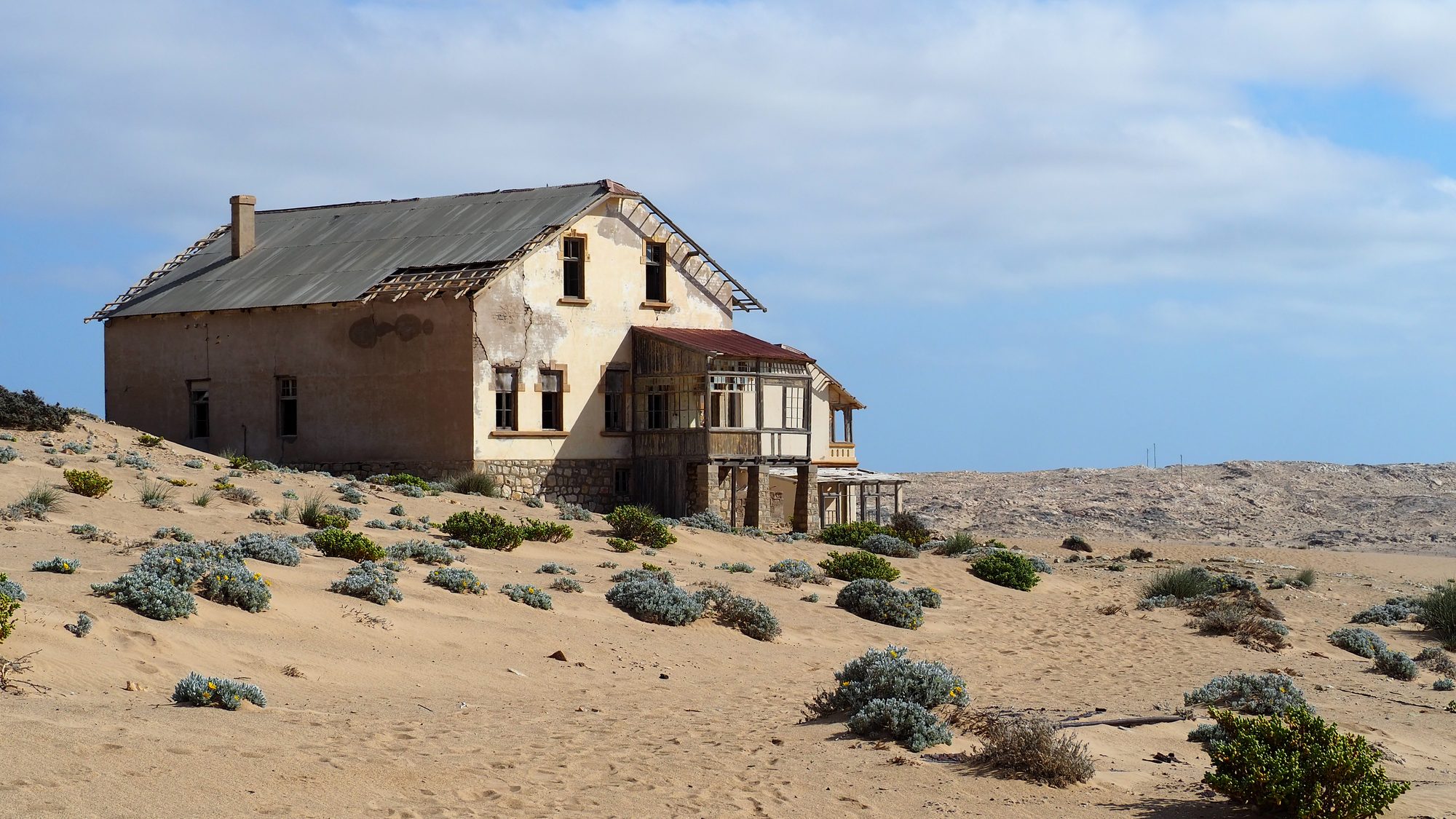
Kolmanskop is a former German mining town that sprang up in 1908 during the diamond rush. In just a few years, it transformed from a railway stop into one of the wealthiest towns in Africa, boasting German-style colonial houses, a hospital, a ballroom, and all the modern comforts of the era… in the heart of the Namib Desert.
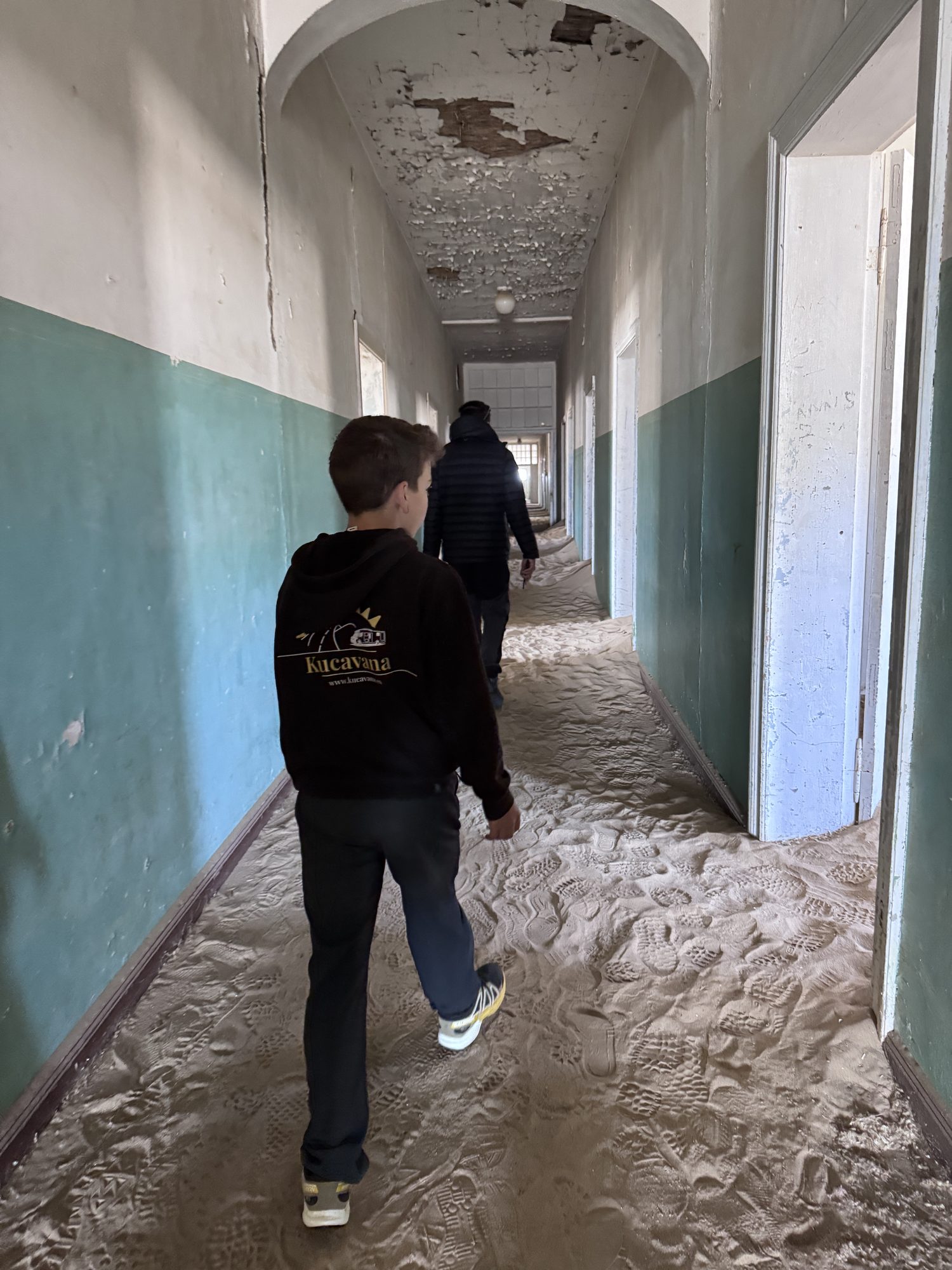
When the riches ran out and diamonds appeared further south, people left, and the village was abandoned in the mid-20th century. Since then, the wind and sand have been creeping into the houses uninvited. Today, there are rooms with half a meter of sand dune inside, doors that open onto mountains of sand, and hallways that resemble beaches.
Incidentally, diamonds are still mined in Namibia, although now mostly offshore. What hasn't changed, however, is the sense of luxury and decay that Kolmanskop exudes, making it one of the most photogenic places in the country.
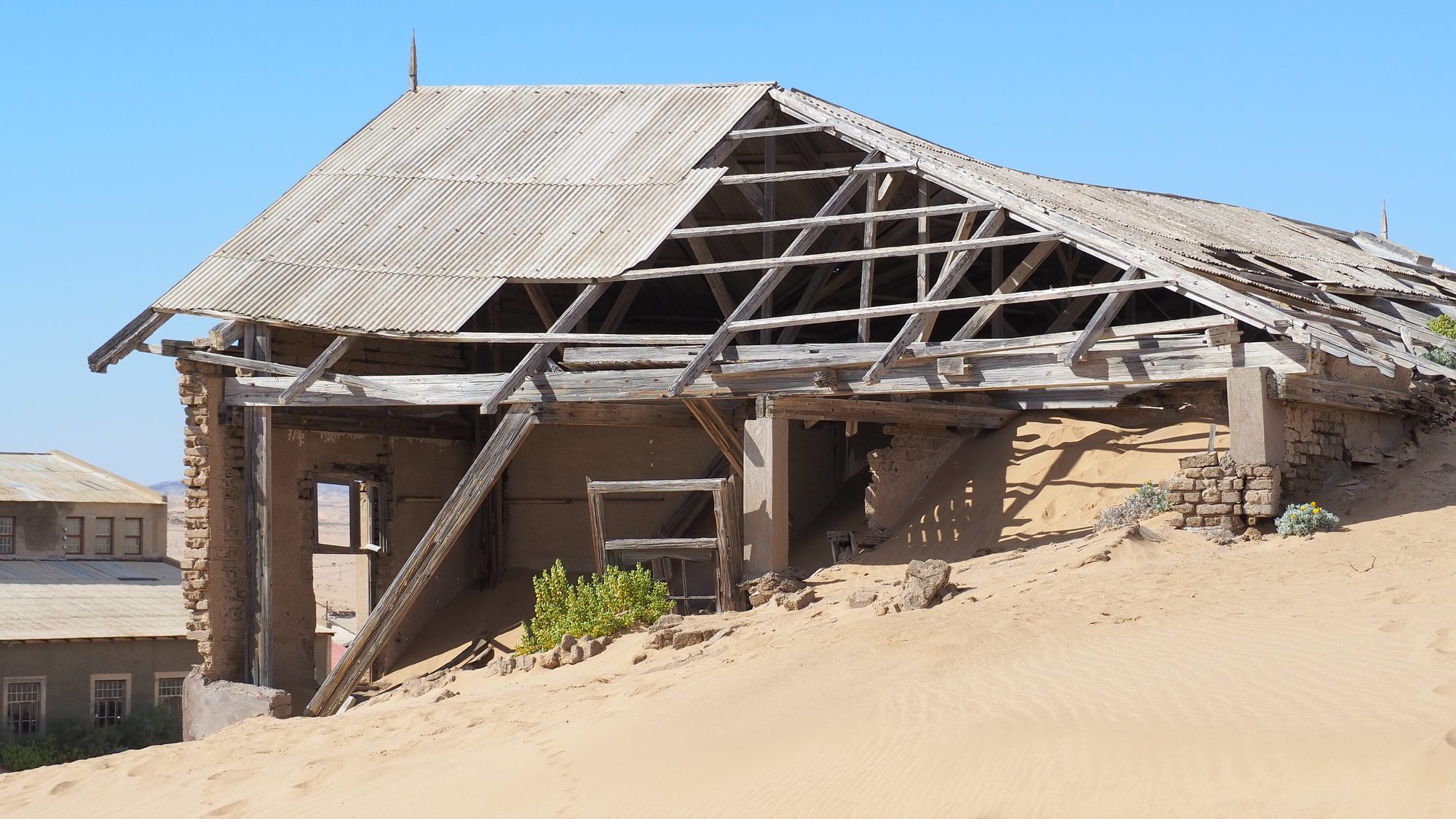
Kolmanskop opening hours, tickets and guided tours
This is the section that would have saved us a lot of trouble, so take note of it:
- Schedule: It's only open in the morning. It's closed in the afternoon.
- Guided tours: There are several tours each morning, and they're included in the entrance fee. You can also explore on your own, as we did.
- Entrada: It's a paid ticket and you buy it at the door.
- Photography permit: If you want to be outside of normal hours, for example at dawn or dusk, there is a special permit for photographers that is paid for separately.
- Distance: About 10 km from Lüderitz, next to the B4. It can be reached by any car.
Kolmanskop is located within a restricted diamond zone, which is why opening hours are so strict. Schedules and prices change, so check the official Kolmanskop website for the latest information before you go.
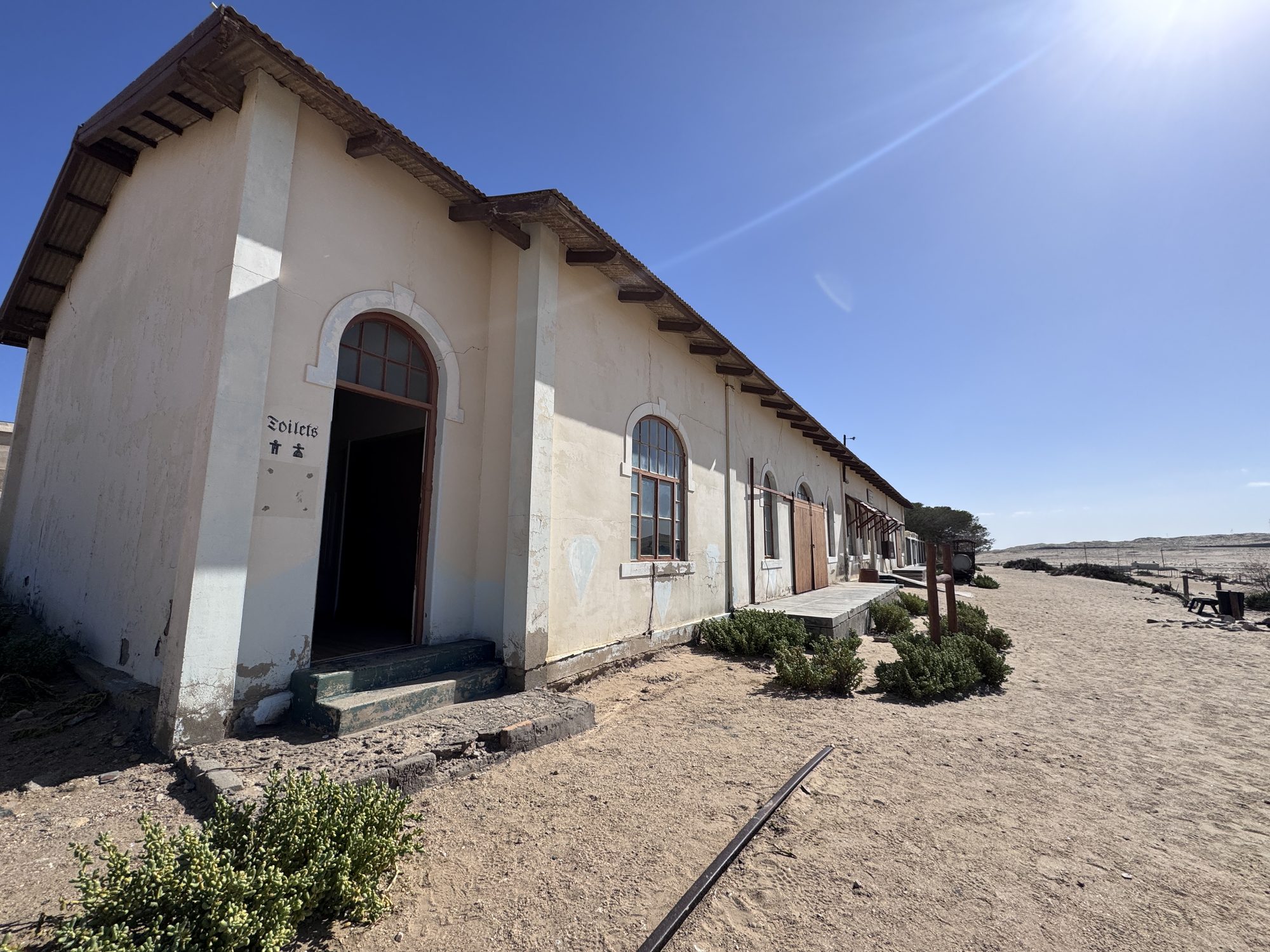
Our mistake: arriving after one o'clock
We confess without shame (well, maybe a little): on our first day, we showed up at the entrance after 1 p.m. Closed. And no amount of pleading will do: rules are rules.
Luckily, we had two nights in Lüderitz and returned the next day after the boat trip. If you only have one night, plan your day to arrive in Kolmanskop in the morning, for example, by leaving Aus early or visiting it before continuing your journey.
Our visit to Kolmanskop
The next day, we finally went in. We explored it on our own , at our own pace, going in and out of houses and buildings. And what a marvel it was.
Kolmanskop has something hard to explain. It's decadent, silent, and beautiful all at once. You open a door and find yourself in an orange room half-filled with sand. You cross another and a very long corridor appears, transformed into a dune. You look out a window and see nothing but desert.
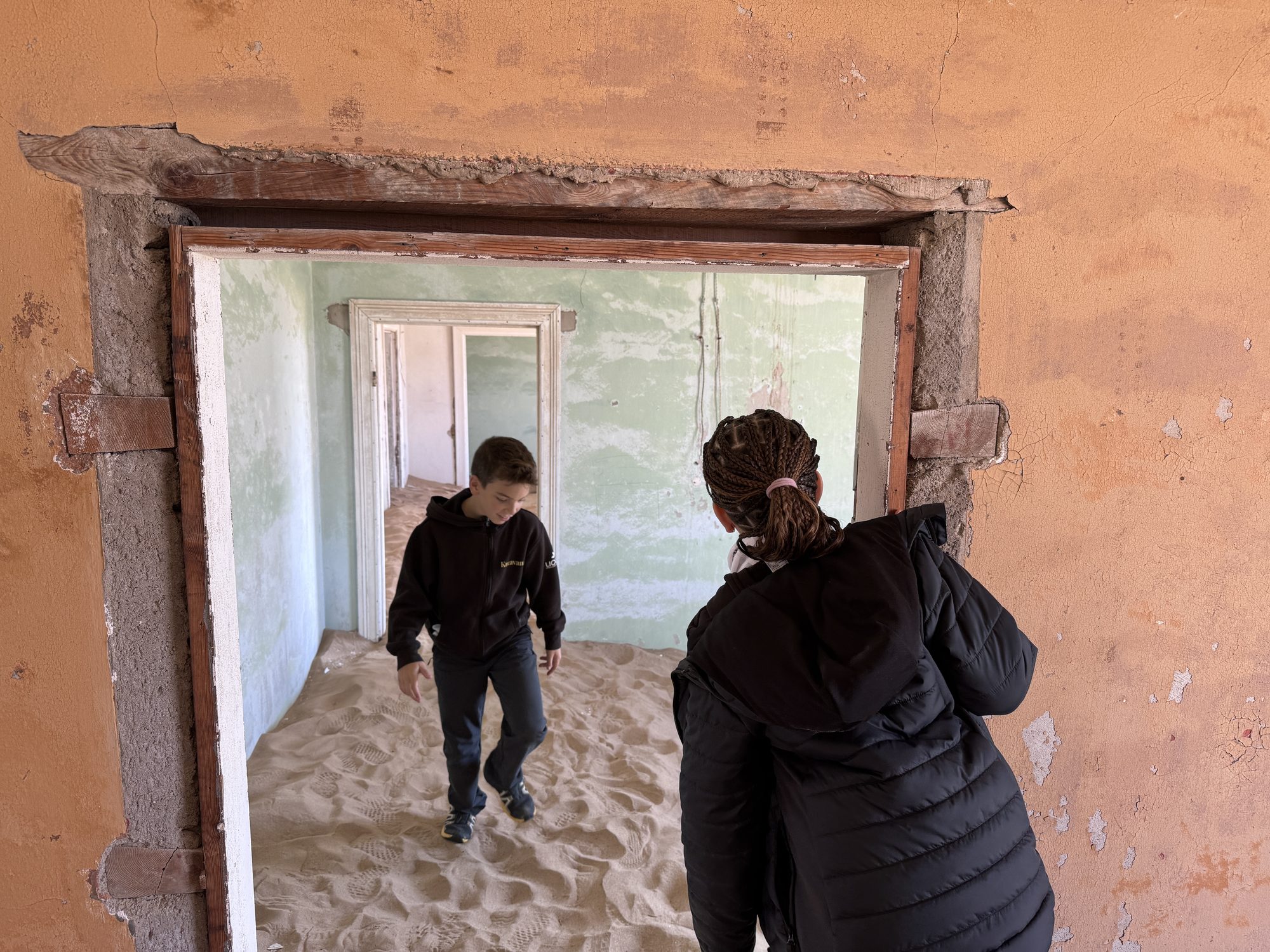
Anna and Arnau had a blast: climbing dunes inside the halls, posing in every doorway, and looking for the most unusual photo opportunity. For the children, it's a kind of adventure park with a story, and for the adults, a movie set.
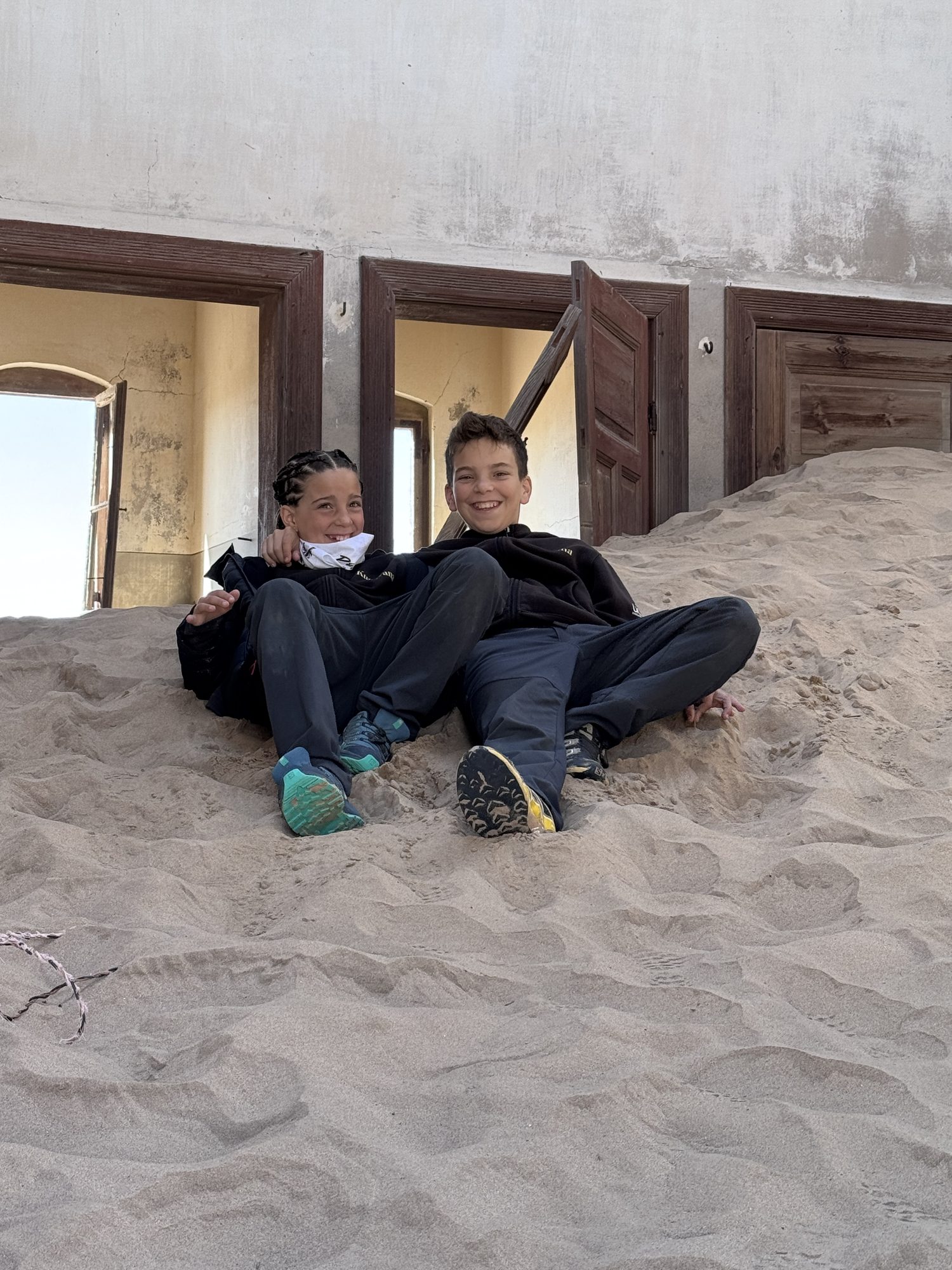
What we loved most was the blend of history, decay, and beauty. It's one of those places with a magical atmosphere that stays with you, like sand clinging to your shoes.
📸 Photo tip
The best photos in Kolmanskop are taken inside the houses, with the light streaming in through doors and windows. Bring a fully charged phone, because you'll take far more photos than you think. And if you have children with you, take advantage of it: they add scale and life to each room.
Lüderitz: what to do in Namibia's most German village
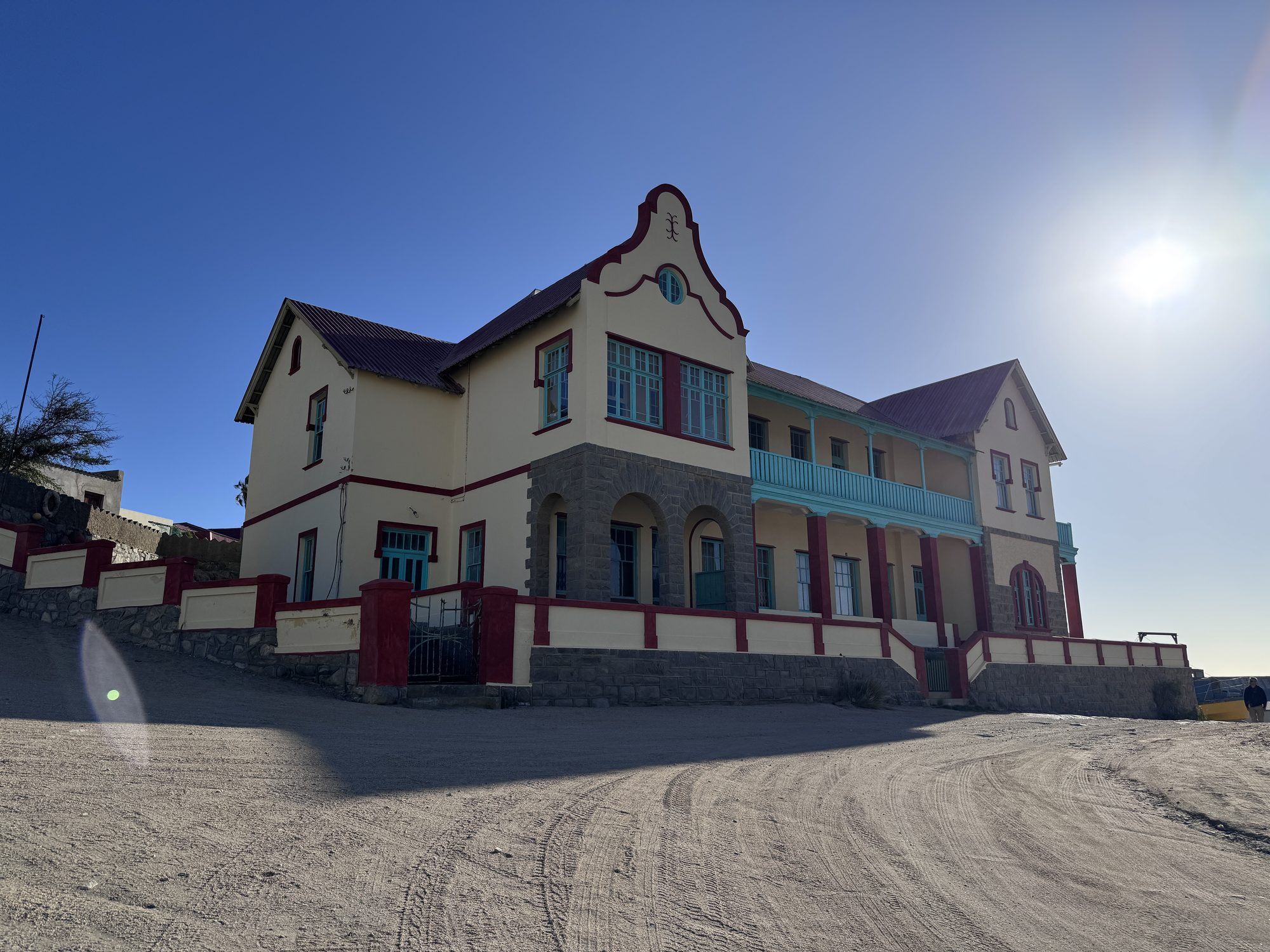
Lüderitz is a small, windy coastal town with a distinctly German feel: colorful houses, pointed roofs, and buildings that look like they belong in a Bavarian village. The curious thing is that all around it is just rocks, sea, and desert.
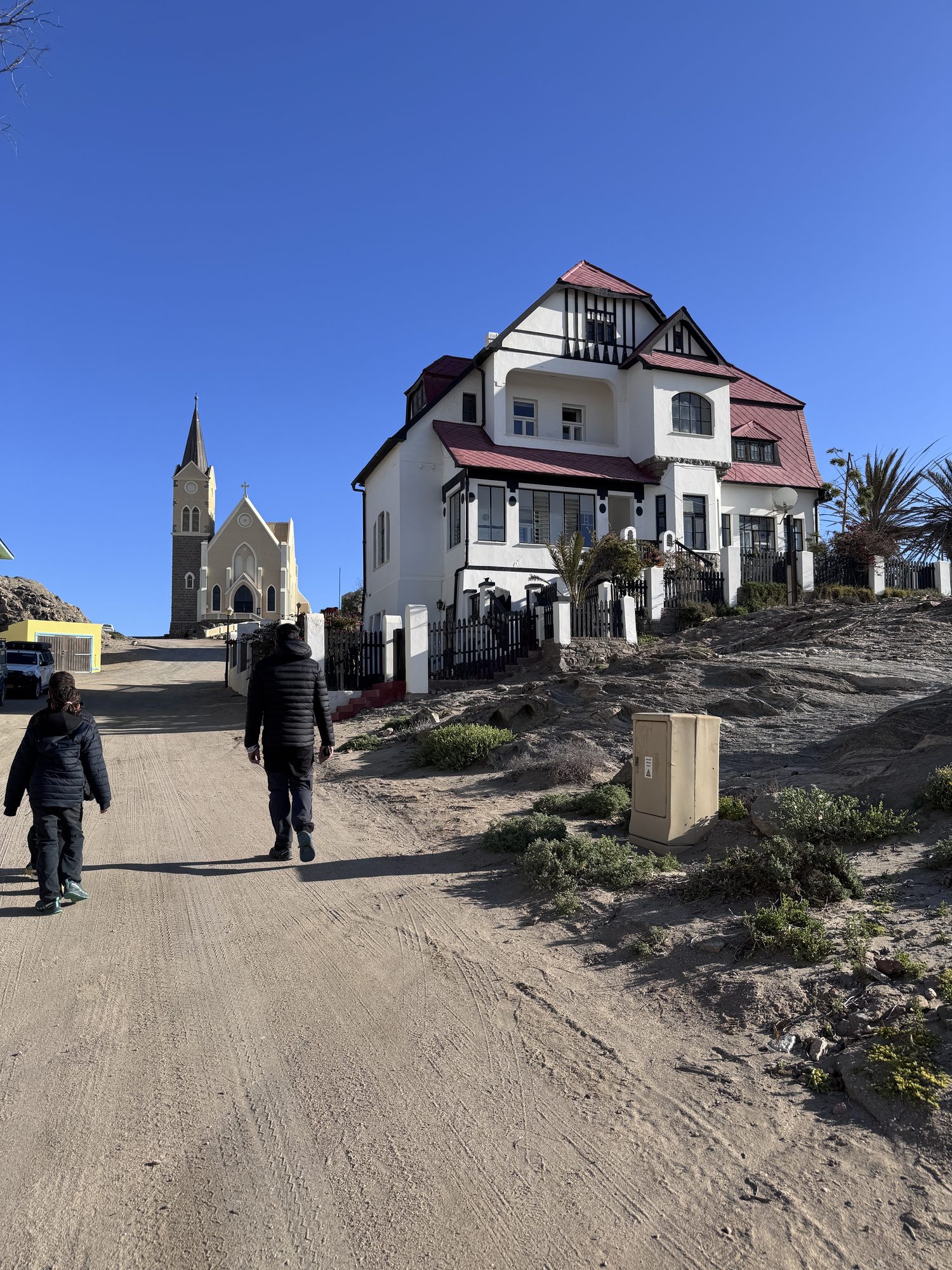
The Felsenkirche, the rock church
The Felsenkirche is the stone church that crowns Lüderitz from atop a rock, and it's the most iconic image of the village. We climbed up to see it, and from up there, you can really understand what Lüderitz is like: colorful rooftops, rocks, and the sea.
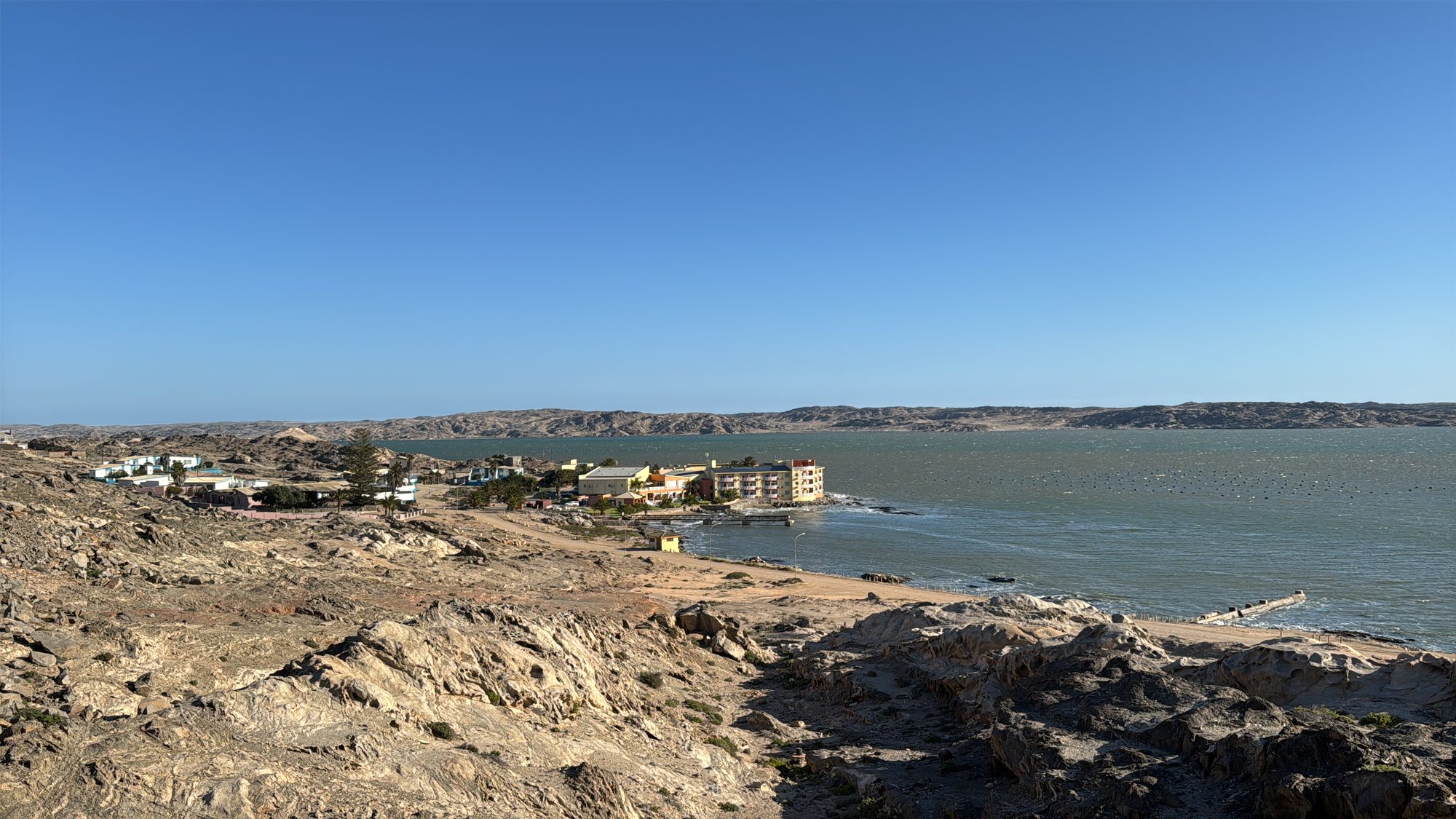
Shark Island: a beautiful campsite with a very dark history
We stayed at the Shark Island campsite , part of the Namibia Wildlife Resorts (NWR) public network. It's a former island now connected to the city, a rocky outcrop with spectacular views over the sea and the bay.
But Shark Island has a history worth knowing before you arrive. It was the site of one of the German Empire's concentration camps during the genocide of the Herero and Nama peoples: between 1905 and 1907, thousands of men, women, and children died there. Today, there is a memorial. Sleeping in a place like this makes you think, and we believe it's also important for children to know about it.
The other main character on Shark Island is the wind . It blows incredibly hard, and sleeping in the rooftop tent with that wind is quite uncomfortable.
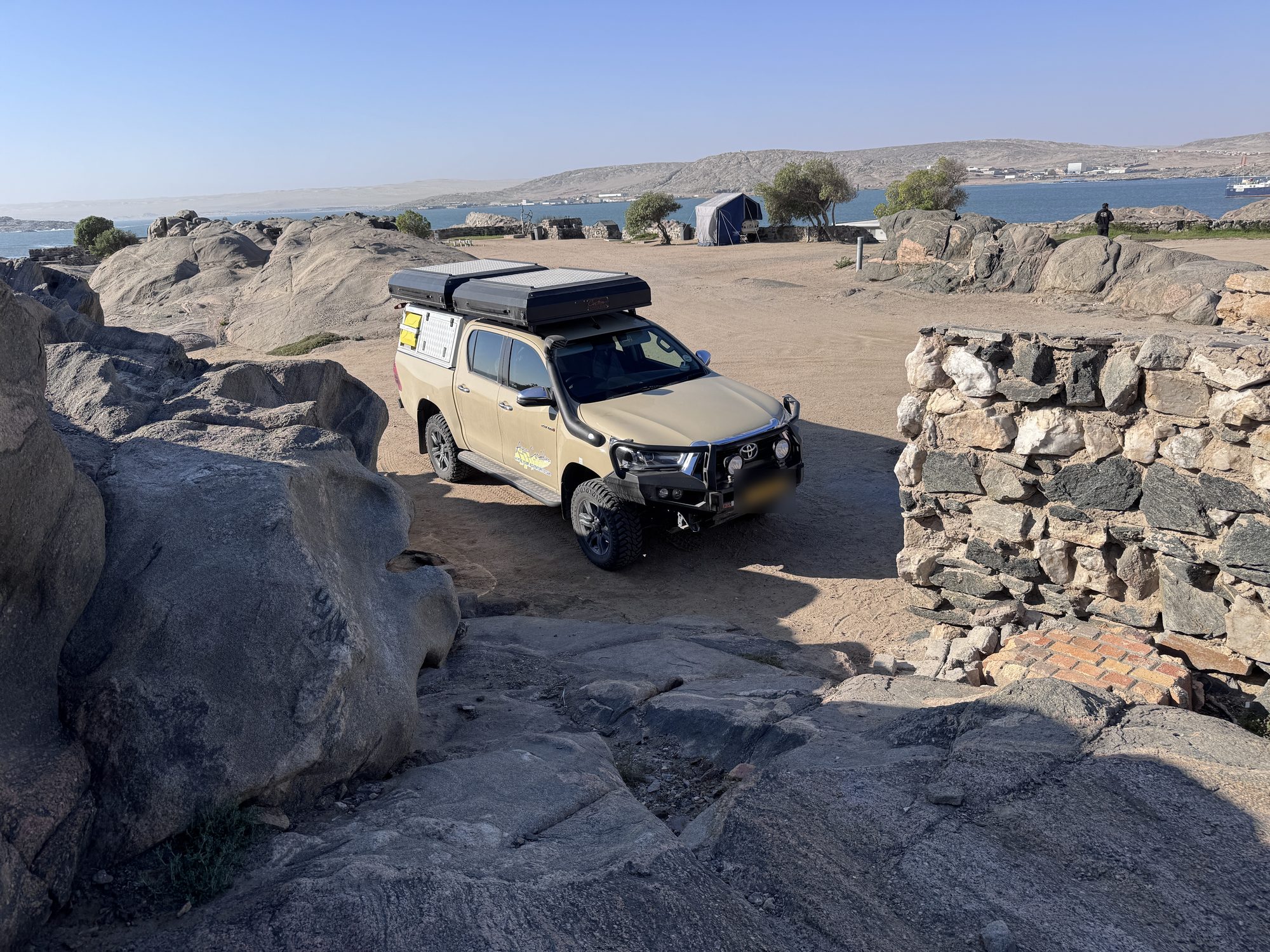
🏕️ Advice if you're sleeping on Shark Island
Find a sheltered spot among the rocks and park your 4x4 so that the rooftop tents are protected from the wind. Bring warm clothing, as winter mornings are cold. If you're not traveling with a rooftop tent, Lüderitz offers guesthouses and small hotels: you can find accommodation in Lüderitz on Booking.com.
Braids, oshiwambo and a Lüderitz hair salon
The afternoon we arrived, something unexpected happened. At the campsite, we met Marina and Mikel , a Spanish couple on their honeymoon, and we clicked instantly. The six of us set off to explore Lüderitz, swapping stories about Namibia like people trading cards.
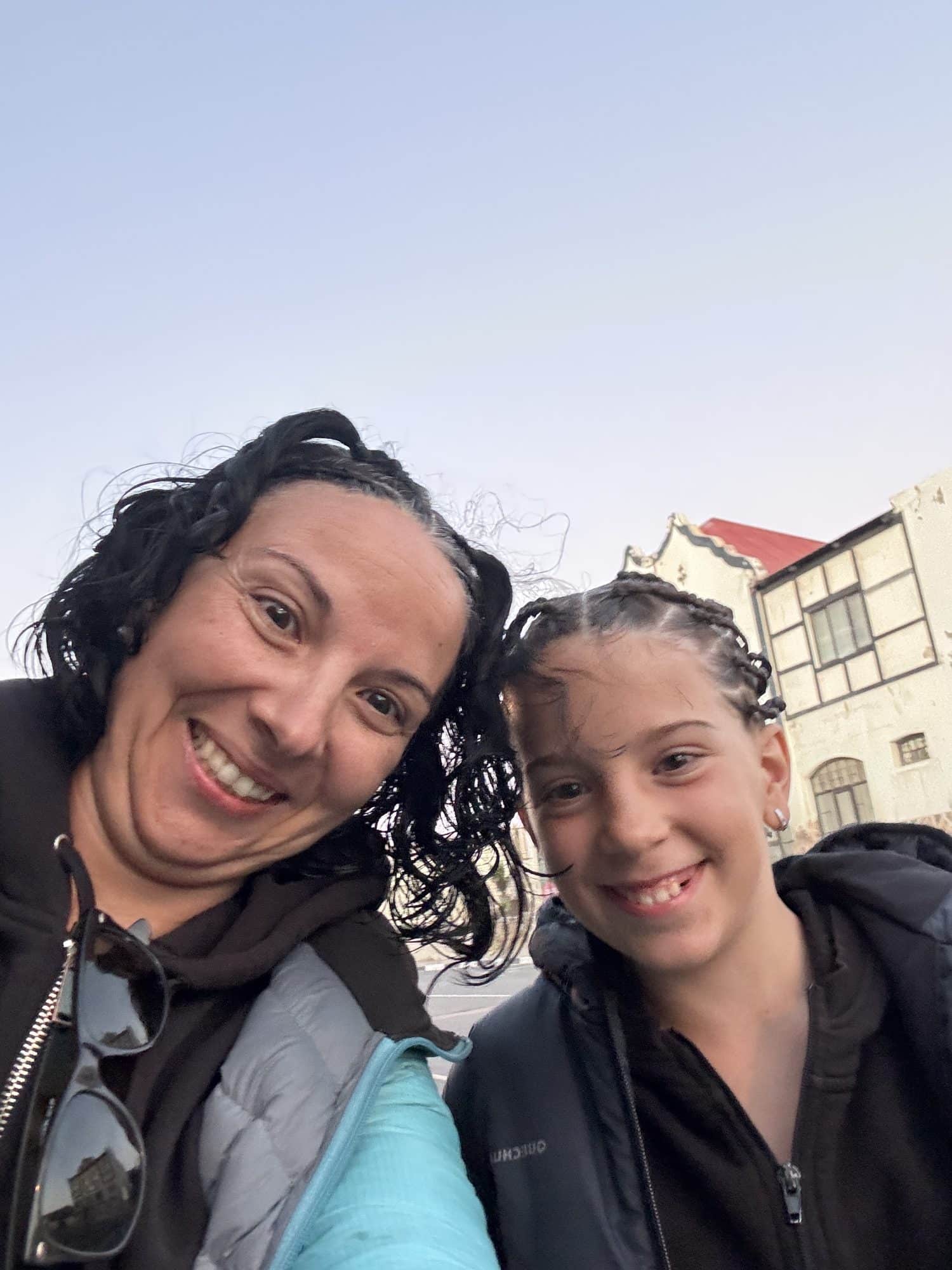
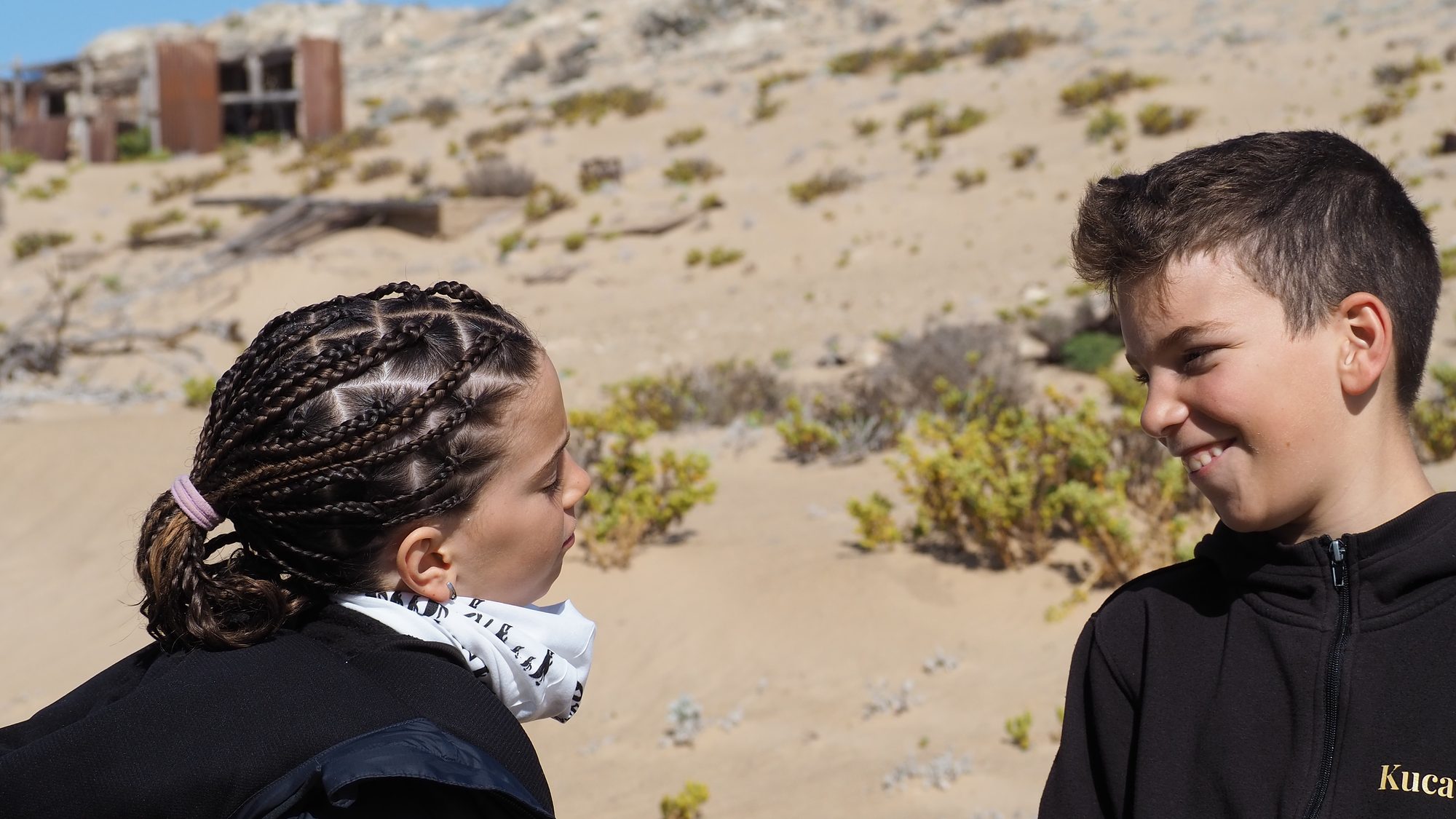
Anna was really keen to get braids like the Namibian girls, so we went into a tiny hair salon full of Ovambo women. We laughed a lot, learned a few words in Oshiwambo, and discovered Latoya Stella, a local singer whose music has been playing at home ever since. Anna's whole head was braided in no time. They washed my hair and braided a few strands, while the women marveled at our curls, which are so different from theirs.
Oysters in Lüderitz: we survived to tell the tale
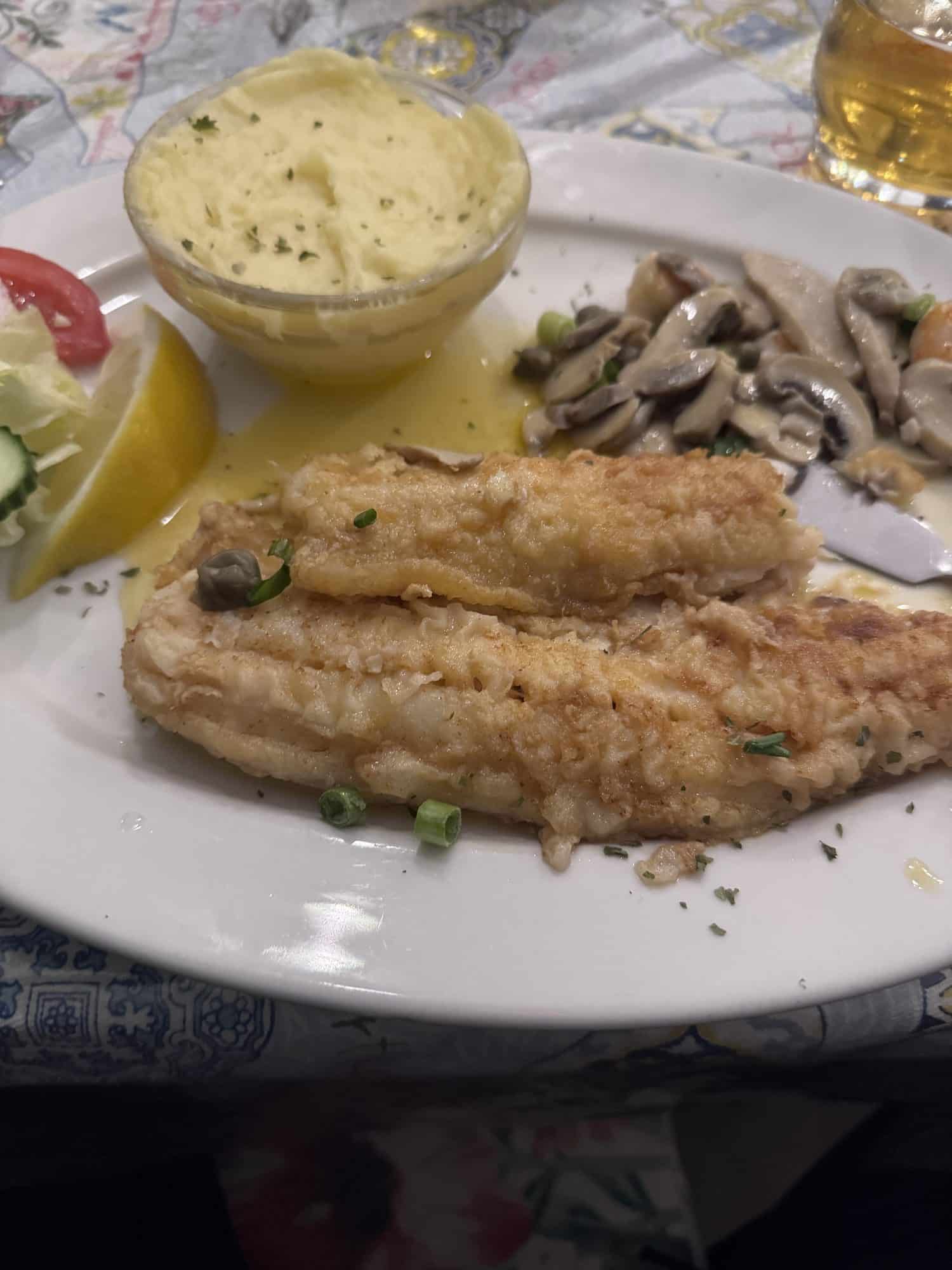
To end the day, Marina, Mikel, and I went out for dinner at a seafood restaurant. I ordered oysters, perhaps not the wisest choice in Africa, but the place was very clean, and I couldn't resist oysters. Those who weren't brave enough for oysters opted for sushi, which isn't exactly the most conservative option either. The result: no one got sick. Namibia is clean and safe, even when it comes to food.
The next day, after Kolmanskop, we said goodbye to Marina and Mikel, who were doing the route in the opposite direction to us. Life brought us together again later in Barcelona, and we're sure it won't be the last time.
Boat trip to see the Cape penguins
The second day involved an early start for a catamaran excursion along the Lüderitz coast, with the aim of seeing Penguin Island. We went with Penguin Catamaran . We left very early, freezing cold, and the excursion lasts about 2-3 hours. It cost us around €30 per person, although we don't remember the exact price, so check the current price before booking.
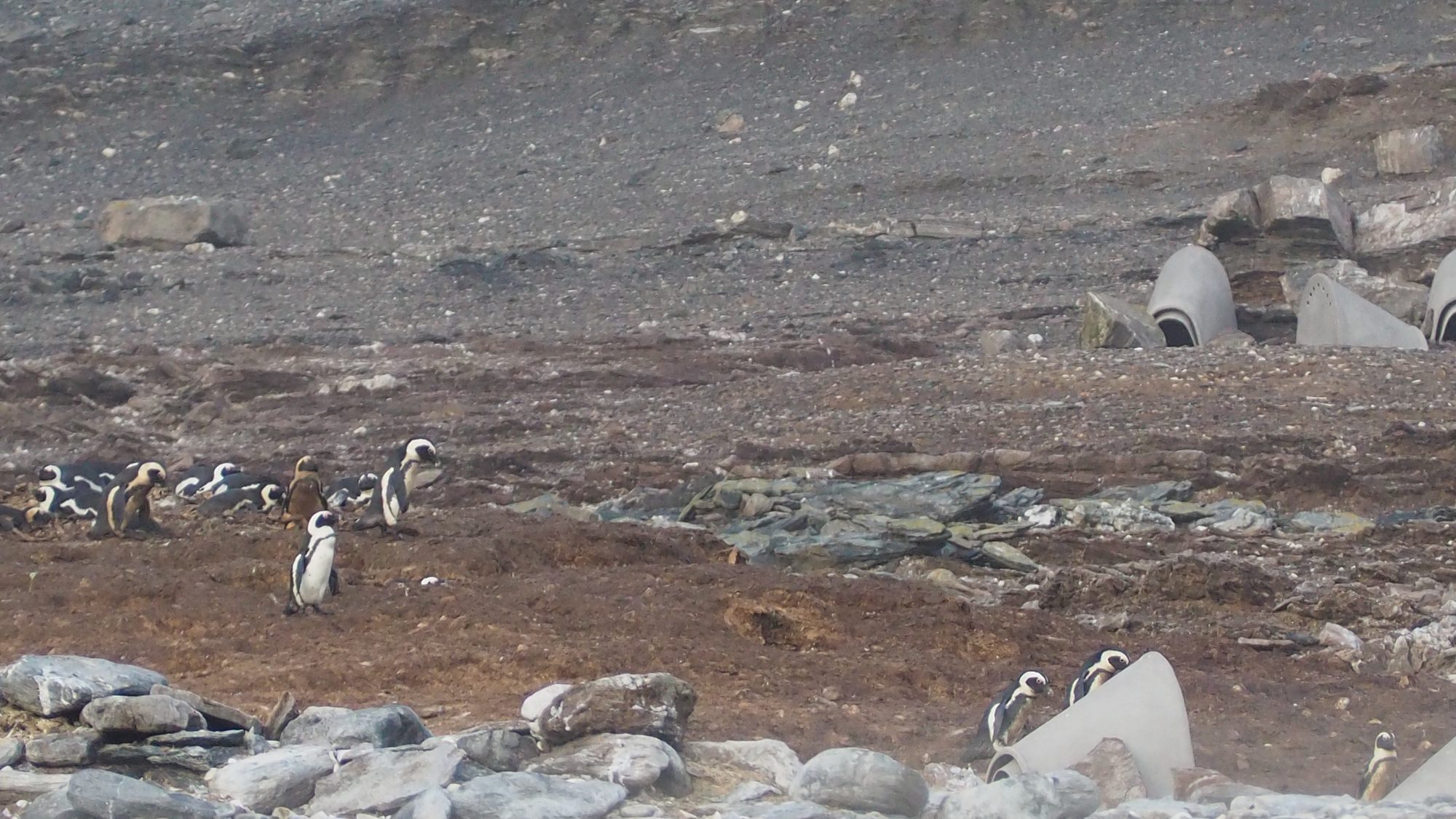
Let's go with realistic expectations, that's what we're here for. The penguins are there, but they're African penguins : tiny, an endangered species with very few individuals left. The boat doesn't get too close so as not to disturb them, so you see them from a distance. If you're nearsighted like me, you'll see them from way over there. But we have to be realistic: we prefer to see them like this, respecting their space.
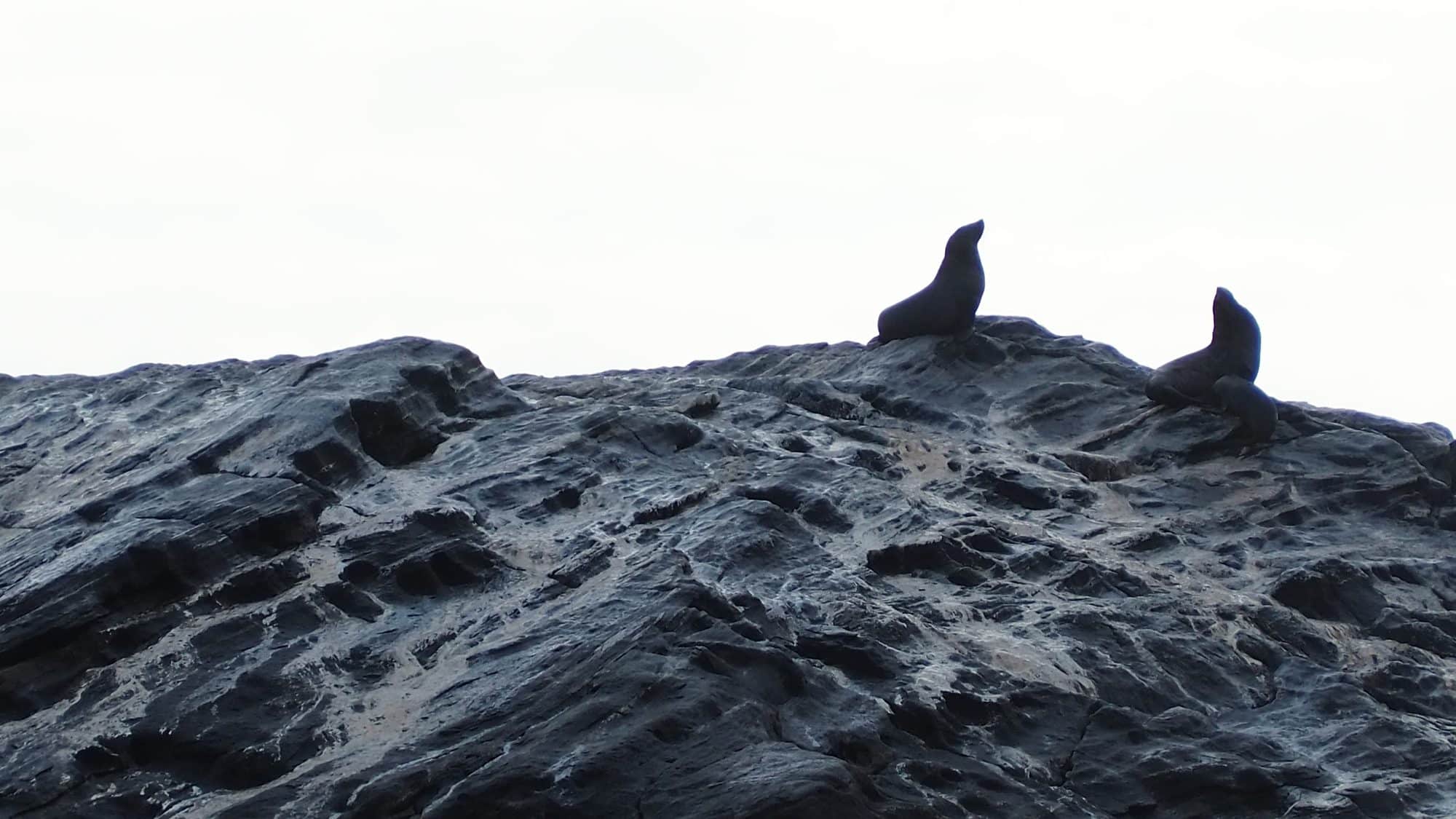
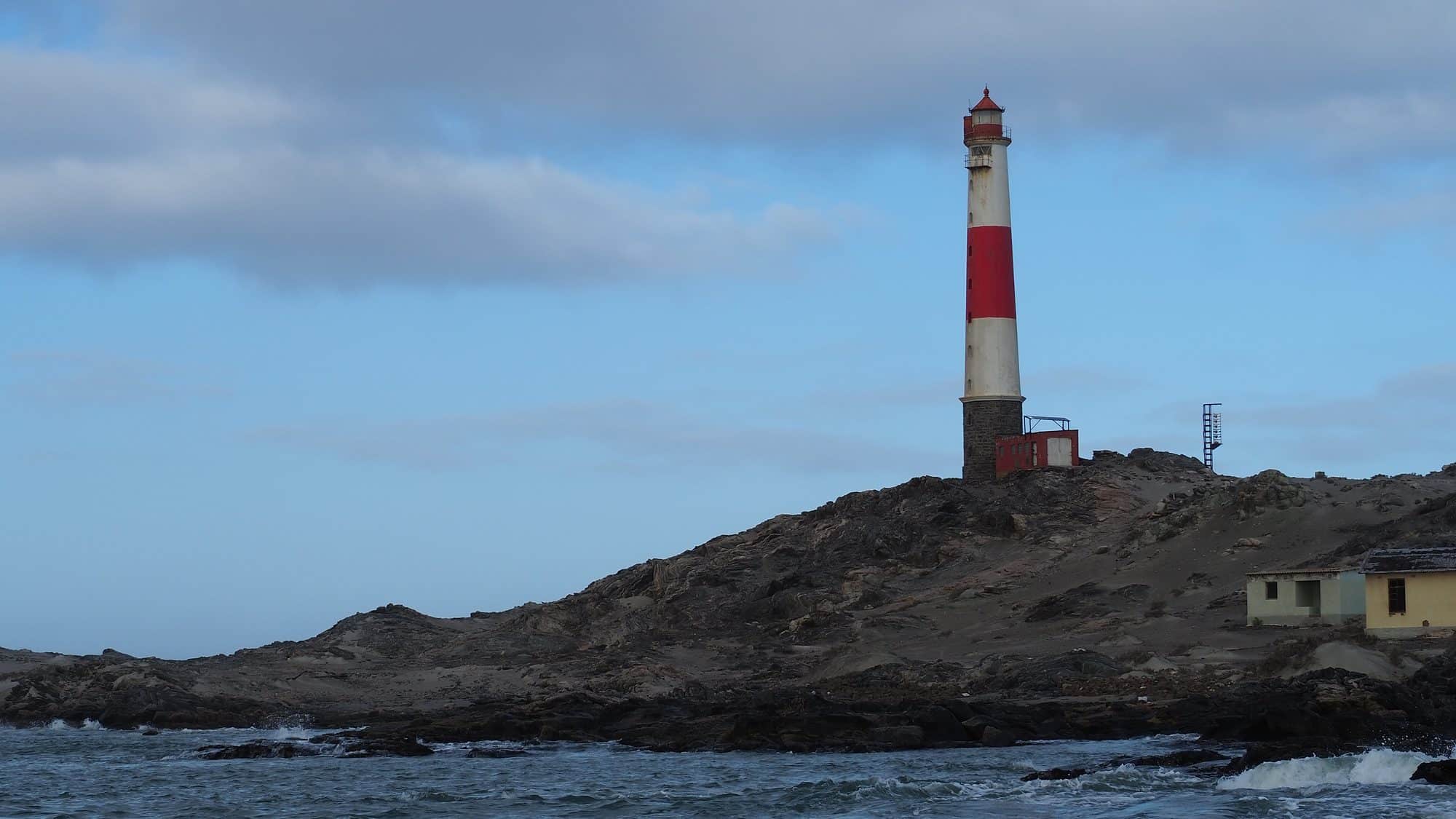
What we did get a good look at was a colony of cormorants, sea lions lying on the rocks, the Diaz Point lighthouse from the sea, and a few dolphins. I say "a few" because the surf was rough and I was so seasick I could barely take any pictures.
🌊 Is the penguin boat trip worth it?
If you get seasick easily, take something before boarding or think twice: the Atlantic here isn't a swimming pool. If you're traveling with children and hoping to see penguins up close, you might be disappointed. But if you fancy sailing along a wild coastline and observing marine life without disturbing it, it's a great way to start the day.
The wild horses of Aus (Garub)
As we left Lüderitz on our way to Fish River Canyon, we finally stopped at the Garub viewpoint , about 20 km west of Aus, next to the B4. Here live the famous wild horses of the Namib Desert , which come to drink at a watering hole.
We were incredibly lucky: a large herd approached the viewpoint and surrounded us so tightly that we could barely get out. Seeing them so close, with the desert and mountains in the background, was one of the most beautiful moments of that part of the trip.
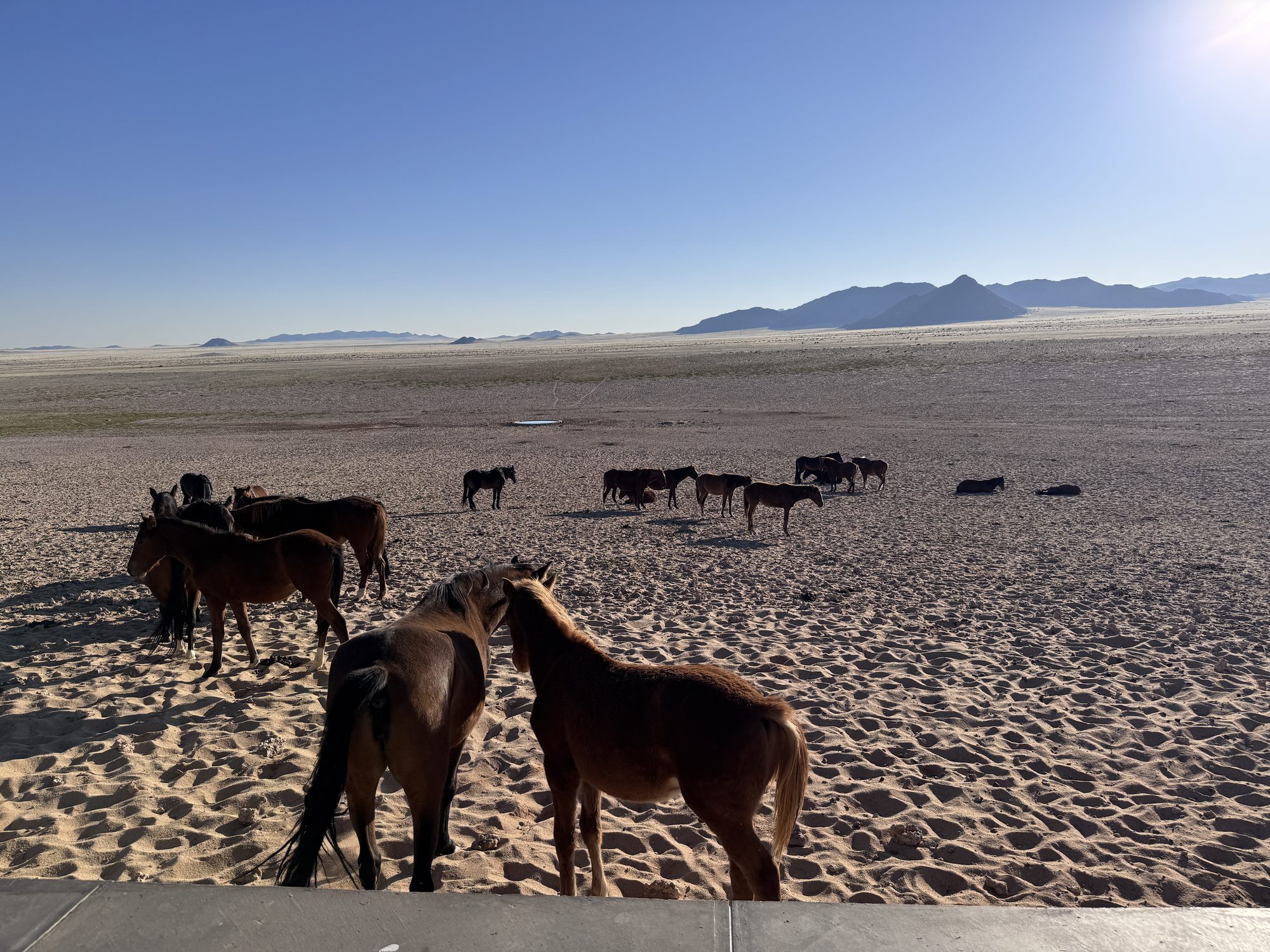
No one knows for sure where these horses came from, and there are several theories. One says they are descended from the horses of the World War I troops that camped in the area. Another suggests they came from a shipwreck near the Orange River. The version we were told links them to the horses bred by the Baron of Duwisib Castle, which were freed after the war. Today, they are cared for and studied by the Namibia Wild Horses Foundation.
🐎 Tips for viewing Garub's horses
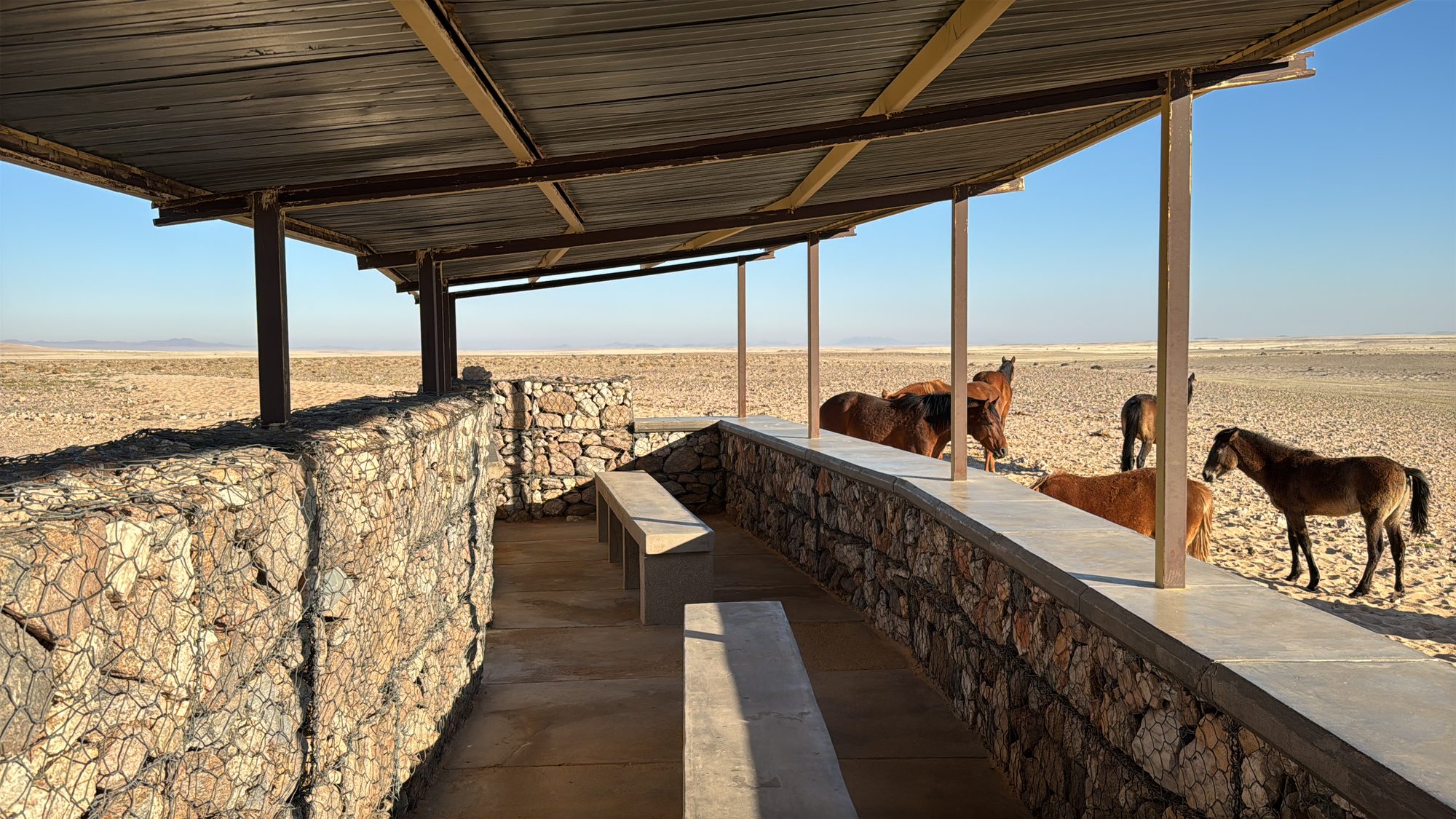
The viewpoint is free and accessible by any car via a short track from the B4. The horses usually appear during the cooler hours, early morning or late afternoon. Do not feed them and keep your distance, even if they don't keep theirs toward you.
What we would do differently
If we were to do this route again, we would change one thing: the second night in Lüderitz.
Lüderitz is small. With the boat trip in the morning and Kolmanskop right after, there wasn't much else to do in the afternoon, and with the wind at the campsite, we didn't feel like being outside. It's the only night of the trip we would change.
Instead, we would have continued on to Fish River Canyon to spend the night at Mount Canyon Guest Farm , a halfway point we discovered the next day. It has a vintage Route 66 vibe, with old cars, apple pie, and amazing meat pies. We also bought a kudu sausage there, which we call "the bad fuet" at home, although Anna and I love it.
✅ Our route recommendation
Arrive in Lüderitz in the morning with enough time for Kolmanskop, spend the night there, take the boat the next day if you like, and continue south, stopping in Garub. This way you make the most of the day and arrive rested at Fish River Canyon.
Lüderitz and Kolmanskop with children
For us, it was one of the most fun stops for Anna and Arnau. Here's why, and a few warnings:
- Kolmanskop is an adventure park with history. They loved climbing dunes inside the houses and discovering rooms. Just be aware that there are old floors and stairs: keep an eye on the little ones.
- The Shark Island campsite is windy. With children, extra clothing and a sheltered plot.
- The ship can make you seasick. If your children get dizzy, take it seriously.
- Shark Island is a good opportunity to talk about history. It impacted our people, and we believe it's important.
- Lüderitz's braids They were Anna's best memory. And mine.
Practical tips for visiting Lüderitz and Kolmanskop
- He arrives in Kolmanskop in the morning. It's closed in the afternoon: this is the most important piece of advice in the whole post.
- Calculate the times from Sesriem carefully: It took us about 6 hours.
- Book your Shark Island campsite in advance on the NWR website, especially during peak season.
- Bring warm clothing and a windbreaker. The wind of Lüderitz is not a legend.
- Visit Shark Island with respect: It is a place of memory.
- Stop in Garub early in the morning If you continue south. It's free and could be one of the highlights of the trip.
- You don't need a 4x4 for this areaThe B4 is paved. For the entire Namibian route, you will need it: we rented our Toyota Hilux with two rooftop tents in Disgusting Car Hireand with the code @KUCAVANA You get a 5% discount. We'll tell you all about it in our Namibia 4x4 guide.
- Travel with insurance. The distances are enormous and private healthcare is expensive. We travel with IATI And with our link, you get a 5% discount.
💛 This post contains some affiliate links: Asco Car, IATI, and Booking. We only recommend products we've personally used and found to be truly effective. It doesn't cost you anything extra, and it helps us keep Kucavana free for the community.
Frequently asked questions about Kolmanskop and Lüderitz
What are the opening hours in Kolmanskop?
Kolmanskop is only open in the mornings. Afternoon entry is only permitted with a special photography permit. Please check the official Kolmanskop website for the most up-to-date opening hours before visiting.
Is it possible to visit Kolmanskop independently?
Yes. We explored it on our own, at our own pace. There are also guided tours included in the entrance fee, at various times in the morning. The schedules are available on the official Kolmanskop website.
How many kilometers is Kolmanskop from Lüderitz?
About 10 km away, next to the B4 road that goes towards Aus. You can get there in a few minutes by car.
How long does it take to see Lüderitz and Kolmanskop?
A full day and one night is enough for Kolmanskop, the town, and Shark Island. If you also want to take the penguin boat, you'll need another morning.
Can you see penguins in Lüderitz?
Yes, but from a distance. They are African penguins, an endangered species, and ships don't get too close to the island so as not to disturb them.
Where can you see the wild horses of Namibia?
At the Garub viewpoint, about 20 km west of Aus, next to the B4 road that leads to Lüderitz. They often come to drink at the water point in front.
Is it worth going all the way to Lüderitz?
For us, yes. Kolmanskop is unique, Lüderitz has a very different atmosphere from the rest of Namibia, and along the way are Garub's horses. And if you continue towards Fish River Canyon, it's right on the way.
Our final reflection
Lüderitz and Kolmanskop were a different kind of stop on our Namibian road trip: less safari and more history, wind, sea, and unexpected encounters. We left with a ghost town covered in sand, two new friends, braids, some harmless oysters, and a herd of wild horses surrounding us in the middle of the desert.
If you come all the way down here, we only ask one thing: arrive in Kolmanskop in the morning . Namibia will take care of the rest.