Table of Contents
"There are places that impress with their beauty. Others with their history. And then there's the Hoba Meteorite , which impresses simply because it's hard to believe that something so enormous literally fell from the sky."
When we were planning our independent trip to Namibia , the Hoba Meteorite was one of those stops we marked almost out of curiosity. We thought we'd spend an hour there, stretch our legs, take a couple of photos, and then continue on to Etosha National Park.
It's not every day you can touch with your own hands the largest meteorite preserved on Earth , climb on top of a rock that arrived from space some 80.000 years ago, or listen to the explanations of a guide while your children enjoy themselves as if they had just discovered a real treasure.
We admit that the entrance fee seemed a bit expensive. However, on our way out, it was our children who completely changed our minds… but we'll tell you about that a little later.
In this article you will discover how to visit the Hoba Meteorite , how to get there, how much the entrance fee costs, how much time to spend there, the most surprising curiosities and our real experience during our 24-day 4x4 route through Namibia.
If you're still planning your trip, we recommend starting with our complete Namibia travel guide , where you'll find an article detailing our 24-day Namibia 4x4 itinerary , including budget, 4x4 rental information, driving tips, and all the route planning details. And if you'd like to discover more must-see places in the country, don't miss our guide on what to see in Namibia , where we've compiled all the destinations we visited during this adventure.
What is the Hoba Meteorite?
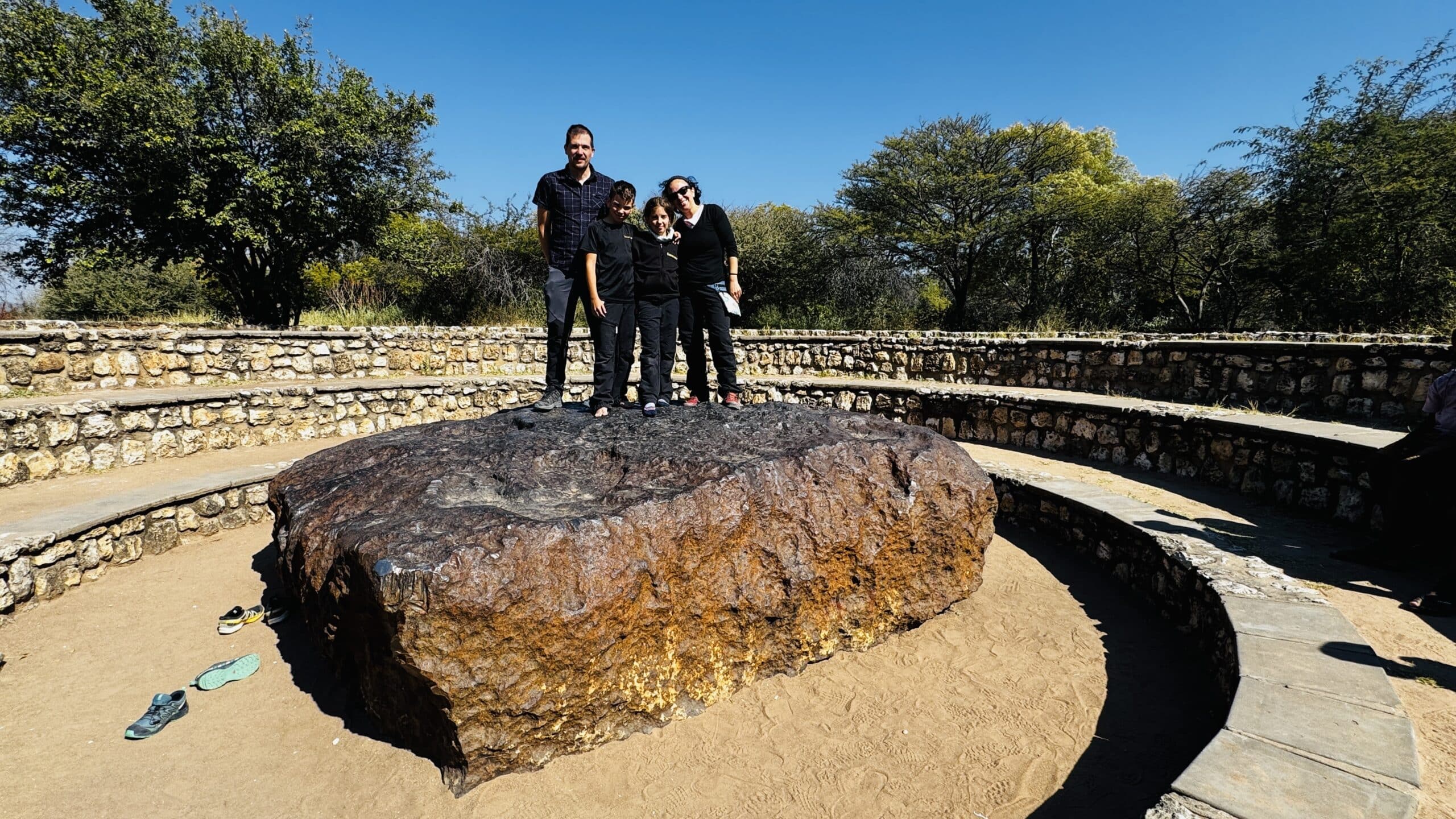
The Hoba Meteorite is the largest known meteorite that remains virtually intact on the surface of our planet.
Yes, you read it right.
It is not the largest that has impacted Earth, but it is the largest block of meteorite that is preserved where it fell , without having fragmented or disintegrated.
Their figures are impressive.
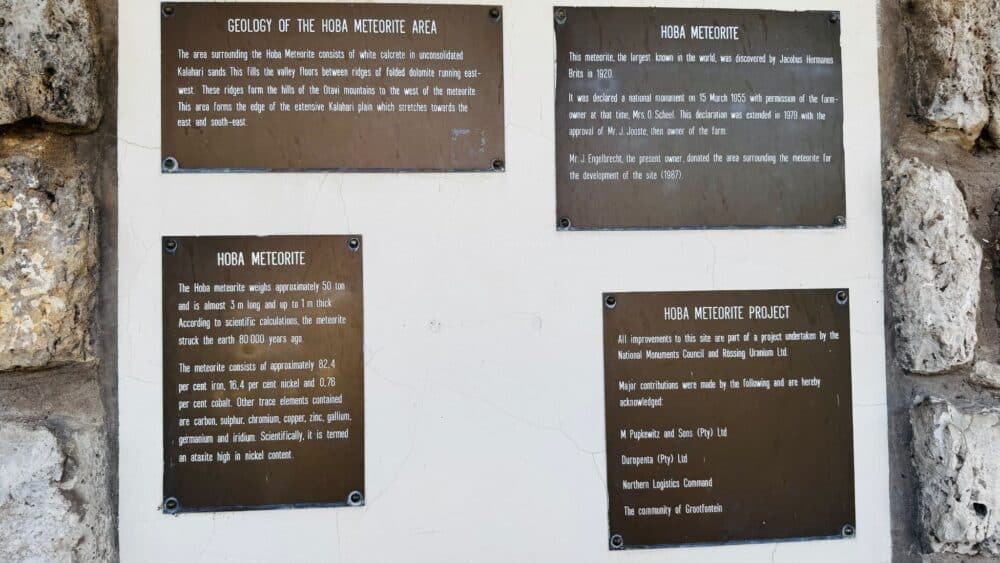
- weighs approximately 60 tonnes
- It measures almost Meters long 3
- has some 2,7 meters wide
- and about one meter thick
When you see it in front of you, it's hard to believe that this enormous metallic mass traveled millions of kilometers through space before landing in Namibia.
The most surprising thing is that it remains practically in the same place where it fell thousands of years ago.
It's where it fell.
It's not inside a museum.
It is not protected under a huge glass dome.
It's there.
In the middle of an estate, surrounded by nature, waiting for any traveler to come and touch an authentic fragment of space.
And that is precisely what makes this visit so special.
Where is the Hoba Meteorite?
The Hoba Meteorite is located in northern Namibia, very close to the city of Grootfontein , within a private estate open to visitors.
It's a perfect stop if you're traveling around the country independently, as it's very well located between the Caprivi Strip and Etosha National Park , two of the must-see places on any Namibian route.
We were coming from Caprivi on our way to Etosha and we only had to detour for a few minutes to get there.
That's why we believe it's one of those visits that fits perfectly into the itinerary without wasting too much time.
If you're still planning your trip, you can check out our complete guide to traveling independently in Namibia , where we explain the route day by day, the distances for each stage, and how we organized the entire trip to make the most of the 24 days of adventure.
IMPORTANT TIP : Don't travel to Namibia without good travel insurance . Seriously. The distances there are enormous, private healthcare is expensive, and if something happens in the middle of a national park or in a remote area, helicopter evacuation can cost a fortune. After thoroughly comparing different options, we chose IATI Estrella , which is the only one with over one million euros of medical coverage—crucial in destinations where any unforeseen event can multiply the costs. IATI also offers 24/7 Spanish-language support and an app for online medical consultations, which was incredibly useful during our trip. Here's our link with a 5% discount on any IATI travel insurance policy. If you're going to Namibia, it's truly worth traveling with peace of mind.
How to get to the Hoba Meteorite
Getting there is really easy.
We used Google Maps downloaded offline , something we recommend doing for the entire trip through Namibia.
Although the main paved roads usually have good coverage, you never know when the signal will drop. We had downloaded all the maps before leaving Spain and they worked surprisingly well throughout the trip.
In fact, we were very surprised by the accuracy.
The times indicated by Google Maps were quite realistic and, at most, we added between half an hour and an hour depending on the stops.
That day we left very early from Ngepi Camp , in the Caprivi Strip.
The day was long.
More than seven hours of driving to reach Etosha National Park.
But Namibia has that strange ability to make even a whole day of driving become part of the journey.
Our experience on the way to the Hoba Meteorite
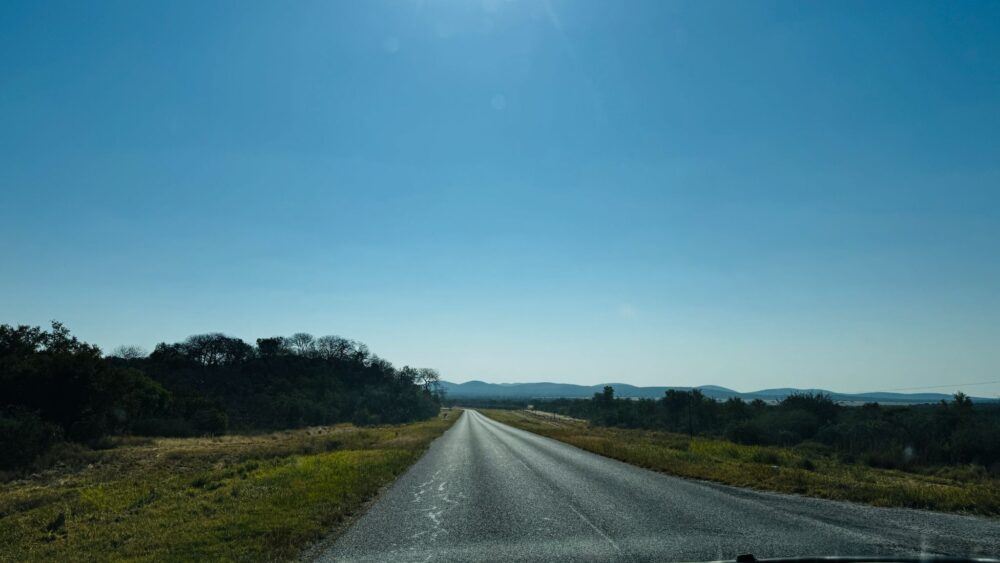
We left at seven in the morning with the sun beginning to illuminate the endless roads of the north of the country.
The entire route is on paved roads, making for a very comfortable drive. In fact, Namibia surprised us greatly in this respect. Before traveling, we had read stories about impassable roads, but the reality is that the main connections between cities are in very good condition.
One of the places that caught our attention the most was Rundu.
It's a city full of life.
After several days traveling through sparsely populated areas, suddenly makeshift markets, small shops, schools, workshops, casinos, and lots of people walking through the streets appear.
We found it very funny to see the open-air butcher shops, with huge pieces of meat hanging while, right next to them, another vendor was offering onions, another pumpkins and another watermelons.
It was impossible not to look out the window constantly.
It seemed that Namibia completely changed its personality in just a few kilometers.
Shortly afterwards came one of those moments that we hadn't seen explained in almost any travel guide.
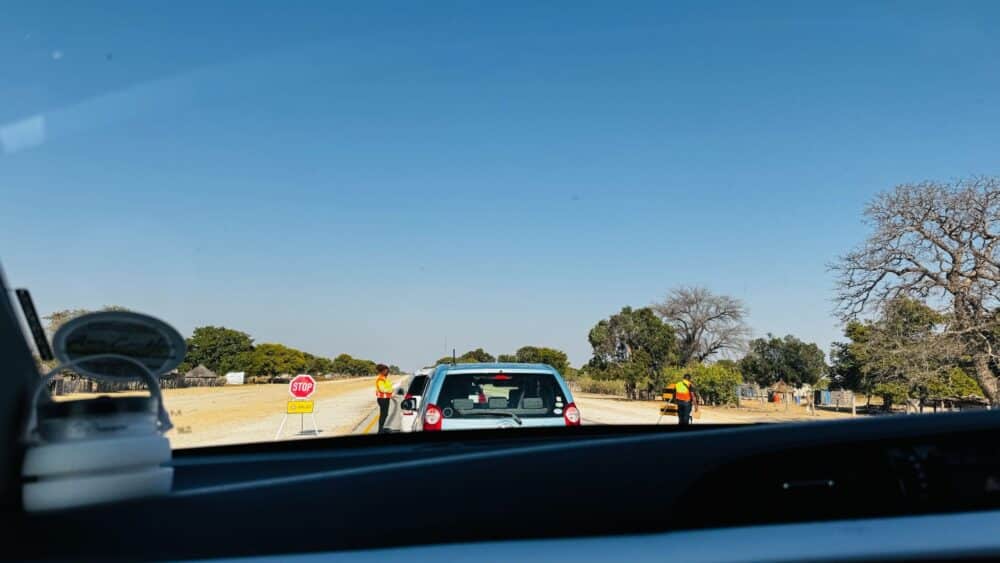
A veterinary check-up.
The officers were checking vehicle by vehicle looking for fresh meat.
There is a health restriction that prevents the transport of meat from the north to the south of the country to avoid the spread of certain livestock diseases.
And they are really strict.
They completely opened our portable cooler, checked all the contents, and verified that we were not carrying any prohibited products.
Luckily we had already read about it while preparing for the trip and that day we didn't have any meat with us.
It's a small detail, but one of those that saves you a lot of trouble if you know about it before traveling.
Throughout the entire route we also encountered police checkpoints approximately every 200 kilometers.
Our experience was excellent.
They were always very kind, especially when they saw that we were traveling with children.
Sometimes they would just say hello.
In others they asked for the driver's license and vehicle documentation.
The whole process was quick, friendly, and without any problems.
And that, honestly, also brings a lot of peace of mind when you're traveling through a completely unknown country.
Before reaching the Hoba Meteorite: stop at Grootfontein
Before detouring towards the Hoba Meteorite we made a very practical stop in Grootfontein , one of the most important cities in northern Namibia.
Here we took the opportunity to do two things that we would end up repeating throughout the trip:
- fill the fuel tank,
- go shopping at the supermarket.
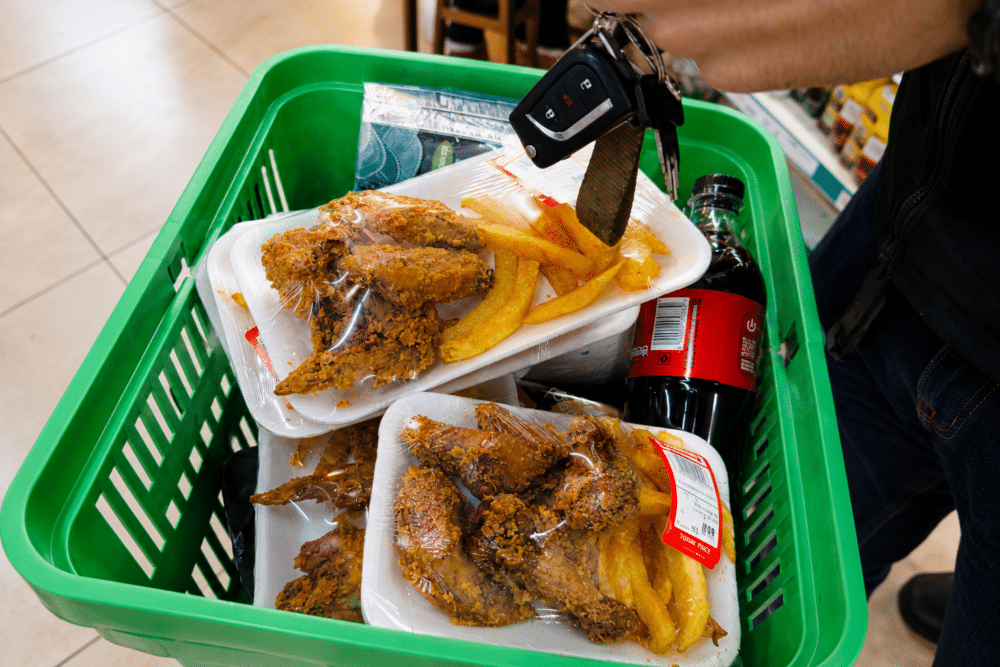
One of the things that surprised us most about Namibian supermarkets is that many of them have prepared food. We found freshly fried chicken, fries, salads, pastries, pizzas… A perfect solution when you've been driving for many hours and don't feel like setting up the whole kitchen in your 4x4.
We bought a good bucket of fried chicken, some potatoes and some cold drinks with a very clear idea in mind.
Eat peacefully next to the meteorite.
And it was a complete success.
A stop to help local families
Shortly before reaching the Hoba Meteorite, we began to find numerous craft stalls along the road.
Many travelers pass by.
We decided to stop.
And, honestly, we believe it was one of the best decisions of the day.
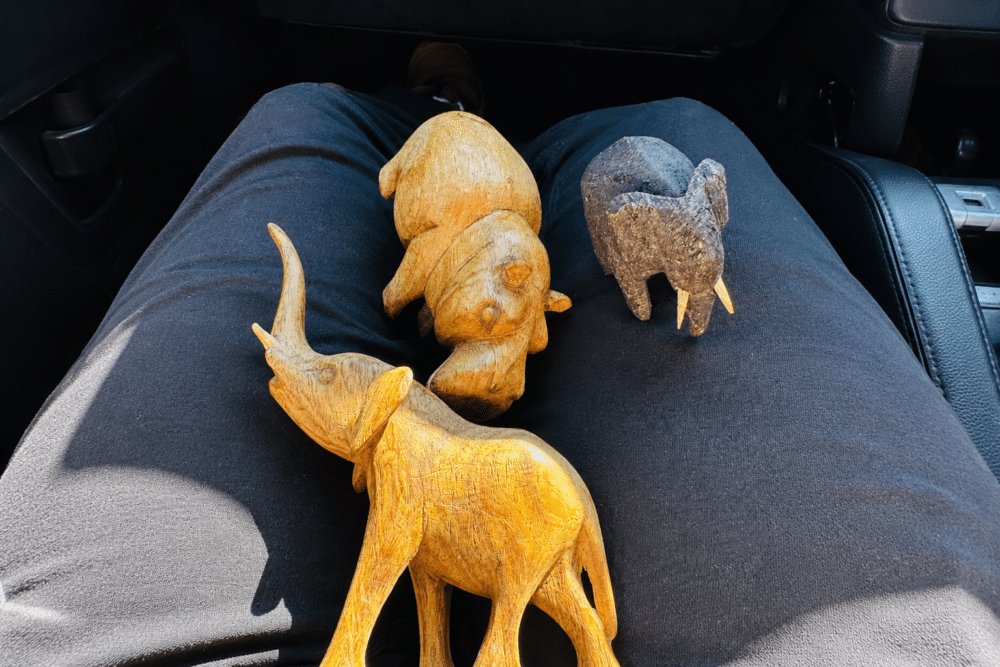
Families sell handmade wooden figures, carved animals, masks, bowls, and many other souvenirs they have made themselves.
We weren't looking for souvenirs.
But we did want our trip to also leave something positive in the country that was hosting us.
In the end we bought several wooden figures and chatted for a while with one of the families.
It was then that they made a request that we still remember today.
They asked us if we had pencils or paper for their children. They had 5 or 6 small children.
We happened to have some with us for the children to draw on during the car ride, so we happily gave them to them as a family decision.
Seeing the excitement with which they were received was one of those little moments that don't appear in travel guides but end up being unforgettable.
From that day on we decided that, whenever we found a supermarket, we would buy pencils, notebooks and school supplies to keep in the car and be able to distribute them when the occasion arose.
It doesn't represent a big expense for us, and yet it can make a small difference for them.
If you travel to Namibia, we really encourage you to do so.
It's a simple and respectful way to give back a small part of everything this country gives you.
Our visit to the Hoba Meteorite
Shortly afterwards we finally arrived at the Hoba Meteorite site.
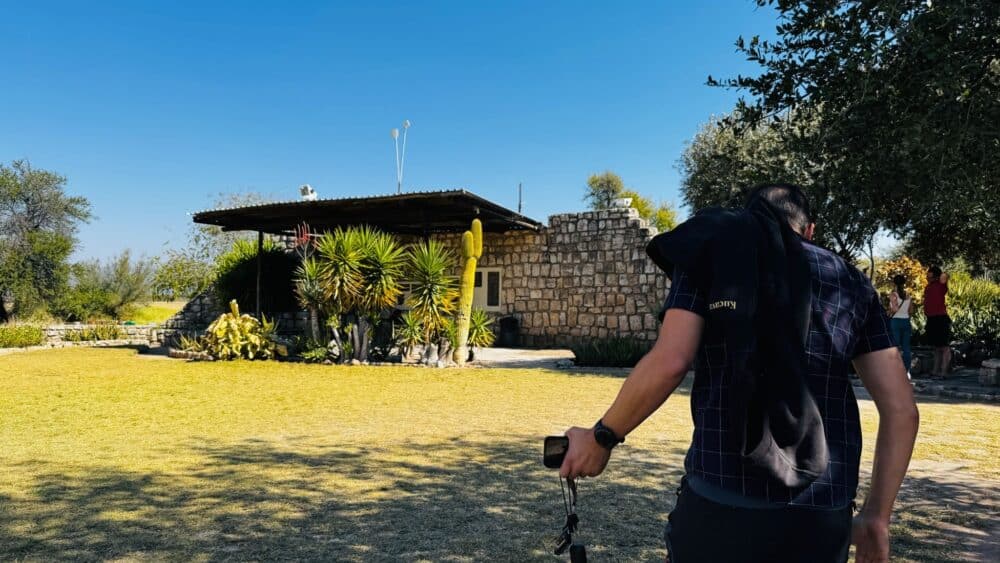
As soon as we entered we found a very pleasant area with trees, shade and several picnic tables.
It was almost noon and the heat was starting to get intense, so we decided to have a leisurely lunch first before starting the tour.
It was a simple meal.
Fried chicken.
Potatoes.
Some fruit.
And we were really looking forward to discovering what we had been waiting for for days.
The guided tour began after lunch.
Yes, the visit is accompanied by a local guide who explains the entire history of the meteorite, how it was discovered, and why it is so important from a scientific point of view.
And then he appeared.
Suddenly, there it was.
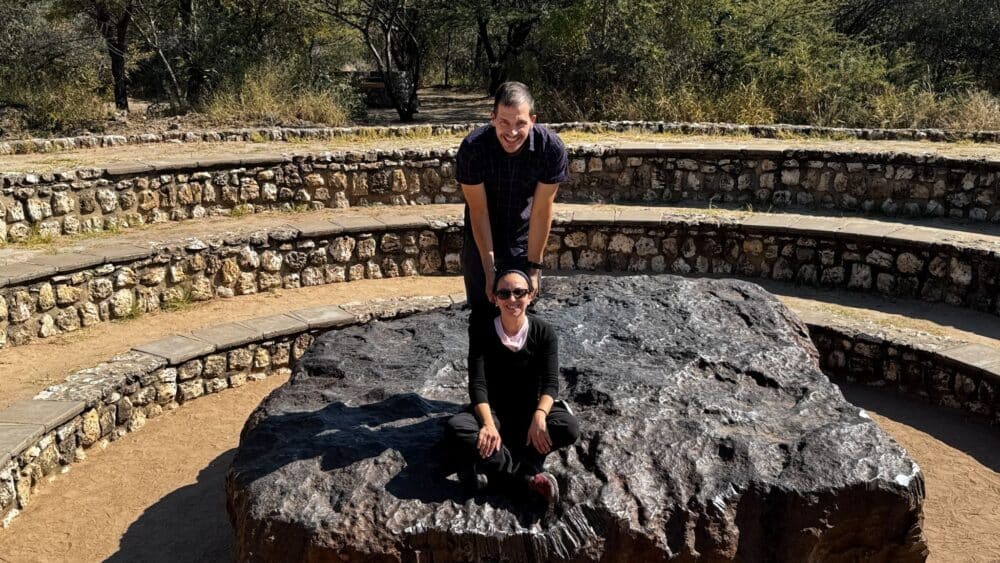
An immense gray metallic mass.
Much bigger than we imagined.
The photographs don't do it justice.
When you stand before it, it's incredibly impressive to think that this block of iron and nickel has traveled millions of kilometers through space before finally resting in a corner of Namibia.
The first thing that caught our attention was its temperature.
Despite the heat, the meteorite was surprisingly cold to the touch.
We couldn't help but touch it again and again.
In the end…
How many times in your life can you put your hand on an object that literally comes from space?
The funniest moment of the visit
Our guide had a little surprise prepared.
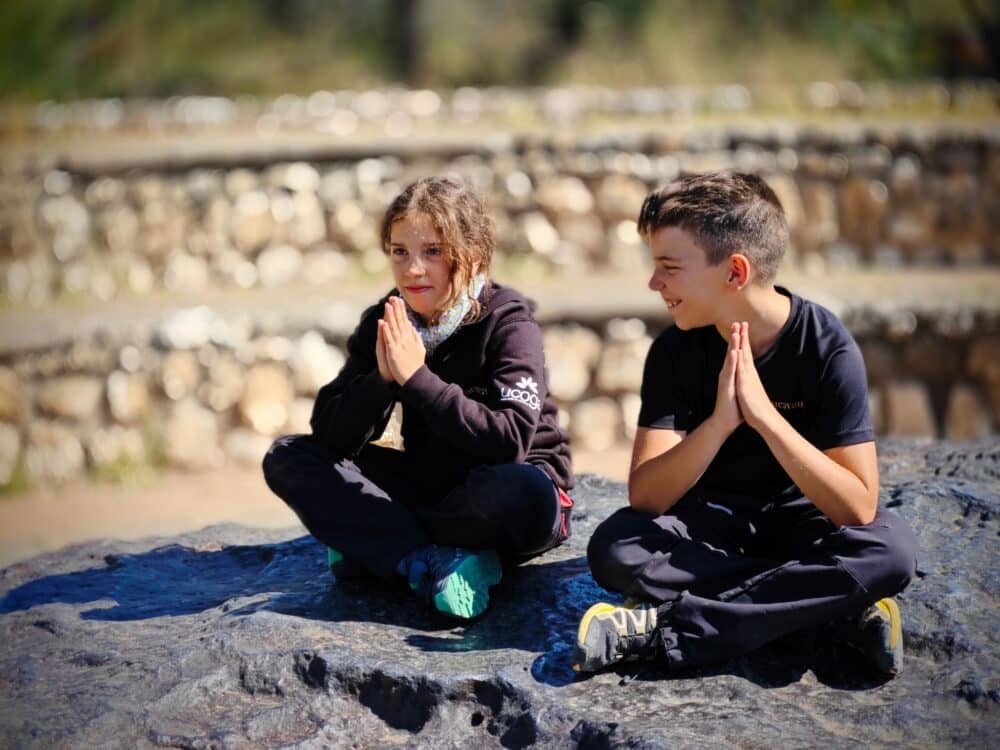
He invited us to climb on top of the meteorite.
Yes.
Literally on top.
And not just us.
To the whole group.
There we all were, balancing on the largest meteorite on the planet, while the guide asked us to stand right in the center.
Then he gave a small tap and showed us a curious acoustic effect.
The sound resonated throughout the enormous metallic mass, creating a very peculiar kind of echo.
It was one of those moments that delight children... and adults too.
Although we couldn't help but laugh:
"If people keep getting on every day, I don't know how long this poor meteorite will last..."
Luckily it weighs around 60 tons , so we think it still has many tourists to endure.
Is it worth paying the entrance fee?
Here comes the million dollar question.
We paid approximately 45 euros for the four of us to access the site with the guided tour.
And, honestly…
Our first impression was that it seemed quite expensive.
Especially considering that the visit doesn't last too long.
But when we left we asked the children what they thought.
And the answer completely threw us off.
They both said they would return.
Without a doubt.
Arnau even made a point that we found brilliant.
He told us:
"Here you don't just see a meteorite... you can touch it. I'm sure that in other countries it would be inside a glass case and you wouldn't even be able to get close."
And he was right.
We often value a place solely based on the time we spend there.
But experience also counts.
And touching the largest preserved meteorite on the planet with your own hands is something that very few places can offer.
If you were to ask us now if we would go back in…
The answer would be yes.
Some interesting facts that the guide explained to us
During the visit we discovered some truly surprising facts.
For example, the Hoba meteorite is made up almost entirely of iron and nickel.
Or that, unlike most meteorites, it never created a large impact crater.
Scientists believe it entered the atmosphere at a very low angle and lost much of its speed before hitting the ground.
That allowed it to remain virtually intact.
We were also very surprised to learn that it was discovered by chance.
In 1920 a farmer was plowing his field when the plow hit something extremely hard.
That "problem" turned out to be one of the most important geological discoveries on the African continent.
Today the Hoba Meteorite is protected as a National Monument of Namibia , and although it remains in its original location, visits are perfectly organized to ensure its preservation.
On the way to Etosha… but with one last surprise
After saying goodbye to the meteorite, we still had a few hours of driving ahead of us to our next destination: Etosha National Park.
We thought the day couldn't hold many more surprises for us.
We were wrong.
Upon arriving at the entrance of Namutoni Gate, we were met with one of the most thorough security checks of the entire trip.
And there are two things you should know before entering Etosha if you don't want to get a nasty shock…
Entering Etosha: the strictest control of the entire trip
After saying goodbye to the Hoba Meteorite , we still had a couple of hours to go before reaching one of the most anticipated places of the trip: Etosha National Park.
We entered through Namutoni Gate , the park's east gate, convinced that we would only have to show the reserve and little else.
Error.
It was the most thorough check we experienced during the entire trip.
The guards thoroughly inspected the vehicle and, above all, were looking for two very specific things that you should be aware of: plastic bags and drones.
Tips for visiting the Hoba Meteorite
Based on our experience, these are the tips we believe can really help you.
Take advantage of the visit if you're traveling between Caprivi or Whindoek and Etosha
We do not recommend traveling hundreds of kilometers just to visit the meteorite.
However, if you're following a similar route to ours, the stop fits perfectly.
In fact, it barely involves a small detour and breaks up a long day of driving very well.
Bring food and take advantage of the picnic area
The tables next to the entrance are a real marvel.
We thoroughly enjoyed that short break in the shade before starting the visit.
After many hours inside the car, it's greatly appreciated.
Spend approximately one hour on it.
You don't need much more.
Between the guided tour, taking photographs and leisurely exploring the grounds, an hour is usually enough.
Yes indeed…
If you're traveling with children, you'll probably end up staying a little longer.
Our people didn't want to leave.
Combine it with Grootfontein
Before or after the visit you can take the opportunity to:
- refuel,
- make a purchase,
- Withdraw money if you need to,
- buy prepared food for the road.
We found it a very convenient stop before entering Etosha.
Buy local crafts
If you have the chance, stop at one of the small wooden stalls you'll find along the road.
Beyond the souvenir you take home, you will be directly helping families who depend on this work.
And if you can also bring some pencils, notebooks or school supplies to give to the children, even better.
They are small gestures that mean a lot.
Is the Hoba Meteorite worth visiting?
If you're looking for a large national park full of animals…
No.
If you expect to spend a whole morning there…
Either.
But if you're doing a self-guided tour of Namibia , we think it's definitely worth it.
Because the Hoba Meteorite is not visited solely for what you see.
It is visited for what it represents.
It's incredible to think that that enormous metallic mass has remained there for thousands of years.
That you can touch it.
Climb on top.
Listen to their story.
And to understand that, long before there were roads, cars, or even human beings, a fragment of the universe already rested in that exact same place.
Some visits are impressive because of their size.
Others for their beauty.
And others, like this one, for making you feel very small.
How to include the Hoba Meteorite in a Namibia itinerary
We visited it during our time between the Caprivi Strip and Etosha National Park , and we believe it's the best way to include it in an itinerary.
If you're still planning your trip, our guide will give you the complete day-by-day route, with all the stages, campsites, distances, budget, and practical tips for traveling independently in Namibia.
Additionally, if you plan to continue on to Etosha, we also recommend reading our complete guide on:
👉 Etosha National Park: Complete guide to doing a self-drive safari
Frequently Asked Questions about the Hoba Meteorite
Where is the Hoba Meteorite?
It is located near the city of Grootfontein, in northern Namibia, within a private estate open to the public.
How much does the Hoba meteorite weigh?
It is estimated to currently weigh around 60 tons , making it the largest meteorite preserved on the Earth's surface.
When did the Hoba meteorite fall?
Scientists believe it impacted approximately 80.000 years ago , although some estimates place its fall even earlier.
Why didn't the Hoba meteorite leave a crater?
Everything indicates that it entered the atmosphere at a very low angle and lost much of its speed before impact, thus avoiding forming a large crater.
Is it possible to touch the Hoba Meteorite?
Yes.
And that is precisely one of the things that surprised us the most.
You can get close, touch it and even climb on top of it during the guided tour.
It is a very different experience from that of most museums or archaeological sites.
Our veredicto
We admit that, when we were organizing the trip, the Hoba Meteorite was not one of the visits we were most excited about.
We thought:
"Well... we'll see a very large rock and then continue on our way to Etosha."
And we were completely wrong.
Not just because of the meteorite.
But not because of everything that surrounded that day.
The endless roads of northern Namibia.
The stop in Grootfontein.
Families selling handicrafts by the roadside.
The conversation with the children.
The picnic under the trees.
Laughter echoing off a rock that had come from space.
And the excitement of entering Etosha a few hours later to begin one of the most incredible safaris of our lives.
In the end we understood that the Hoba Meteorite is not a must-see just because it is the largest in the world.
It's essential because it transforms a simple commute into one of those travel days that, years later, you still remember with a smile.
And perhaps that is the true magic of traveling through Namibia.
Because you almost never know which place will end up surprising you the most.
Continue organizing your trip to Namibia
If you're planning a self-guided trip through Namibia, these are the guides that will best help you plan your journey:
🧭 Complete guide to traveling to Namibia
All the information about budget, 4x4 rental, safety, accommodations, best time to go and our complete route through the country.
📅 24-day Namibia itinerary
Our complete day-by-day itinerary.
🗺️ What to see in Namibia
The must-see places that we would include in any trip around the country.
Namibia with children
Everything we learned while traveling as a family through Namibia.
💰 How much does a trip to Namibia cost?
Detailed actual budget for the trip.
🛡️ Is it safe to travel to Namibia?
Our real-life experience with safety, driving, and unexpected events during the trip.
Latest posts from our blog
-
Definitive manual for traveling by motorhome【2024】
Super complete manual for traveling by motorhome with all the answers to your questions.
-
Namibia Trip: Complete Guide for Independent Travel (24-day Itinerary, What to See and Tips Based on Our Experience)
Are you thinking of planning a trip to Namibia on your own and don't know where to start? After traveling the country for 24 days as a family in a 4x4 with rooftop tents, we've put together this comprehensive guide with everything we wish we had known before our trip. Here you'll find information…
-
London with children: what to see and do as a family (royal guide with map) of the top 22 plans
If you're planning a trip to London with kids and don't know where to start, here you'll find the 22 best family-friendly activities, an optimized 3-day itinerary, money-saving tips, the best free museums, and an interactive map with all the must-see places. Basic summary: London with kids. Quick information. Recommended days: 3-5…
-
Guide to traveling to Canada: everything you need to know for a trip to Canada on your own
Welcome to a super guide for traveling to Canada from Spain or anywhere in Europe. One of our newest destinations in this wonderful world, where every trip continues to surprise us with its hidden gems. How lucky we are to have been born on Earth! How fortunate to be able to travel to Canada! Visiting Canada…
Ethical code:
On our blog you will find affiliate links. These are always placed with our highest ethics. We never publish any service or product that we have not used before and that we are sincerely happy with. That is why our recommendations are always ethical. In addition, there is no additional cost for you to book through our links and, on the other hand, it means a small commission for us that helps us maintain this blog so that you can continue enjoying it for free.