Table of Contents
Some places are remembered for what you see. Others for what you hear, smell, and feel. Cape Cross belongs to this second group.
Even before you get out of the car, you know you're arriving. The sound of thousands of seals fills the air, while the wind carries a very distinctive scent, announcing that you're about to visit one of Namibia's most breathtaking natural wonders.
When we were planning our independent trip to Namibia , Cape Cross was one of the places that piqued our curiosity the most. We had read all sorts of opinions. Some travelers insisted it was an essential stop, while others warned that the smell was so intense they could barely stay for a few minutes.
Having been there, our opinion is very clear.
💡 Before we continue…
If you're still planning your trip, we recommend starting with our guide to independent travel in Namibia , where you'll find a complete 24-day itinerary , budget, 4x4 rental information, and all the trip preparations. You can also consult our guide to what to see in Namibia , with all the must-see places we visited along the way.
In this article you will discover how to visit Cape Cross , how to get there, how much the entrance fee is, how much time to spend there, what you can see besides the seal colony and our real experience during our 24-day 4x4 tour of Namibia.
Cape Cross at a glance
| Information | Facts & figures |
| 📍 Location | West coast of Namibia, within Dorob National Park |
| 🦭 What to see | The largest colony of fur seals in Africa |
| ️ recommended time | 1,5 - 2 hours |
| 💶 Price | Approximately €25 for the four of us (our visit in 2025) |
| 📅 Best time | All year round (breeding season: November and December) |
| 🚗 Ideal for | Independent travel, families, photography and nature lovers |
IMPORTANT TIP : Don't travel to Namibia without good travel insurance . Seriously. The distances there are enormous, private healthcare is expensive, and if something happens in the middle of a national park or in a remote area, helicopter evacuation can cost a fortune. After thoroughly comparing different options, we chose IATI Estrella , which is the only one with over one million euros of medical coverage—crucial in destinations where any unforeseen event can multiply the costs. IATI also offers 24/7 Spanish-language support and an app for online medical consultations, which was incredibly useful during our trip. Here's our link with a 5% discount on any IATI travel insurance policy. If you're going to Namibia, it's truly worth traveling with peace of mind.
Cape Cross is absolutely worth it.
Not only is it home to the largest colony of African fur seals , but the entire environment conveys a sense of untamed nature that is difficult to describe in words. The constant noise of tens of thousands of seals, the jackals patiently waiting for their opportunity, the fog enveloping the coast, and the powerful crashing of the Atlantic Ocean create a unique atmosphere.
What is Cape Cross?
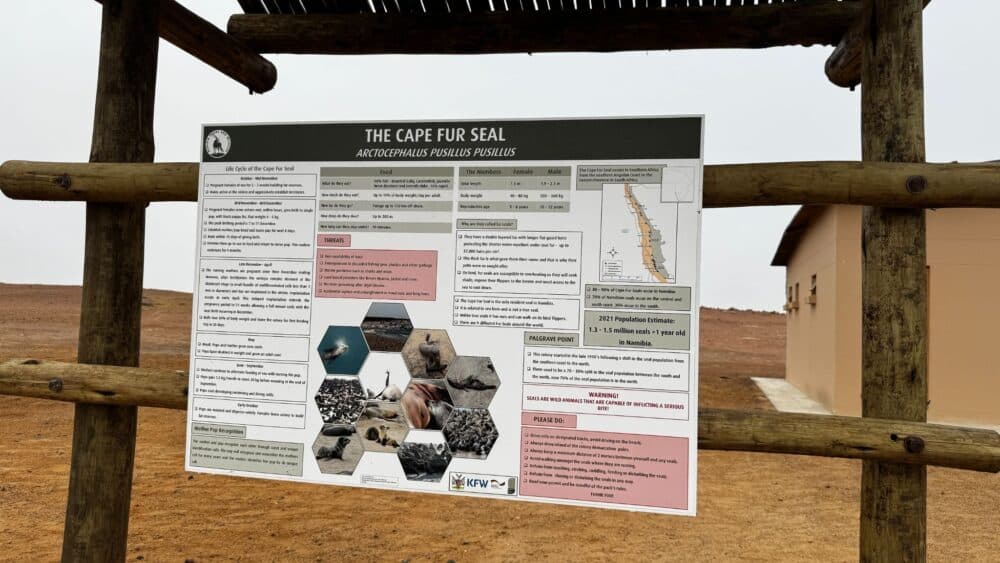
Cape Cross is one of the most famous places on Namibia 's Atlantic coast and is home to the largest colony of Cape Fur Seals in Africa.
Depending on the time of year, between 100.000 and more than 200.000 specimens can gather here , especially during the breeding season, between November and December.
Although we usually talk about seals, the species that actually lives here is the Cape fur seal , perfectly adapted to the cold waters of the Atlantic Ocean thanks to the Benguela current, one of the richest in nutrients on the planet.
But Cape Cross is not just a huge colony of sea lions.
It is also one of the best places in Namibia to observe how a completely wild ecosystem works.
Here they coexist:
- 🦭 Thousands of adult sea lions.
- 👶 Hundreds of offspring born each season.
- 🦊 jackals, who take advantage of any opportunity to feed themselves.
- ???? Cormorants, seagulls and other seabirds.
- 🐾 And even, with a bit of luck, brown hyenas, one of the most difficult mammals to observe in Namibia.
Everything happens in front of the visitor.
No prepared shows.
No schedules.
Without barriers.
Just nature functioning exactly as it has for thousands of years.
🦭 Did you know…?
The Cape Cross colony was declared a Nature Reserve in 1968 to protect the Cape fur seal. Today it is one of the most important places in the world for the conservation of this species.
Where is Cape Cross?
Cape Cross is located on the west coast of Namibia , within Dorob National Park , approximately at:
- 120 kilometers north of Swakopmund.
- 300 kilometers south of Terrace Bayneighbourhood, in the heart of Skeleton Coast.
Its location makes it a perfect stop if you're touring the coast between the Skeleton Coast , Swakopmund and Spitzkoppe.
We were arriving from Camping Mile 108 , where we had spent the night after exploring part of the spectacular Skeleton Coast.
It was a very comfortable stage because we only had to drive for about an hour before arriving.
How to get to Cape Cross
Getting to Cape Cross is very easy.
The road is completely paved and in very good condition, so any car can get there without difficulty.
As throughout our trip to Namibia, we used Google Maps offline , having downloaded all the maps before leaving Spain.
It's one of the best pieces of advice we can give you.
Although many main roads have coverage, there are long stretches where it disappears completely. Having downloaded maps gave us a lot of peace of mind throughout the trip.
Furthermore, we were pleasantly surprised by the accuracy of Google Maps.
The times it indicated were quite realistic and, apart from the occasional stop to take photos or refuel, we rarely accumulated more than half an hour of difference from the initial forecast.
Our experience in Cape Cross
Waking up on the Skeleton Coast
We woke up after one of the most eventful nights of the entire trip.
We were sleeping at Camping Mile 108 , very close to the Skeleton Coast , and the wind had blown incredibly hard for practically the entire night.
Sleeping in a tent on the roof of the 4x4 while the wind relentlessly beats down has its adventurous side… although we must admit that sleeping, sleeping… wasn't our best night of the trip either.
When dawn broke, the landscape remained exactly the same.
IMPORTANT TIP: If you're traveling to Namibia, rent a 4x4 with a rooftop tent; it's undoubtedly the best option for independent travel. Asco Car, with whom we rented without any issues and highly recommend, has given us a 5% discount that you can all use by booking with them on their website and adding the discount code @KUCAVANA.
Mist. Wind. Ocean.
That gray sky so characteristic of this coast, where the oldest desert on the planet meets the cold waters of the Atlantic.
We had a quick breakfast, packed up camp, and headed towards Cape Cross.
We knew that one of Namibia's great natural spectacles awaited us.
What we hadn't yet imagined was that the adventure would begin even before we got out of the car…
Our experience in Cape Cross: a seal colony you won't forget
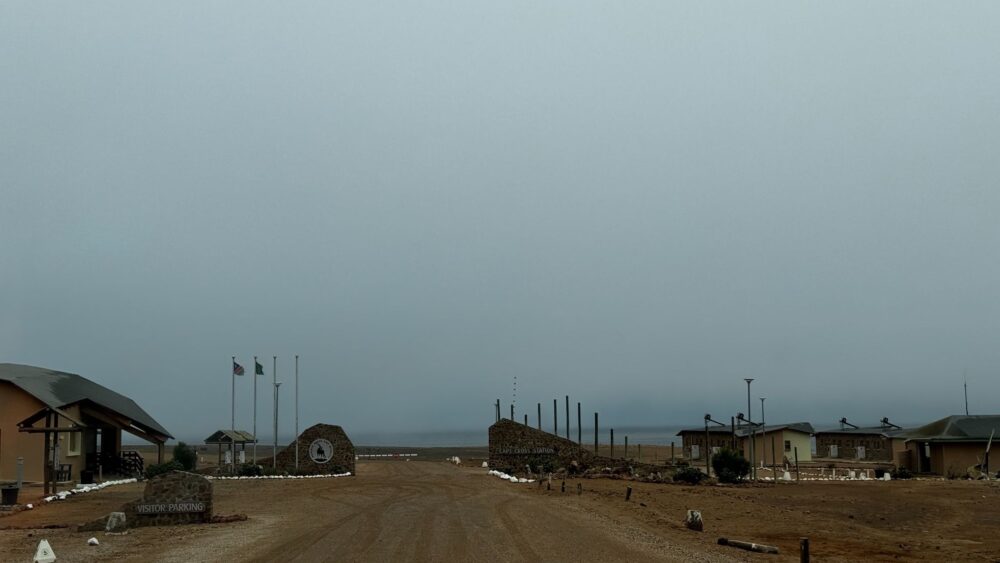
As soon as we arrived at the entrance to Cape Cross, we paid the access fees.
In our case it was approximately €25 for the four of us , a price that seemed reasonable to us considering the maintenance of the reserve and the possibility of observing one of the most impressive natural spectacles in Namibia.
But the surprise came even before parking.
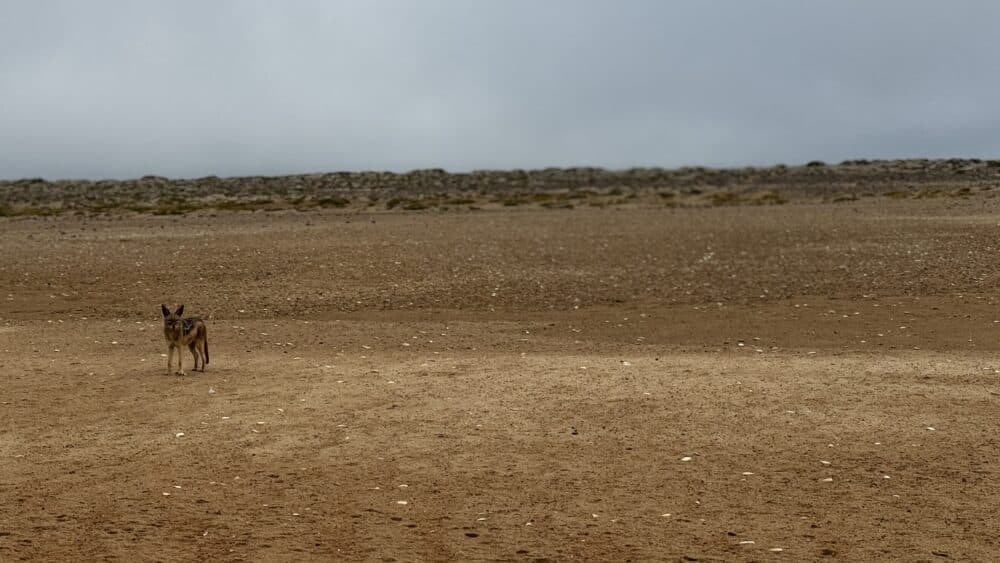
We had barely walked a few meters when we saw two beautiful jackals walking calmly along the road.
They weren't there by chance.
They patiently awaited the opportunity to feed on a dead seal or a pup that had not survived.
It may seem like a harsh scene.
And it is.
But it's also one of the things we liked most about Cape Cross.
There is no show prepared for the tourist here.
Everything happens exactly the same way it has been happening for thousands of years.
Nature rules.
And you are simply a privileged spectator.
The Cape Cross walkways: a balcony overlooking thousands of sea lions
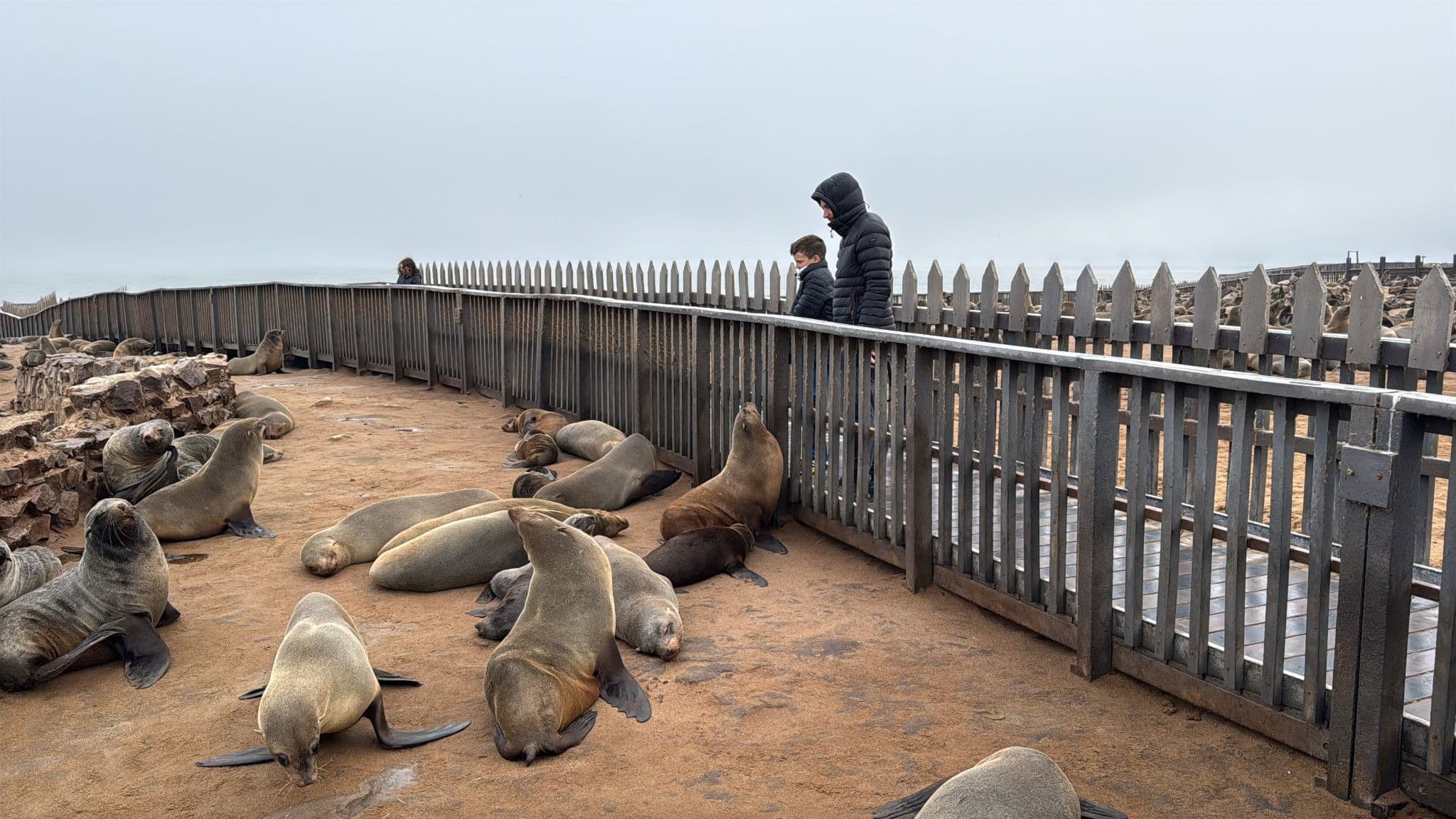
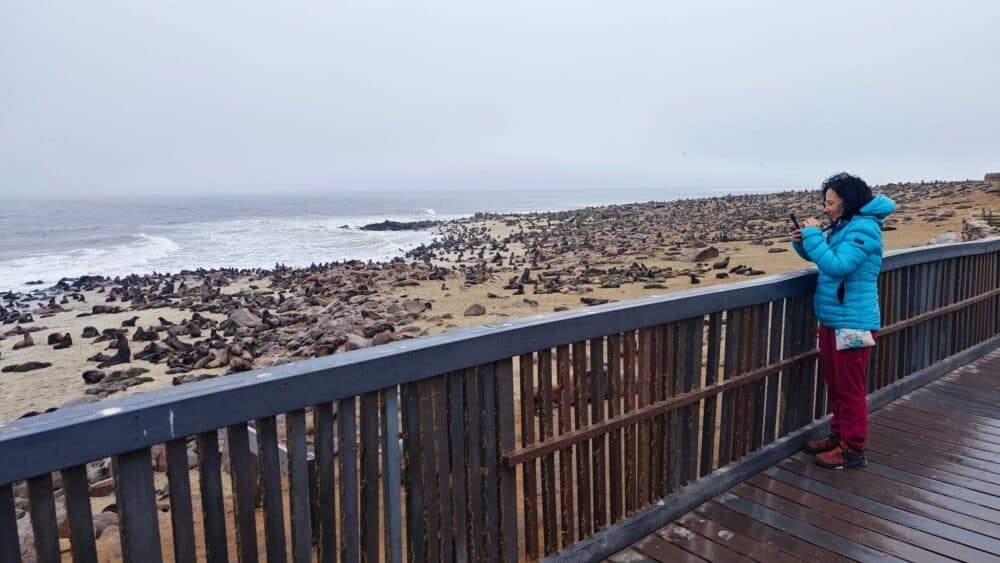
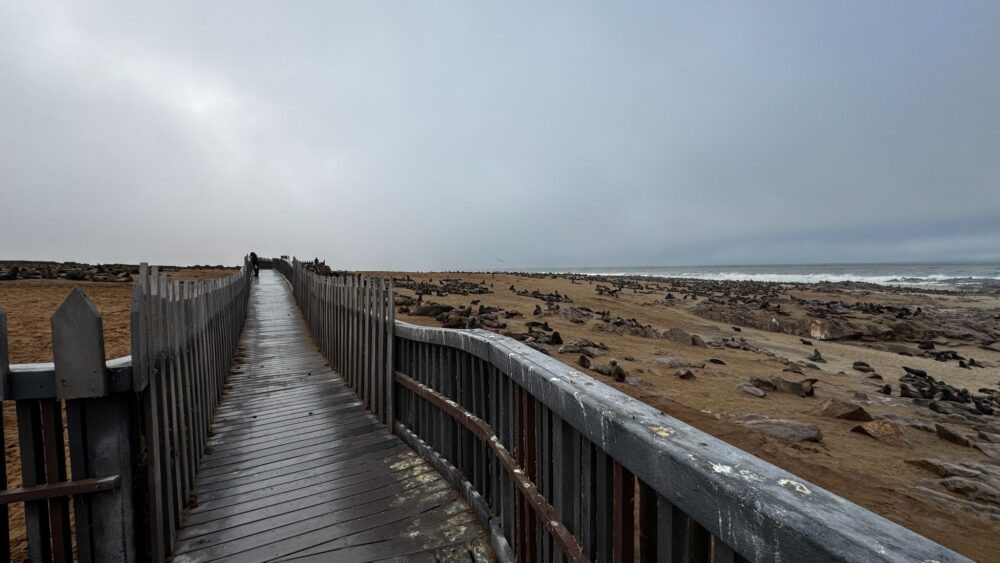
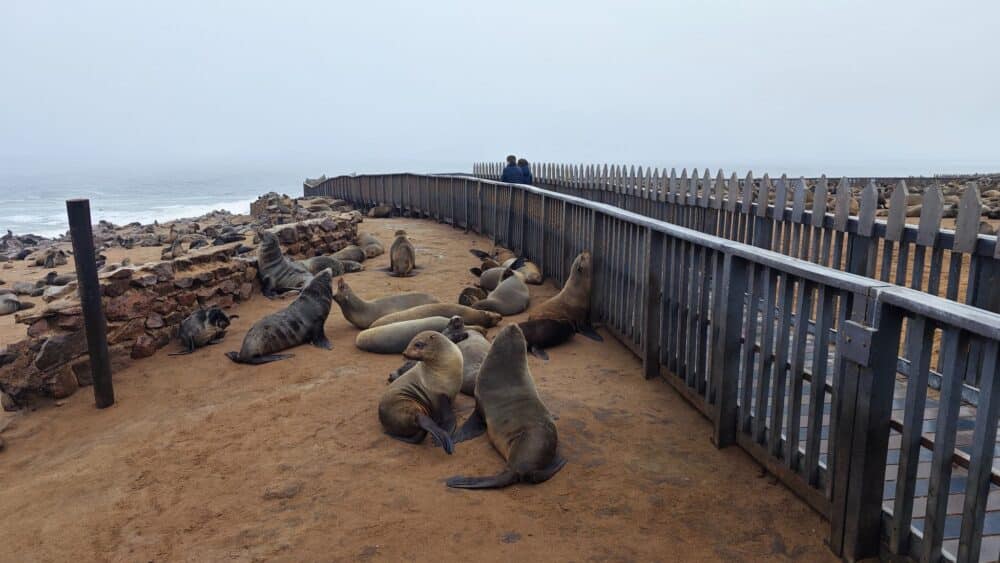
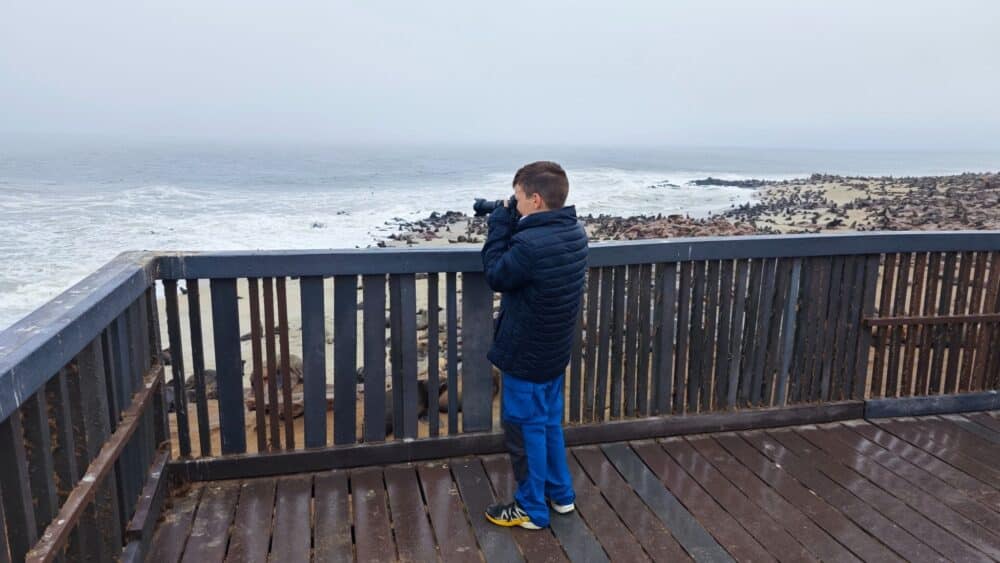
Once inside the enclosure, a system of elevated wooden walkways allows you to tour the colony without disturbing the animals.
We really liked how it was organized.
The platforms bring visitors very close to the sea lions, but at the same time maintain a sufficient distance to avoid disturbing their behavior.
As we walked, we barely knew where to look.
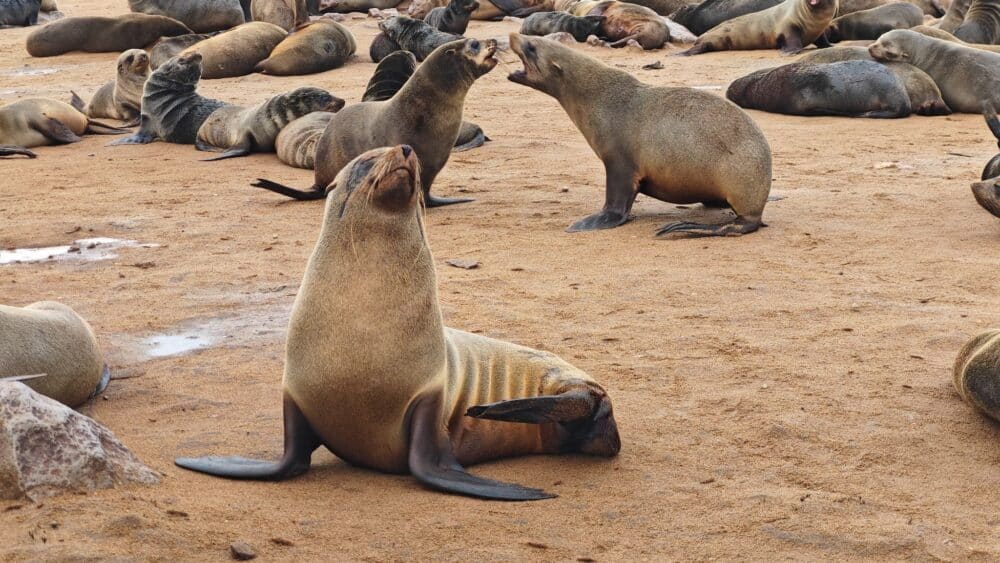
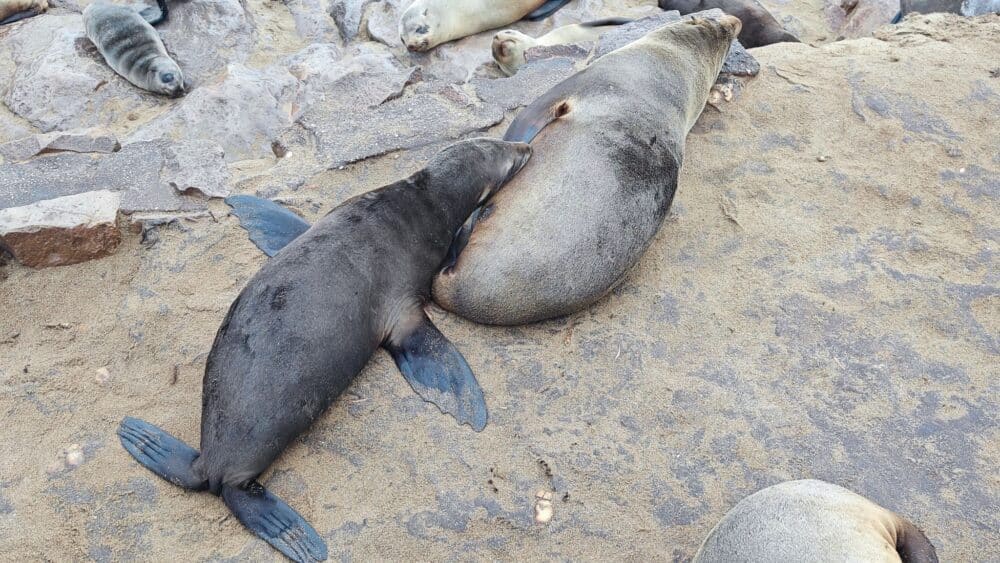
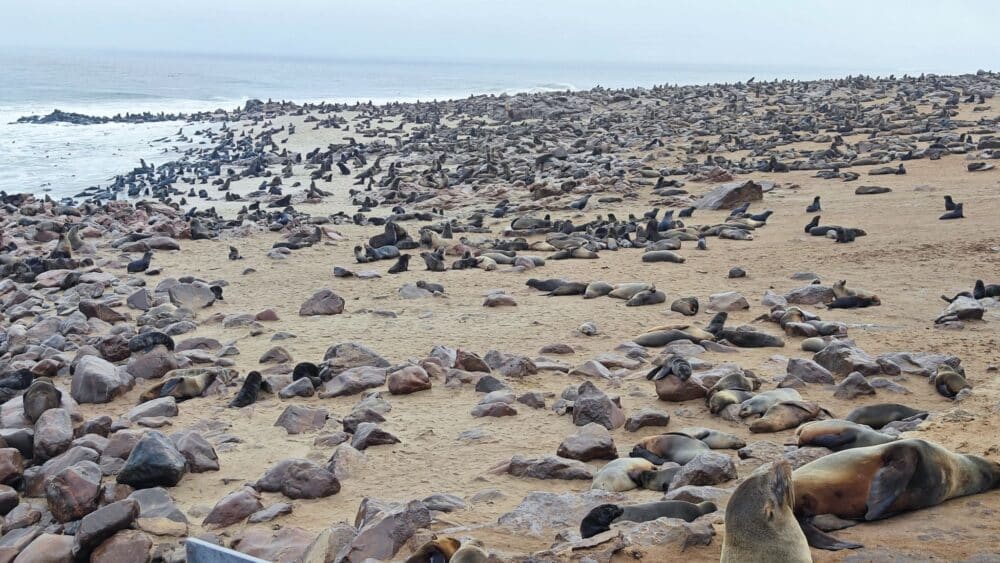
There were seals absolutely everywhere.
Adults resting.
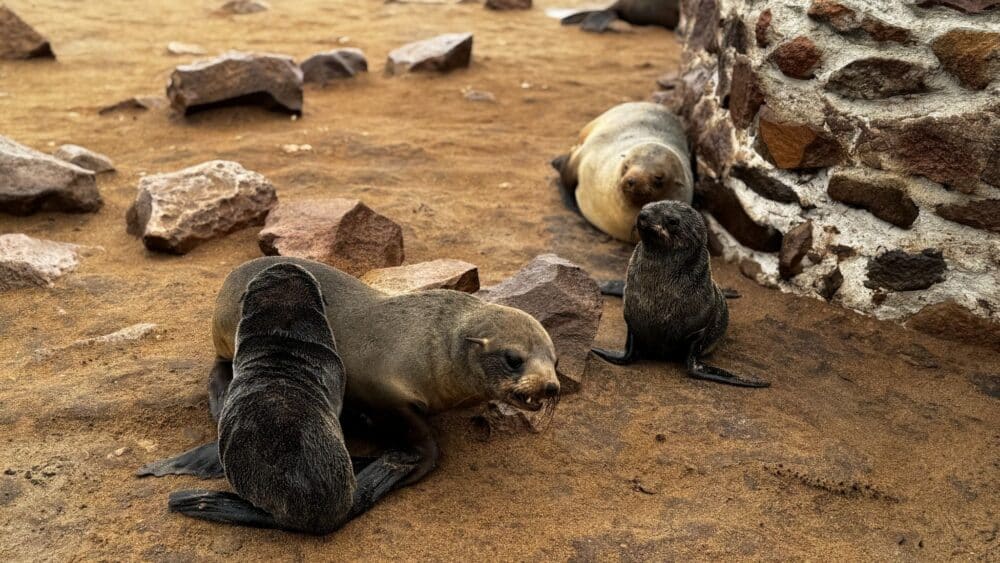
Young animals looking for their mothers.
Males fighting over territory.
Others playing among themselves.
Some were sleeping completely oblivious to the commotion.
And dozens continuously entering and leaving the ocean.
It's one of those places where you can easily spend an hour or two just observing.
Something different happens every minute.
🦭 Our recommendation
Don't rush along the walkways.
Sit down for a few minutes if you can.
Observe.
Listens.
You'll see scenes that you'd probably miss if you just take the typical quick photo and continue on your way.
Does Cape Cross smell as bad as they say?
If you search for information about Cape Cross on the Internet, you will probably find hundreds of comments warning about the famous smell of the seal colony.
Some even recommend bringing:
- essential oils,
- masks,
- scented handkerchiefs…
We had read it too.
And, just in case, we carried a small bottle of essential oil in our backpack.
Do you know how many times we use it?
None.
Not because Cape Cross smells good.
Because it doesn't smell.
It smells amazing.
But, at least for us, it was far from unbearable.
The smell reminded us a lot of an animal shelter or a large dog pound.
I suppose that having volunteered for many years at animal shelters made that smell quite familiar to us.
That's why we want to reassure you.
Yes, it smells strong.
But we don't think that's a reason to stop visiting Cape Cross.
In fact, we saw many people strolling around peacefully without any problems.
It will probably depend a lot on the wind direction, the temperature, and of course, each person's sensitivity.
💡 Kucavana Tip
If you are particularly sensitive to smells, you can carry a handkerchief with a few drops of essential oil.
We had it with us… but we never got around to taking it out of the backpack.
The sound of Cape Cross is even more impressive than the smell.
If we had to choose just one thing that surprised us about Cape Cross , it probably wouldn't be the smell.
It would be the sound.
Thousands upon thousands of sea lions vocalizing at the same time generate a continuous noise that can be heard even before getting out of the car.
There is no silence.
Just a huge chorus of grunts, calls between mothers and young, territorial fights, and constant splashing.
It's impossible to describe it in words.
You have to experience it.
And it is precisely that sound that makes the visit a completely immersive experience.
You don't just observe the colony.
You feel it.
How much time should you spend in Cape Cross?
We thought we'd be there for about an hour.
In the end we were there for almost two hours.
And they flew by.
Because small scenes are constantly happening:
- a mother finds her offspring;
- Two males begin a fight;
- A jackal appears among the seals;
- Hundreds of animals jump into the sea at the same time.
We could easily have stayed another hour.
In fact, our children were the ones who least wanted to leave.
And that, for us, is usually the best indicator that a place is really worth it.
Diogo Cão's cross: a lot of history in an almost unknown corner
Before leaving Cape Cross, it is worth visiting another of its symbols.
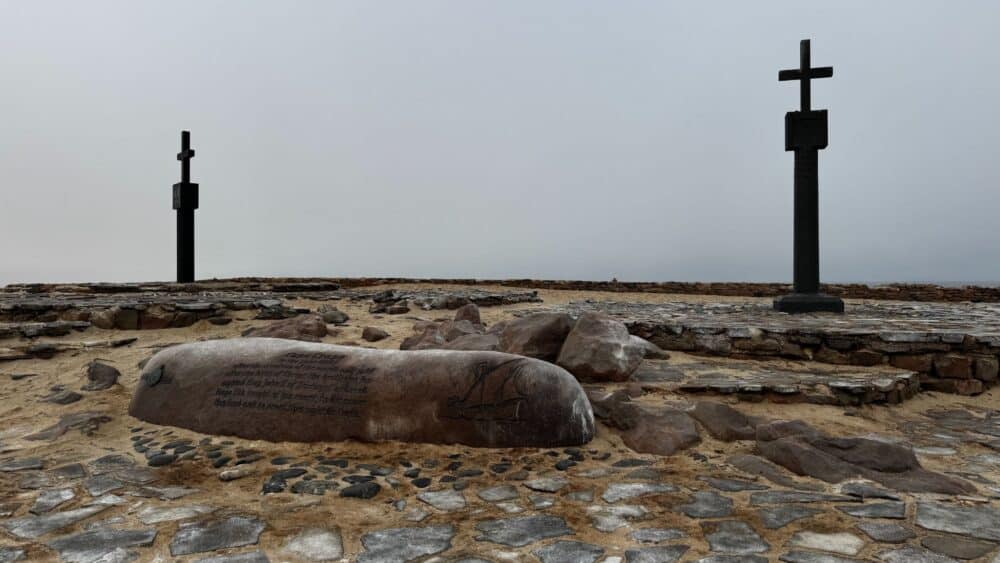
Very close to the parking lot you will find a replica of the Padrão de Diogo Cão , the stone cross that commemorates the arrival of the Portuguese explorer to these shores in 1486.
The original cross was erected to claim these lands for the Portuguese Crown and is considered one of the first European monuments built in sub-Saharan Africa.
What can be seen today is a reproduction.
The original is preserved and protected in a museum in Germany.
It's a very quick visit, but it adds an interesting historical component to a day that until then revolves almost exclusively around wildlife.
Our review of Cape Cross
⭐⭐⭐⭐⭐ 4,8/5
What we liked the most
✔ The enormous number of sea lions.
✔ Being able to observe them so closely.
✔ The presence of completely wild jackals.
✔ How well organized the catwalks are.
✔ The feeling of contemplating authentic nature.
The only less positive thing
✖ The smell may be intense for some people.
✖ During peak season, there can be quite a few people on the catwalks.
But honestly…
None of that managed to spoil a visit that we would remember for a very long time.
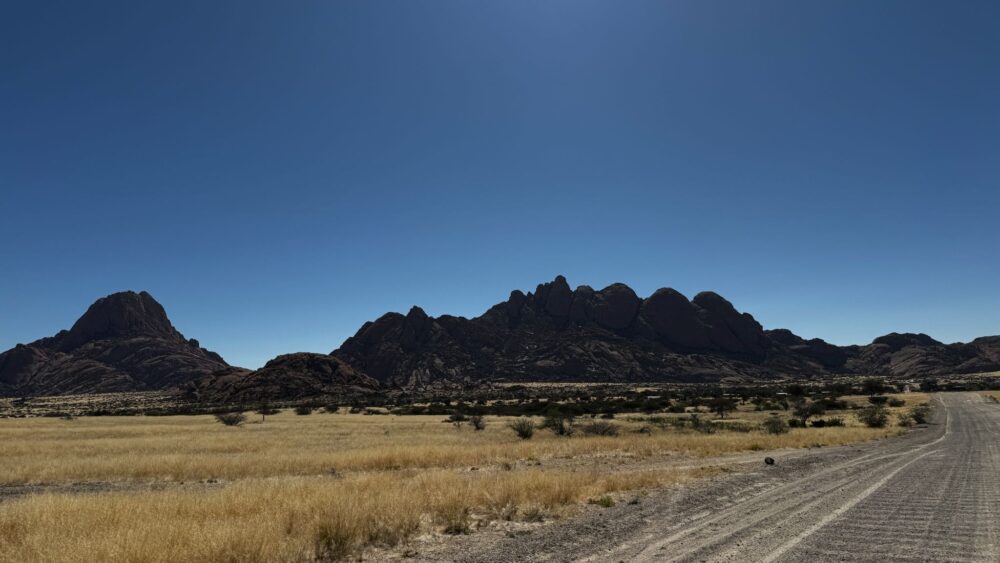
From Cape Cross to Spitzkoppe: one of the most beautiful stages in Namibia
After almost two hours completely mesmerized watching the Cape Cross sea lion colony , it was time to continue our route.
And, although it seemed difficult to overcome what we had just experienced, the rest of the day still held several surprises for us.
That is precisely one of the things that made us fall in love with Namibia.
You never know what will surprise you the most.
A curious stop to buy salt… without any vendors
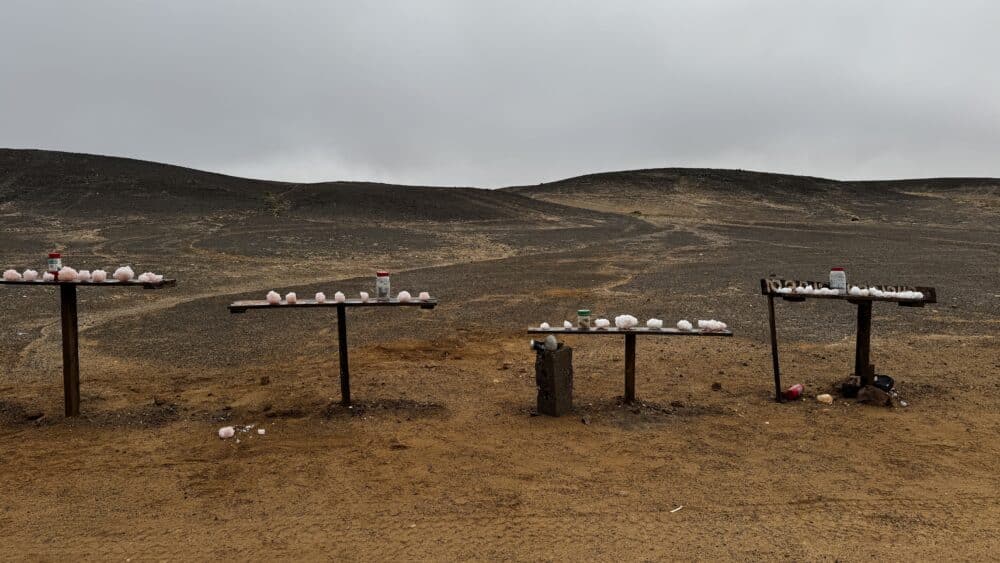
As soon as we left Cape Cross we started finding small roadside stalls selling large blocks of crystallized salt.
The strange thing is that there was absolutely nobody there.
Just the perfectly placed stones, a sign with the price, and a small container to leave the money.
As simple as that.
And that's how incredible it is.
We found it very funny because it demonstrates the enormous level of trust that still exists in many rural areas of Namibia.
We bought a beautiful salt stone.
Honestly, we never got around to using it for anything practical when we got back home.
But we loved taking it home as a souvenir and, above all, thinking that with that small gesture we were directly helping local families.
💚 Our advice
Whenever possible, buy a small souvenir from local stalls. It's a simple way to support the economy of the communities living in these remote areas of Namibia.
The Zeila shipwreck: another must-see on this road
Just a few kilometers further south we made another highly recommended stop.
The Zeila Shipwreck.
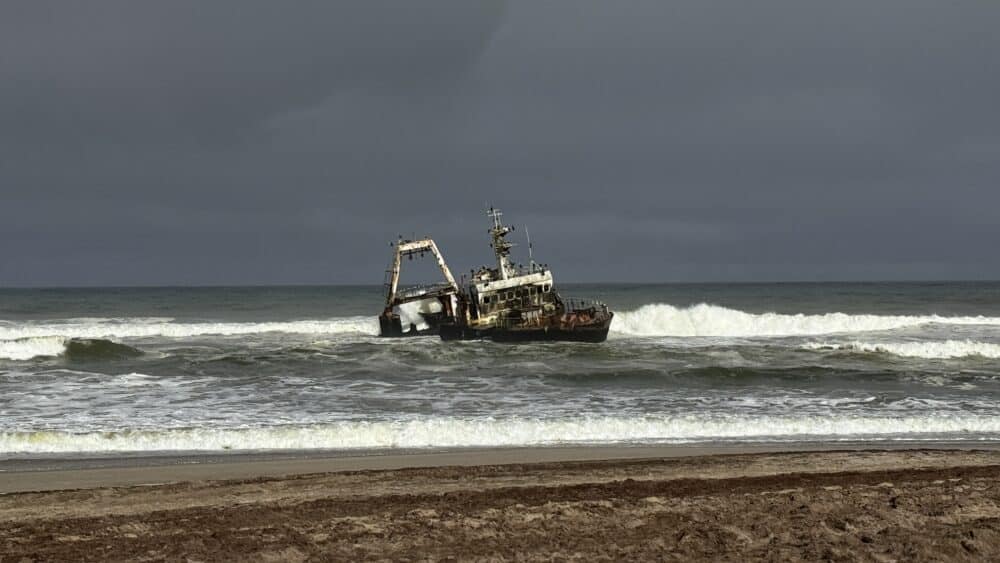
It is a fishing boat that has been stranded off the coast since 2008 , when it was towed to be scrapped and ended up beached during a severe storm.
Today it has become one of the most photographed places on this part of the coast.
It caught our attention because it can be seen perfectly from the ground.
The contrast between the rusted hull, the Atlantic Ocean, and the completely deserted landscape creates a very photogenic image.
The visit only takes a few minutes, so we think it's worth taking advantage of the fact that it's practically on the way between Cape Cross and Swakopmund.
Stop in Swakopmund to replenish supplies
Our next stop was Swakopmund.
Although we weren't going to visit the city yet —we would do that a couple of days later—, we took the opportunity to go into a supermarket and restock food for the following days of our trip.
It's something we did several times during the trip.
In Namibia, it's advisable to take advantage of the larger cities to buy everything you need before venturing back into much more isolated areas.
In Swakopmund you will find well-stocked supermarkets, gas stations and practically any service you might need.
Sleeping in Spitzkoppe: one of the best decisions of the trip
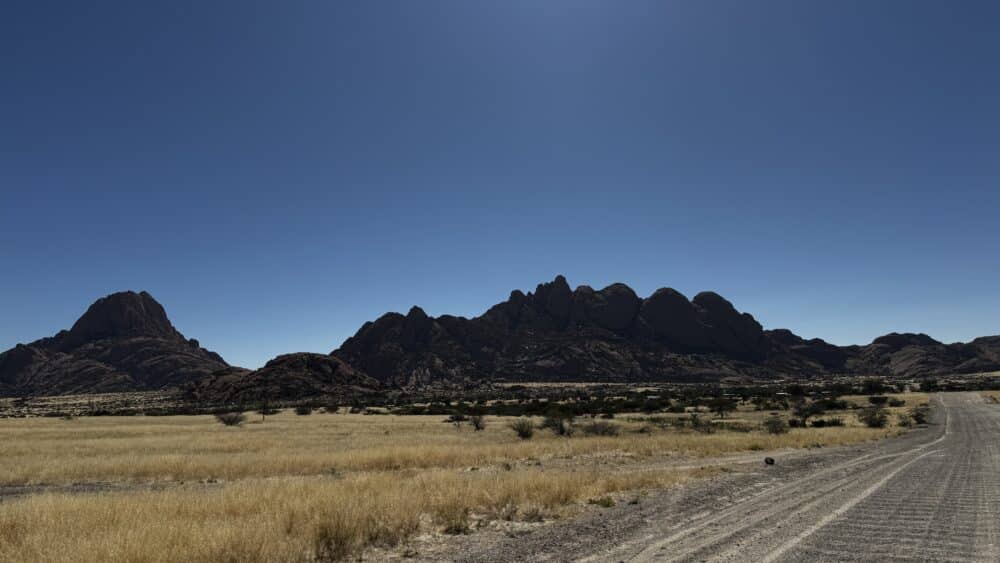
That night we slept at Spitzkoppe Tented Camp & Campsite.
We chose this campsite because it was considerably cheaper than the main campsite in the park and also offered a swimming pool, plenty of shade and a very peaceful atmosphere.
It was a real success.
But the best was yet to come.
As soon as we settled in, we booked a guided 4x4 tour to explore the Spitzkoppe mountains for the entire afternoon. To learn more, you should read our Spitzkoppe blog post.
Is Cape Cross worth visiting? Our opinion
Yes. Without a doubt.
Especially if you're touring the west coast of Namibia.
Not only because it is the largest seal colony in Africa.
Also because it is one of those places where you can observe nature functioning exactly as it always has.
Without artifice.
No schedules.
No shows.
Only thousands of sea lions living in freedom.
If you also continue your journey towards Spitzkoppe or Swakopmund , the visit fits perfectly into the itinerary.
⭐ Kucavana Rating
Landscape: ⭐⭐⭐⭐⭐
Fauna: ⭐⭐⭐⭐⭐
Photo: ⭐⭐⭐⭐⭐
Accessibility: ⭐⭐⭐⭐⭐
Children: ⭐⭐⭐⭐⭐
Recommended time: 2 hours
Frequently Asked Questions about Cape Cross
Where is Cape Cross?
Cape Cross is located on the west coast of Namibia, within Dorob National Park , approximately 120 kilometers north of Swakopmund.
What animals can be seen in Cape Cross?
Mainly Cape fur seals , but it is also common to see jackals , seabirds and even brown hyenas in the surroundings.
Does Cape Cross smell that bad?
It smells quite strong.
But, in our experience, the smell is more reminiscent of an animal shelter than something truly unbearable.
We brought essential oil just in case… and we never ended up using it.
How long does it take to visit Cape Cross?
Between 1,5 and 2 hours is usually enough to leisurely walk along the walkways, take photographs and enjoy observing the colony.
What is the best time to visit Cape Cross?
It can be visited year-round.
Between November and December, the largest number of offspring are concentrated and the colony reaches its maximum splendor.
Our final reflection
When we think of Cape Cross , the first thing that comes to mind is not photographs.
It's the sound.
Thousands of sea lions calling to each other as the Atlantic crashes powerfully against the coast.
It's the wind.
The fog.
The jackals waiting patiently among the colony.
And that feeling of contemplating a corner of the planet where nature still sets the rules.
You might arrive thinking you're only going to see seals.
We thought so too.
And we left with the memory of one of the most authentic and wild experiences of our entire trip through Namibia.
Continue organizing your trip to Namibia
If you're planning a self-guided trip through Namibia, these are the guides that will best help you plan your journey:
🧭 Complete guide to traveling to Namibia
All the information about budget, 4x4 rental, safety, accommodations, best time to go and our complete route through the country.
📅 24-day Namibia itinerary
Our complete day-by-day itinerary.
🗺️ What to see in Namibia
The must-see places that we would include in any trip around the country.
Namibia with children
Everything we learned while traveling as a family through Namibia.
💰 How much does a trip to Namibia cost?
Detailed actual budget for the trip.
🛡️ Is it safe to travel to Namibia?
Our real-life experience with safety, driving, and unexpected events during the trip.
Latest posts from our blog
-
Definitive manual for traveling by motorhome【2024】
Super complete manual for traveling by motorhome with all the answers to your questions.
-
Namibia Trip: Complete Guide for Independent Travel (24-day Itinerary, What to See and Tips Based on Our Experience)
Are you thinking of planning a trip to Namibia on your own and don't know where to start? After traveling the country for 24 days as a family in a 4x4 with rooftop tents, we've put together this comprehensive guide with everything we wish we had known before our trip. Here you'll find information…
-
London with children: what to see and do as a family (royal guide with map) of the top 22 plans
If you're planning a trip to London with kids and don't know where to start, here you'll find the 22 best family-friendly activities, an optimized 3-day itinerary, money-saving tips, the best free museums, and an interactive map with all the must-see places. Basic summary: London with kids. Quick information. Recommended days: 3-5…
-
Guide to traveling to Canada: everything you need to know for a trip to Canada on your own
Welcome to a super guide for traveling to Canada from Spain or anywhere in Europe. One of our newest destinations in this wonderful world, where every trip continues to surprise us with its hidden gems. How lucky we are to have been born on Earth! How fortunate to be able to travel to Canada! Visiting Canada…
Ethical code:
On our blog you will find affiliate links. These are always placed with our highest ethics. We never publish any service or product that we have not used before and that we are sincerely happy with. That is why our recommendations are always ethical. In addition, there is no additional cost for you to book through our links and, on the other hand, it means a small commission for us that helps us maintain this blog so that you can continue enjoying it for free.