Table of Contents
If before traveling someone had asked us what the biggest surprise of our trip through Namibia would be , we probably would never have answered Caprivi.
When we think of Namibia, we often imagine giant dunes, desert landscapes, safaris in Etosha, or endless gravel roads. We arrived with that same idea. However, after traveling more than 5.000 kilometers in a 4x4 across the country, the Caprivi region ended up becoming one of our favorite places.
Here Namibia takes on a completely different character. Great rivers appear, lush vegetation, lively African villages, hippos, crocodiles, elephants, and some of the greenest landscapes in the entire country.
And if there is one place that perfectly represents this wilder and more unknown Namibia, it is Bwabwata National Park, within the Caprivi Strip , one of the best areas to go on a self-drive safari away from the crowds.
If you're planning a trip to Namibia , we recommend starting with our complete Namibia travel guide , the main article where we've compiled all the information you need to plan your route: budget, safety, best time to travel, 4x4 rental, accommodations, and our complete itinerary for the country.
If you're looking for must-see places to include in your itinerary, for us Caprivi is one of the must-see destinations to include on any list of what to see in Namibia.
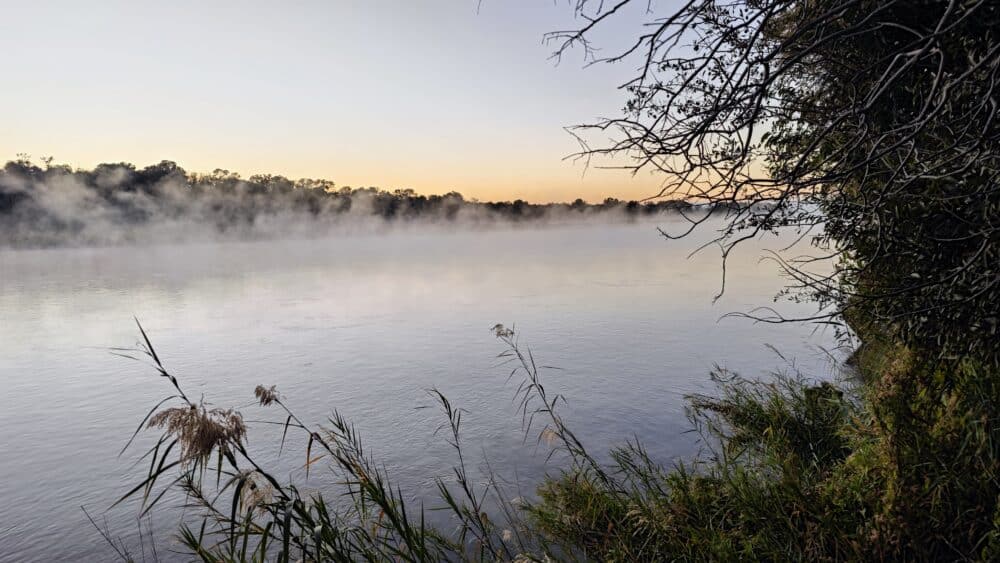
Caprivi, Namibia: where it is and why it is so different from the rest of the country
The Caprivi Strip is a narrow strip of land located in the far northeast of Namibia, wedged between Angola, Zambia, Botswana and very close to Zimbabwe.
This is a unique region within the country. While much of Namibia is dominated by arid and semi-desert areas, Caprivi is marked by the presence of large rivers such as the Okavango , the Kwando , the Zambezi , and the Linyanti , which provide water, vegetation, and enormous biodiversity.
Thanks to these rivers, we find some of the richest ecosystems in southern Africa. It is one of the best areas in Namibia for observing large mammals, birds, and wildlife associated with wetlands.
Furthermore, Caprivi is part of the massive KAZA (Kavango-Zambezi Transfrontier Conservation Area) transboundary conservation project , considered one of the largest protected areas in the world. Thanks to this, thousands of elephants freely cross between Angola, Namibia, Botswana, Zambia, and Zimbabwe, following ancient migratory routes.
Although many travelers only visit Etosha or Sossusvlei , we believe that spending a few days in Caprivi allows you to discover a much more authentic and different Namibia.
If you're still planning your itinerary, we recommend you also check out our complete guide on what to see in Namibia , where we've compiled all the must-see places in the country.
Caprivi Namibia in 30 seconds
- Location: northeastern Namibia
- Main park: Bwabwata National Park
- Recommended time: 2-3 days
- Best time: May-October
- Recommended vehicle: 4 × 4
- Featured activity: self-guided safari and boat trip
- Ideal for: families and nature lovers
Caprivi and Bwabwata in quick facts
Before we delve into our experience, here's a quick overview to get you up to speed.
| Information | Facts & figures |
| Region | Caprivi Strip (Zambezi Region) |
| main park we visited | Bwabwata National Park |
| Location | Northeast Namibia |
| Park size | 6.100 km² |
| Main rivers | Okavango and Kwando |
| Recommended vehicle | 4x4 and lowering tire pressure because of the sand |
| Recommended days | 2-3 days minimum |
| Best time | May to October |
| Featured Animals | Elephants, lions, buffalo, hippos, crocodiles, leopards |
| Ideal for | Self-guided safaris, nature, families and photography |
| level of tourism | Low |
| Security | Very good, following the usual safari guidelines. |
What we liked the most
✔ The feeling of adventure and authenticity.
✔ The scarce presence of tourists.
✔ Sleeping by the Okavango River listening to hippos all night long was quite an adventure, sometimes a little unsettling, hehehe
✔ Go on self-guided safaris practically alone.
✔ The absolute contrast with the rest of Namibia.
What we didn't like
❌ The journey to the Caprivi Strip from any other destination in the country takes 7-8 hours.
❌ The hippos and crocodiles were so close to where we slept, it was scary sometimes when you thought about it, although it was part of the adventure of course
❌ The sandy tracks, if you don't know how to drive on them and don't lower the tire pressure, can leave you stuck in the middle of a nature park full of lions.
Must-sees and visiting times
| Place | Essential | Time |
| Breathtaking | ⭐⭐⭐⭐⭐ | 1 day |
| Basket | ⭐⭐⭐⭐ | 1 day |
| Popa Falls | ⭐⭐⭐ | 1 h |
| Divide | ⭐⭐⭐⭐ | Some food |
| Ngepi Camp or lodge camping around | ⭐⭐⭐⭐⭐ | minimum 2 nights |
What to see in Caprivi Namibia
Although many people identify Caprivi solely with Bwabwata National Park, the reality is that this region offers much more.
Bwabwata National Park
It is the region's crown jewel and the main reason most travelers come here. It combines self-drive safaris, verdant landscapes, Kalahari forests, marshes, and an enormous diversity of wildlife.
Later we will tell you in detail about our experience exploring both the Mahango and Kwando areas.
Okavango River
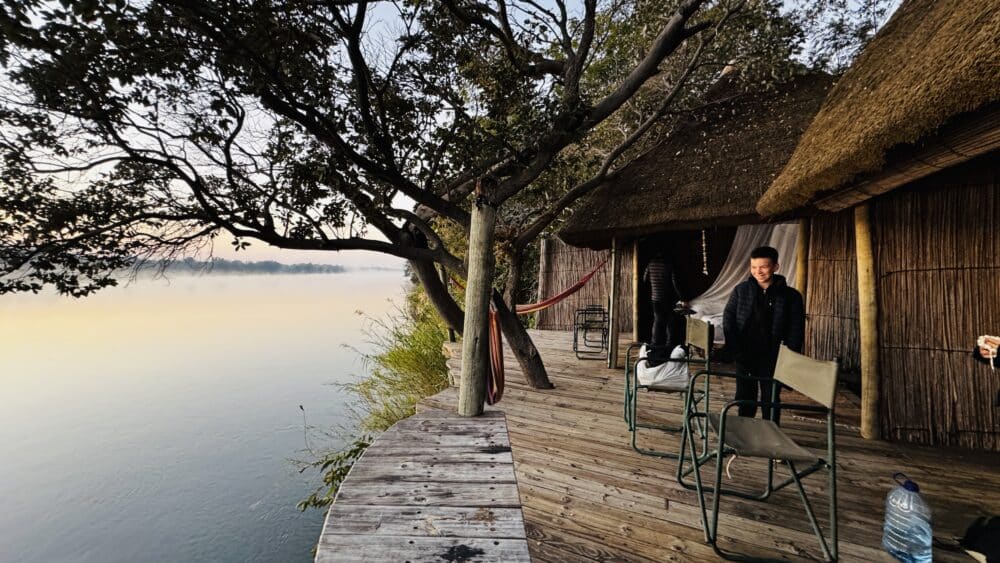
The Okavango River shapes much of life in this region. Here you'll find some of Namibia's most spectacular accommodations, with terraces literally suspended over the water and constant views of hippos and crocodiles.
It was precisely next to this river where we lived one of the most memorable experiences of the entire trip.
Popa Falls
Although the name may be misleading, it is not a series of large waterfalls but a series of rapids and small waterfalls that are very pleasant to visit along the way.
Divide
A small town that often becomes the main base for exploring the western part of Caprivi and the Mahango area.
Kwando and Kongola Rivers
The eastern part of Bwabwata offers wetter landscapes and a high concentration of wildlife, especially elephants, hippos, and buffalo.
Mudumu and Nkasa Rupara National Park
Two much less well-known parks that perfectly complement a route through Caprivi and that many consider some of Namibia's best-kept secrets.
However, if you only have a couple of days, we would recommend focusing on Bwabwata and its surroundings, as it offers an excellent combination of nature, wildlife, and ease of access.
Bwabwata National Park: what it is and why it's so special
Bwabwata National Park is not only one of Namibia's great natural treasures. It is also one of the most interesting examples of conservation in all of Africa.
Unlike other national parks where no one lives, Bwabwata is home to both wildlife and local communities. In fact, some 5.000 people live within its boundaries, primarily in the Omega Zone and other small settlements scattered throughout the park.
Its history is also unusual. The area was initially declared the Caprivi Game Reserve in 1966 and later a Game Park in 1968. For decades it was affected by the region's armed conflicts and by the South African occupation during Namibia's war of independence. It wasn't until after the country's independence that genuine conservation-oriented management began.
In 2007, the current Bwabwata National Park was officially created , integrating the former Mahango Reserve and opting for a pioneering model that combines environmental protection and development of local communities.
Today it forms part of the gigantic KAZA ecological corridor (Kavango-Zambezi Transfrontier Conservation Area) , considered one of the largest protected areas on the planet and fundamental for elephant migrations between Angola, Zambia, Botswana and Namibia.
With an area of over 6.100 km² , the park stretches between the Okavango River and the Kwando River , offering a huge variety of ecosystems:
- Kalahari Forests.
- Mopane forests.
- Floodplains.
- Marshes.
- Papyrus marshes.
- Riparian forests.
All of this makes Bwabwata one of the most biodiverse places in Namibia.
If you want to discover other must-see natural spaces in the country, we recommend our guide on what to see in Namibia.
Bwabwata National Park: basic information
| Official name | Bwabwata National Park |
| Where to sleep | Spectacular lodges and campsites in the National Park |
| Proclamation | 2007 (as a national park) |
| Size | 6.100 km² |
| Main rivers | Okavango (west) and Kwando (east) |
| Vegetation | Kalahari forests, omurambas, papyrus, Zambezi teak, Makalani palms |
| Featured fauna | Elephants, buffalo, lions, leopards, wild dogs, hippos, rare birds |
| Resident population | About 5.000 people live inside the park |
| Tourism | Primarily foreign explorers and campers |
| Shared management | Local community (Kyaramacan Association), MET, NGOs, international projects |
| Part of | KAZA Transboundary Conservation Area |
| Actual problems | Pressure from uncontrolled tourism, elephant management, habitat conservation |
Our experience in Caprivi and Bwabwata with children
To be honest, we arrived in Caprivi without too many expectations.
We thought it would simply be a transition zone before reaching Etosha National Park , but it ended up becoming one of the most special stages of our entire 24-day Namibian route.
In fact, our children thoroughly enjoyed this part of the trip. If you're thinking of traveling around the country as a family, we also recommend reading our guide to Namibia with children , where we explain everything we learned traveling through the country with our two kids.
They were able to observe hippos from our tree house, discover crocodiles for the first time in the wild, navigate the river and experience their first great African safari.
Day 4 of our route: from Waterberg to the Okavango River
After spending the night in Waterberg Plateau National Park , where we had enjoyed one of the few safe hikes of the trip and our first white rhinos, we set off towards the northeast of the country.
It was a long day. A very long day.
Almost eight hours of driving separated us from our accommodation in Caprivi.
As we made our way towards Rundu, we began to notice how Namibia was completely changing.
Small scattered villages appeared, wooden craft stalls in front of houses right next to the paved road, pumpkin vendors where you simply left the money in a secure box, and houses built with sheet metal, branches, and thatched roofs.
For the first time we felt we were seeing the most authentic Namibia.
The real Namibia, where the people lived.
After leaving the asphalt came another great first of the trip: our first serious kilometers on deep sand . Luckily, it was only a few kilometers to reach the campsite, and honestly, that area wasn't all that bad. In fact, the signs at the campsite made fun of driving a 4x4 there, saying things like, "You've already paid for your super 4x4 rental, although a local here drives a normal Panda, hehe."
And that's when we discovered we still had a lot to learn about 4x4 driving , this was just the beginning, hehehe
Fortunately, we managed to reach Ngepi Camp without any problems , an absolutely magical place by the Okavango River that would become one of our favorite accommodations of the whole trip, although there are many, see here all the ones in the same area , one next to the other in the same style there in Divundu.
Sleeping on the Okavango
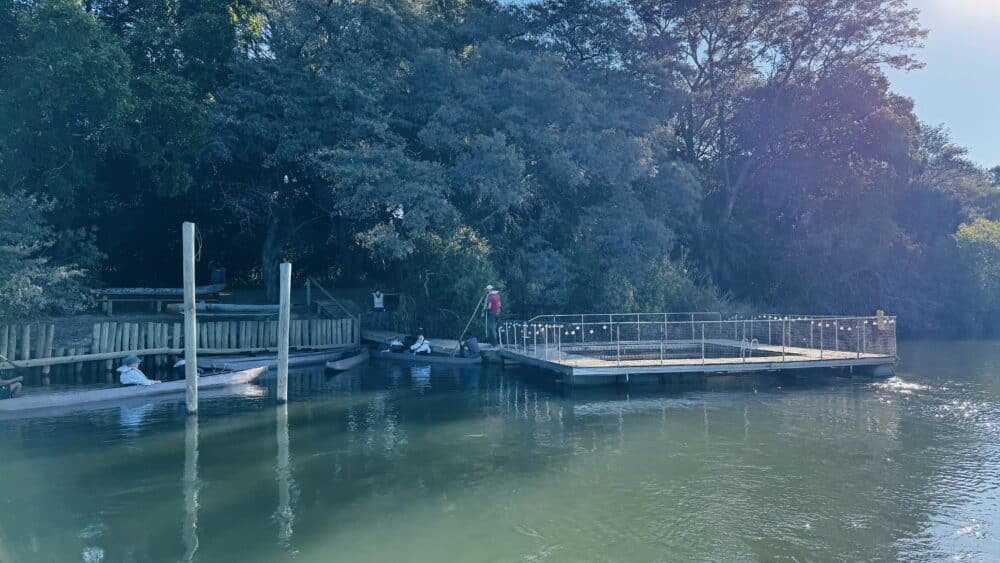
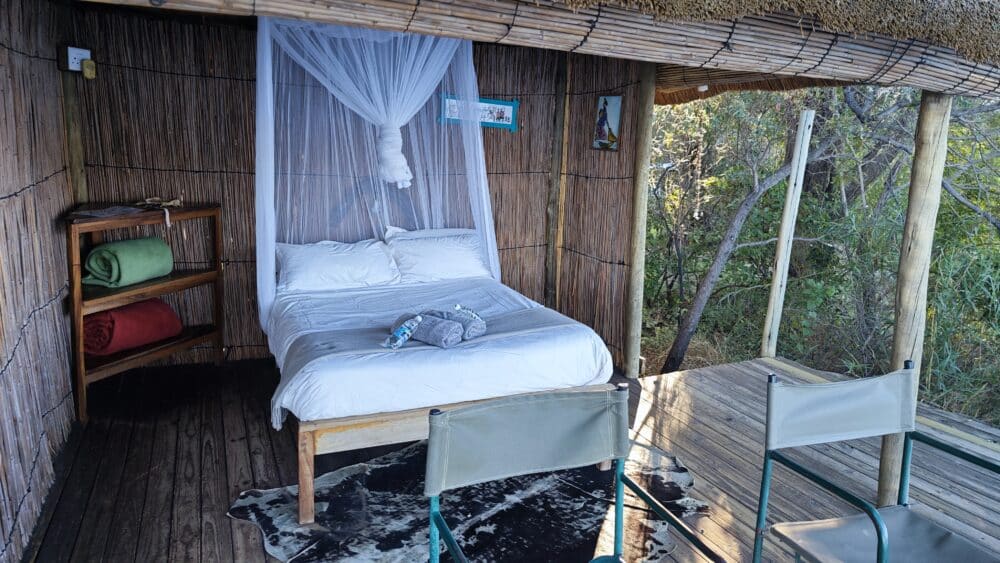
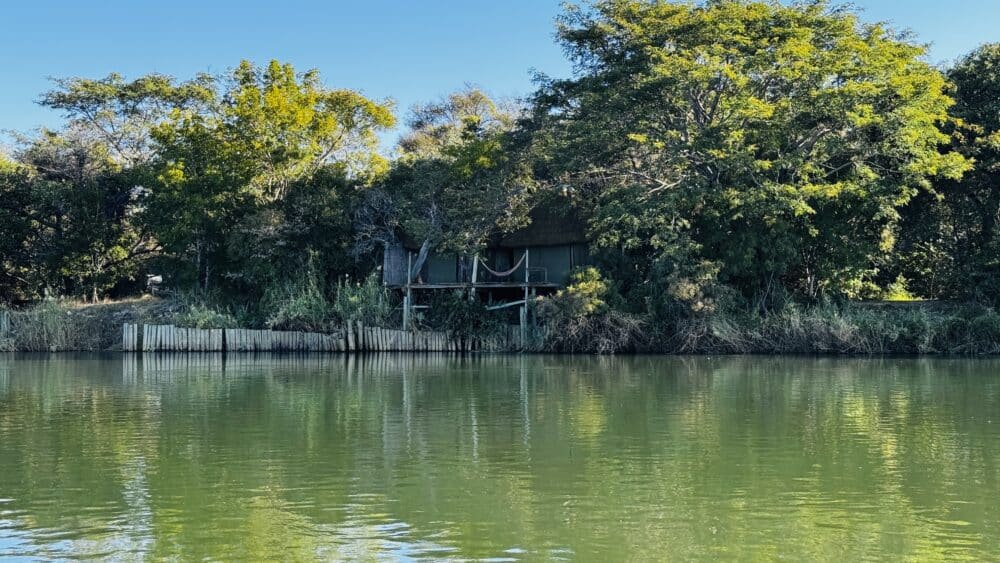
We had booked a tree house built literally over the Okavango River , the typical accommodation in the area, although a bit more expensive than others, to be honest.
When I asked for the key at reception, the guy—with dreadlocks, reggae music playing in the background, and an atmosphere more reminiscent of Jamaica than Namibia—answered me with a smile:
—It's under the rug.
The problem was that there wasn't even a door, hehehe, it had stayed with us hehehe
No door, no lock. And it didn't need one.
That was simply spectacular.
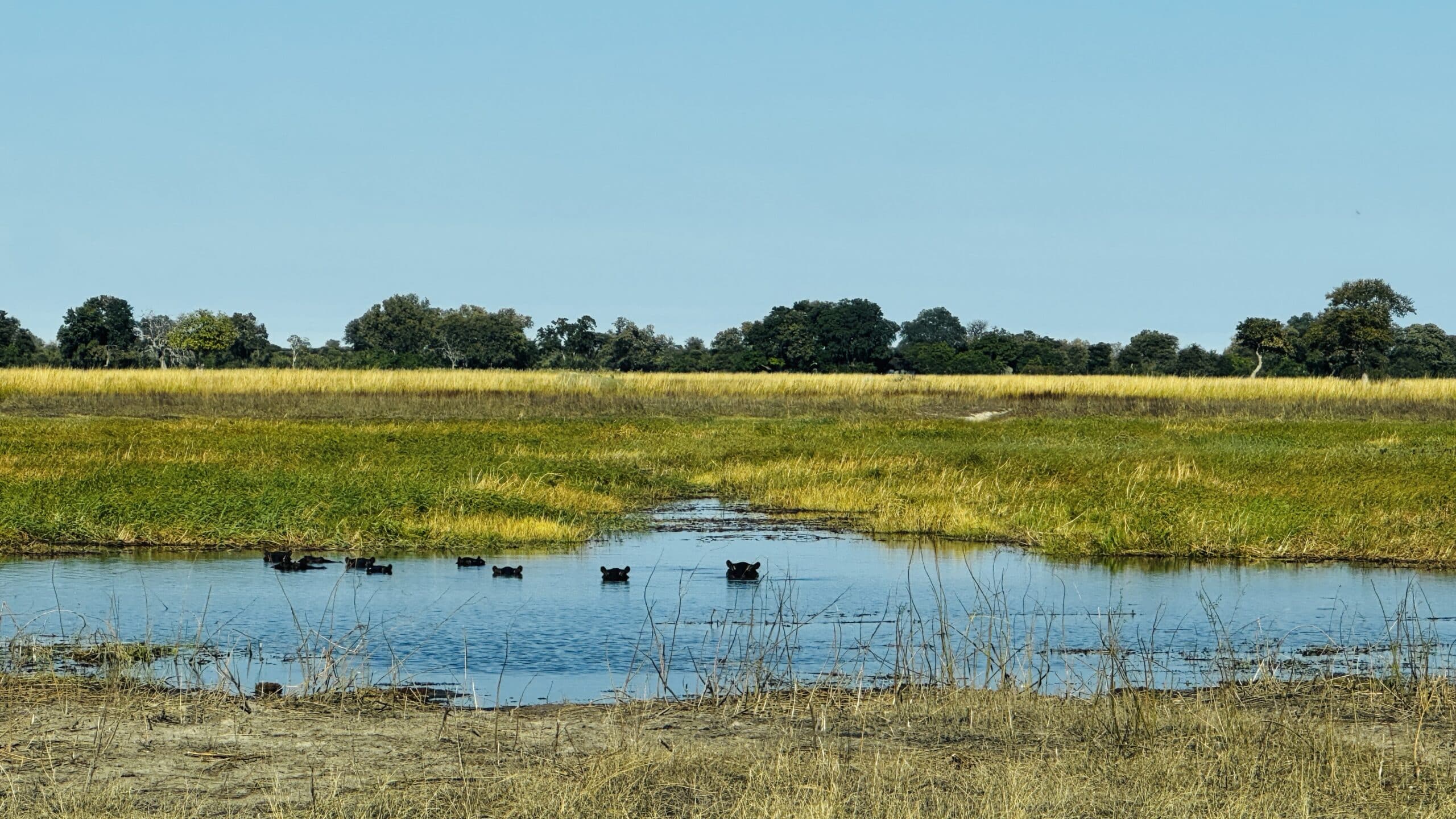
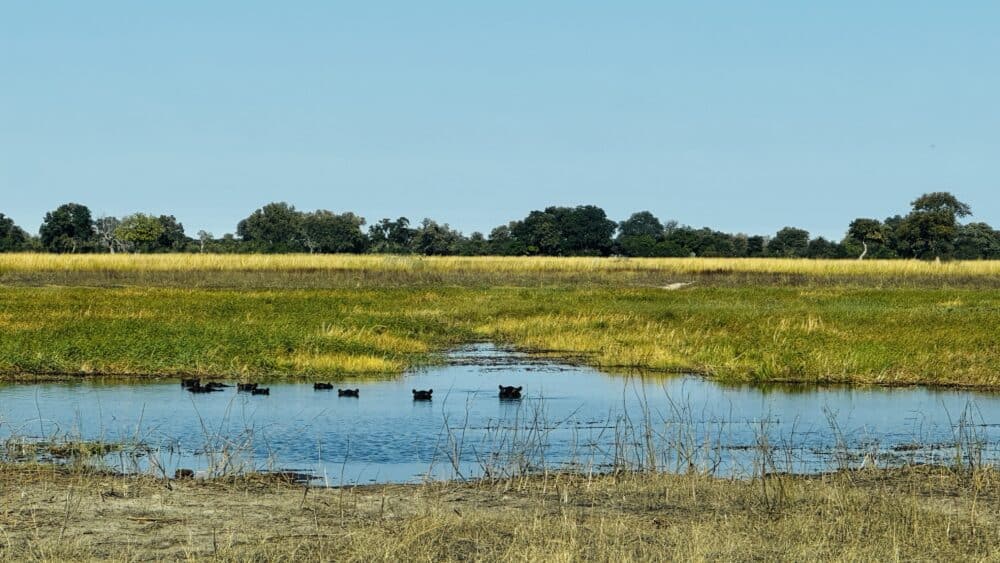
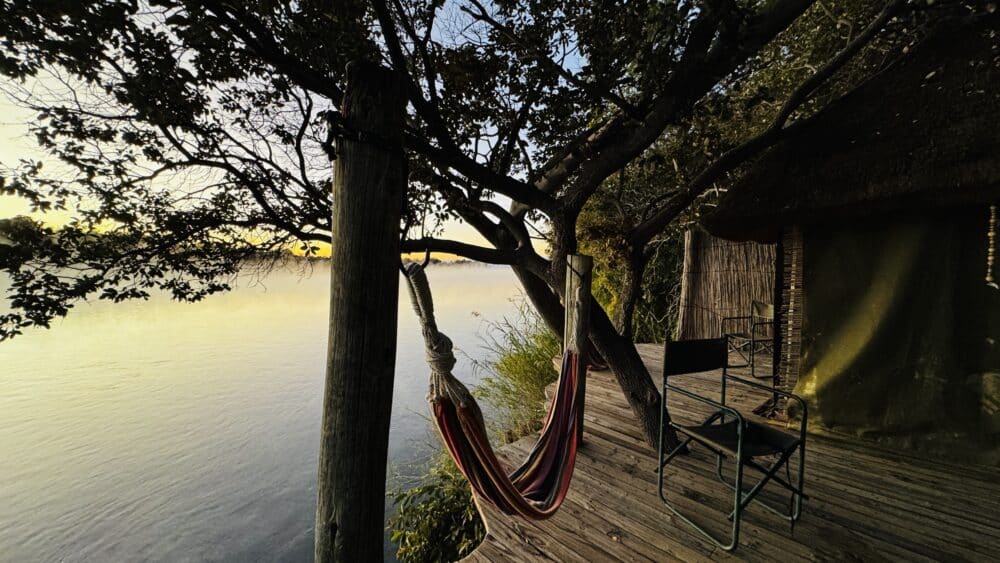
From the terrace we watched crocodiles and hippos moving through the river as the sun began to set, with one of those African images to remember for a lifetime.
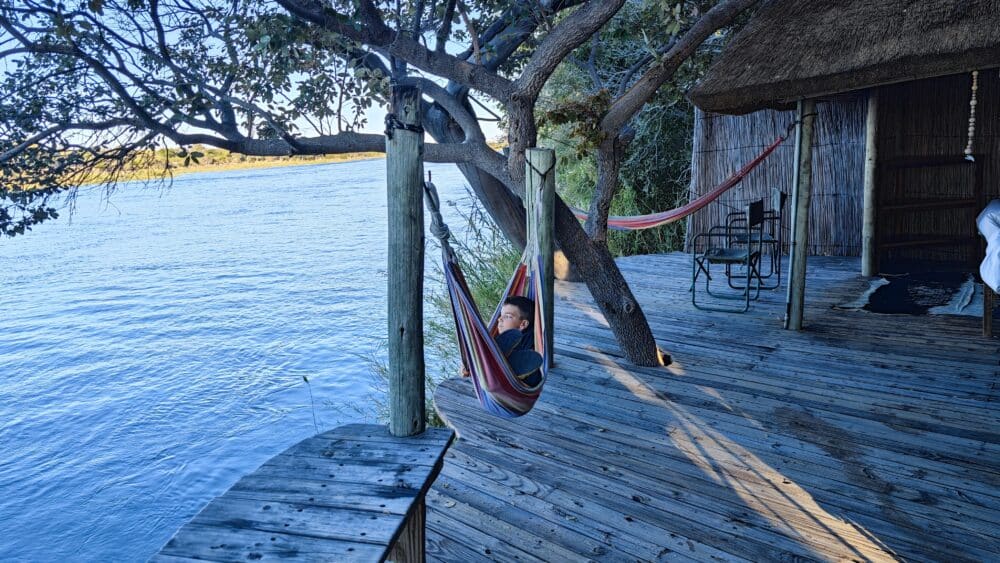
The children were fascinated. Although I was much less so when I saw them getting too close to the hammocks suspended over the water, where crocodiles and hippos kept swimming right beneath us. Stretching out in a hammock is quite a risky sport, isn't it? (Hehehe)
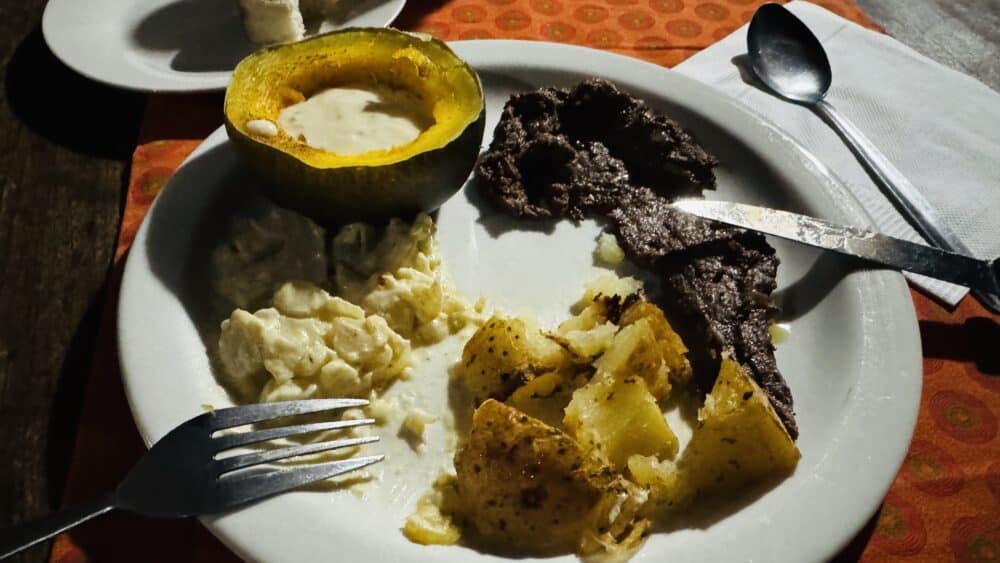
That night we had dinner at the lodge camping restaurant while watching the sunset over the Okavango; the hostel-like spirit of this campsite makes it very pleasant.
The sounds of the hippos throughout the night , mixed with what sounded like a monkey throwing fruit at our cabin, meant we didn't get much sleep, to be honest, hehe.
But honestly… It was one of those experiences I'll remember for the rest of my life . Pure Africa.
Free Safari in Bwabwata National Park
The next day brought one of the most anticipated moments of our African adventure.
Our first big self-drive safari.
And also in a park that practically nobody talks about when preparing a trip to Namibia, where we didn't have much information or rather, none at all.
After having breakfast by the Okavango, on our little terrace, we headed towards one of the park entrances in our 4x4. There are two areas of this park, one that is quite far from where we stayed, Kwando Core Area , and the area where we stayed, Mahango , which also has two different entrances, one on each side of the Okavango River.
Entrance fees were very affordable compared to other national parks: about 115 Namibian dollars per adult and approximately half that for children.
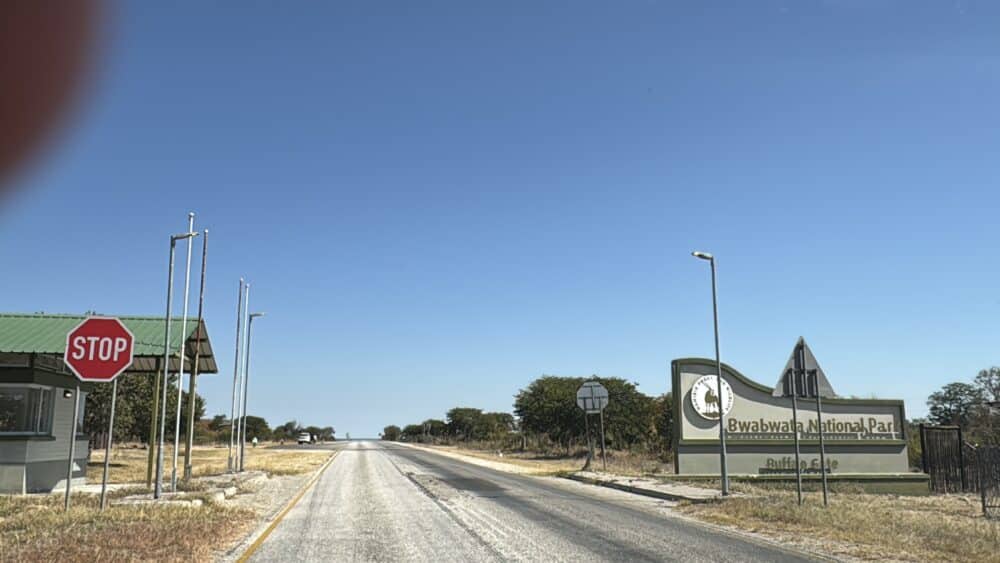
We entered through the Buffalo Gate area , where we immediately discovered why everyone recommends traveling with a 4x4 vehicle.
The sand was deep as we moved towards the wetlands and Okavango area. Very deep at times…
We had barely gone a few kilometers when we started encountering large kudus, springboks, birds of spectacular colors and some of the most beautiful landscapes we had seen up to that point.
But the best was yet to come. After explaining the two areas of Bwabwata, I'll tell you our great anecdote from Bwabwata. Keep reading.
The two areas of Bwabwata: Mahango and Kwando
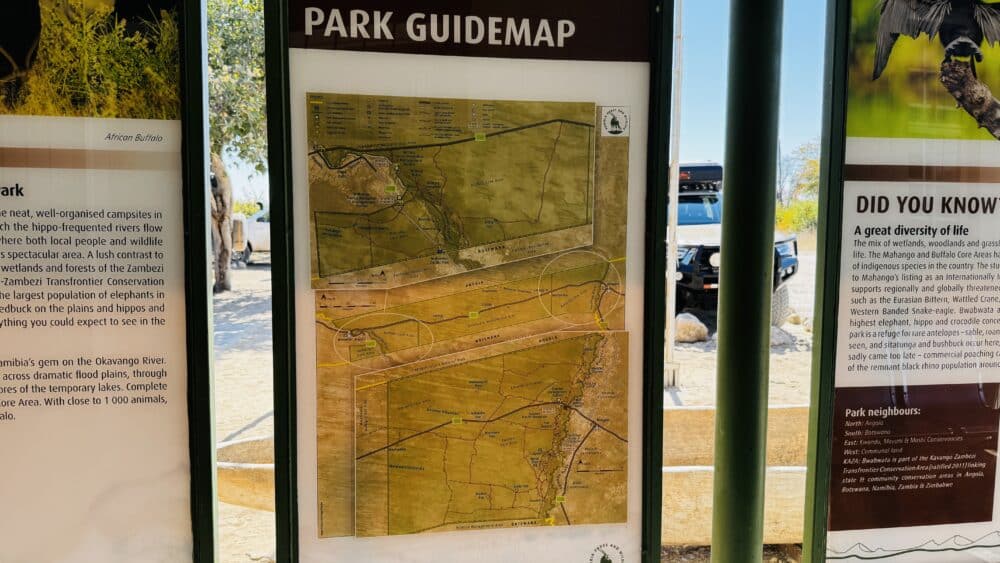
One of the things that surprised us most when preparing for our visit was discovering that Bwabwata National Park does not function like a conventional national park , but is divided into two large main areas separated by tens of kilometers and connected by the paved B8 road that runs through the Caprivi region.
Many travelers only visit one of them without realizing that each area offers quite different landscapes and experiences. And if you go for just two days, like we did, you always end up missing out on visiting one of the areas.
Mahango Core Area: the gateway from Divundu
The Mahango area , located along the Okavango River and very close to Divundu, is the best known and most accessible for most travelers. It's also the area we visited during our first independent safari, as it's the closest to where we were staying.
Here we find some of the most spectacular landscapes in the park, with riparian forests, marshes, floodplains and abundant water for much of the year.
The wildlife is very varied and is usually relatively easy to observe:
- Elephants
- Hippos
- Cocodrilos
- buffaloes
- Sable antelopes
- Roan antelopes
- Kudus
- Leones
- Numerous birds
Furthermore, this is the area where the well-known Buffalo Gate is located , one of the main entrances to the park, which is the one we took to enter.
Many of the tracks are sandy and a 4x4 is highly recommended to travel them calmly; ideally, when paying the entrance fees, lower the tire pressure.
If you only have half a day or a full day in Bwabwata, this is probably the area you'll visit, just like we did.
Kwando Core Area: the wildest area of Bwabwata
The second large area of the park is the Kwando Core Area , located much further east, near Kongola and the Kwando River.
This part of Bwabwata receives fewer visitors and offers an even greater sense of isolation.
The landscapes are dominated by large floodplains, forests and wetlands that attract a huge amount of wildlife throughout the year.
It is especially known for the presence of:
- Large herds of elephants.
- Buffaloes.
- hippos
- Crocodiles.
- Lions
- African wild dogs.
- More than 400 species of birds.
Many experts consider this area to be part of one of the best wildlife corridors in all of southern Africa thanks to its integration within the KAZA cross-border project.
We didn't get to visit the Kwando area during this route, but both other travelers and several accommodations in the region recommended it to us as one of the wildest and least visited areas of Bwabwata.
Which one do we recommend visiting?
If you have limited time, the Mahango area is usually the simplest and most accessible option; it is the easiest to get to and from the area.
However, if you are going to spend three days in Caprivi, our recommendation is to combine both areas, as you will have time to see both zones for sure.
Indeed, one of the great advantages of Bwabwata National Park is that it allows you to discover two completely different ecosystems within the same national park.
We thoroughly enjoyed exploring the Okavango area, but if we were to return tomorrow we would dedicate even more time to exploring the Kwando region, one of the wildest and least visited regions in all of Namibia, or so we were told.
2 or 3 day itinerary to visit Caprivi and Bwabwata on your own
One of the most common questions when planning a trip to Namibia is how many days to dedicate to Caprivi. Based on our experience, we believe the ideal time is between two and three full days.
Although many people cross the region in a single day on their way to Etosha National Park , we believe this is a mistake. Caprivi has enough attractions to justify spending several days there as part of any independent Namibian itinerary.
Caprivi in 2 days
Day 1
- Arrival from Waterberg Plateau National Park o Rundu o Etosha National Park
- It is installed Divundu or Ngepi Camp or surroundings.
- Boat trip on the Okavango River at sunset.
- Hippopotamus and bird watching at your Okavango lodge campsite
Day 2
- Self-drive safari in the Mahango Core Area.
- Entrance through Buffalo Gate and all the way to the Buffalo Marshes.
- Return to accommodation.
- Continue the route towards Etosha or stay overnight and get up early the next day.
Caprivi in 3 days
If you have an extra day, we recommend spending it exploring the eastern part of the park.
Day 3
- Transfer to Kongola.
- Tour by Kwando Core Area.
- Continue towards Mudumu
- Continue the route towards Etosha or stay overnight and get up early the next day.
Quick mind map to organize the visit
If we look at the region from west to east, the usual route would be:
Divundu → Mahango → Okavango River → Kongola → Kwando → Etosha
This distribution greatly helps to understand the geography of the former Caprivi Strip , now officially called the Zambezi Region , one of the greenest and most biodiverse areas in Namibia.
Self-drive safari in Caprivi: our experience and tips
One of the main reasons to visit this region is that going on a self-drive safari in Caprivi remains an authentic, peaceful experience, very different from what you'll find in other more well-known parks in Africa.
While in places like Etosha National Park it's common to encounter numerous vehicles around a wildlife sighting, during our self-drive safari in Caprivi we spent long periods without seeing a soul. That feeling of adventure and exploration was precisely one of the things we enjoyed most about this part of Namibia.
For us, Caprivi is one of the best regions in the country for those who enjoy driving their own vehicle and discovering wildlife at their own pace. You don't need to follow convoys or depend on organized schedules. You simply move slowly, observe, enjoy the scenery, and let nature reveal itself.
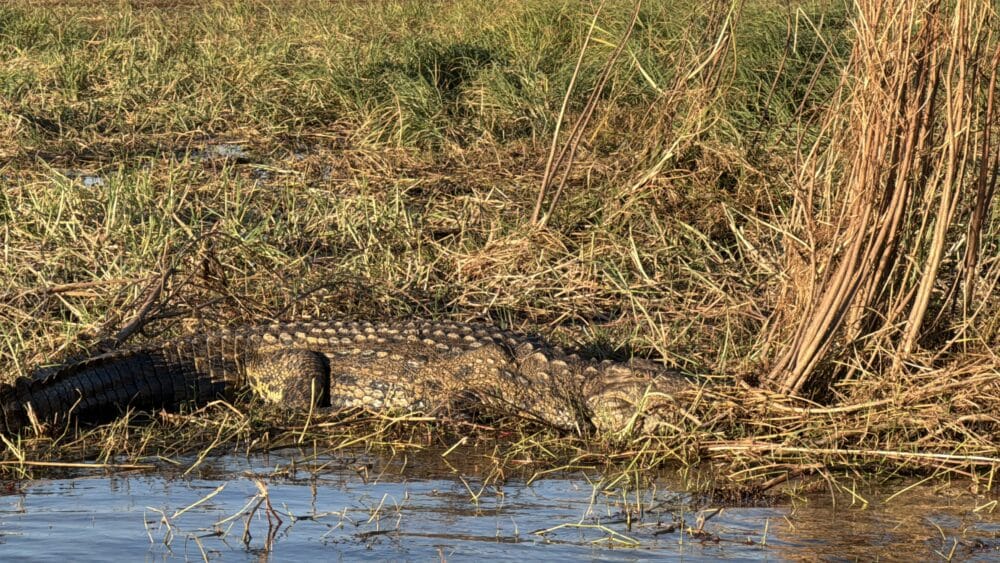
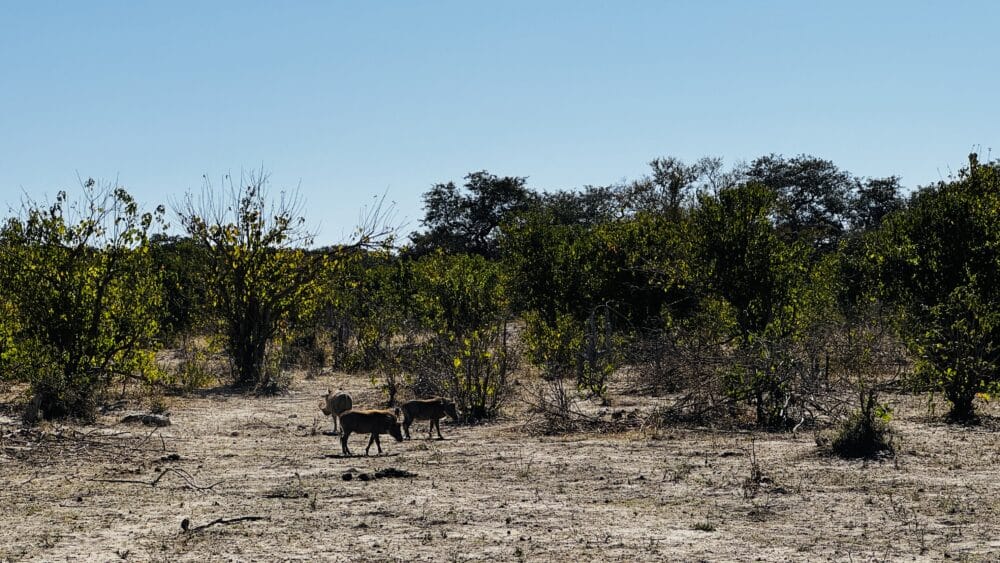
During our safari we saw elephants, hippos, crocodiles, buffalo, great kudus, warthogs, and the only lionesses of our entire trip through Namibia . In fact, we didn't have such a special encounter with lions again, not even in Etosha.
Furthermore, the contrast between the great rivers, marshes, forests, and abundant vegetation makes Caprivi a very different experience from the rest of the country. That's why we believe that a self-drive safari in Caprivi is one of Namibia's most underrated activities.
If you're planning a trip around the country and looking for a wilder, less touristy, and very authentic experience, Caprivi is one of the best areas for a self-drive safari in Namibia.
What animals did we see in Bwabwata National Park?
One of the great advantages of Bwabwata is that it offers a much wilder and less crowded experience than other national parks in the country.
We saw a spectacular amount of wildlife.
| Animal | Did we see it? |
| Leones | ✅ Yes |
| Hippos | ✅ Yes |
| Cocodrilos | ✅ Yes |
| buffaloes | ✅ Yes |
| Elephants | ✅ Yes |
| Warthogs | ✅ Yes |
| Kudus | ✅ Yes |
| Springboks | ✅ Yes |
| exotic birds | ✅ Yes |
| Leopard | ❌ No |
| cheetah | ❌ No |
The only lionesses on the entire trip: the anecdote we will never forget from this trip
The most incredible anecdote happened precisely when we were still learning to drive on sand.
José started to get nervous because the track was getting more and more complicated, and there came a moment when he decided to turn around.
He asked me to get out of the car to help him maneuver through the trees. FIRST BIG MISTAKE: NEVER EVER GET OUT OF THE CAR IN A NATIONAL SAFARI PARK
I obeyed. I made sure it didn't hit any branches. SECOND BIG MISTAKE: OBEYING YOUR HUSBAND LOL
I went back upstairs. We kept moving forward.
Complete rookies… It was our first safari on our own and we had no idea that the park held what we would later see so close up…
And just a few minutes later, thanks to some safari guides who showed us where to look, four lionesses appeared in front of us.
The only ones we saw on the entire trip. Brutal… We didn't even manage to see lions again in Etosha National Park .
And the best part was realizing that, while I was calmly standing outside the car helping to maneuver, those lionesses were probably just a few meters away watching us, because I was very, very close to where I got out. LESSON LEARNED: NEVER EVER GET OUT OF THE CAR IN A NATIONAL PARK.
When we thought about it later, we all burst out laughing. But we also understood why in Africa you should never get out of your vehicle inside a national park.
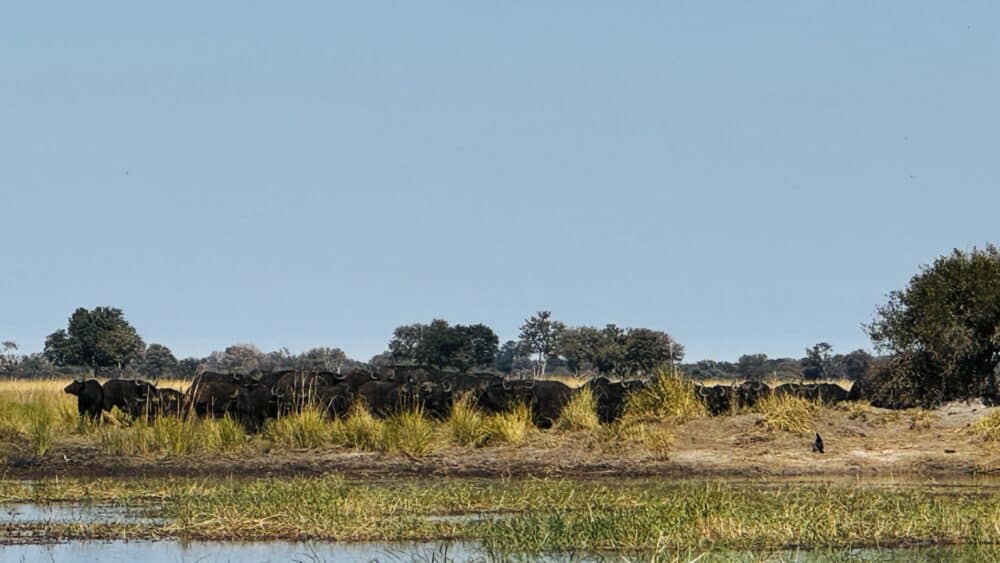
From that moment on, there were more spectacular encounters with hippos, huge herds of buffalo, warthogs, crocodiles, and a multitude of birds.
And we still had one of the best sunsets of the entire trip to experience from the water.
Okavango River boat tour: one of Caprivi's best experiences
After our first self-drive safari in Bwabwata, we returned to Ngepi Camp for lunch and a short rest. It had been an intense morning, and another of the region's star attractions still awaited us.
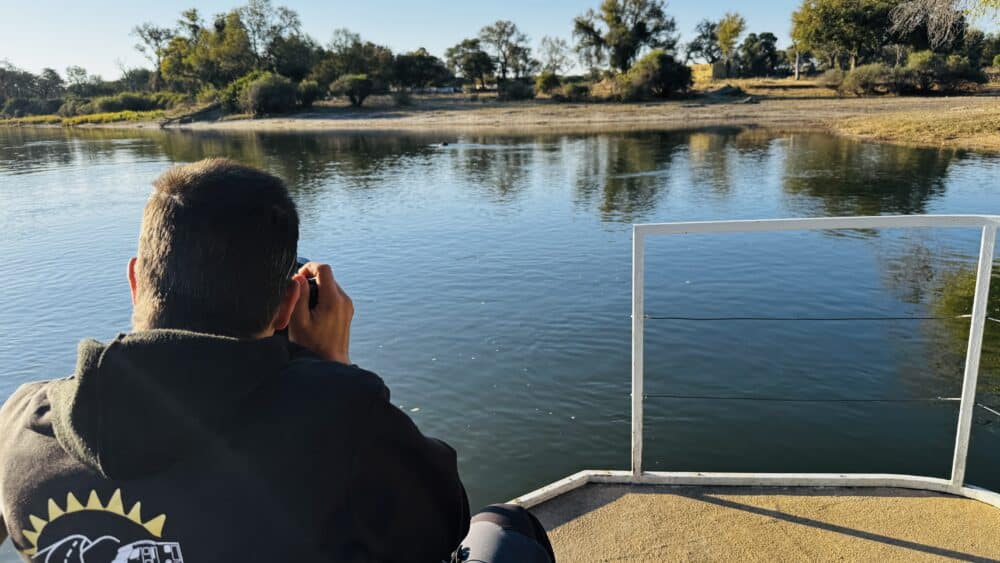
In the afternoon we took a boat trip on the Okavango River.
We had initially considered a tour in a traditional mokoro , the typical wooden boats used by local communities. However, Anna wasn't keen on the idea, and to be honest, we weren't particularly convinced either. With hippos and crocodiles everywhere , a conventional boat seemed like a much calmer option for traveling with children—certainly less anxiety for me.
And it was a great choice. Although the boat's safety wasn't exactly top-notch with loose plastic chairs, hehe, but this is Africa 🙂
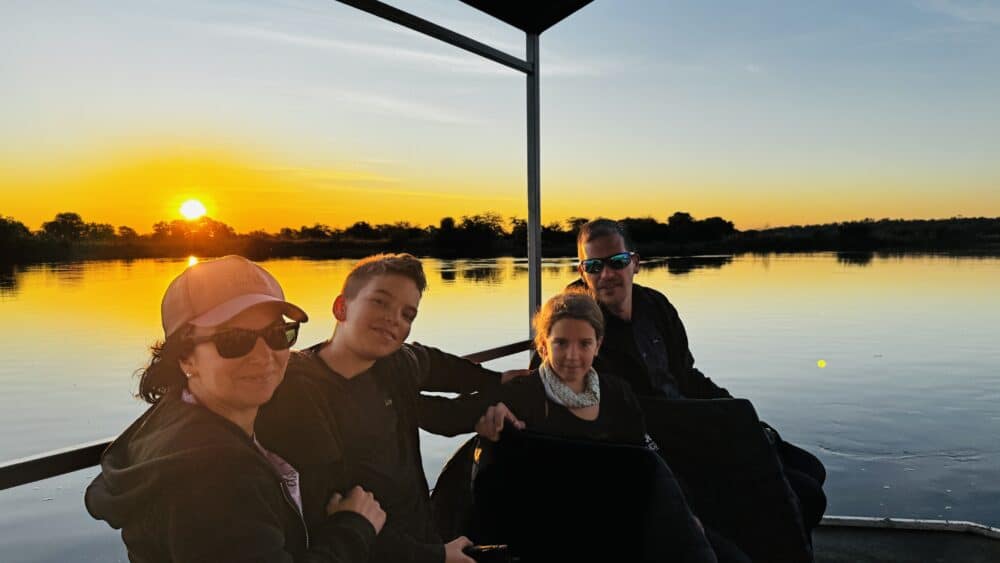
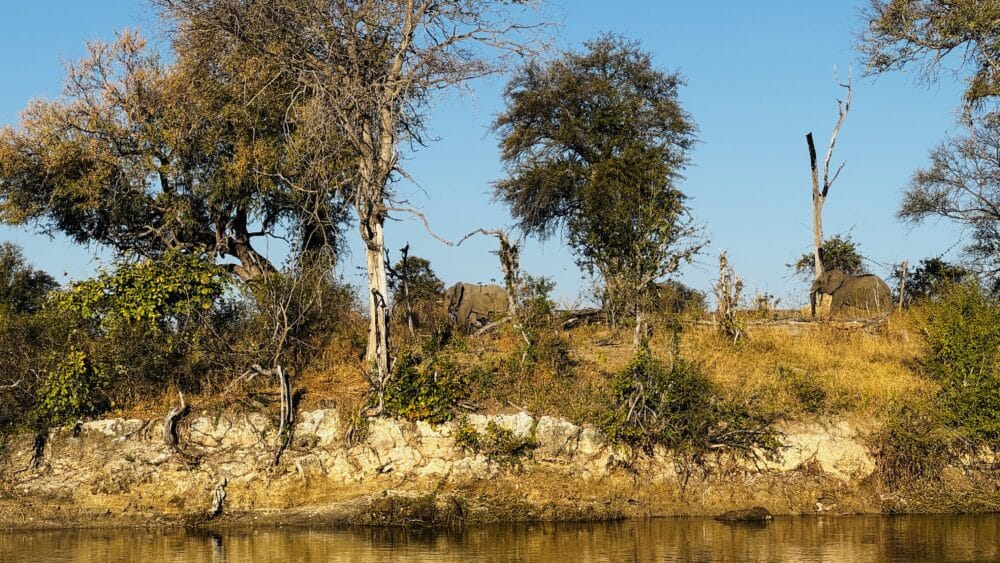
During the trip, we saw hippos very close to the boat, crocodiles sunbathing on the banks, a multitude of birds, and some elephants approaching the water. All of this was accompanied by one of the most beautiful sunsets of the entire trip.
If you visit Caprivi, combining a self-drive safari in Bwabwata with a boat trip on the Okavango River is one of the best ways to discover the region's wildlife from two completely different perspectives.
Do you need a 4x4 to visit Caprivi and Bwabwata?
The short answer is yes.
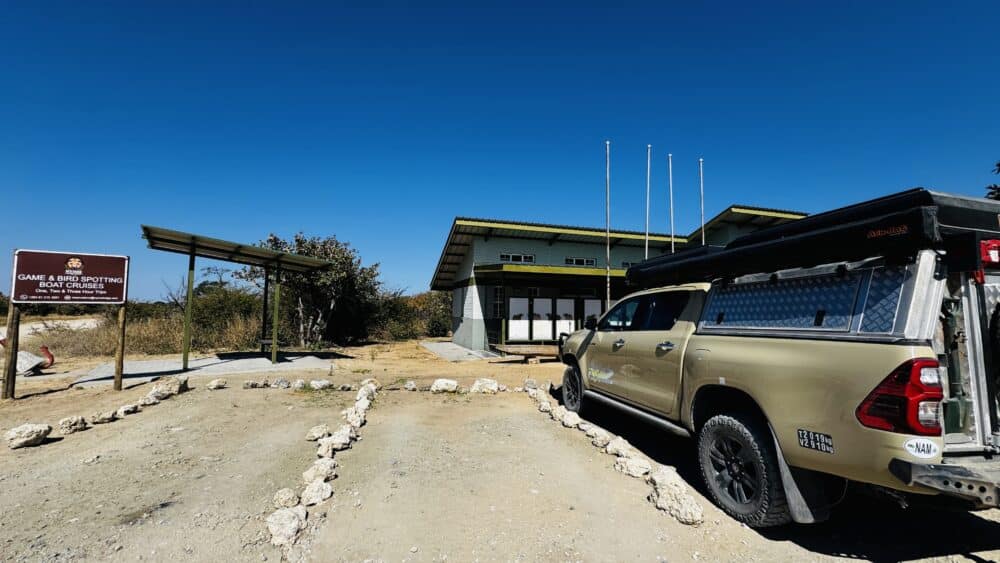
If your intention is to visit only Divundu, some accommodations along the Okavango or travel on the main paved roads, you could do so with a conventional car, although first of all ask at your accommodation, because for example ours had access via a sandy road that was much better with a 4x4.
But if you really want to explore Bwabwata National Park , drive its inland trails and enjoy the full experience, a 4x4 is practically essential.
We entered through the Buffalo Gate area and quickly discovered that much of the route runs over deep sand.
And here we learned an important lesson.
Before traveling, we thought we'd only find sand in places like Sossusvlei and Deadvlei , but the reality was very different. We also found deep sand in Caprivi, in several areas near the Okavango, and further along the Skeleton Coast.
Our advice is very simple: As soon as you see deep sand, lower the tire pressure and drive in the ruts made by the cars ahead.
We arrived in Caprivi pretty new to driving on sand and it took us a few days to really understand how it worked, but if we managed it, you'll definitely do amazing! In fact, I'll confess that in this area we didn't even lower our tire pressure... and we didn't get stuck... but honestly, we should have! 😛
👉 If you want to know all the details about driving, tires, insurance, equipment and rentals, we recommend reading our complete guide to Namibia in 4x4.
🚙 Our advice: rent a 4x4 with a rooftop tent
After traveling over 5.000 kilometers through Namibia for 24 days, we have a very clear recommendation: if your budget allows, rent a 4x4 equipped with a rooftop tent.
Not only will you gain the freedom to sleep in some of the most spectacular places in the country, but you will also be able to easily access areas where a conventional vehicle may have difficulties.
We traveled in a Toyota Hilux from Asco Car and the experience was flawless from beginning to end.
In addition, Asco Car offers Kucavana readers a 5% discount using the code:
@KUCAVANA
👉 You can check availability and prices directly on their website.
Where to sleep in Caprivi and Bwabwata
The region offers numerous accommodations along the Okavango and Kwando rivers, from very simple campsites to luxury lodges.
However, if we had to recommend just one accommodation in all of Caprivi, it would undoubtedly be Ngepi Camp where we had a great time, although it is true that they are all of the same style there.
If you want to see in detail how much a trip to Namibia costs, read our post and check the details.
Ngepi Camp: sleeping over the Okavango River
Of all the accommodations on our trip to Namibia , few left us with such a special memory as this one.
We stayed for two nights in a tree house built literally over the Okavango River.
From the terrace we could see crocodiles and hippos during the day and hear hippos all night long.
The feeling was incredible.
For the children it was a real adventure. For us, one of the most memorable experiences of the entire trip.
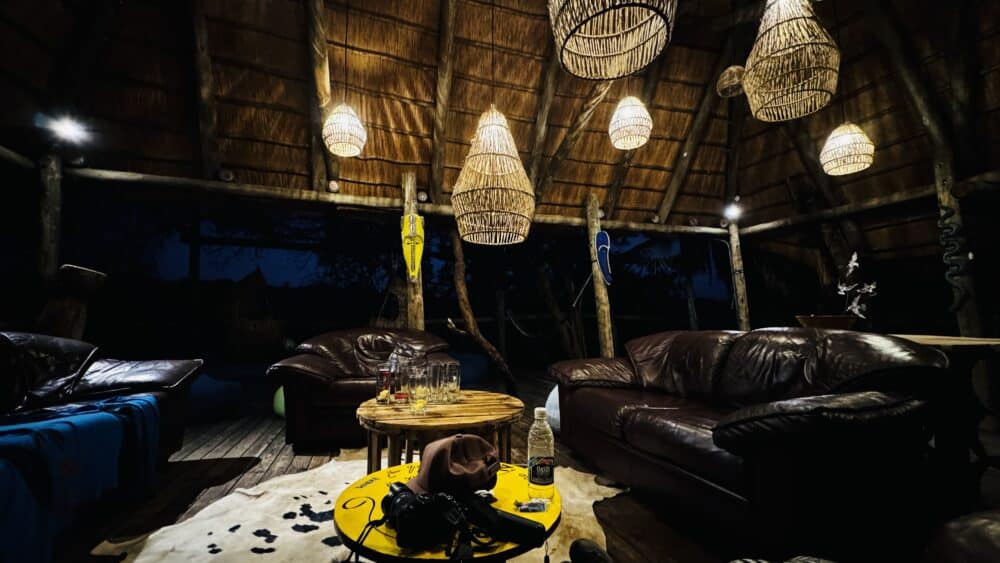
The atmosphere of the place is also very special. Reggae music in the reception area, extremely friendly staff, open-air bathrooms, common areas integrated into nature, and a curious floating pool protected within the river itself.
Yes, a swimming pool inside the Okavango , to swim among hippos hehehe
Although to be honest, with the hippos so close, we're not entirely sure about it, hehehe.
🏕️ Our advice for booking accommodations in Namibia
If there's one thing we would do exactly the same on our next trip, it's to book as much accommodation as possible online through this reliable intermediary platform .
Before discovering this way of booking, we wasted hours exchanging emails, waiting for replies that never came, and making international transfers with absurd fees.
During a long trip through Namibia, changes of plans are much more common than you might think. That's why we greatly appreciate being able to modify bookings, check recent reviews, and have all confirmations centralized in one place.
👉 Here you can see the accommodations we used during our 24-day trip through Namibia and that we would book again without hesitation.
How to organize a visit to Bwabwata National Park
Unlike other more well-known national parks in Namibia, Bwabwata remains a relatively uncrowded destination and very easy to explore independently.
recommended time
Our recommendation is to dedicate at least two full days to the region.
One to explore the Mahango area and another to explore the eastern part of the park and enjoy some boat activities.
Tickets
Tickets are paid for directly at the park entrances.
When we visited, the price was around 115 Namibian dollars per adult and approximately half that for children.
Best time to visit Bwabwata
The dry season, between May and October , is usually the best time to observe wildlife.
The animals congregate closer to water sources and the trails are much easier to navigate.
We visited the area at the end of June and the conditions were excellent.
Fuel Efficiency:
Very important.
Although you'll find gas stations in towns like Rundu or Divundu , it's a good idea to refuel whenever you have the chance.
One of the things we learned during our independent trip through Namibia is that the distances are enormous and it's never worth running the tank too low.
Security
We found Bwabwata to be a very safe area to travel as a family.
Simply apply the same rules as in any African safari:
- Do not get out of the vehicle.
- Do not drive at night.
- Always keep your distance from wildlife.
- Bring enough water.
👉 You can find all our advice in the guide on Is it safe to travel to Namibia?
Best time to visit Caprivi and Bwabwata
Although the Caprivi region can be visited year-round, the best time for wildlife viewing usually coincides with the dry season, between May and October.
During these months the animals congregate closer to rivers and water sources, the trails are usually in better condition and the temperatures are more pleasant for exploring the park.
We visited Caprivi at the end of June and the conditions were practically perfect for traveling. The days were sunny and pleasant, while the nights were much cooler than we had imagined.
In fact, our first night at Ngepi Camp turned out to be much colder than expected. We went to bed listening to hippos by the Okavango River and woke up to a temperature of just a few degrees, exactly 4-5 degrees Celsius.
On the other hand, the rainy season completely transforms the region. The landscape becomes even greener and more spectacular, although some trails can become considerably more challenging.
👉 If you are organizing your trip, we recommend you also consult our guide on the best time to travel to Namibia , where we analyze the climate of each region of the country month by month.
Is there malaria in Caprivi?
Yes.
Caprivi is one of the areas in Namibia where there is a risk of malaria , especially during the rainy season and in certain areas near rivers.
For this reason, it is always advisable to consult with a travel medicine center before leaving and get prescriptions for malaria pills.
We routinely use mosquito repellent, wear long clothing at dawn and dusk, and always sleep under mosquito nets, something that is very common in almost all accommodations in this region.
The malaria pills had absolutely no side effects on either the children or us; nowadays it's not like before, they are much safer and have fewer side effects.
Is it safe to visit Caprivi and Bwabwata as a family?
This was one of the questions we asked ourselves most often before traveling.
And after our experience, the answer is clear: Yes, Caprivi seemed like a very safe region for family travel. Although you should always be alert and cautious around hippos and crocodiles.
In fact, our children thoroughly enjoyed this part of the trip.
They were able to observe hippos from our tree house, discover crocodiles for the first time in the wild, navigate the river and experience their first great African safari.
However, it is essential to be very clear about some basic rules.
The main thing is to never forget that you are surrounded by wildlife.
The hippos, for example, were probably the animals that commanded the most respect during our entire stay. They were constantly present around the river, and at night we could clearly hear their movements near our accommodation. They are the animals that cause the most fatal accidents in Africa; they are very territorial and aggressive, so every precaution is necessary.
It is also advisable to avoid any nighttime travel and not to leave the designated areas.
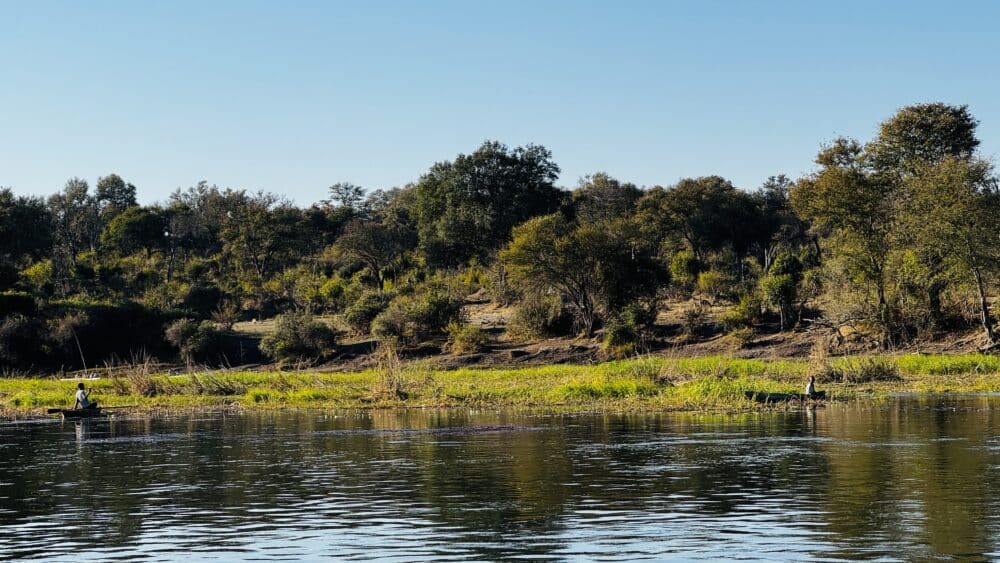
We never felt unsafe due to crime or problems with the local population. Quite the opposite. The people were extremely friendly throughout our stay. Be sure to buy their traditional wooden mokoro boats; you won't find them anywhere else in Namibia, and it's the only way to support the locals.
⚠️ Do not travel to Namibia without travel insurance
Namibia is one of the safest countries in Africa for independent travel, but also one of the largest and most remote.
If you have an accident on a gravel track, fall during a hike, or need medical assistance in the middle of a national park, costs can quickly escalate, especially if an air evacuation is required.
We travel insured with IATI Estrella , a policy that stands out for its high medical coverage, 24-hour assistance in Spanish, and online medical consultations through its app.
Honestly, it's one of those things you hope you never have to use, but you're incredibly grateful to have it when you travel so far from home.
👉 You can purchase your IATI insurance here with a 5% discount for Kucavana readers.
Caprivi or Etosha: two completely different safaris
One of the most common questions when organizing a route through Namibia is whether it is worth visiting Caprivi if you already plan to visit Etosha National Park.
Our answer is a resounding yes.
But for a very simple reason. They are not comparable experiences.
Etosha is the great classic
In Etosha you will find a huge concentration of animals, excellent infrastructure, easy roads to travel and many opportunities to observe wildlife during a self-drive safari.
It is probably the best place in Namibia to get started on African safaris.
Bwabwata is the adventure
Caprivi and Bwabwata offer just the opposite.
Here the landscapes are much greener, the rivers play a huge role, tourists are scarce and the feeling of exploration is much greater.
Often we go through long periods without encountering any other vehicle.
That creates a much more authentic and wild experience.
If you only have a few days, Etosha should definitely be a priority.
But if you have enough time, combining both parks is one of the best decisions you can make during a self-guided trip to Namibia.
👉 Our recommendation is to include both in your 24-day Namibia itinerary , as they complement each other perfectly.
Is it worth the detour to Caprivi?
After everything we've been through, for us the answer is a resounding yes.
Caprivi was one of the regions that surprised us the most in the entire country.
We arrived thinking it would simply be a transitional stage between Waterberg Plateau National Park and Etosha National Park.
The nearly eight-hour drive to get there seemed tough, but luckily the road was paved and quite enjoyable, passing through villages. The return trip from Caprivi to Etosha was also almost seven hours, but with a stop that made it very pleasant : a visit to the large Hobas meteorite.
We ended up leaving with the feeling of having discovered one of the most authentic Namibias.
We loved the green landscapes, the great rivers, the hippos, the uncrowded safaris, the sunsets over the Okavango, and the constant feeling of exploring a still little-known corner of the world.
It was also one of the places where our children enjoyed themselves the most.
The combination of nature, adventure, animals and accommodations as special as Ngepi Camp made this stage one of the most beautiful memories of the trip.
If you are planning a self-guided trip through Namibia , our recommendation is clear:
Don't limit yourself to the dunes of Sossusvlei and Deadvlei or the safaris of Etosha National Park.
Set aside at least two or three days to discover Caprivi.
We are convinced that it will surprise you as much as it surprised us.
Veterinary control of meat between northern and southern Namibia
There is a peculiarity of Namibia that surprised us quite a bit during the trip and that is worth knowing before traveling around the country independently.
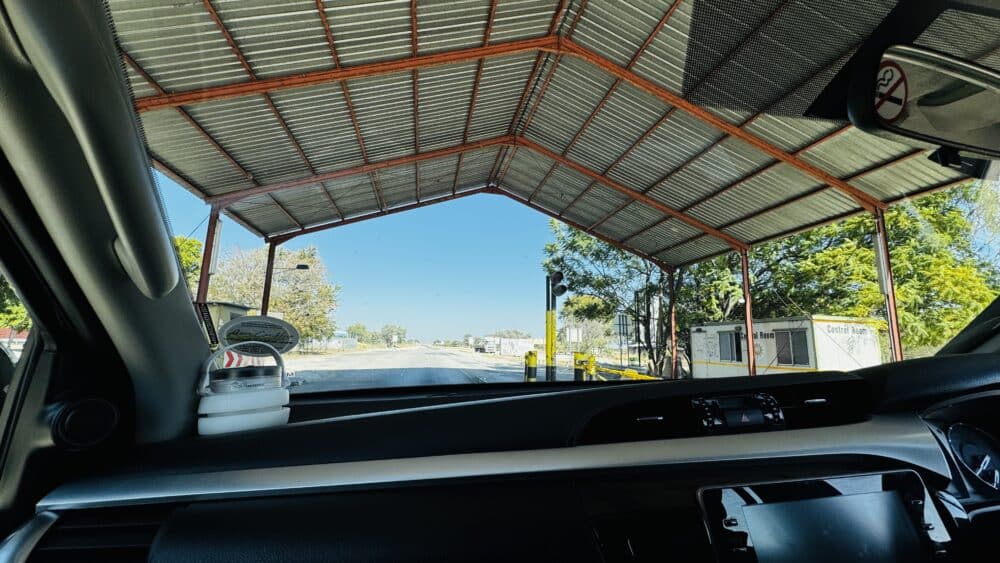
When traveling between certain northern and southern regions, you will find several official veterinary checkpoints , popularly known as Veterinary Control Gates or Red Line.
Its objective is to protect livestock in the south of the country from possible animal diseases originating from some areas in the north and from neighboring countries.
In practice, this means that when you go through these checkpoints, officers may ask you if you are transporting certain products of animal origin and search the vehicle.
The products that are usually restricted or prohibited are mainly:
- Fresh meat.
- Raw meat.
- Some sausages and meat products.
- Certain unprocessed animal products.
We encountered one of these checkpoints while traveling from the Caprivi region to southern Namibia, both on the way up from Waterberg and on the way down to Etosha. The inspection was quick and friendly, but it did require us to rearrange some of the food we had in the 4x4's cooler.
Our advice is simple: before crossing these checkpoints, try to consume the fresh meat you are carrying or find out about the current restrictions, as they may vary slightly over time.
It's not something you should worry about or that will alter your trip, but it's good to know to avoid surprises when you're traveling independently in Namibia.
Our advice
If you're traveling with a cooler in your 4x4, as we did, try to plan your meat purchases around these veterinary inspections. This will prevent you from having to throw away food you've just bought or rearrange your food supplies at the last minute.
Tips for visiting Caprivi and Bwabwata independently
After our experience touring the region as a family, these are the tips that we found most useful and that we would apply exactly the same way if we returned tomorrow.
Don't drive at night
This is probably the most important piece of advice in the entire article.
Caprivi has a lot of wildlife near the roads, and driving at night greatly increases the risks.
We always tried to arrive at our accommodation with plenty of time before sunset.
Refuel whenever you have the chance.
Distances in Namibia are enormous and gas stations don't always appear when you need them.
Although the region is better supplied than other areas of the country, it never hurts to travel with extra funds.
It includes downloaded offline maps.
Mobile coverage is spotty in many areas of Caprivi.
We used a downloaded version of Google Maps and it was one of the best decisions of the trip.
📱 Internet in Namibia: our recommendation
One of the questions we had before traveling was how to get internet access as soon as we landed in Namibia.
Based on our experience, we believe the most convenient option is to have an eSIM installed before leaving home , especially if you want to have a connection from the very beginning to check maps, reservations, routes or communicate with family.
We recommend Holafly Africa , which allows you to activate data before your trip and forget about looking for local shops or SIM cards when you arrive.
👉 Plus, you can get a 5% discount using our link.
However, it's important to be very clear about one thing: no eSIM, local SIM card, or phone company will solve the lack of coverage in some of Namibia's most remote areas.
During our trip, we found excellent coverage in places like Swakopmund and Walvis Bay , Windhoek, and along the main paved roads. However, in regions like Caprivi, parts of Bwabwata, Damaraland, and the Skeleton Coast, we spent hours and even days without a signal.
That's why our advice is to combine the eSIM with Google Maps downloaded offline , an external battery, and good route planning.
Always respect wildlife
It may seem obvious, but when you spend several days observing animals you end up normalizing situations that are not normal.
Hippos, elephants, and buffalo can be extremely dangerous if they feel threatened.
Always keep your distance and avoid unnecessary close contact.
Mistakes we made at Caprivi and Bwabwata (so you don't repeat them)
If traveling independently has taught us anything, it's that we often learn more from our mistakes than from our successes . And Caprivi was no exception.
Get out of the car inside the park
It was probably the most absurd mistake of the entire trip.
We were still novices at independent African safaris and, when Jose had to maneuver to turn around on a sandy track, he asked me to get out to help him.
Minutes later we discovered that there were four lionesses just a few meters away.
We'll never know if they were already there when I got out of the car.
And frankly, we don't want to know either.
From then on, we had one rule very clear: on a safari, you never get out of the vehicle.
Underestimating the sand
We arrived thinking that the sand would only be a problem in places like Sossusvlei and Deadvlei.
Error.
In Caprivi we found some of the sandiest slopes of the entire trip.
If you see deep sand again, lower your tire pressure as soon as possible.
You'll save yourself a lot of scares.
To think that hippos are calm animals
During the first few minutes watching hippos from our tree house, we thought they were cute and even funny animals.
But they are responsible for more human deaths in Africa than many large predators.
That's why we always observe them with great respect.
Spending too little time on Caprivi
This was probably our biggest planning mistake.
We went thinking it would be a simple transitional stage between Waterberg Plateau National Park and Etosha National Park.
And it ended up being one of the regions we liked the most in the whole country.
If we were to reorganize our 24-day Namibia route , we would dedicate an extra day to calmly exploring the Kwando area and some lesser-known corners of the current Zambezi Region.
Frequently Asked Questions about Caprivi and Bwabwata
Is Caprivi worth visiting if I'm already going to Etosha?
Yes. In fact, after visiting both parks during our 24-day Namibian trip , we believe they are two completely complementary experiences.
Many people consider removing Caprivi from their itinerary thinking they will see enough animals in Etosha National Park , but the reality is that both places offer very different sensations.
Etosha stands out for its huge concentration of wildlife, its infrastructure, the ease of doing self-guided safaris and the possibility of observing animals in the famous waterholes for hours.
Caprivi and Bwabwata National Park , on the other hand, offer a much wilder and more authentic experience. Here, the landscapes are lush and green, rivers play a prominent role, there are fewer tourists, and the feeling of exploration is constant. For some stretches, we covered kilometers without encountering another soul, something virtually impossible in Etosha.
In addition, Caprivi gave us some of the most special experiences of the entire trip: sleeping over the Okavango River listening to hippos at night, sailing among crocodiles at sunset, or discovering our only lionesses on the entire route.
If you have enough time to travel around the country, our recommendation is clear: combine both parks within your independent Namibia route.
For us, both Etosha National Park and Caprivi are among the must-sees that we would include on any list of what to see in Namibia.
How many days are needed to visit Caprivi?
Our recommendation is to dedicate a minimum of two or three days.
This way you can explore Bwabwata at your leisure, enjoy some boat activities and relax at the riverside accommodations.
Is it possible to visit Bwabwata independently?
Yes. In fact, it's one of the great advantages of this region.
We explored the park completely on our own and found it to be a fantastic experience.
Do you need a 4x4 to visit Bwabwata?
Yes, especially if you want to explore the Buffalo Gate area and the park's indoor trails.
Deep sand is present in numerous sections.
👉 You can read all our tips in the Namibia 4x4 guide.
What animals can be seen in Bwabwata?
Among others:
- Elephants
- Leones
- buffaloes
- Hippos
- Cocodrilos
- Warthogs
- Kudus
- Sable antelopes
- Roan antelopes
- More than 400 species of birds
Is there malaria in Caprivi?
Yes.
It's one of the regions in Namibia where there's a risk of malaria, especially during the rainy season. That's why it's good to know the best time to travel to Namibia.
It is always advisable to consult with a travel medicine center before traveling.
Is Etosha or Bwabwata better?
It depends on what you're looking for.
If it's your first African safari, Etosha National Park is probably more spectacular and easier to navigate.
If you're looking for a more authentic , green, and less touristy experience , Bwabwata can become one of the highlights of your trip.
Our final opinion on Caprivi and Bwabwata
There are places that are impressive.
And then there are places that stay with you for years.
Caprivi belongs to this second group.
It may not have the international fame of Sossusvlei and Deadvlei , nor the huge concentration of wildlife of Etosha National Park , but that is precisely where much of its charm lies.
Here we find a different Namibia.
Greener. More peaceful. And more authentic.
We slept on the Okavango River listening to hippos all night, saw our only lionesses of the trip , sailed among crocodiles at sunset, and discovered a region that barely appeared in the itineraries we had read before leaving.
Therefore, if you are planning a self-guided tour of Namibia , our recommendation is clear: Include Caprivi.
Continue organizing your trip to Namibia
If you're planning a self-guided trip through Namibia, these are the guides that will best help you plan your journey:
🇳🇦 Complete guide to traveling to Namibia
All the information about visas, safety, budget, best time to go, 4x4 rentals, accommodations and planning.
👉 Trip to Namibia: a complete guide for independent travel
🗺️ What to see in Namibia
The must-see places in the country, our favorites and the corners that surprised us the most during 24 days of travel.
📅 24-day Namibia itinerary
Our complete day-by-day itinerary traveling the country as a family.
🚙 Namibia on your own
Everything we learned organizing and traveling through Namibia as a family.
🚗 Namibia in a 4x4
Driving tips, rentals, insurance, tires, and mistakes we made.
⚠️ Is it safe to travel to Namibia?
Everything about safety, health, vaccines, malaria, and driving.
Latest posts from our blog
-
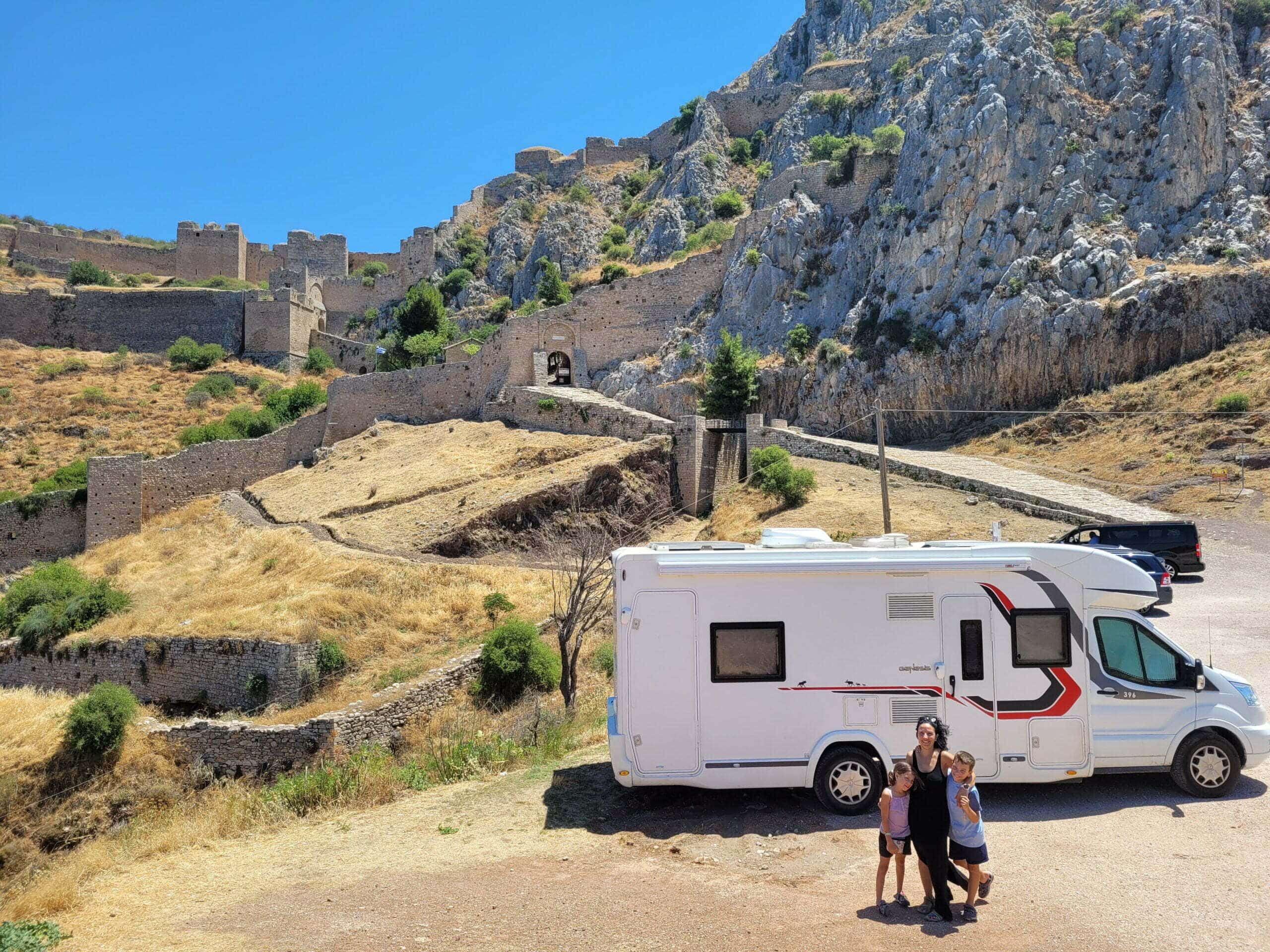
Definitive manual for traveling by motorhome【2024】
Super complete manual for traveling by motorhome with all the answers to your questions.
-
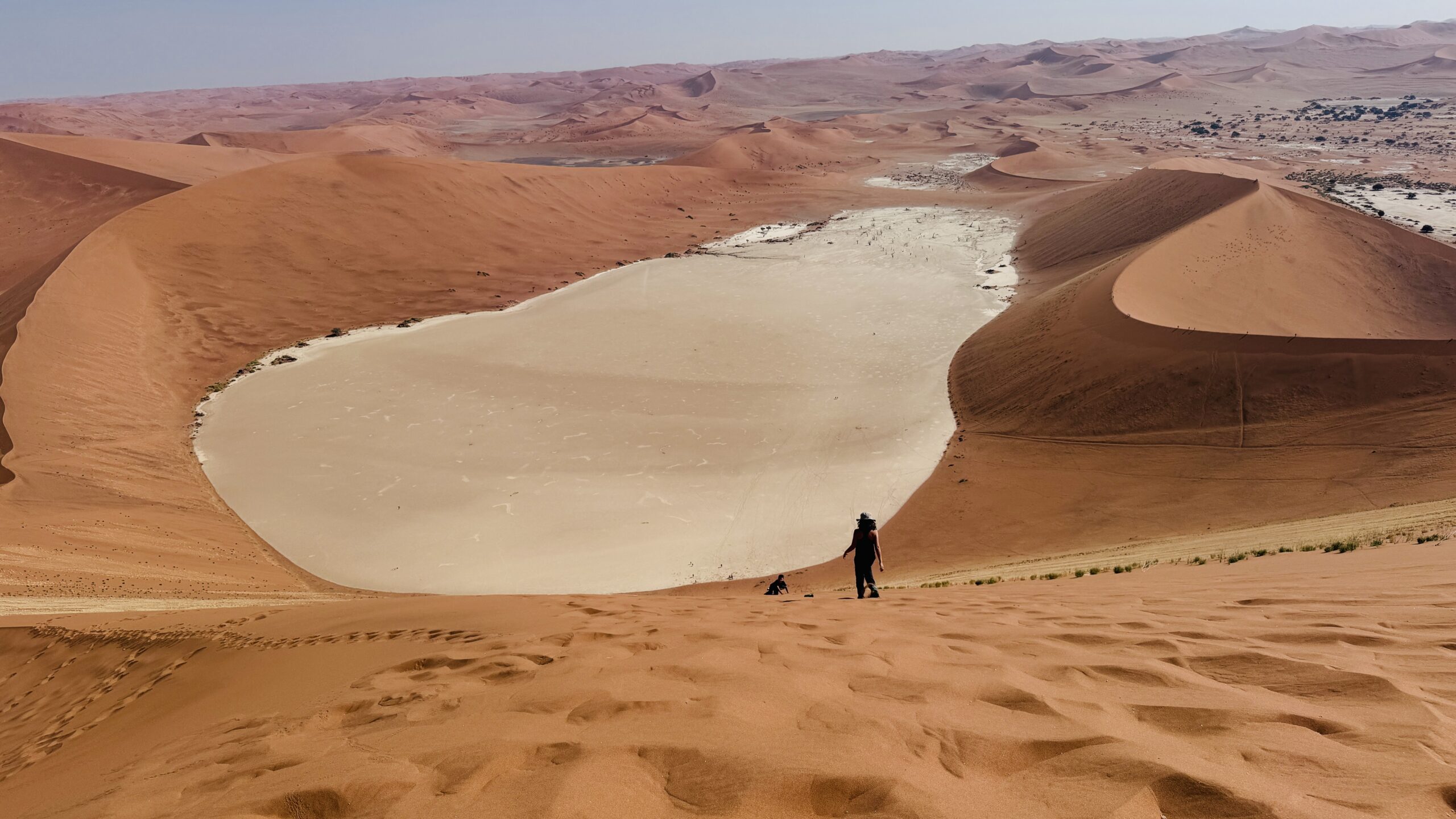
Namibia Trip: Complete Guide for Independent Travel (24-day Itinerary, What to See and Tips Based on Our Experience)
Are you thinking of planning a trip to Namibia on your own and don't know where to start? After traveling the country for 24 days as a family in a 4x4 with rooftop tents, we've put together this comprehensive guide with everything we wish we had known before our trip. Here you'll find information…
-
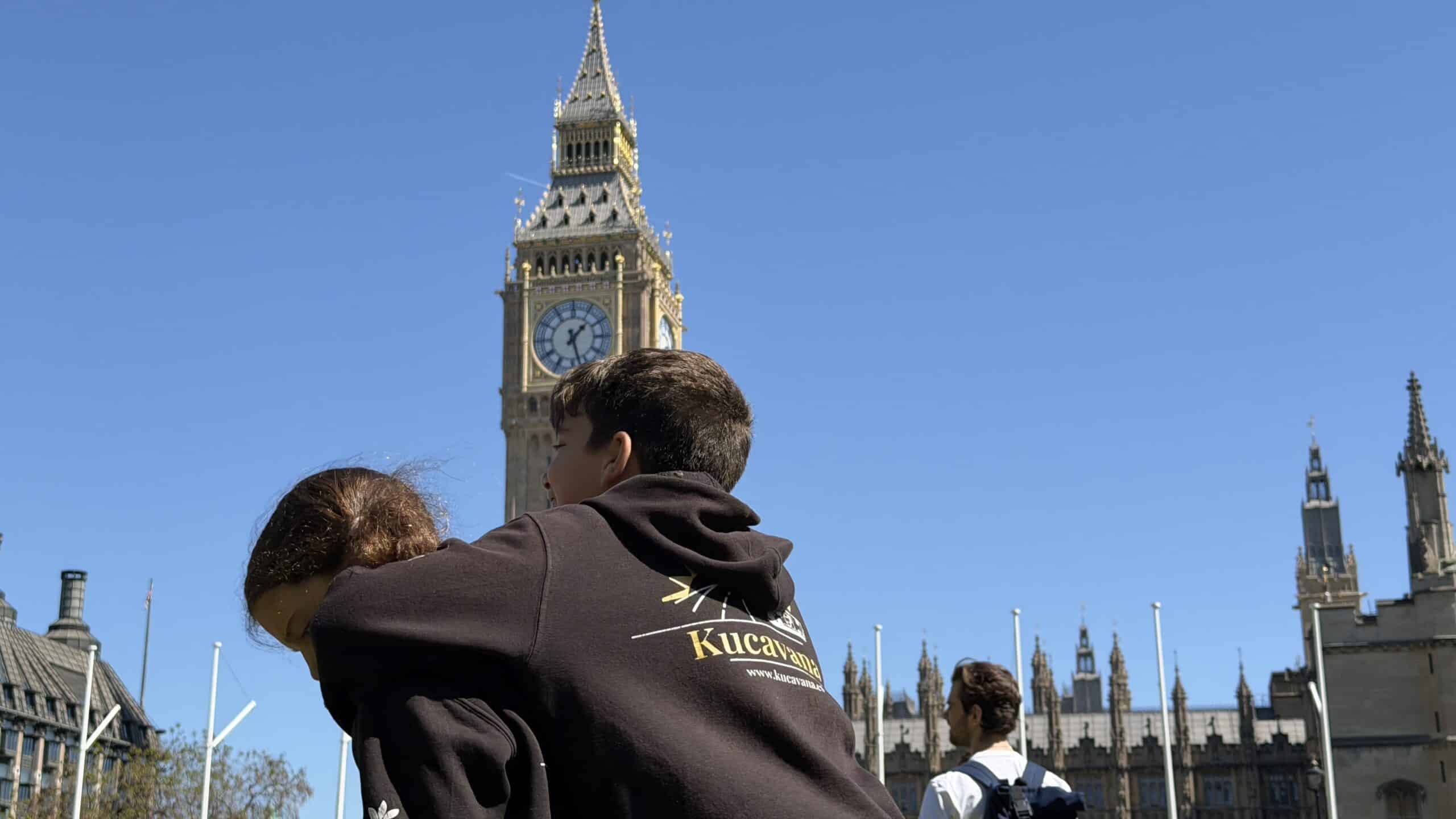
London with children: what to see and do as a family (royal guide with map) of the top 22 plans
If you're planning a trip to London with kids and don't know where to start, here you'll find the 22 best family-friendly activities, an optimized 3-day itinerary, money-saving tips, the best free museums, and an interactive map with all the must-see places. Basic summary: London with kids. Quick information. Recommended days: 3-5…
-
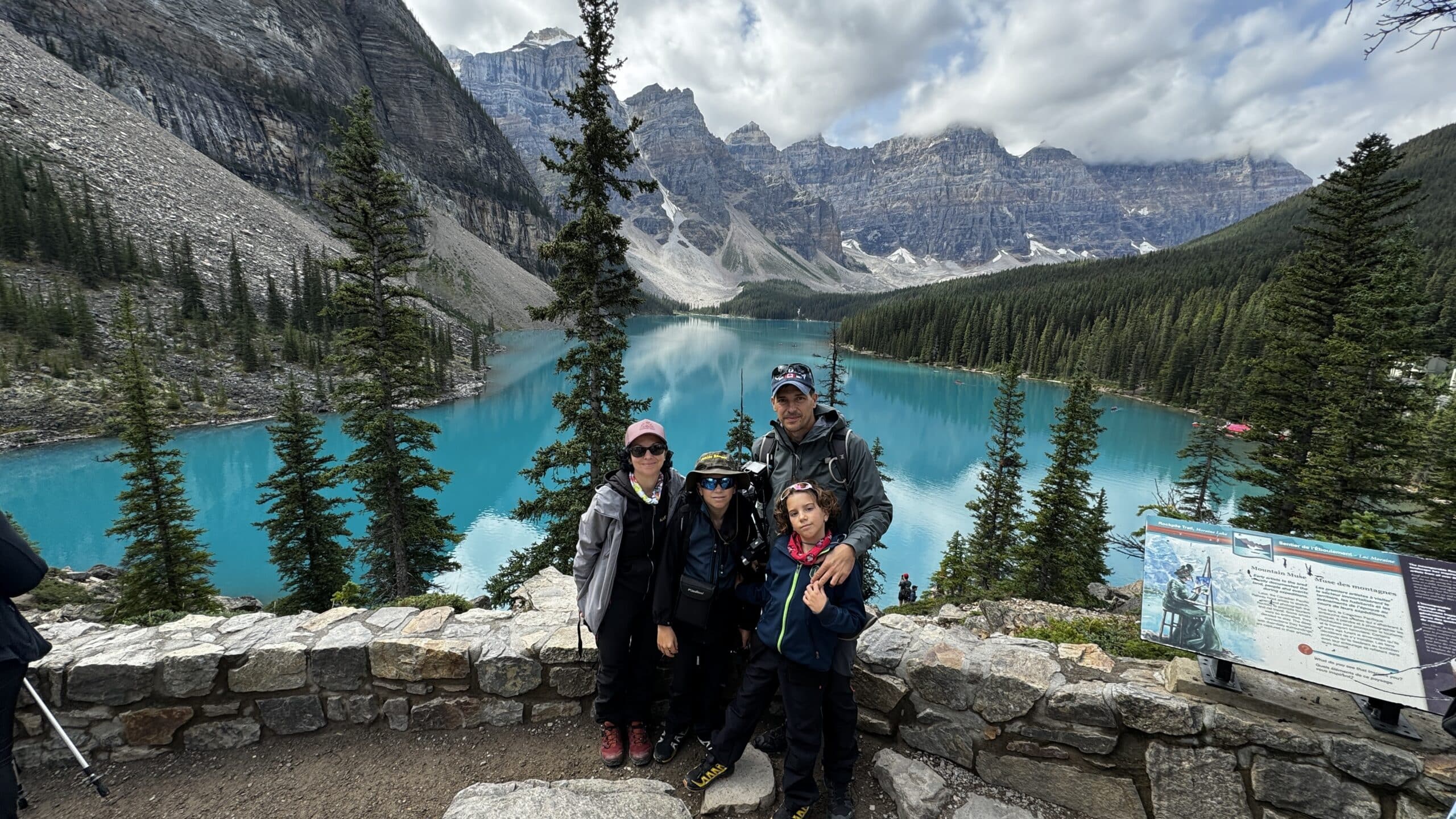
Guide to traveling to Canada: everything you need to know for a trip to Canada on your own
Welcome to a super guide for traveling to Canada from Spain or anywhere in Europe. One of our newest destinations in this wonderful world, where every trip continues to surprise us with its hidden gems. How lucky we are to have been born on Earth! How fortunate to be able to travel to Canada! Visiting Canada…
Ethical code:
On our blog you will find affiliate links. These are always placed with our highest ethics. We never publish any service or product that we have not used before and that we are sincerely happy with. That is why our recommendations are always ethical. In addition, there is no additional cost for you to book through our links and, on the other hand, it means a small commission for us that helps us maintain this blog so that you can continue enjoying it for free.