
Table of Contents
Swakopmund es el gran contraste de Namibia: después de muchos días de desierto, safaris y pistas de grava, de repente aparecen el océano Atlántico, cafeterías, panaderías alemanas, casas de colores y semáforos. Durante unos minutos tuvimos la sensación de haber abandonado África. Y precisamente ahí está gran parte de su encanto.
We spent two nights of our stay here. 24-day family itinerary through Namibia. En esta guía te contamos qué ver en Swakopmund, cómo fue nuestro tour por la township de Mondesa, dónde dormimos, cuántos días dedicarle y qué excursiones merecen la pena desde aquí, como la de Walvis Bay y Sandwich Harbour.

🌊 What you can't miss: pasear por el casco alemán y el Jetty, el tour por la township de Mondesa (de lo que más nos enseñó de Namibia) y, desde aquí, la excursión en 4×4 a Sandwich Harbor. Dedícale al menos dos noches.
Swakopmund de un vistazo
| Information | Facts & figures |
|---|---|
| 📍 Location | Namibia's west coast, between the Atlantic Ocean and the Namib Desert |
| ⭐ Essential | Casco alemán, Jetty y faro, tour por la township de Mondesa y la excursión a Sandwich Harbour |
| ⏱️ Recommended time | 2 full days (3 if you can) |
| 🚙 Ideal para | Descansar a mitad de ruta, lavar ropa, hacer la compra grande y organizar excursiones |
| 🛏️ Where to sleep | Swakopmund: apartments, hotels and guesthouses for all budgets |
| 🌊 Perfect base for | Walvis Bay, Sandwich Harbour, Living Desert Tour, Cape Cross and Spitzkoppe |
About us
We are the Kucavana family , and we travel with our two children and our adopted dog, Max. We usually travel in our motorhome, also called Kucavana, hence the name of our blog (as a baby, Anna couldn't pronounce "motorhome" and said "Kucavana"). But we also enjoy traveling by bicycle, by plane, and backpacking—the point is to have adventures as a family. The one writing this is me, Pilar, the mom of the family and perhaps the craziest one. I enjoy every new experience we have as a family, and I hope to help you enjoy traveling as much as we do.
To stay connected with you, follow us on our social media channels: YouTube and Instagram
Swakopmund: the Namibia that looks like Europe
We arrived from Spitzkoppe and, before leaving the area, stopped at the craft stalls in the village of Spitzkoppe to buy some things and give pencils and notebooks to the children. Then we drove to the largest city we would see on the entire trip.
We stayed two nights in an apartment in a very central location. After several days in rooftop tents, a bed, warm rooms, and bathrooms were very welcome. However, the apartment didn't have heating, and it got chilly at night.
There are small pleasures that are only appreciated after several days living among slopes, dust and tents: a long hot shower, a really soft bed and a supermarket where there is everything.
The first thing we did was take a walk to get our bearings in the city. And the feeling was so strange: it seemed like we were in Lloret de Mar. Playgrounds, people fishing, crowded terraces, diamond shops and African antique stores, modern supermarkets… and houses for €400.000 in real estate agency windows. Swakopmund feels like another Namibia, and the disparity with what we had seen in the rest of the country is overwhelming.
That's why, although many itineraries only dedicate one night to it, we recommend at least two : for the city, for excursions, and to recharge your batteries before continuing on to the Namib Desert.
What to see in Swakopmund: 11 must-sees
Swakopmund is easily explored on foot: almost everything of interest is located between the waterfront and the old town. These are the places you shouldn't miss, plus some things to do in the surrounding area.
1. The Jetty
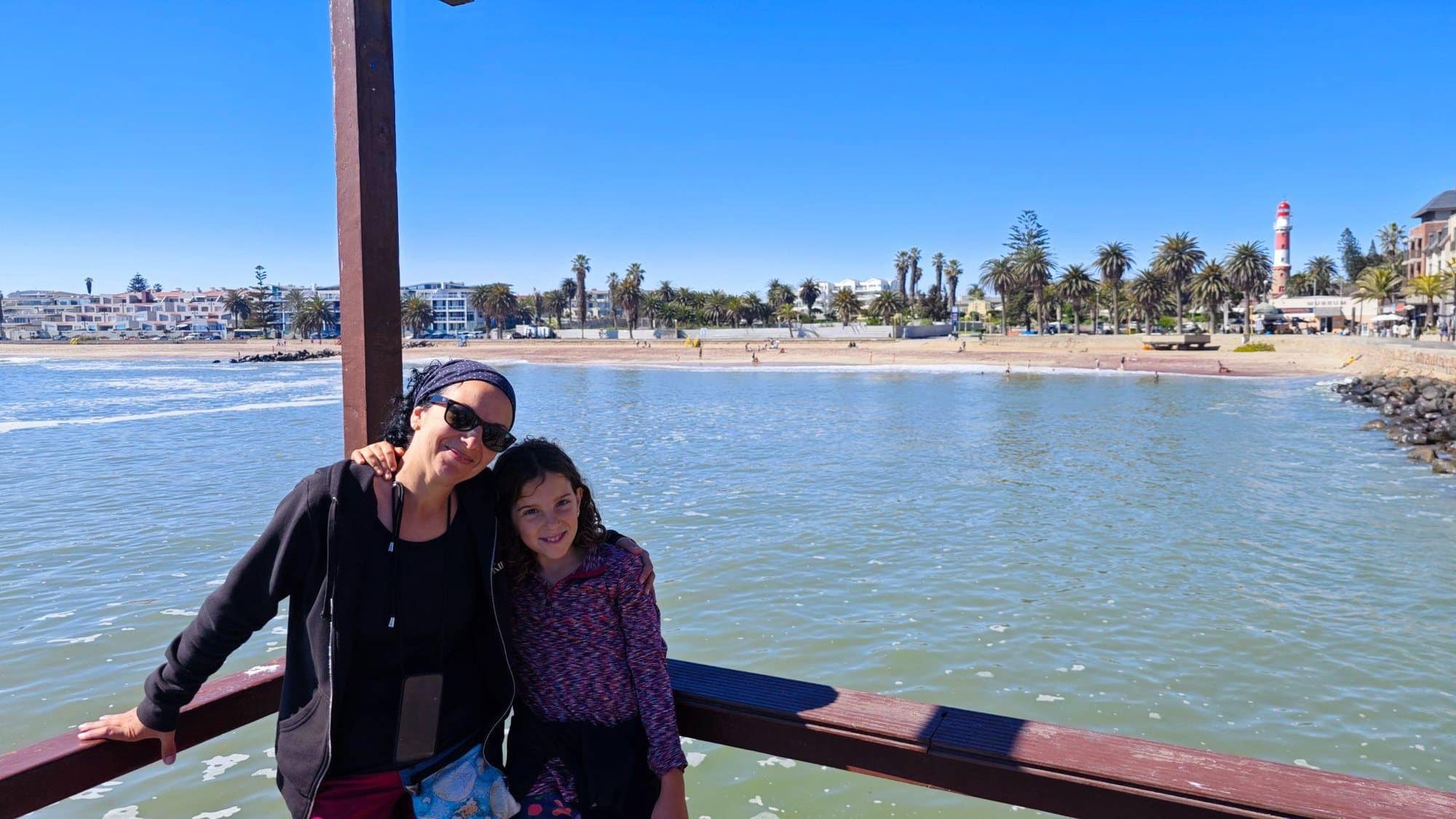
It's the quintessential Swakopmund postcard. The first wooden pier was completed in 1905, but the sea and woodworm destroyed it, and in 1911 they began building an iron one. Today you can walk to the end to see the town from the sea, and at the far end there's a fish restaurant. At sunset, with the mist rolling in, it has a lovely, melancholic feel.
2. The lighthouse and the Mole
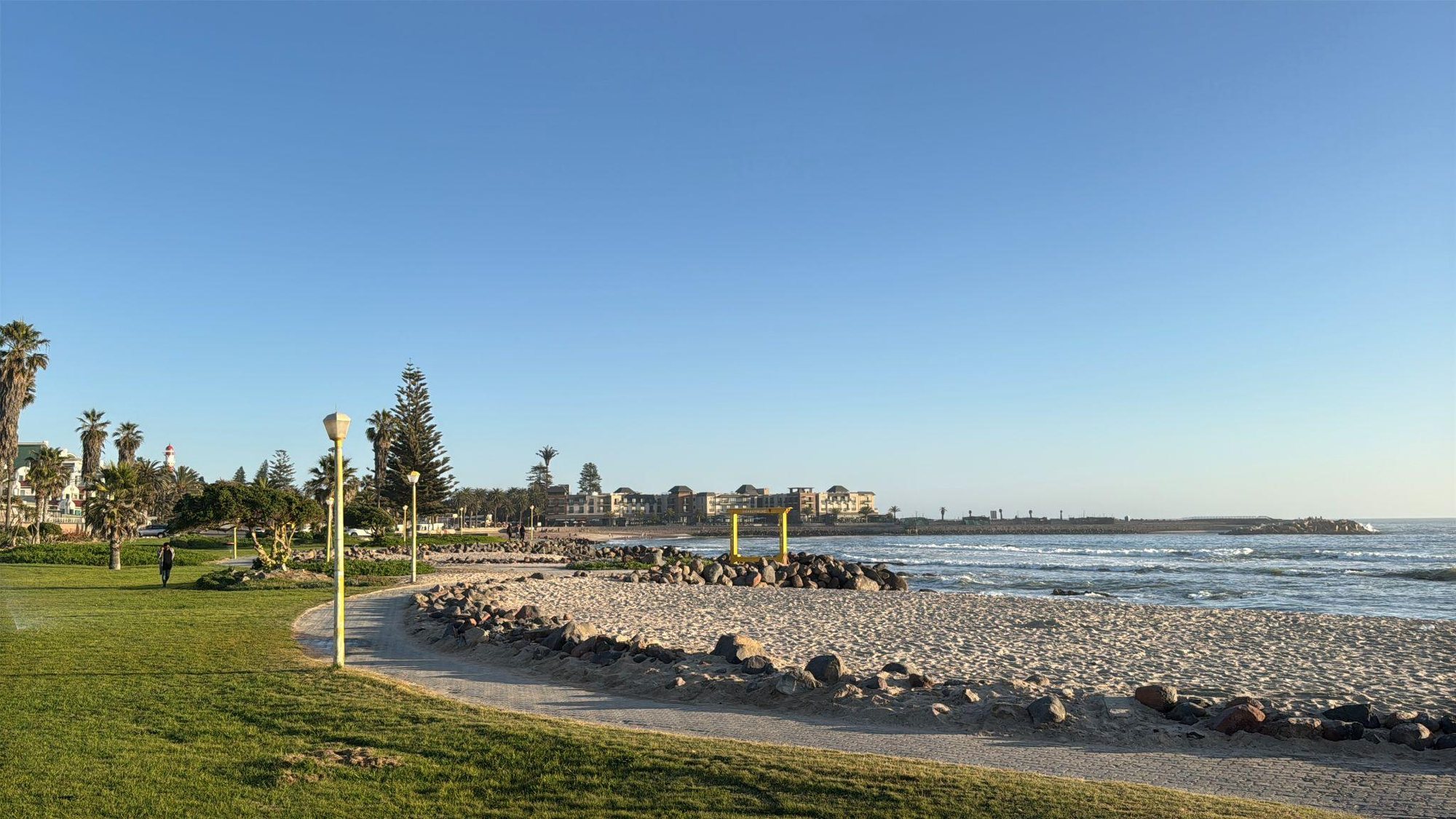
The lighthouse, with its red and white stripes, is the city's most prominent building. Right next to it is the Mole , a breakwater built in 1899 that was intended to transform Swakopmund into a harbor but ended up filled with sand. Today it's a sheltered beach where people stroll and swim when the weather is nice (which isn't very often on the Namibian coast).
3. The German historic center: Woermannhaus and Hohenzollernhaus
One of Swakopmund's greatest attractions is simply walking. Without a map and without a destination. Strolling through the center is like taking a trip back in time: colorful colonial houses, gabled roofs, palm trees, manicured gardens, cafes and pastry shops with signs in German. At times it's hard to believe you're still in Africa.
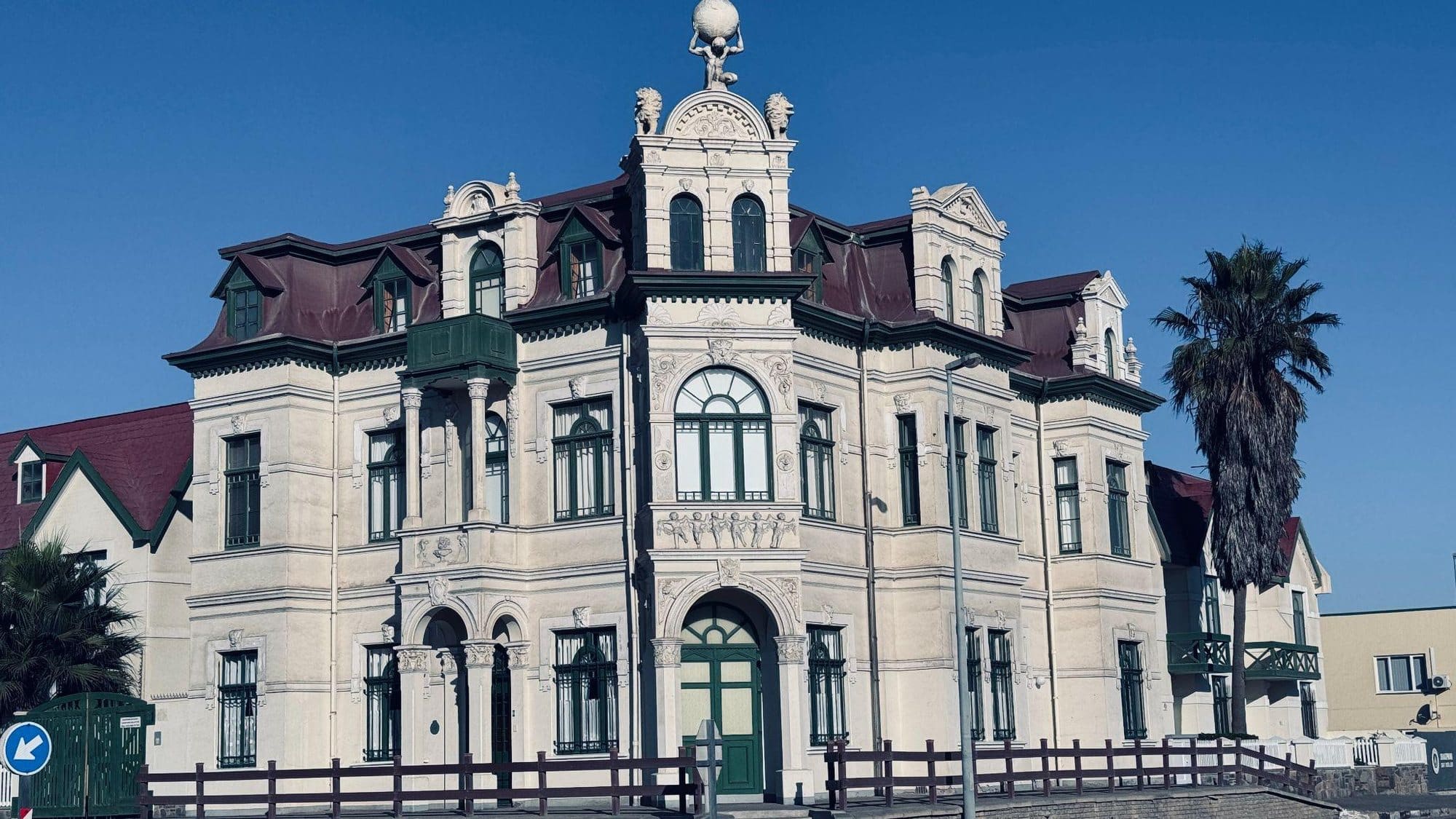
Don't miss the Woermannhaus , built in 1905 as the headquarters of a German trading company, with its tower visible from the beach (today it is a public library), nor the Hohenzollernhaus , the stately white building crowned by the statue of Atlas holding up the world.
🥨 SUPER KUCAVANA TIP! Take advantage of Swakopmund to treat yourself at a German pastry shop and do your big grocery shop: there are modern and well-stocked supermarkets, something you won't see again until Windhoek if you continue south.
4. Swakopmund Museum
It's located at the foot of the lighthouse and is perfect for a foggy or windy day. Explore Namibia's natural history, geology, cultures, and colonial era.
5. Kristall Galerie
If your kids have a treasure-hunting spirit, they'll love it. It houses the world's largest known collection of quartz crystals , along with minerals and semiprecious stones from all over the country. There's a shop, so keep an eye on your wallet.
6. Namibia National Aquarium
A small aquarium dedicated to the fauna of Namibia's Atlantic coast. A good option for families with children if the weather isn't great.
7. The beach, the promenade and the craft market
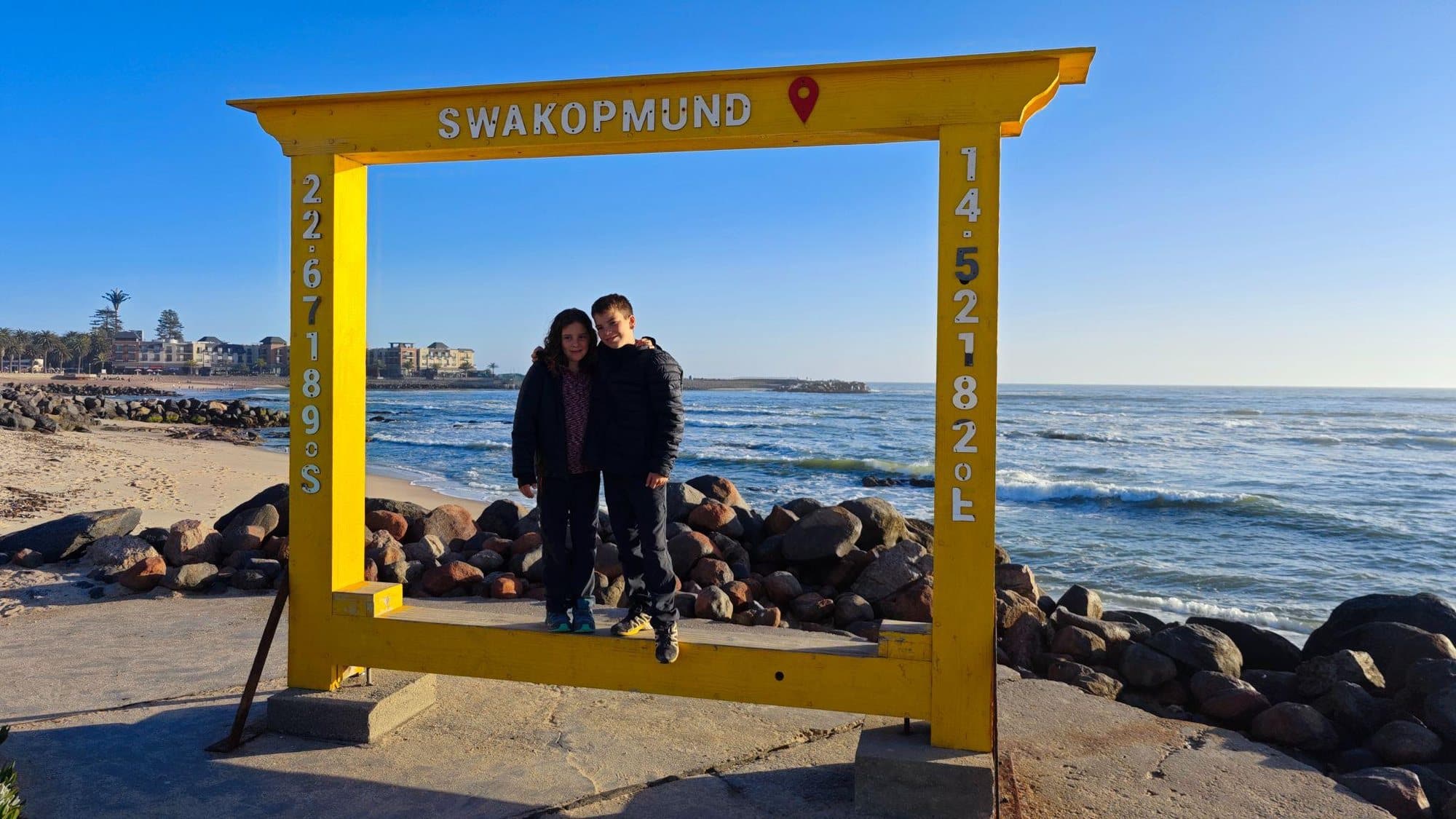
Swakopmund beach isn't for swimming (the water is freezing), but it's perfect for strolling, collecting seashells, and letting the kids run around freely. Along the promenade, you'll find stalls selling local artisans' wood carvings, jewelry, and paintings—a great place to buy souvenirs and support the local economy. And don't leave without taking a picture in front of the giant yellow "Swakopmund" sign by the sea.
8. The Martin Luther locomotive
Just outside the city, next to the B2 road, stands an abandoned steam locomotive from 1896, left in the desert. It was brought here to replace oxcarts on the route inland, but it wasn't suited to the sand and has remained here ever since. It makes for a quick and interesting stop on the way to Spitzkoppe or Windhoek.
9. The Lunar Landscape and the Welwitschias Route
About 30 km east of Swakopmund lies the Moon Landscape , a valley of eroded rock that looks like something from another planet. Many tours combine it with the Goanikontes oasis and the Welwitschia mirabilis , plants that only grow in the Namib and southern Angola and can live for over a thousand years. If you're traveling independently, you'll need a permit from the Ministry of Environment office in Swakopmund.
We didn't do it (we were left wanting to see a welwitschia during the whole trip), but it's one of the first things we would add with an extra day.
10. Living Desert Tour: the "Little Five" of the desert
It's a half-morning excursion through the dunes between Swakopmund and Walvis Bay, searching for the Namib's "little five": geckos, lizards, snakes, chameleons, and scorpions. It's one of the most highly recommended excursions by other travelers, especially those with children.
11. Adventure in the dunes: sandboarding, quad biking and parasailing
The sea of dunes between Swakopmund and Walvis Bay is a natural amusement park: sandboarding lying down or standing up, quad biking and even parachute jumps over the desert and the sea.
👉 At Civitatis you have activities in Swakopmund such as the guided tour of Mondesa , sandboarding or excursions to Cape Cross and Spitzkoppe, with free cancellation on many of them.
Is Swakopmund safe?
You might read on some blogs that there's insecurity. Our experience: during the day, none. Our landlord told us that security had improved a lot and that we shouldn't worry; we even parked the car on the street without any problems. At night, as in any city, it's best to use common sense: don't leave anything valuable in plain sight inside the car and follow the advice of your accommodation. We explain this in more detail in "Is it safe to travel to Namibia?"
🚙 SUPER KUCAVANA TIP! If you're traveling with a 4x4 loaded with luggage, try to book accommodation with private or secure parking. You'll sleep much more soundly.
🧺 SUPER KUCAVANA TIP! Take advantage of Swakopmund to do a deep clean. Our landlord did it for us: all the family's clothes for 300 Namibian dollars (about €15).
Tour of the township of Mondesa: the other side of Swakopmund
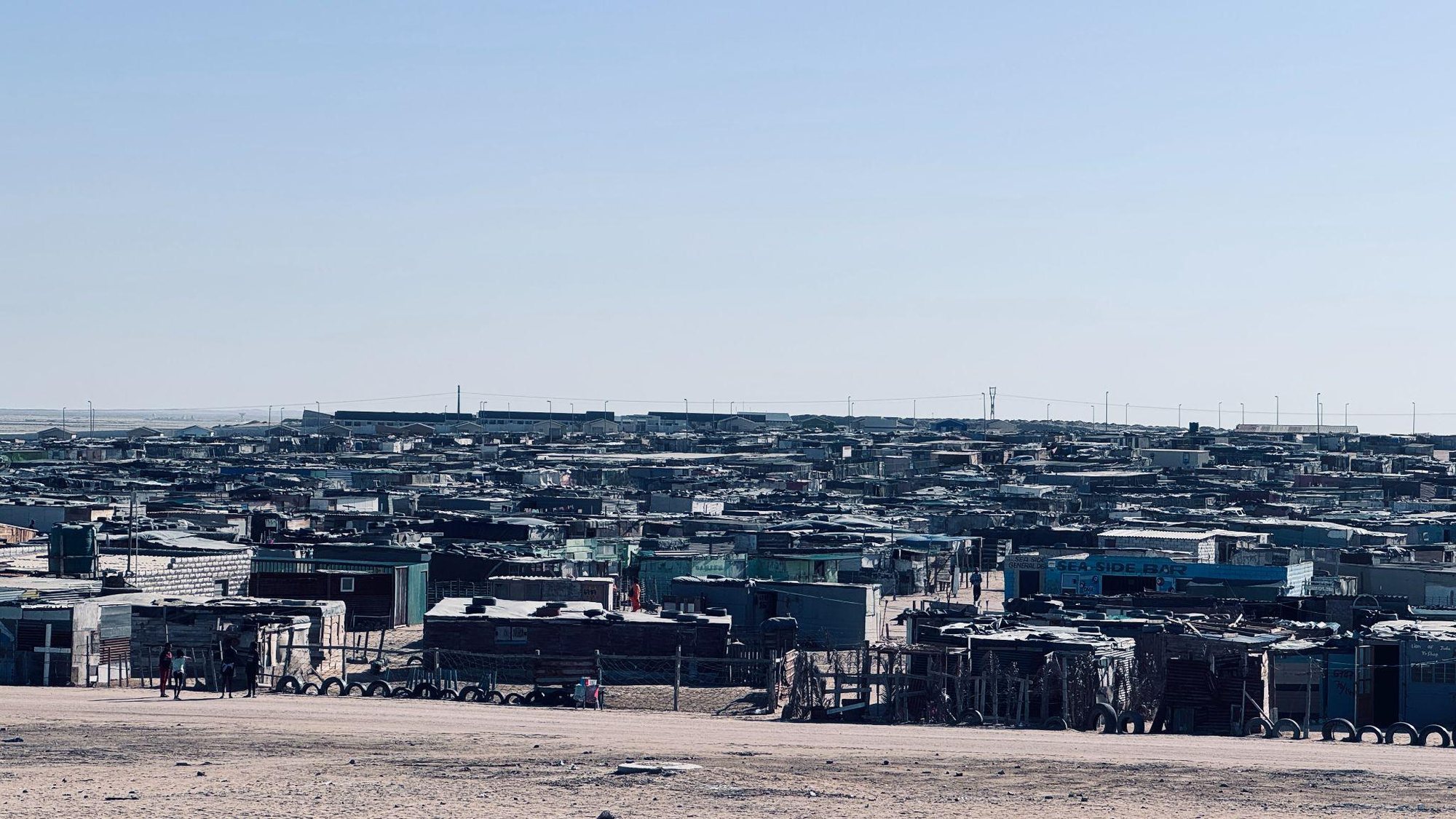
If you only see the city center, you'll get a very incomplete picture of Namibia. That's why we booked a guided tour of Mondesa , the township of Swakopmund. As our guide explained, about 45.000 of the city's 75.000 people live there.
Townships originated under apartheid, when Black people could only leave them to work. That ended decades ago, but inequality remains very much present.
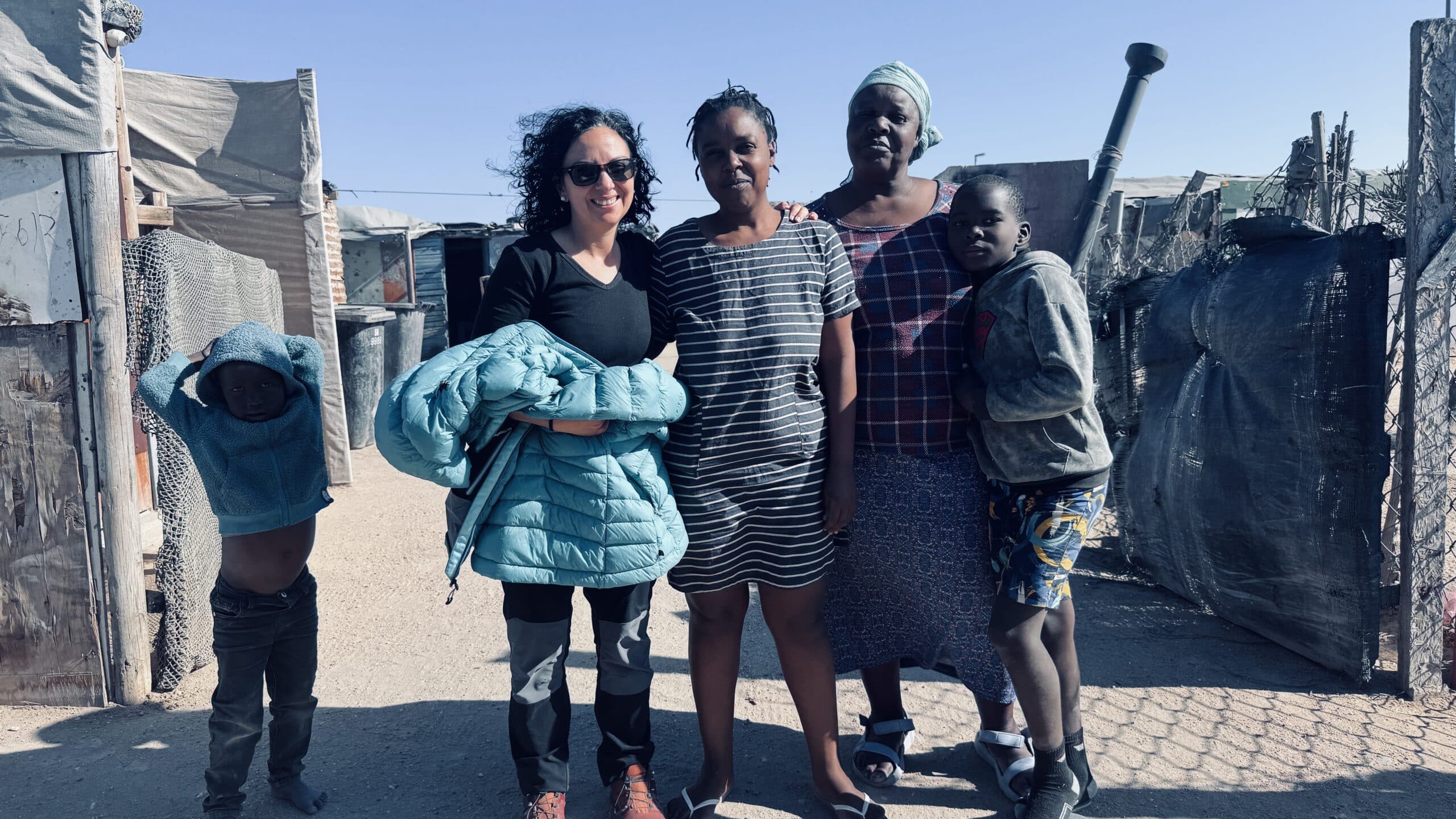
We started at the Mondesa market , where we bought a few things to help the vendors. Afterwards, we visited the newer part of town, with its brick houses built by the families themselves thanks to a government program, and met a Herero grandmother and her granddaughters. She showed us the traditional headdress worn by Herero women, shaped like cow horns, reflecting the importance of cattle in their culture.
Then we went to the oldest part of town, with its shacks of corrugated iron without electricity, shared bathrooms, and one water tap per street. In one of those shacks, a women's project operates, selling handicrafts and medicinal herbs. And that's where the magic happened: a Damara girl spoke to us in Spanish, which she had learned working with a Spanish NGO.
Eat like the locals (mopane worms included)
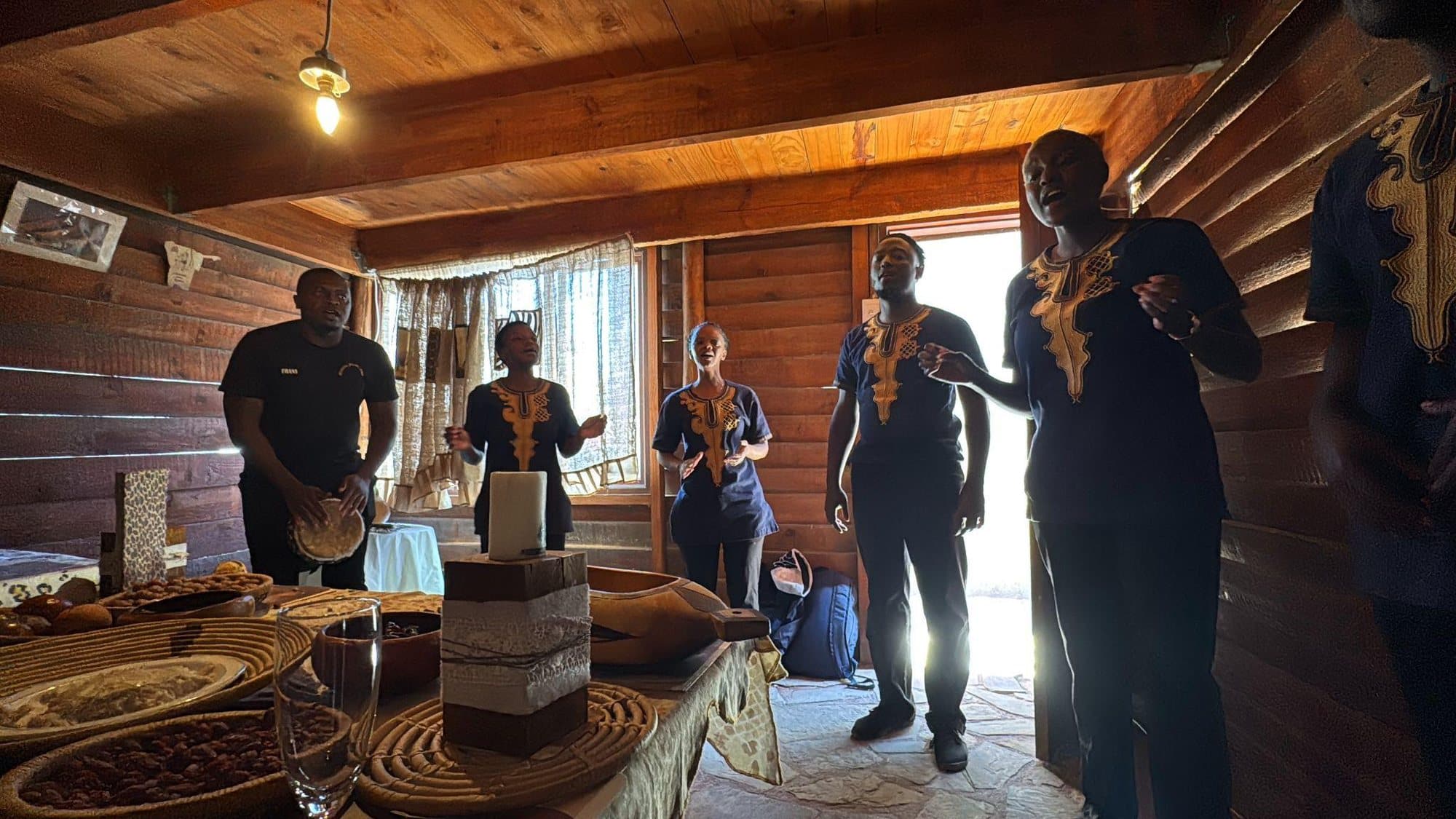
The tour ended at a local restaurant serving typical Ovambo food: fried mopane worms (pure protein), porridge with spinach and beans, and for dessert, date palm fruit and a kind of delicious fritter. We ate with our right hand, and before eating, we washed our hands with a jug of hot water. We tried everything, and Arnau even had seconds of the worm. To top it all off, a choir from Mondesa came to sing for us. We bought their CD, of course.
It was a very respectful and humane visit, nothing like "poverty tourism": it wasn't about looking, but about listening and understanding. For us, this tour was one of the highlights of the trip. It's absolutely worthwhile , especially if you're traveling with children.
Las mejores excursiones desde Swakopmund
Swakopmund es la base perfecta para descubrir toda la costa atlántica de Namibia. Las excursiones se pueden reservar antes o allí mismo, en las agencias del centro y del puerto.
| Excursion | Time | Our assessment |
|---|---|---|
| Walvis Bay y Sandwich Harbour | Una tarde | ⭐⭐⭐⭐⭐ |
| Tour por la township de Mondesa | Noon | ⭐⭐⭐⭐⭐ |
| Cape Cross | Noon | ⭐⭐⭐⭐⭐ |
| Spitzkoppe | 1 day | ⭐⭐⭐⭐⭐ |
| Living Desert Tour | Noon | ⭐⭐⭐⭐☆ |
| Duna 7, sandboard y quads | 2-3 horas | ⭐⭐⭐⭐☆ |
Walvis Bay y Sandwich Harbour
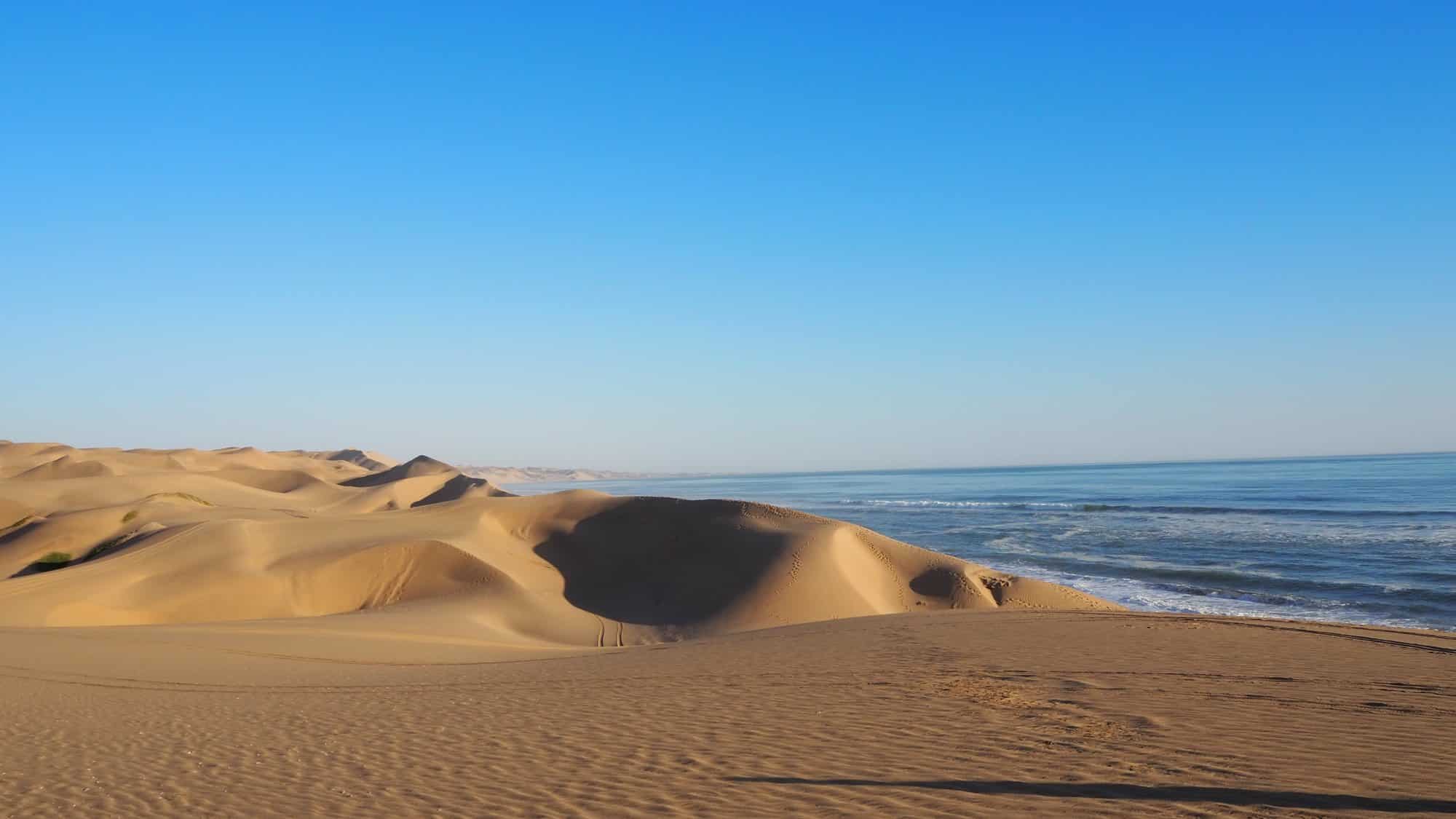
Si solo pudiéramos recomendar una excursión desde Swakopmund, sería esta. A media hora está Walvis Bay, con sus salinas rosas y la laguna llena de flamencos, y más al sur, Sandwich Harbor, donde las dunas del Namib caen directamente al Atlántico. La hicimos en 4×4 con guía, con ballenas, un atasco en lo alto de una duna y un atardecer con champán incluidos. Nos costó casi 200 € por persona y la repetiríamos mil veces.
👉 Te lo contamos todo en Walvis Bay y Sandwich Harbour: qué ver y cómo es la excursión en 4×4.
Cape Cross and Spitzkoppe
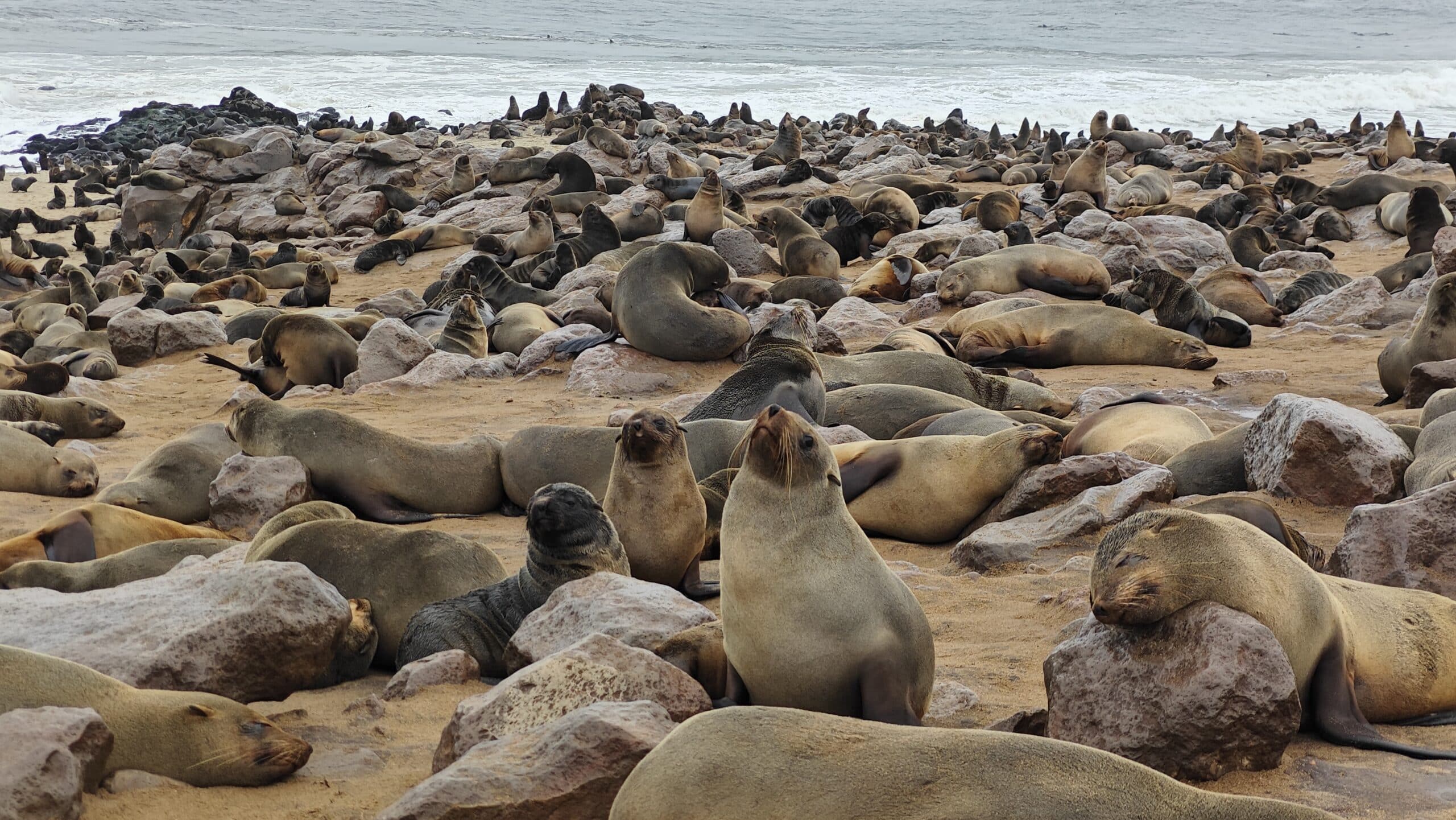
A poco más de una hora al norte está Cape Cross, con la mayor colonia de lobos marinos de África. Y a unas dos horas, Spitzkoppe, con sus montañas de granito, pinturas rupestres y un atardecer en el arco de roca que no se olvida. Nosotros los visitamos de camino hacia Swakopmund.
Dónde dormir en Swakopmund
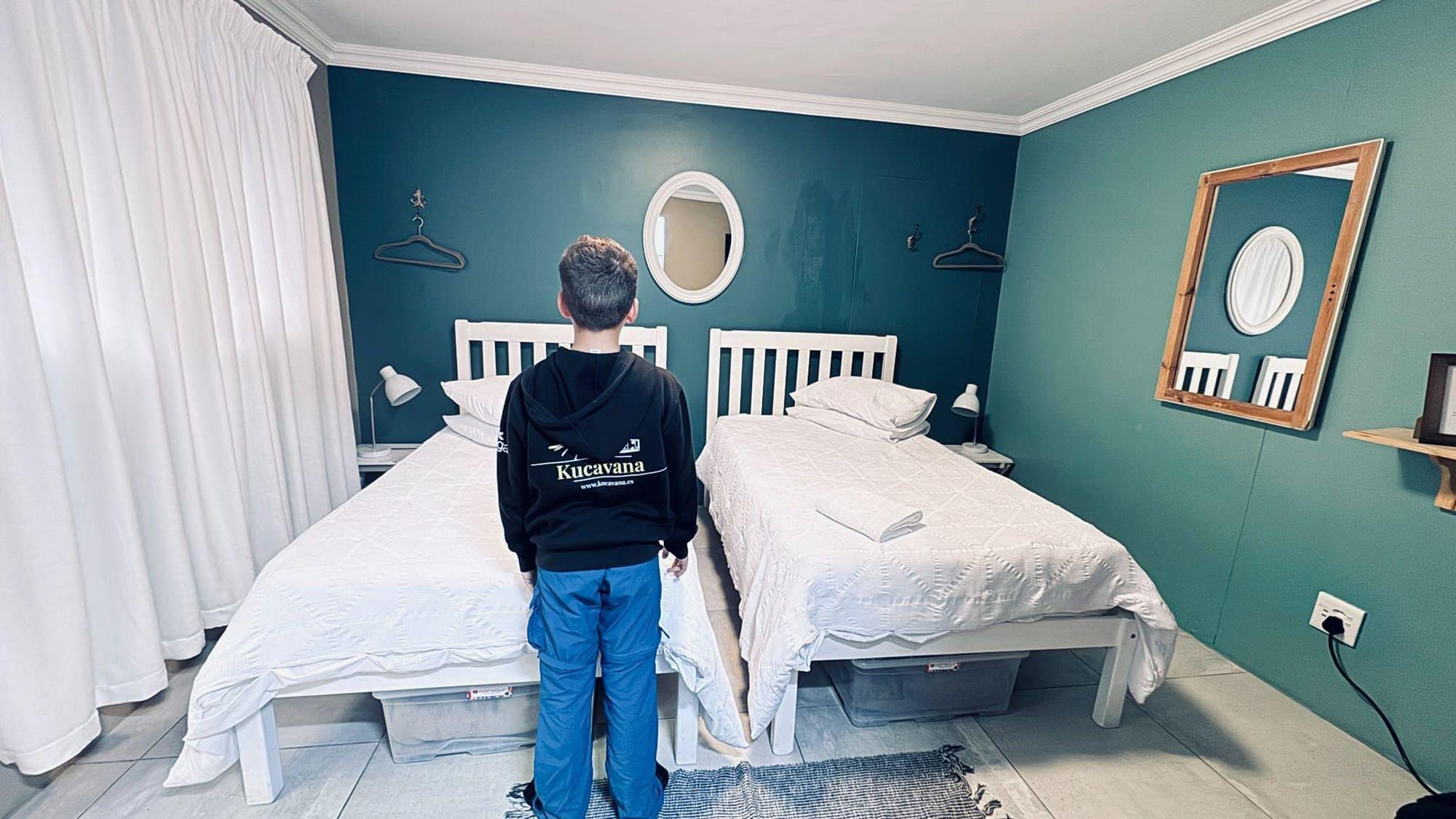
We stayed in Swakopmund, in an apartment from Namibia Nights Accommodation , right in the center, close to the beach and shops. It was a fantastic experience and very reasonably priced: cheaper than some of the campsites we stayed at on the trip. We would definitely do it again: Swakopmund has a much livelier atmosphere, it's walkable, and there are more restaurants, cafes, and shops. Plus, almost all the tours (including Sandwich Harbour) pick you up at your accommodation.
¿Y Walvis Bay? Compensa si quieres estar junto a la laguna de los flamencos o si vas a hacer kayak o catamarán a primera hora. Para todo lo demás, Swakopmund.
Cuántos días dedicar a Swakopmund
We stayed two nights and it wasn't enough. Many itineraries only dedicate one night to it, and we think that's insufficient.
| Available time | Our recommendation |
|---|---|
| Noon | Walk through the town center, the beach, the promenade and the Jetty |
| 1 day | Add the Mondesa or Sandwich Harbour sunset tour |
| 2 days (ideal) | Centro de Swakopmund, Mondesa y la excursión a Walvis Bay y Sandwich Harbour |
| 3 days or more | Add a Living Desert Tour, Lunar Landscape, a catamaran trip in Walvis Bay, or a day trip to Cape Cross or Spitzkoppe. |
This is the organization we propose:
- Day 1: A stroll through the center of Swakopmund (pier, lighthouse, German helmet, Kristall Galerie) and an afternoon of shopping and laundry.
- Day 2: tour por Mondesa por la mañana y Walvis Bay y Sandwich Harbour por la tarde. Es lo que hicimos nosotros, y fue un día redondo.
- Day 3 (if you can): Living Desert Tour y Paisaje Lunar, o catamarán en Walvis Bay.
The weather on the coast: foggy and cold
Be careful with your clothing. The Atlantic is cold on the Namibian coast, and it's often foggy in the mornings. We were there in July, and at night we wore jackets even inside the apartment, which had no heating. Going from the desert heat to this cool air in just a few hours can be quite disorienting, so always keep your fleece and jacket handy.
What Swakopmund made us think
Swakopmund gave us a lot to think about. The expensive tours are for tourists and white people; the locals live in another world, just a few kilometers away. The next day, before leaving, we saw some pretty basic cars at a used car dealership for €13.500, and someone who works at a lodge told us they earned about €350 a month. The numbers just don't add up.
Por eso nos gustó tanto combinar las dos caras: el paseo por el centro, el tour por Mondesa comprando a los proyectos locales y la gran experiencia de Sandwich Harbour. Swakopmund no es solo una ciudad bonita: es el lugar donde Namibia cambia de ritmo.
How to get there and what's nearby
| Destination from Swakopmund | Approximate distance | Time spent driving |
|---|---|---|
| Walvis Bay | 35 km | 30 minutes |
| Cape Cross | 120 km | 1 30 h min |
| Spitzkoppe | 150 km | 2 hours long. |
| Sossusvlei | 350 km | 5-6 horas |
| Windhoek | 360 km | 4-5 horas |
Swakopmund is the natural stop between the north (Damaraland, the Skeleton Coast, Cape Cross y Spitzkoppe) y el sur (Walvis Bay, el desierto del Namib y Sossusvlei and Deadvlei). From Swakopmund we continued south through the Kuiseb Canyon and the Tropic of Capricorn.
???? Our kit for your trip to Namibia
✅ Travel insurance: IATI with a 5% discount.
✅ 4x4 with rooftop tent: Disgusting Car with the code @KUCAVANA.
✅ Lodges and houses: Booking with many free cancellation options.
✅ Guided excursions: Activities in Namibia on Civitatis, if you prefer not to drive a certain section.
Preguntas frecuentes sobre Swakopmund
What to see in Swakopmund in one day?
The pier, the lighthouse, and the Mole, the historic German quarter with the Woermannhaus and the Kristall Galerie. If you have some free time in the afternoon, you could visit the Martin Luther locomotive or take a tour of Mondesa.
¿Cuántos días hacen falta para visitar Swakopmund?
Nosotros estuvimos dos noches y nos supo a poco. Con dos días completos puedes hacer el centro, Mondesa y la excursión a Sandwich Harbour; con un tercero, el Living Desert Tour o el Paisaje Lunar.
¿Cuál es la mejor excursión desde Swakopmund?
Para nosotros, sin duda, la de Walvis Bay y Sandwich Harbour in 4×4.
¿Es mejor dormir en Swakopmund o en Walvis Bay?
For most travelers, Swakopmund is the better choice: it has a livelier atmosphere and is walkable. Walvis Bay is a better option if you want to be by the lagoon or plan to do activities on the bay early in the morning.
Is it cold in Swakopmund?
More than you'd expect. Because of the fog and the cold Atlantic, the mornings and evenings are cool. We wore jackets in July.
Is Swakopmund safe?
During the day we didn't feel unsafe at all. At night, it was just common sense, like in any other city.
Is the tour of the township of Mondesa worth it?
Yes, absolutely. It was one of the experiences that taught us the most about the real Namibia, and a great way to ensure your money goes to local projects.
Continue organizing your trip to Namibia
- 🧭 Namibia trip: a complete guide for independent travel
- 📅 24-day Namibia 4x4 route
- 🦩 Walvis Bay y Sandwich Harbour
- 🏜️ Sossusvlei and Deadvlei for free
- 🚙 Namibia in a 4x4
- 🛡️ Is it safe to travel to Namibia?
- 📄 Requirements for traveling to Namibia
This post contains affiliate links: if you purchase through them, it doesn't cost you any extra and it helps us continue creating content. We only recommend what we use ourselves.
Latest posts from our blog
-

Definitive manual for traveling by motorhome【2026】
Super complete manual for traveling by motorhome with all the answers to your questions.
-

Walvis Bay and Sandwich Harbour: what to see and what the 4x4 tour is like (our experience)
What to see in Walvis Bay (pink salt flats, flamingos, Dune 7) and our 4x4 excursion to Sandwich Harbour: price, tips and whether it's worth it.
-

Namibia by 4x4: a complete guide to renting, driving and exploring the country independently
How to rent and drive a 4x4 in Namibia: which car to choose, prices, rooftop tents, roads, rules and the mistakes we made in 5.000 km.
-
Is it safe to travel to Namibia? Our real experience after 24 days in a 4x4 with children
Is it safe to travel independently in Namibia? Our experience in 24 days in a 4x4 with children: crime, roads, malaria, insurance, and tips for a worry-free trip.

Ethical code:
On our blog you will find affiliate links. These are always placed with our highest ethics. We never publish any service or product that we have not used before and that we are sincerely happy with. That is why our recommendations are always ethical. In addition, there is no additional cost for you to book through our links and, on the other hand, it means a small commission for us that helps us maintain this blog so that you can continue enjoying it for free.